Gaudí and Modernist Architecture in Barcelona
Navigating the architectural labyrinth of Barcelona can feel like trying to solve a puzzle where the pieces are constantly moving and half of them are covered in scaffolding. I remember my first week living here, standing in front of the Sagrada Família with a paper map, feeling completely dwarfed by the sheer complexity and the crushing weight of the crowds. This guide solves that architectural overwhelm by breaking down the genius of Antoni Gaudí and his contemporaries into a manageable, deeply rewarding journey through the soul of Barcelona.
Disclosure: This post may contain affiliate links. We may earn a commission at no extra cost to you if you make a purchase through these links. Read full disclosure.
Understanding the Modernisme Movement in Barcelona
To truly appreciate what you are looking at when you stand before a building that looks like it was made of melting wax or dragon scales, you have to understand the era of Modernisme. This wasn't just a style of architecture; it was a loud, vibrant declaration of Catalan identity. At the end of the 19th century, Barcelona was bursting at its seams, literally. The old city walls were torn down, and the Eixample district was being laid out. In this expansion, the wealthy industrialist class wanted to show off their success, and they used architects like Gaudí to do it.
The Cultural Context of the Renaixença
The Renaixença, or Catalan Renaissance, was the fuel for the Modernist fire. After centuries of feeling suppressed, the Catalan people were rediscovering their language, their literature, and their unique place in the world. Local history shows that every curve and floral motif you see on these buildings is a nod to this cultural pride. The architects weren't just building houses; they were building monuments to a dream of independence and artistic freedom.
When you walk through the streets of the Eixample today, you are essentially walking through an open-air museum of this period. If you are planning your first trip, I highly recommend checking out Barcelona for First-Time Visitors: What to See and Skip to help prioritize which of these massive structures deserves your limited time and which can be admired from the sidewalk.
Architectural Characteristics of Modernisme
What makes a building "Modernist" in Barcelona? Look for the total absence of straight lines. Gaudí famously said that there are no straight lines in nature, and therefore, there should be none in architecture. You will see organic shapes, curves that mimic the movement of water or the growth of trees, and an incredible use of light.
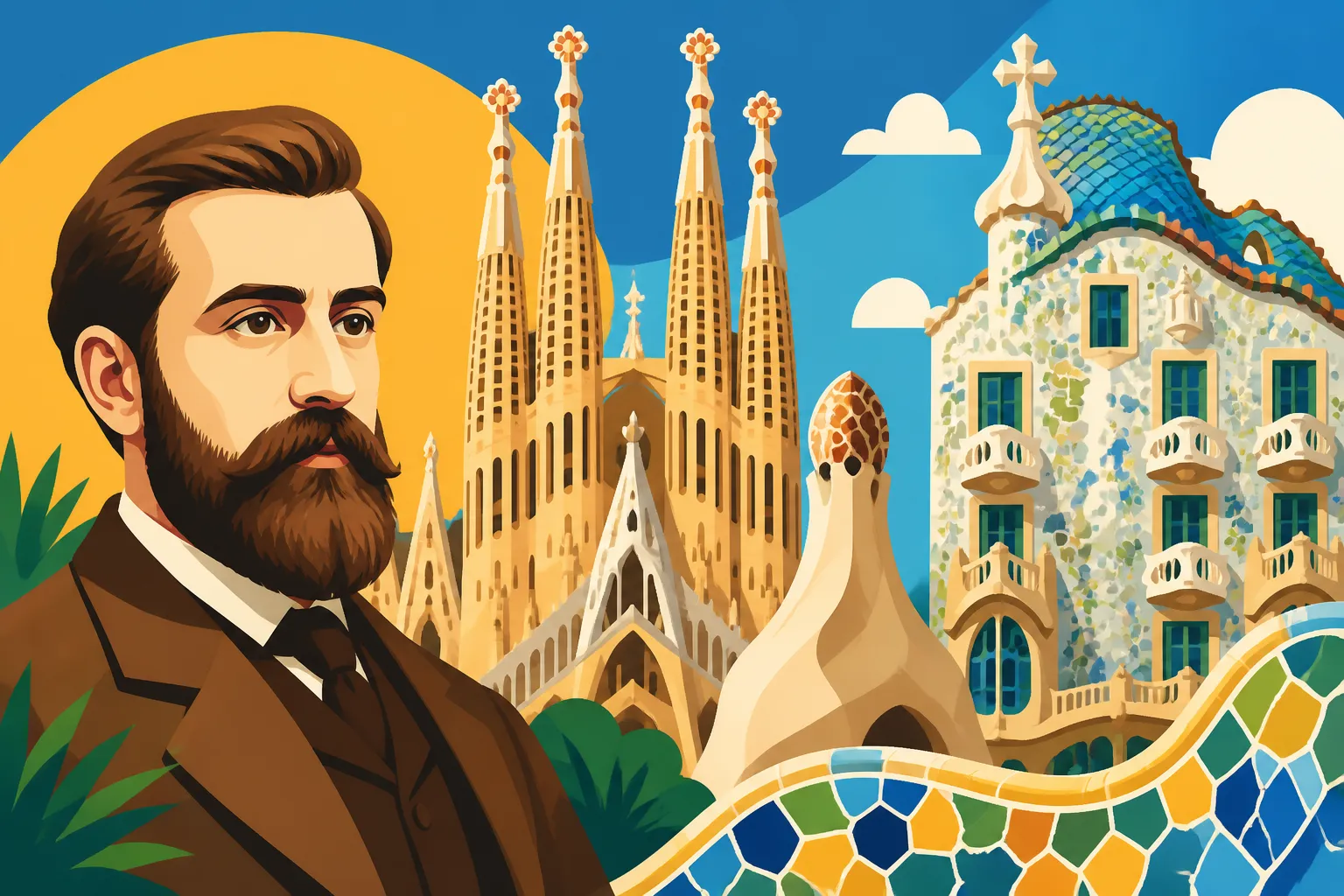
Another key feature is "trencadís," the technique of using broken ceramic pieces to create mosaics. You’ll see this everywhere, from the benches in Park Güell to the chimneys of the Casa Milà. It was a sustainable way to use factory scraps and turn them into high art. Beyond the aesthetics, the craftsmanship involved in the wrought iron, the stained glass, and the woodcarvings is staggering. It’s the kind of detail that you only really appreciate when you stop rushing and look at the door handles or the balcony railings.
Beyond Gaudí: Domènech i Montaner and Puig i Cadafalch
While Gaudí is the name everyone knows, a veteran's tip is to not ignore the other giants of the movement. Lluís Domènech i Montaner and Josep Puig i Cadafalch were just as influential and, in some cases, even more respected by their peers at the time. Domènech i Montaner’s Hospital de Sant Pau is a sprawling "city within a city" that feels more like a palace than a medical facility.
Puig i Cadafalch, on the other hand, often blended Modernisme with Gothic and Flemish influences. His Casa de les Punxes looks like a medieval castle dropped into the middle of a modern city grid. If you want to understand the full scope of the city's beauty, you need to see how these three masters competed and inspired one another. Many people find that staying in the right area makes this easier, so take a look at What's the Best Area to Stay in Barcelona? for advice on finding a home base near the action.
The Crown Jewels of Antoni Gaudí
If you only have a few days, you will likely spend most of your time chasing the Gaudí masterpieces. These are the heavy hitters that draw millions of visitors every year. Having lived here through many peak seasons, I can tell you that the logistics of seeing these sites are as important as the sites themselves.
La Sagrada Família: A Work in Perpetual Progress
The Sagrada Família is the undisputed symbol of the city. It is a forest made of stone, where the columns branch out like trees and the light filtered through stained glass changes with every hour of the day. It has been under construction for over 140 years, and every time I visit, there is something new to see. It’s not just a church; it’s a theological and biological treatise written in stone.
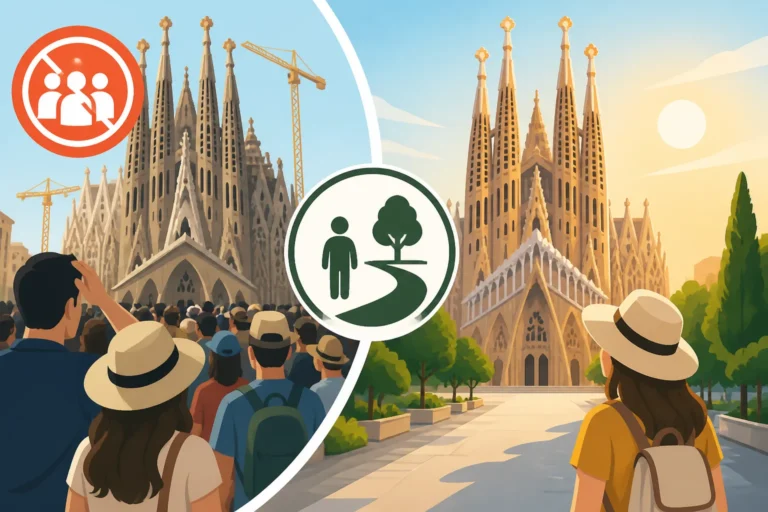
The most common mistake visitors make is showing up without a pre-booked ticket. Countless travelers have been standing in the midday sun, heartbroken to find that the next available slot is three days away. For the best experience, you must plan ahead. For deep-dive logistics, read my guide on How to Avoid Crowds at the Sagrada Família. This will save you from the worst of the queues and help you understand the difference between the towers and the main basilica.
Park Güell: The Failed Housing Project
Many people don't realize that Park Güell was originally intended to be a luxury gated community for Barcelona’s elite. It was a commercial failure, with only two houses ever built, but it became a triumph of landscape architecture. The way Gaudí integrated the paths, the viaducts, and the plazas into the natural hillside of Carmel is nothing short of brilliant.
Getting there is a bit of a hike. Literally. Most visitors take the metro and then have to navigate a series of steep escalators and hills. My advice? Wear comfortable shoes and bring a water bottle. The views from the top are spectacular, but the physical exertion is real. If you are trying to squeeze this into a tight schedule, you might want to look at How to See Gaudí's Buildings in Barcelona in One Day to see how to link the park with the city center sights.
Casa Batlló and Casa Milà (La Pedrera)
Located on the Passege de Gràcia, these two houses represent the pinnacle of Gaudí’s residential work. Casa Batlló is often called the "House of Bones" because of its skeletal balconies and iridescent, scaly roof that looks like the back of a dragon. Inside, the attention to detail is obsessive—even the ventilation system is integrated into the artistic design.
Casa Milà, or La Pedrera (The Quarry), is quite different. It is a massive, undulating stone building that lacks any supporting walls. The entire weight is carried by pillars and steel beams, allowing for an open floor plan that was decades ahead of its time. The rooftop, with its "warrior" chimneys, is one of the most photographed spots in the city. If you’re trying to decide between the two, it often comes down to whether you prefer the colorful, fairy-tale vibe of Batlló or the raw, sculptural power of Milà.
Navigating the Block of Discord and Eixample
Walking down Passeig de Gràcia is an exercise in neck-straining. This is where the wealthiest families lived, and they competed fiercely to have the most impressive house on the block. The most famous stretch is the "Manzana de la Discordia," named after the Greek myth of the Apple of Discord.
The Manzana de la Discordia
On one single city block, you have three major works by the three major architects of the era: Casa Batlló (Gaudí), Casa Lleó i Morera (Domènech i Montaner), and Casa Amatller (Puig i Cadafalch). The styles clash spectacularly. The Amatller house has a stepped, Flemish-style roof, while the Lleó i Morera is defined by its ornate floral carvings and delicate rotunda.
Seeing them side-by-side is the quickest way to learn the differences between the masters. Visitors are often advised to grab a chocolate at the shop on the ground floor of Casa Amatller—it’s one of the few places that still feels connected to the original family’s history. Before you head out for a day of walking, make sure you have your finances sorted; our guide on Money for Travel in Spain: Cards, Cash, and ATMs is a lifesaver for navigating local payment norms.
Exploring the Eixample Neighborhood
The Eixample is more than just a place for fancy houses; it is a masterclass in urban planning. Designed by Ildefons Cerdà, the grid system with its chamfered corners (octagonal intersections) was meant to allow for better sunlight, ventilation, and traffic flow. Even if you aren't looking at a specific "monument," the ordinary apartment buildings in this district often feature stunning wrought iron balconies and tiled entryways.
As you walk, pay attention to the street lamps and the tiles under your feet. The hexagonal paving stones on Passeig de Gràcia were actually designed by Gaudí himself. However, like any major city center, you need to stay aware of your surroundings. Pickpockets are unfortunately quite skilled here, so brush up on your safety knowledge with Staying Safe in Spain: Common-Sense Tips for Travelers.
Hidden Modernist Gems in the Backstreets
If you want to escape the massive crowds, you have to look beyond the main avenues. Places like the Casa Vicens, Gaudí’s first house, were hidden away for years as private residences and only recently opened to the public. It features a stunning Orientalist style with vibrant green and white tiles.
Another favorite of mine is the Palau de la Música Catalana. While it’s technically just outside the Eixample in the Ribera district, it is perhaps the most beautiful Modernist building in the world. The stained-glass skylight in the main concert hall is so detailed that it feels like the sun is permanently setting inside the room. For those who enjoy getting out of the urban sprawl for a bit, consider looking into Best Day Trips From Barcelona Without a Car to find other regional treasures.
Practical Strategies for the Architectural Enthusiast
Barcelona is a city that rewards the prepared. If you show up with no plan, you will spend most of your time in line and most of your money on overpriced tourist food. I've learned the hard way that a little bit of logistical planning goes a long way toward enjoying the art.
Booking Tickets and Avoiding Scams
Almost every major Modernist site requires a timed entry ticket. I cannot emphasize this enough. Use platforms like GetYourGuide to find skip-the-line tickets or bundled tours that can save you a few euros. Be wary of people selling "discounted" tickets on the street near the monuments; these are almost always scams.
If you are coming from another city in Spain, I highly recommend using Omio to book your train or bus. It simplifies the process of getting into Sants Station, which is just a short metro ride from the heart of the Modernist route. For those looking to stay within walking distance of the masterpieces, Booking.com is usually the most reliable way to find apartments in the Eixample that actually look like the photos.
Comparison of Major Modernist Sites
| Site | Architect | Key Feature | Recommended Duration |
|---|---|---|---|
| Sagrada Família | Antoni Gaudí | Forest-like columns, stained glass | 2-3 Hours |
| Park Güell | Antoni Gaudí | Trencadís benches, city views | 2-4 Hours |
| Casa Batlló | Antoni Gaudí | Dragon-scale roof, organic shapes | 1.5 Hours |
| Casa Milà | Antoni Gaudí | Sculptural chimneys, attic museum | 1.5 Hours |
| Palau de la Música | Domènech i Montaner | Inverted stained-glass dome | 1 Hour (Tour) |
| Hospital de Sant Pau | Domènech i Montaner | Tiled pavilions, garden complex | 2 Hours |
Transport Tips: Getting Around the Modernist Route
The Barcelona metro is excellent, but for the Modernist route, walking is often better. Most of the houses are clustered together in the Eixample. If you do need to use the metro, the L3 (Green) and L4 (Yellow) lines will be your best friends.
Remember that Barcelona is a very hilly city as you move north toward Park Güell. If you have mobility issues, Taxis or ride-sharing apps are quite affordable and can drop you right at the entrance of the sites. I’ve often taken a taxi up to the top of Park Güell and then walked downhill back into the city to save my knees.
Making the Most of Your Modernist Experience
Art is better when you aren't hungry or stressed. Integrating your architectural tour with the local lifestyle is the key to a memorable trip. After all, these buildings were meant to be lived in and enjoyed.
Guided Tours vs. Self-Guided Walks
A self-guided walk gives you the freedom to stop for a coffee whenever you want, but you might miss the subtle stories hidden in the stone. A good guide can explain why there are hidden symbols of Catalan nationalism in the carvings or the engineering marvels that keep the stone from collapsing.
It is worth considering a hybrid approach: do a guided tour of the Sagrada Família to get the deep history, and then use your own feet and a map to explore the houses of the Eixample at your own pace. You can find many reputable tours through GetYourGuide that cater to specific interests, like "Gaudí for Kids" or "Modernist Photography Walks."
Where to Eat Amidst the Architecture
One of the biggest traps in Barcelona is eating on the main tourist drags like Las Ramblas or directly in front of the Sagrada Família. The food is often frozen and the prices are astronomical. Instead, walk two blocks away from any major monument into the side streets of the Eixample.
Look for a "Menú del Día," a fixed-price three-course lunch that is a staple of Spanish life. It’s the most economical way to eat well. To avoid any cultural faux pas at the table, make sure you read Spanish Meal Times and Dining Etiquette Explained. Knowing that dinner doesn't really start until 9:00 PM will help you plan your sightseeing so you aren't starving when all the good kitchens are still closed.
Summary of the Modernist Legacy
The architecture of Barcelona is more than just a collection of pretty buildings; it is the physical manifestation of a city that refused to be ordinary. From the towering spires of the Sagrada Família to the hidden tile work of a random Eixample entryway, the spirit of Gaudí and his contemporaries is woven into the very fabric of the city. As someone who has walked these streets thousands of times, I can promise you that the more you look, the more you will find. Don't try to see it all in one day. Pick a few sites that resonate with you, take your time, and let the curves and colors of Modernisme tell you the story of Catalonia.
Disclaimer
This guide is for informational purposes only. While we strive to provide the most accurate and up-to-date information regarding opening hours, ticket prices, and travel logistics in Barcelona, these details are subject to change by the local authorities and site management. Always verify specific details on the official websites of the monuments before your visit. The author and publisher are not responsible for any inconveniences or financial losses incurred while following this travel advice.