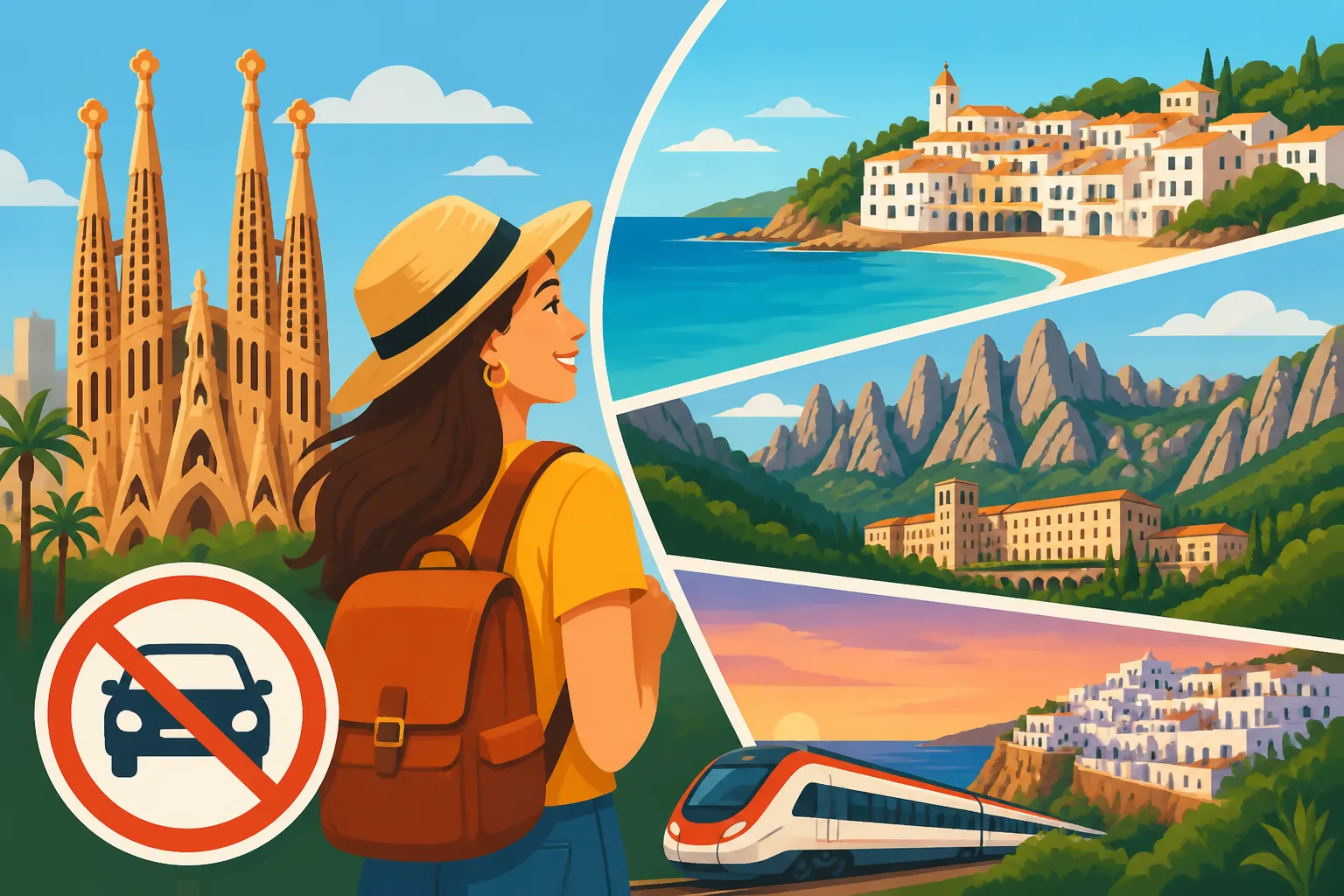
Best Day Trips From Barcelona Without a Car
Finding yourself trapped in the "Barcelona bubble" is a common expat rite of passage, but the real magic of Catalonia often lies just past the last stop on the Metro. I remember my first month in the city, staring at a confusing Renfe map and nearly giving up because I didn't have a car to reach those cliffside monasteries I saw on Instagram. This guide solves that paralysis by breaking down the absolute best day trips you can reach using only trains and buses.
Disclosure: This post may contain affiliate links. We may earn a commission at no extra cost to you if you make a purchase through these links. Read full disclosure.
The Holy Grail of Day Trips: Montserrat
If you only do one trip outside the city, make it Montserrat. It is the one place that actually lives up to the hype, featuring serrated mountain peaks that look like they were designed by Gaudí himself. I’ve made the mistake of showing up at Plaça d'Espanya without a plan, only to spend forty minutes wandering around the underground tunnels looking for the right platform. Don't be that person.
Mastering the R5 Line and Combo Tickets
The journey begins at the Plaça d'Espanya station, where you need to find the FGC (Ferrocarrils de la Generalitat de Catalunya) lines. Look for the R5 line headed toward Manresa. The most important decision you’ll make is at the ticket machine: do you want the "Aeri" (cable car) or the "Cremallera" (rack railway)? They are two different stops. If you want the cable car, you get off at the Aeri de Montserrat station. If you want the rack railway, you stay on one more stop to Monistrol de Montserrat.
We recommend the Aeri for the sheer thrill of dangling over the valley, though the Cremallera is much better if you have a fear of heights or are traveling with a stroller. You can often find great deals on these transport links through platforms like Omio, which helps you compare the schedules before you even leave your apartment. Remember to buy a combined ticket that includes the train and your chosen mountain transport; it saves you about 20% compared to buying them separately.
Navigating the Monastery and Beyond
Once you reach the monastery level, the air gets noticeably cooler. Your first stop should be the Basilica to see the Black Madonna (La Moreneta). There is almost always a line, so if you arrive after 11:00 AM, expect a wait of at least an hour. If the line is too long, don't worry—the spiritual energy of the place is just as palpable in the surrounding hills.
For those who want to escape the crowds, take the Sant Joan funicular further up the mountain. From the top station, there are several well-marked hiking trails. One of my favorites is the walk to Sant Jeroni, the highest peak. It takes about three hours round-trip, but the 360-degree views of Catalonia are unbeatable. If you're planning on staying late to catch the sunset, check Booking.com for the Hotel Abat Cisneros right on the mountain—waking up to the sound of the monastery bells before the first train arrives is a core memory in the making.
Mediterranean Escapes: Sitges and the South
Sitges is the "easy win" of day trips. It’s close, it’s beautiful, and the train ride itself is a scenic journey that hugs the coastline. Whenever I have friends visiting from home who are tired of the crowds at Barceloneta, I point them toward the R2 Sud line. It’s the perfect antidote to city stress, offering seventeen different beaches and a historic center that feels like a whitewashed dream.
The R2 Sud Experience
Getting to Sitges is as simple as it gets. You can catch the R2 Sud train from Estació de França, Passeig de Gràcia, or Sants Station. The journey takes about 35 to 40 minutes. My veteran tip: sit on the left side of the train when leaving Barcelona. As you pass through the Garraf tunnels, the view opens up to the Mediterranean, and for a few minutes, it feels like the train is floating on the water.
The Renfe ticketing system has become more digital, but the old-school Rodalies machines still occasionally swallow coins. I recommend using the official app or a contactless card to avoid the queue at the station. Since this is such a popular route, trains run every 15 to 30 minutes, so there’s no need to stress about a strict schedule. If you want to dive deeper into how the regional networks function, check out our guide on Train Travel in Spain: High-Speed vs Regional Routes Explained.
Beyond the Beach: Culture and Nightlife
While most people come for the sand, Sitges has a sophisticated soul. The Cau Ferrat Museum, once the home of artist Santiago Rusiñol, is a hidden gem filled with Picasso and El Greco works. After soaking up some art, wander through the "Casc Antic" (Old Town) and find a spot for a late lunch.
Sitges is also famous for its vibrant LGBTQ+ scene and its legendary Carnival. If you happen to be visiting during a festival, the trains will be packed, so booking a guided experience through GetYourGuide can sometimes be a lifesaver for navigating the logistics and finding the best viewing spots for the parades. For more on how to behave in these social settings, read up on Spanish Social Customs: Greetings, Kisses, and Personal Space.
Medieval Magic and Modern Art: Girona and Figueres
If you want a trip that feels like stepping back in time—or into a Salvador Dalí painting—you head north. Girona is often called "Barcelona's little sister," but she has a character all her own. I once spent an entire afternoon just lost in the Jewish Quarter (El Call), which is one of the best-preserved in Europe.
The High-Speed Advantage
You have two main choices for getting to Girona: the regional train (MD or R11) which takes about 90 minutes, or the high-speed AVE/AVANT trains which whisk you there in just 38 minutes from Sants Station. If you value your time, the high-speed option is worth the extra few euros. You can easily find and book these tickets on Omio to ensure you get a reserved seat, as the AVANT trains can sell out during the morning rush.
When you arrive in Girona, the walk from the station to the historic center is about 10 minutes. The city is famous for its colorful houses hanging over the Onyar River and its massive Cathedral, which Game of Thrones fans will recognize as the Great Sept of Baelor. To make the most of your dining experience here, it helps to understand the local rhythm; our article on Spanish Meal Times and Dining Etiquette Explained will help you avoid the "tourist trap" restaurants that open too early.
The Dalí Triangle in Figueres
If you have enough energy, you can combine Girona with Figueres in a single day. Figueres is just another 15 to 25 minutes north by train. The main draw here is the Dalí Theatre-Museum, which is the world’s largest surrealist object. I’ll be honest: it’s bizarre, overwhelming, and absolutely brilliant.
It is wise to book your museum tickets weeks in advance. If you’re doing a DIY trip, you can use GetYourGuide to find "Skip-the-Line" tickets which are essential in the summer months. If you decide that one day isn't enough to see both cities, you can find charming boutique hotels in Girona’s old town through Booking.com to turn your day trip into a relaxed overnight stay.
Roman Heritage by the Sea: Tarragona
Tarragona is the most underrated day trip from Barcelona. While everyone else is fighting for space in Sitges, you can be walking through a Roman amphitheater that sits right on the edge of the Mediterranean. It’s a UNESCO World Heritage site that feels like a living museum.
Navigating the Stations
This is where many expats get caught out. There are two stations: "Tarragona" and "Camp de Tarragona." Do not book a ticket to Camp de Tarragona for a day trip. That station is 10 kilometers outside the city in an industrial zone, meant for long-distance high-speed lines to Madrid. You want the regional station simply called "Tarragona," which is located right at the bottom of the city’s hill, just a short walk from the ruins and the beach.
Trains depart regularly from Barcelona Sants and Passeig de Gràcia. The journey takes about an hour and ten minutes on the regional R16 or Media Distancia trains. Once you step off the train, you’ll see the "Balcó del Mediterrani," a viewpoint at the end of the main Rambla. Locals believe that touching the iron railing here brings good luck—a tradition known as tocar ferro. For more practical tips on getting around, see our post on Public Transport in Spain: Cards, Discounts, and Etiquette.
A Walk Through the Part Alta
The "Part Alta" is the high part of the city where the Roman ruins and the medieval Cathedral are clustered. You can buy a single ticket that grants access to all the major Roman sites, including the Circus, the Praetorium, and the Walls. Walking along the Archaeological Promenade at sunset is one of the most peaceful experiences you can have in Catalonia.
Tarragona is also a great place to try authentic romesco sauce, which originated here. If you're worried about the language barrier when ordering your seafood feast, our guide on Ordering Food and Drinks in Spanish: A Practical Phrasebook will give you the confidence to order like a local.
Summary of Travel Options
To help you plan your logistics, here is a quick comparison of the most popular car-free day trips from Barcelona:
| Destination | Transport Mode | Departure Station | Travel Time | Approx. Cost (Return) |
|---|---|---|---|---|
| Montserrat | R5 Train + Cable Car/Rack Railway | Plaça d'Espanya | 1h 30m | €25 – €35 |
| Sitges | R2 Sud Train | Sants / Passeig de Gràcia | 40m | €9 – €12 |
| Girona | AVE / AVANT High-Speed Train | Sants Station | 38m | €20 – €35 |
| Girona | Regional Train (MD/R11) | Sants / Passeig de Gràcia | 1h 30m | €16 – €22 |
| Tarragona | Regional Train (R16/MD) | Sants / Passeig de Gràcia | 1h 10m | €16 – €20 |
| Figueres | AVE / AVANT High-Speed Train | Sants Station | 55m | €25 – €45 |
Practical Tips for Car-Free Travel
Before you head out, there are a few "survival" tips I’ve learned the hard way. First, always carry a reusable water bottle. The tap water in Barcelona is safe but tastes like a swimming pool; however, in places like Girona or Montserrat, the water quality is often much better. Check out Tap Water in Spain: Safety, Taste, and Filtration Tips for more on this.
Ticketing and Apps
Download the Renfe Cercanías app and the Rodalies de Catalunya app. Spanish train schedules can change with very little notice due to track maintenance or strikes. Having the apps allows you to see real-time delays. Also, keep an eye out for the "T-usual" or "T-casual" cards if you live in Barcelona—while they are mostly for the metro, some zones overlap with nearby day trip destinations, potentially saving you money on the first leg of your journey.
If you are planning to travel during peak season (June to August), I cannot stress enough how important it is to book your return high-speed tickets in advance through Omio. Standing on a platform in Girona at 8:00 PM only to find all the fast trains are full is a miserable end to a great day.
Safety and Scams
While Catalonia is generally very safe, train stations are prime territory for petty theft. Always keep your bag in front of you, especially at Sants and Plaça d'Espanya. Be wary of anyone offering "help" with the ticket machines—they are usually looking for a tip or a chance to see where you keep your wallet. For a deeper dive into staying safe, read Common Financial Scams Targeting Expats in Spain (and How to Avoid Them).
Finally, don't forget that many smaller towns still observe the siesta. Between 2:00 PM and 5:00 PM, you might find many shops and even some smaller museums closed. Use this time to have a long, leisurely lunch—it’s the Spanish way, after all. If you're unsure about the local tipping culture after your big meal, refer to Tipping in Spain: When, Where, and How Much.
Disclaimer
This guide is for informational purposes only. While we strive to provide the most accurate and up-to-date travel information for 2026, transport schedules, ticket prices, and local regulations in Spain are subject to change without notice. Always verify specific routes and opening times on official operator websites before departing. Be aware that regional strikes or maintenance work can affect public transport availability. Traveling involves inherent risks, and we recommend maintaining valid travel insurance and following all local safety guidelines during your day trips.