Spanish Bar and Café Etiquette for Newcomers
Walking into a bustling Spanish bar for the first time can feel like walking onto a movie set where everyone knows the script but you. I remember my first week in Madrid, standing awkwardly by the bar for ten minutes while locals shouted "¡Oiga!" and "¡Dime!" around me, feeling completely invisible and more than a little frustrated. This guide breaks down the unwritten rules of Spanish bar and café etiquette so you can order with confidence, avoid common tourist faux pas, and finally feel like you belong in your neighborhood local.
Disclosure: This post may contain affiliate links. We may earn a commission at no extra cost to you if you make a purchase through these links. Read full disclosure.
The Daily Rhythm: Knowing When to Go
In Spain, the bar is the extension of the living room, but its function shifts dramatically depending on the hour. Unlike in many English-speaking countries where a café is for coffee and a bar is for booze, a Spanish bar is often both, serving espresso at 8:00 AM and gin tonics at midnight. Understanding the timing is the first step to mastering etiquette because showing up for a full meal at 6:00 PM will immediately mark you as a newcomer.
The Morning Rush and the Segundo Desayuno
The first major wave of the day happens between 8:00 AM and 10:30 AM. You will see people standing at the bar, quickly knocking back a café solo or a café con leche before work. However, the real social magic happens during the segundo desayuno (second breakfast) around 11:00 AM. This is when offices empty out and friends meet for a quick break.
During this window, the etiquette is fast-paced. You find a spot at the bar, catch the waiter's eye, and order your coffee alongside a tostada con tomate (toast with grated tomato and olive oil) or a pincho de tortilla. It is perfectly acceptable to be brief here; the waiters are juggling dozens of orders and don't expect small talk. If you are traveling between cities using Omio to explore different regional breakfast styles, you will notice that in the south, the bread might be a mollete, while in the north, it is more likely to be a sturdy baguette.
The Afternoon Siesta Slump and Merienda
From 2:00 PM to 4:00 PM, bars that serve food will be packed for the menú del día. If you aren't there to eat a full three-course meal, it is best to stay at the bar rather than taking up a table. After 4:00 PM, the "siesta" lull begins. Many traditional bars might even close their kitchens, though the doors remain open for coffee and drinks.
Around 6:00 PM, the merienda (afternoon snack) kicks in. This is a slower, more relaxed time. You’ll see grandparents with grandchildren or students sharing a pastry or a small sandwich. The etiquette here is much more "slow-life." You are expected to linger. If you’ve used Booking.com to find a rental in a residential neighborhood, this is the best time to visit the local plaza and observe how the community interacts. It is the bridge between the workday and the late Spanish evening.
Late Night Socializing and the Vermut Hour
On weekends, the hora del vermut (vermouth hour) occurs around 1:00 PM, just before lunch. This is a high-energy social ritual where ordering a sweet, red vermouth on tap is the standard. The etiquette is crowded and standing-room-only. You might find yourself shoulder-to-shoulder with strangers, and that is part of the charm.
As night falls, usually starting no earlier than 8:30 PM, the bar transforms again. This is when the Spanish Tapas Culture: How to Order and Where to Go really comes into play. The etiquette shifts from individual orders to group sharing. You don't just order for yourself; you order for the table. Understanding this communal aspect is vital; if you sit with a group of Spaniards and order a plate of food just for yourself without offering to share, it is considered quite rude.
The Protocol of Ordering and Interaction
The biggest hurdle for most newcomers is simply getting the food or drink to the table. The relationship between a customer and a waiter in Spain is different than in the US or UK. It isn't based on "the customer is always right" or overly bubbly service; it is a professional, often blunt, exchange of equals.
The Art of Getting the Waiter's Attention
In many countries, waving at a waiter is considered the height of rudeness. In a busy Spanish bar, if you wait for them to come to you, you might be waiting until the next century. The etiquette here is proactive but respectful. A simple "¡Perdona!" (Excuse me) or "¡Hola!" when they pass by is standard. Once you have their attention, be ready. Spanish waiters prize efficiency over everything else.
I’ve learned the hard way that hovering near the bar without making eye contact is a recipe for being ignored. You need to "claim" your space. This doesn't mean being aggressive, but it does mean standing firmly at the bar and having your order ready. If you are struggling with the language, a Spanish Language and Everyday Communication for Visitors guide can help, but even pointing and saying "Esto, por favor" (This, please) is perfectly acceptable.
Decoding the Coffee Menu
Ordering "a coffee" in Spain will result in a confused stare. You must be specific about the ratio of milk to caffeine. The café solo is a small, strong espresso. The café cortado is an espresso "cut" with a small amount of milk. The café con leche is the standard breakfast choice, roughly half coffee and half hot milk. Then there is the manchado, which is mostly hot milk "stained" with a tiny bit of coffee.
There is also an etiquette to how you drink it. If you are at the bar, it’s usually a quick affair. If you take it to a table, especially on a terrace, you are paying a premium for the space (the terraza supplement) and are thus entitled to sit there for as long as you like. Nobody will shoo you away once you've finished your cup. For those planning a trip, checking GetYourGuide for local coffee and chocolate tours can give you a deeper look into these regional variations, especially in cities like Madrid or Barcelona.
Bread, Olives, and the Unspoken Rules of Tapas
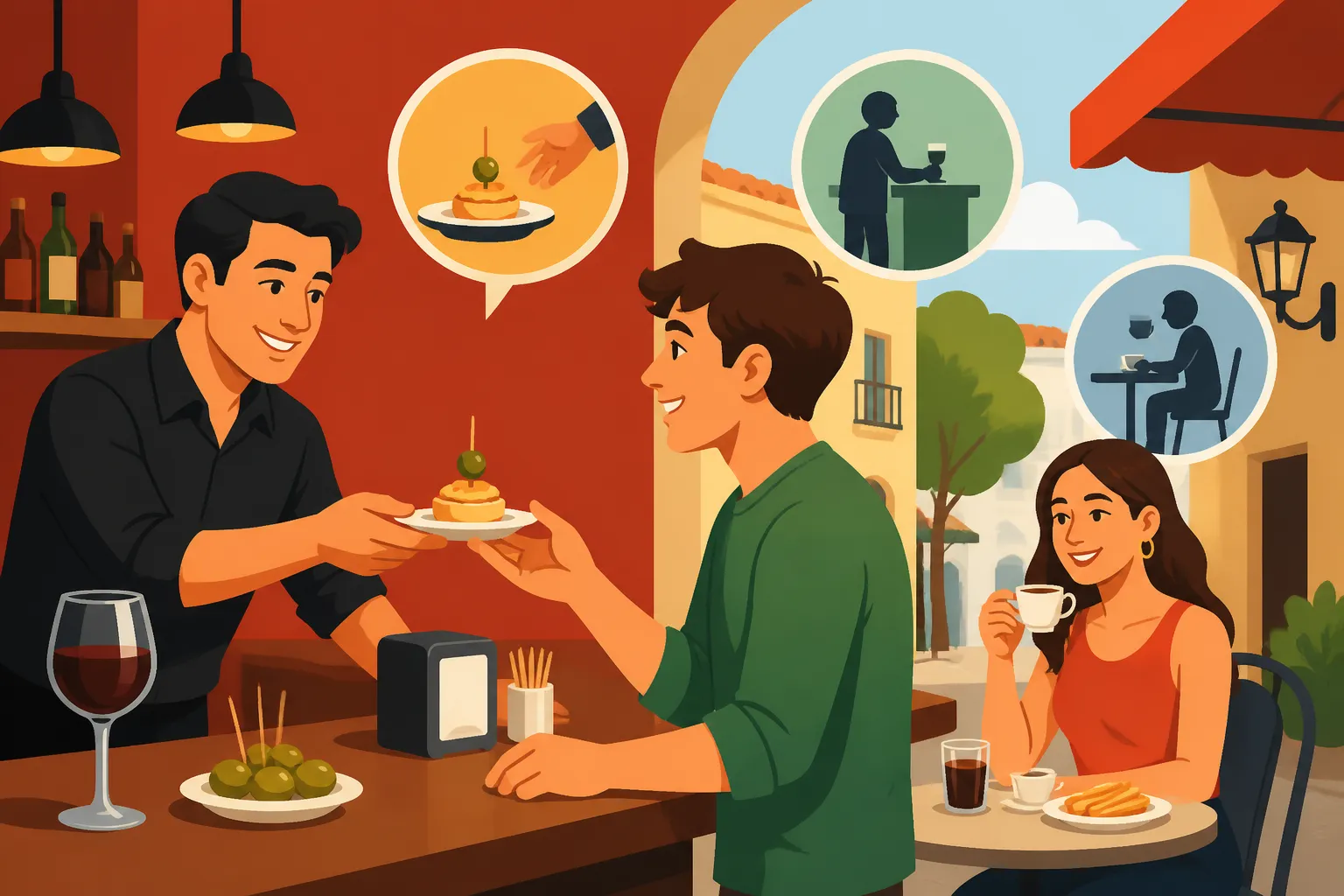
In many traditional bars, when you order a drink, you will be served a small plate of olives, chips, or even a mini-tapa for free. This is a gift from the house. The etiquette here is simple: you don't choose it, and you don't complain about it. It’s a gesture of hospitality. However, be aware that if a waiter places a basket of bread on your table during a meal, it is almost never free. You will likely see a charge of €1.00 to €2.50 on your bill for "pan" or "cubierto." If you don't want it, you can politely ask them to take it away, but most locals just accept it as part of the dining cost.
| Term | Meaning | Etiquette Tip |
|---|---|---|
| La Barra | The bar counter | Usually cheaper than sitting at a table. Best for quick drinks. |
| Terraza | Outdoor seating | Often carries a 10-20% surcharge. Expect slower service. |
| Caña | A small draft beer | The standard way to order beer so it stays cold while you drink. |
| Pincho | A small snack | Usually on a slice of bread; often self-service in the North. |
| La Cuenta | The bill | You must ask for it; they will never bring it automatically. |
Navigating the Financials: Paying and Tipping
Money is where many expats and tourists feel the most friction. Spanish financial etiquette is understated and rarely involves the high-pressure tactics found elsewhere.
To Tip or Not to Tip?
This is perhaps the most debated topic among newcomers. The short answer is: tipping is not mandatory, but small change is appreciated. Unlike the 20% standard in the US, tipping in Spain is usually about rounding up. If your coffee is €1.80, leaving the €0.20 change is common. If you have a nice dinner, leaving €2 to €5 for the table is generous.
For a detailed breakdown, you should consult Tipping in Spain: When, Where, and How Much. Generally, if the service was "just okay," locals leave nothing. If you are at a high-end restaurant or the waiter went out of their way to help you with your limited Spanish, a slightly larger tip is a nice gesture, but nobody will chase you down the street if you leave exactly what the bill says.
Cash vs. Card: Navigating Modern Payments
While Spain has modernized rapidly, the etiquette around payment methods still varies. In large cities like Madrid or Valencia, you can pay for a single coffee with a card or phone. However, in smaller "mom and pop" bars, there may be a minimum spend (often €5 or €10) for card use. It is always polite to ask "¡Se puede pagar con tarjeta?" (Can I pay by card?) before you order if you aren't carrying cash.
It is useful to carry a few small coins for "propina" (tips) and "centimillos" for the exact price of a coffee. It makes the transaction faster and keeps the waiter happy. If you are booking your travel through platforms like Omio, keep your digital receipts handy, but for the bars themselves, don't expect digital-only environments everywhere.
Splitting the Bill (The Spanish Way)
If you go out with a group of Spanish friends, you will notice a distinct lack of calculators at the end of the meal. The etiquette is usually to split the bill equally (pagar a escote) regardless of who had the extra glass of wine. Alternatively, one person might pay for the whole round, with the expectation that someone else will get the next one.
Trying to itemize exactly what you ate down to the cent is often seen as "tacaño" (stingy). If you are on a tight budget, it is better to communicate that beforehand or suggest a place where everyone can order their own Spanish Tapas Culture: How to Order and Where to Go portions.
Social Dynamics and Physical Space
How you occupy a bar in Spain says a lot about your familiarity with the culture. Space is at a premium, especially in historic city centers where bars are often tiny, narrow corridors.
Bar vs. Table vs. Terrace: Where to Sit
There is a hierarchy of pricing and service based on where you sit.
- La Barra (The Bar): This is the cheapest and most social. It’s where you go for a quick drink and a chat.
- Mesas (Tables): Inside tables are usually for those eating more than just a quick snack.
- Terraza (The Terrace): This is the most expensive. You are paying for the view and the fresh air.
If you are looking for a place to work on your laptop, look for a modern "cafetería" or "coworking café." Taking a laptop to a traditional, crowded tapas bar is a major etiquette breach and will likely earn you some dirty looks from the staff who need that table for paying diners.
Noise Levels and Group Dynamics
Spanish bars are loud. This isn't because people are being aggressive; it's because the culture is inherently "exteriorized." People talk over each other, there might be a TV blaring the news or a football match, and the espresso machine is constantly hissing.
The etiquette for newcomers is to match the energy. You don't need to shout, but don't expect a quiet, library-like atmosphere. If you’re looking for a quiet spot to read, you’re better off finding a public library or a quiet park. When you enter a small neighborhood bar, it’s also polite to give a general "¡Buenas!" or "¡Hola!" to the room. It’s a small touch that marks you as a neighbor rather than just a transient tourist.
Children and Pets in Spanish Bars
One of the most refreshing aspects of life in Spain is how inclusive bars are. It is perfectly normal to see children running around a bar at 11:00 PM while their parents have a drink. Bars are family spaces. If you have kids, don't feel like you need to hide them away; just ensure they aren't tripping up the waiters.
Regarding pets, the rules have become more standardized recently. Many bars allow well-behaved dogs, especially on the terraces. However, it is always best to check for a "dog-friendly" sticker or ask "¡Se admiten perros?" before bringing your furry friend inside. This is part of the broader Spanish Social Customs: Greetings, Kisses, and Personal Space that prioritize community and shared enjoyment of public areas.
Regional Nuances and Specialized Venues
Spain is not a monolith, and bar etiquette can change as you cross regional borders. What works in a taberna in Madrid might be slightly different in a sidrería in Asturias or a txoko in the Basque Country.
The Sidrerías of the North
If you find yourself in Asturias or San Sebastián, the etiquette around cider (sidra) is a spectacle in itself. You don't pour your own cider. The waiter will pour it from a height to aerate it—a process called escanciar. You are expected to drink the small amount they pour immediately while it's still "fizzy" and then leave the last dregs in the glass to be tossed out (this cleans the glass for the next pour). It feels wasteful to newcomers, but it is the strictly observed local protocol.
The Pincho Protocol in the Basque Country
In many bars in cities like Bilbao or San Sebastián, the counters are piled high with pinchos (small snacks on bread). In some places, the etiquette is to take a plate, help yourself, and then tell the waiter how many you had at the end (the "honor system"). In others, the waiter must serve you. Always watch what the locals are doing for two minutes before you start grabbing food. If you are unsure, just ask, "¡Cómo funciona esto?" (How does this work?).
The Tabernas and Bodegas of Andalusia
In the south, especially in places like Jerez or Seville, the focus is often on sherry and fried fish. The etiquette here is often more traditional. You might see napkins on the floor in older bars—traditionally, this was a sign of a good bar (the more napkins, the more customers). While modern bars are cleaner, don't be shocked by the rustic nature of some legendary spots. To find these authentic gems, I often check GetYourGuide for specialized sherry tasting tours that explain the nuances of fino vs. manzanilla and the etiquette of the venencia.
Essential Phrases for Bar Success
While you don't need to be fluent, a few key phrases will make your life much easier and show respect for the local culture.
- "¿Me pones…?" – Literally "Will you put for me…?" This is the most common way to start an order. It sounds more natural than "I want."
- "La cuenta, por favor." – The bill, please.
- "¿Qué tienes de tapa?" – What do you have for a tapa? (Use this if you want to know what the free snack is).
- "Otra, por favor." – Another one, please (for when you want a second drink).
- "¿Está libre?" – Is this (chair/table) free?
If you are staying in a hotel booked through Booking.com, the receptionists can often give you a "cheat sheet" of local slang specific to that city. For instance, in Madrid, a small beer is a caña, but in Bilbao, you might ask for a zurito.
Summary Table: Quick Reference for Spanish Bar Etiquette
| Situation | Do | Don't |
|---|---|---|
| Arriving | Give a general "¡Buenas!" to the staff. | Wait at the door to be seated (unless there is a sign). |
| Ordering | Make eye contact and speak up. | Wait for the waiter to come to you at the bar. |
| Drinking | Finish your drink before ordering the next round. | Order a large "pint" of beer if you want to look like a local. |
| Paying | Ask for the bill ("La cuenta"). | Expect them to bring the bill without being asked. |
| Tipping | Leave small change or round up. | Feel obligated to leave 15-20%. |
| Socializing | Share your food with your companions. | Eat an entire plate of tapas by yourself without offering. |
Important Disclaimer Regarding Local Customs
This guide provides a general overview of Spanish bar and café etiquette based on common practices. However, regional laws, specific house rules of individual establishments, and changing social norms can affect these guidelines. Always observe the specific behavior of locals in the bar you are visiting and respect the instructions of the staff. Prices, opening hours, and service charges vary significantly across Spain's different autonomous communities. This information is for educational purposes for tourists and expats and does not constitute legal or professional advice.