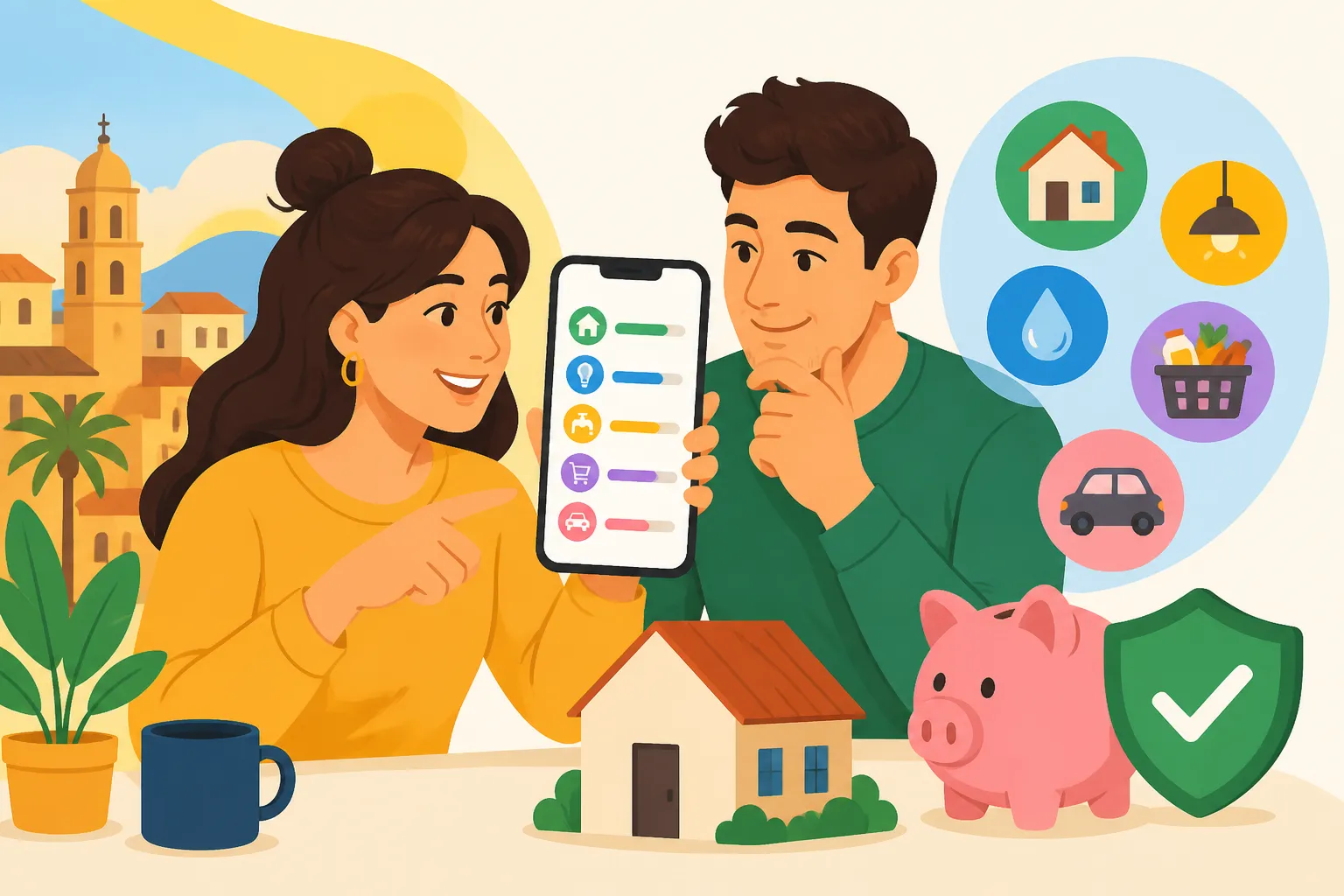
How to Track Shared Household Expenses in Spain (Tools and Tips)
One of the most exhausting hurdles of moving to Spain is navigating the messy intersection of outdated banking traditions and the high-pressure reality of shared living. I still remember the first month I spent in a Barcelona flat-share, chasing roommates for three-euro grocery debts while trying to decipher a hand-written electricity bill. This guide solves that chaos by providing a clear, modernized framework for managing shared household expenses in Spain.
Disclosure: This post may contain affiliate links. We may earn a commission at no extra cost to you if you make a purchase through these links. Read full disclosure.
The Cultural Reality of Sharing a Home in Spain
Sharing an apartment, or a piso compartido, is a rite of passage for almost everyone moving to major Spanish hubs like Madrid, Valencia, or Seville. Unlike some other European countries where communal living is strictly for students, the current Cost of Living in Spain: Monthly Budget Guide for Expats means that professionals and long-term residents often find themselves splitting costs well into their thirties. This creates a complex financial ecosystem where everyone has different spending habits, income levels, and expectations of what constitutes a "fair" share.
The administrative burden in Spain adds a layer of difficulty that many newcomers aren't prepared for. Most utility companies, such as Endesa or Iberdrola, will only allow one person to be the "titular" or the primary contract holder. This person becomes the de facto treasurer for the household. If you are that person, you are legally responsible for the debt, which puts you in a vulnerable position if a roommate decides to skip out on their portion of the bill. It is also essential to ensure everyone in the house is correctly registered for the How to Register Your Address (Empadronamiento) When You Move House to ensure the household is legally compliant, even if the bills are only in one name.
Understanding this dynamic is the first step toward harmony. Spanish bureaucracy moves slowly, and the banking system can be rigid. You aren't just managing money; you are managing the risk associated with being the point of contact for the landlord and the utility providers. This is why having a transparent, digital-first system is no longer just a "nice to have" feature—it is a survival strategy for co-living.
Leveraging Digital Banking Solutions for Roommates
The days of the communal "jar of cash" in the kitchen are largely over, replaced by sophisticated digital tools that handle the heavy lifting for you. When I first arrived, I tried to keep everything in a physical ledger, but it was a nightmare to reconcile at the end of the month. Today, services like N26 have completely changed the game. If you and your roommates all use N26, you can set up "Shared Spaces," which are essentially sub-accounts where everyone can contribute their portion of the rent or utilities. This keeps the household money separate from your personal spending and provides a real-time audit trail of who has paid.
For households with international residents, Wise is often the unsung hero of expense tracking. It frequently happens that a roommate might be receiving their salary or parental support in a non-Euro currency like USD or GBP. Using Wise to convert those funds before sending them to the primary bill-payer ensures that no one is losing money to the abysmal exchange rates offered by traditional Spanish "Big Three" banks. It also helps in maintaining a clear record for those who might need to consult Spanish IBAN, SEPA, and SWIFT: Sending and Receiving Money Explained when transferring large sums for a security deposit or the first few months of rent.
Choosing a digital-first approach also simplifies the process of Opening a Bank Account in Spain: Step‑by‑Step for Foreigners. Traditional banks often require a stack of paperwork and a physical visit to a branch that closes at 2:00 PM. Neobanks and international transfer services allow you to manage the household's "business" from your phone, which is vital when you are trying to coordinate with three other people who have different work schedules.
Managing Specific Household Bills in the Spanish System
In Spain, the most common way to pay recurring bills is through a system called domiciliación bancaria. This is essentially a direct debit where the company pulls money directly from your account every month or every two months. This is why the primary bill-payer needs a reliable system to collect funds before the withdrawal happens. You can find more detail on this in the guide on How to Set Up Automatic Utility Payments in Spain (Domiciliación), but the practical application for roommates is all about timing.
Electricity is the most volatile expense you will share. Spain has a "time-of-use" tariff system where prices fluctuate wildly depending on whether it is "Punta" (peak), "Llano" (flat), or "Valle" (valley/off-peak). If you have a roommate who insists on running the dryer at 2:00 PM on a Tuesday, your bill will skyrocket. It is highly recommended to sit down and read Understanding Spain Electricity Bills: Tariffs, Peak Hours, and Savings together so that everyone understands how their individual habits affect the shared pot. Transparency here prevents resentment from building when the bill arrives and is 40% higher than expected.
Water and gas bills in Spain often arrive bimonthly, which can lead to "bill shock" if you haven't been setting aside money every month. A common mistake is to only split the bills when they arrive. Instead, I suggest calculating an average monthly cost for all utilities and having every roommate contribute that fixed amount to a shared space or a separate account. At the end of the year, you can reconcile the difference. This provides a financial cushion for the household and ensures that the primary bill-payer isn't constantly out of pocket.
Navigating Communal Expenses and Unexpected Costs
Beyond the standard rent and electricity, Spanish apartments often involve a "Comunidad" fee. This covers the maintenance of the building, the elevator, and the cleaning of the common stairwells. In many Renting in Spain: Contracts, Deposits, and Tenant Rights agreements, the landlord pays this fee, but in some cases, it is passed on to the tenants. You must clarify this before signing, as a sudden building repair—known as a derrama—could lead to an unexpected invoice for hundreds of euros that needs to be split.
Then there are the "invisible" shared costs: cleaning supplies, toilet paper, olive oil, and salt. While these seem small, they are the most frequent source of roommate friction. Some households prefer a "buy your own" policy, but this leads to four bottles of dish soap cluttering the sink. A better way is to use a dedicated tracking app where every small purchase is logged. This ensures that the person who always remembers to buy the heavy laundry detergent eventually gets "paid back" by the person who only ever buys the sponges.
If you are living in a building with a porter (portero), there might also be small seasonal costs or holiday tips that are culturally expected. While not legally mandated, these gestures go a long way in making your life easier when you lose your keys or need a package held. Discussing these small cultural nuances as a household ensures that everyone is on the same page regarding "household reputation" management.
Best Apps and Tools for Expense Tracking in Spain
To keep the peace, you need a system that is accessible to everyone at any time. I have found that a combination of a dedicated splitting app and a shared cloud spreadsheet works best for the unique rhythm of Spanish life.
| Tool Category | Recommended Option | Best For | Pros/Cons |
|---|---|---|---|
| Splitting App | Splitwise | Daily expenses & groceries | Pro: Auto-calculates debts. Con: Can get messy with too many entries. |
| Banking | N26 Spaces | Rent and fixed bills | Pro: Legal bank record of transfers. Con: Everyone needs the same bank for max efficiency. |
| Transfers | Bizum | Instant repayments | Pro: Integrated into almost all Spanish banks. Con: Limited to Spanish phone numbers. |
| Record Keeping | Google Sheets | Long-term tracking & history | Pro: Fully customizable. Con: Requires manual entry and upkeep. |
Bizum is perhaps the most important tool you will use in Spain. It is an instant payment system integrated into nearly every Spanish banking app. It allows you to send money using only a phone number. In a shared house, "Bizum me" is the most common phrase you will hear. However, Bizum has limits on the number of transactions you can receive per month, so for a house with many roommates, it shouldn't be the only tool you use. Using a neobank like N26 alongside Bizum gives you the flexibility of instant transfers with the robust reporting of a modern bank.
Legal and Tax Implications of Shared Expenses
Many expats don't realize that constantly moving thousands of euros between roommates can occasionally trigger red flags with the Spanish Tax Agency (Agencia Tributaria or AEAT). If you are the primary bill-payer and three roommates are each sending you 800 euros for rent and bills every month, your bank account shows 2,400 euros of "income" that isn't actually yours. While usually explainable, it is vital to keep your Renting in Spain: Contracts, Deposits, and Tenant Rights and all utility receipts organized.
For those who are American citizens or have complex tax residencies, using a service like Taxes for Expats is highly recommended to ensure that these communal "in-and-out" transfers aren't being mischaracterized as unreported income on your home country's tax returns. The AEAT is increasingly using AI to monitor bank transfers, and while they are mostly looking for "black money" or professional services being paid under the table, having clear labels on your Bizum transfers (e.g., "Rent October Calle Mallorca") is a simple habit that can save you a massive headache later.
Furthermore, if you are an autónomo (freelancer) working from home, the way you split and track these expenses is even more critical. You may be able to deduct a portion of the shared utilities from your taxes, but only if the bills are in your name and you can prove the percentage of the home used for work. Navigating this requires a deep dive into Spanish Income Tax (IRPF) 101: Who Pays and When to ensure you aren't leaving money on the table or incorrectly filing your quarterly returns.
Practical Tips for Harmonious Co-living in Spain
The secret to tracking shared expenses isn't just the software; it's the social contract. It is worth having a "House Meeting" on the first Sunday of every month. It sounds corporate, but it’s the best way to address the Cost of Living in Spain: Monthly Budget Guide for Expats shifts—like when the AC is running 24/7 in July. Use this time to reconcile any "un-trackable" cash expenses and to check that everyone is happy with the current budget.
When someone eventually decides to move out, the process of returning the fianza (security deposit) can be a flashpoint for conflict. You should consult the guide on What is ‘Fianza’ in Spain? Deposit Rules Explained Simply to understand the legal timelines. Usually, the landlord has 30 days to return the deposit, but utility bills are often delayed. A smart household will agree to hold back a small "utility reserve" from the departing roommate's deposit to cover their final, yet-to-be-received water or electricity bill. This prevents the "ghosting" roommate scenario where someone leaves and forgets they owe 50 euros for the final month's gas.
Finally, remember that you are living in a country that values social connection over rigid efficiency. Sometimes, the best way to "rebalance" the household books isn't a transfer, but a round of tapas and drinks for the house. If you’ve followed the advice on How to Avoid Rental Scams in Spain: Red Flags for Newcomers, you should be in a legitimate, safe home. Keeping the financial side organized allows you to enjoy the Spanish lifestyle without the dark cloud of money-related stress hanging over your morning café con leche.
Disclaimer
The information provided in this article is for general informational purposes only and does not constitute legal, financial, or tax advice. While every effort has been made to ensure the accuracy of the information, laws and banking regulations in Spain change frequently. Always consult with a qualified professional, such as a gestor or tax advisor, before making significant financial decisions.





