Understanding Co-Payments at Spanish Pharmacies (Copago)
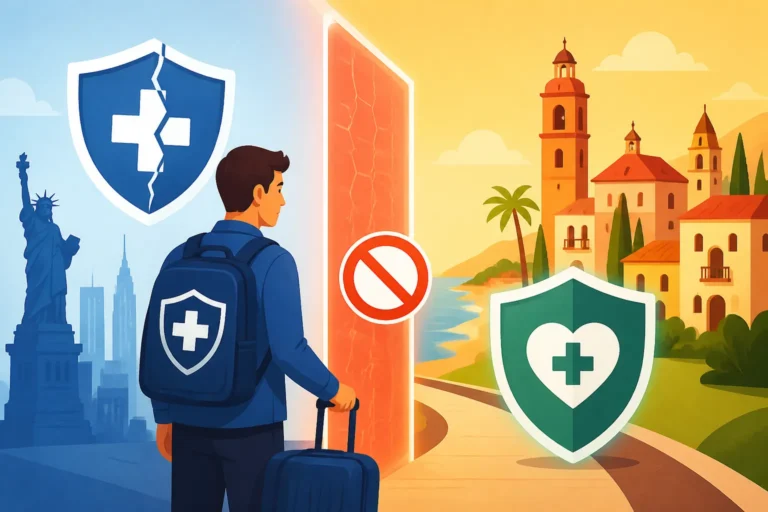
Handing over my shiny new public health card at a Valencia pharmacy, I fully expected my antibiotics to be completely free. Instead, the pharmacist charged me four euros, leaving me incredibly confused about what “universal healthcare” actually meant. Navigating the Spanish pharmacy billing system is notoriously frustrating for newcomers. This guide decodes the prescription co-payment system so you know exactly what to expect.
Disclosure: This post may contain affiliate links. We may earn a commission at no extra cost to you if you make a purchase through these links. Read full disclosure.
The Basics of the Spanish Copago System
In Spain, the state-funded healthcare system provides world-class medical treatment, surgeries, and emergency care completely free of charge at the point of service. However, this absolute financial protection does not entirely extend to the farmacia. When you take a prescription to the chemist, you enter the realm of the copago farmacéutico.
What Exactly Is the Copago
The word copago literally translates to co-payment. It is a state-mandated cost-sharing model for prescription medications. The Spanish government subsidizes a significant portion of the cost of essential drugs, but as a patient, you are legally required to pay a calculated percentage out of your own pocket.
To even access this subsidized pricing, you must be legally registered in the public healthcare system with an active health card (SIP or CIP card, depending on your autonomous community). If you have not yet crossed that initial administrative hurdle, reviewing our walkthrough on What Is a ‘Centro de Salud’ in Spain and How Do You Register? is your mandatory first step.
It is also crucial to understand how your prescriptions are processed. Gone are the days of carrying green paper slips. Today, when a public doctor prescribes you a medication, it is uploaded digitally directly onto the magnetic strip or chip of your public health card. You simply hand the card to the pharmacist, and their computer system reads your file, checks your national tax bracket, and instantly calculates your specific copago. If you ever need to track what medications have been prescribed to you historically, reading Medical Records in Spain: Accessing and Sharing Your History will help you navigate your digital health portal.
Public Healthcare versus Private Prescriptions
The most common trap that new expats fall into involves mixing public and private healthcare systems. The subsidized copago rates exclusively apply to prescriptions written by a doctor within the state-funded public system.
If you visit a private medical clinic and the private doctor hands you a paper prescription or a digital QR code, you will not receive the public subsidy when you go to the pharmacy. Even if you show the pharmacist your public health card, the system will reject the discount because the prescription did not originate from a public doctor. You will be forced to pay 100% of the retail price of the drug. Understanding these systemic boundaries is critical, and you can explore them deeply in our overview of the Spain Healthcare System for Expats: Public vs Private.

How Copayment Tiers are Calculated
The Spanish government does not apply a flat fee for medications. Instead, the copago is a progressive system heavily tied to your age, your employment status, and your declared annual income.
Income Brackets and Percentages
Every person registered in the Spanish public health system is assigned a TSI code (Tarjeta Sanitaria Individual). This code dictates the exact percentage you pay at the pharmacy register.
The social security system automatically links your health card to your Declaración de la Renta (Spanish annual income tax return) from the previous fiscal year. Based on your declared income, the system categorizes you into a specific payment bracket.
Here is the frustrating reality for new expats: if you have just moved to Spain and have not yet filed your first Spanish tax return, the system has no financial data on you. By default, the computer will usually place you in the standard working-age bracket, meaning you will pay 40% or 50% of the medication cost until your first tax return is processed. For a broader look at how these medical costs impact your daily budget, see our detailed breakdown on Health Costs in Spain: Typical Co-Pays and Out-of-Pocket Fees.
| TSI Code | Demographic and Income Bracket | Copayment Percentage | Monthly Cap |
| TSI 001 | Unemployed without benefits, severe disability | 0% (Free) | None |
| TSI 002 | Pensioners (Income under €100,000) | 10% | €8.23 to €18.52 (Income dependent) |
| TSI 003 | Working Age (Income under €18,000) | 40% | No Cap |
| TSI 004 | Working Age (Income €18,000 – €100,000) | 50% | No Cap |
| TSI 005 | High Earners (Income over €100,000) | 60% | €61.75 (Applies to pensioners only) |
Pensioners and Chronic Illness Exemptions
The system is highly protective of vulnerable demographics, particularly retirees and those suffering from long-term illnesses. If you are officially recognized as a pensioner in the Spanish system, you usually pay only 10% of the medication cost, and this is strictly capped at a few euros per month. Once you hit your monthly cap, your medications are entirely free for the rest of the month.
Furthermore, Spain offers significant financial relief for specific, state-recognized chronic illnesses (such as diabetes, HIV, or severe asthma). Medications specifically prescribed for these chronic conditions fall under a special Aportación Reducida (reduced contribution) scheme. Regardless of your income bracket, you will only pay 10% for these specific life-saving drugs, and the cost is hard-capped at €4.24 per prescription. If you are moving to Spain with a pre-existing condition and need to organize this complex administrative paperwork, our guide on Chronic Conditions in Spain: Managing Ongoing Care as an Expat is an invaluable resource.
Navigating the Pharmacy with Private Insurance
Many expats—particularly those residing on non-lucrative visas, digital nomad visas, or golden visas—are legally required to hold comprehensive private health insurance and do not have access to the public copago subsidies.
The Out of Pocket Reality
If you rely entirely on private healthcare, you must accept that your insurance premium covers your doctor’s visits, your diagnostic tests, and your hospital stays, but it almost never covers outpatient pharmacy prescriptions.
When your private doctor prescribes you an antibiotic or an inhaler, you take that prescription to the pharmacy and pay 100% of the Retail Sale Price (PVP). The good news is that the Spanish government heavily regulates pharmaceutical pricing. Unlike in the United States, where a simple inhaler might cost hundreds of dollars out-of-pocket, paying 100% of the retail price in Spain is often astonishingly cheap. A full course of private antibiotics might only cost you between five and ten euros.
Bridging the Gap with Expat Brokers
Because you are paying full retail price at the pharmacy, ensuring that your actual private health insurance policy is competitively priced and comprehensive is absolutely vital. This is exactly where utilizing an expert, expat-focused broker like Innoinsure becomes a massive financial lifesaver.
A dedicated, bilingual agent from Innoinsure can seamlessly filter the complex Spanish insurance market and match you with a premium health plan that suits your specific visa requirements and budget. While outpatient pharmacy reimbursement is rare, a broker from Innoinsure knows exactly which premium policies offer optional add-ons that can help offset out-of-pocket medical expenses.
By securing your policy through Innoinsure, you also gain immediate, unrestricted access to top-tier, English-speaking private doctors. If you ever need a quick prescription renewal without paying for an in-person consultation, many modern policies brokered by Innoinsure feature robust telemedicine apps, allowing you to get a digital prescription sent directly to your phone. To fully understand the exact financial structure of these premium networks before you sign a contract, read our thorough breakdown on How to Compare Private Health Plans: Deductibles, Co-Pays, Networks. Trusting Innoinsure with your coverage ensures you are never caught off guard by hidden medical costs.
Managing Wellness and Non Prescription Costs
The most frequent source of financial shock at the Spanish pharmacy has nothing to do with prescribed medications, but rather with basic, everyday wellness items and over-the-counter necessities.
Why Over the Counter Costs Add Up
The subsidized copago system applies strictly to medications that a public doctor has explicitly deemed medically necessary and formally prescribed. If you walk into a pharmacy to buy over-the-counter (OTC) items—such as basic ibuprofen for a headache, a mild cough syrup, or standard allergy pills—you are paying the full, unsubsidized retail price.
Because Spanish pharmacies hold a strict legal monopoly on the sale of all medical products, you cannot buy pain relievers at a local supermarket or grocery store. This lack of retail competition means that basic OTC medications are often more expensive than expats anticipate. However, local pharmacists are brilliant frontline resources who can legally dispense excellent triage advice to ensure you are buying the right product. To understand exactly what they can and cannot legally dispense over the counter, check out Can a Pharmacist in Spain Help With Minor Illness? What to Expect.
Finding Affordable Holistic Alternatives
While local Spanish pharmacies are absolutely brilliant for dispensing acute pharmaceutical medications, they frequently fall incredibly short when it comes to holistic, preventative wellness.
If you try to buy clean-ingredient immune boosters, high-grade Vitamin C, specialized probiotics, or sports nutrition items in a local physical pharmacy, you will be deeply frustrated. The selections are severely limited, and when they do happen to stock recognized international holistic brands, the retail markups are absolutely staggering, turning basic preventative wellness into a massive luxury expense.
To completely bypass this frustrating retail gap, the savvy international community in Spain relies heavily on iHerb. By ordering your daily vitamins, potent antioxidants, and premium joint-support supplements directly through iHerb, you gain access to the exact, trusted wellness brands you successfully used back home without paying the inflated local pharmacy markup.
Having a dedicated holistic wellness stash delivered directly to your Spanish door via iHerb ensures you are actively fortifying your body against illness before you ever need a prescription. You completely bypass the limitations of the local market by utilizing iHerb for your preventative care. Navigating a foreign healthcare system is chaotic and exhausting; relying on iHerb to effortlessly restock your recovery and prevention arsenal puts the control firmly back in your hands, saving you significant money on unsubsidized wellness products.
References
Primary sources (official)
- Ministerio de Sanidad – Aportación del usuario en la prestación farmacéutica (Copago): https://www.sanidad.gob.es/profesionales/farmacia/copago/home.htm
- Seguridad Social – Prestaciones y Asistencia Sanitaria: https://www.seg-social.es/wps/portal/wss/internet/Trabajadores/PrestacionesPensionesTrabajadores/10938/11566/11567
Other helpful sources
- Citizens Advice Bureau Spain – Healthcare Copayment Information: https://www.citizensadvice.org.es/faq/healthcare/
Disclaimer
The information provided in this article is for educational and informational purposes only and does not constitute formal medical, financial, or legal advice. Spanish healthcare laws regarding the copago farmacéutico, income brackets, and subsidized drug lists are subject to frequent legislative updates and varying interpretations by the autonomous communities. Always consult directly with a licensed Spanish medical professional, a local pharmacist, or your private insurance broker regarding your specific prescription needs, public healthcare eligibility, and private coverage limits.