What Is the Auxiliares de Conversación Program in Spain?
Picture this: you land in a small Spanish town, you are assigned to a primary school, and your first stipend payment has not arrived. You also don’t know whether your visa lets you tutor on the side. Thousands of native English speakers sign up for the Auxiliares de Conversación program every year and run into exactly these surprises. This guide explains how the program really works, from the application to your first paycheck.
Disclosure: This post may contain affiliate links. We may earn a commission at no extra cost to you if you make a purchase through these links. Read full disclosure.
What the Auxiliares de Conversación Program Actually Is
The Programa de Auxiliares de Conversación is a government scheme run by Spain’s Ministry of Education. It places native speakers of English, and of several other languages, in Spanish public schools as language and culture assistants. You do not lead the class. You support a qualified teacher, usually in English classes or in bilingual subjects such as science, art or social studies taught partly in English.
When I first heard about the program, I pictured something like a gap-year volunteering gig. It is more structured than that, and also less glamorous. You are part of a school staff, you follow a timetable, and you represent your country’s language and culture. You also learn quickly how a Spanish staffroom runs on coffee, gossip and very flexible ideas of punctuality.
Who Runs It and What You Do in the Classroom
The Ministry manages the national program and works with Spain’s autonomous communities. Each regional education department, the consejería, handles placements, school assignments and stipend payments. In practice, your experience in Madrid can look very different from a colleague’s in rural Galicia or coastal Murcia. Both of you are in the same program.
A typical week might look like this:
- In a Year 3 class, you read a story aloud while the children act it out.
- In a secondary school, you run a speaking group so teenagers can practice for an oral exam.
- In a bilingual lesson, you prepare a short presentation on Thanksgiving, Bonfire Night or Australian wildlife.
Some teachers give you clear tasks. Others hand you the whiteboard marker and expect you to improvise. Both happen, often in the same school.
A common frustration is being treated as a substitute teacher. In theory, you should never be left alone in charge of a class. In reality, a teacher may step out “for five minutes” that become twenty. It helps to know your role from the start and to raise concerns politely with your coordinator, the staff member assigned to look after you. Our guide to Spanish Workplace Communication: Meetings, Feedback, and Tone is useful here, because Spanish colleagues tend to handle disagreements more indirectly than many English speakers expect.
Is It a Job or a Scholarship?
This distinction confuses almost everyone, and it matters. Auxiliares receive a monthly stipend, an “ayuda” or “beca”, not a standard salary under an employment contract. You do not usually enter the country on a work visa. Most non-EU participants come in on a student-type stay authorization, because the program is legally framed as a cultural and educational exchange.
That legal framing explains several things people find odd. Your monthly payment does not look like a normal payslip. The program typically arranges health insurance for you instead of enrolling you in the regular employee social security system. And your visa status affects what other work you can legally do. If you want the broader picture of English-teaching routes, including private academies and other placement programs, see Teaching English in Spain: Requirements, Programs, and Visas.
How Much Auxiliares Earn and Where the Money Goes Further
Money is where expectations and reality clash most often, so here are the verified figures.
The Base Stipend and Regional Differences
According to Ministry of Education documents for the 2025-26 and 2026-27 school years, the base stipend is EUR 800 a month for 14 hours a week in the classroom. Some regions pay more, usually in exchange for more weekly hours.
The Ministry’s 2024-25 regional table gives a useful picture of how this works:
| Region | Monthly Stipend | Weekly Hours | Notes |
|---|---|---|---|
| Madrid | EUR 1,000 | 16 hours | Highest figure in the table, but also the highest rents |
| Galicia | EUR 935 | 16 hours | Above base, with a lower cost of living than Madrid |
| Murcia | EUR 800 | Base arrangement | Up to EUR 914.29 with extra hours |
| Andalusia | EUR 800 | Base arrangement | Paid at the base rate |
| Base program rate | EUR 800 | 14 hours | Figure in Ministry documents for 2025-26 and 2026-27 |
Two points stand out. First, a higher stipend does not automatically mean more money left over at the end of the month. Madrid pays EUR 1,000 for 16 hours, but a room in a central Madrid flat can swallow a large share of it. Second, regional figures are set by each consejería and can change between school years. Always check the current regional conditions in the official program documents before you rank your preferred regions.
Budgeting on an Auxiliar Stipend
Here is a realistic example. Sarah is placed in a mid-sized town in Galicia and receives EUR 935 a month. She shares a flat with two Spanish teachers, eats the menú del día twice a week, and takes the regional bus to school. She covers her costs and can save a little for weekend trips to Santiago or Porto. Her friend Tom, in Madrid on EUR 1,000, lives in a shared flat further out, commutes on Cercanías trains, and admits he relies on private tutoring to travel at all.
Both are doing the same program. The difference comes down to geography.
Two budgeting tips that every veteran auxiliar will repeat:
- Arrive with savings. Many participants report that the first stipend payment arrives late, sometimes well into the school year, while the region processes paperwork. You will need to cover a rental deposit, your first month’s rent, and the cost of getting your residence card before any program money appears.
- Budget for the region, not the headline figure. For more on monthly costs by city, see Cost of Living in Spain: Monthly Budget Guide for Expats. For a wider comparison of teaching pay across job types, read What’s a Realistic Salary for an English Teacher in Spain?.
How to Apply Through Profex Step by Step
Applications go through Profex, the Ministry’s online platform for programs abroad. The interface looks dated and the instructions can feel cryptic, but the process is manageable if you follow it in order.
The Application and Your Application Number
Here is the typical sequence:
- Create a Profex account with your personal details, and check that your name matches your passport exactly.
- Fill in the auxiliar application, including your education, language level, any teaching experience and a personal statement.
- Upload your supporting documents. These usually include a copy of your passport, proof of your degree or current enrollment, and a letter of recommendation.
- Choose your regional and school-type preferences, ranking regions and stating whether you prefer cities, towns or villages.
- Submit the application, print it, sign it and send it as your country’s instructions require. Procedures vary by nationality and are sometimes handled through the education office at the Spanish embassy.
- Wait for verification. Once your documents are checked, your status changes to “inscrita”, meaning registered.
The step people misunderstand most is the number you get at registration. When your application reaches “inscrita” status, it is assigned an application number, often called your inscription number (número de inscripción). For many nationalities, placements are processed largely in order of registration. A lower number generally means you are considered earlier and have a better chance of getting a preferred region.
That is why experienced applicants submit as soon as the application window opens instead of polishing their personal statement for weeks. Write it well, but write it early.
Placement, the Carta de Nombramiento and the Visa
After registration, the waiting begins. Placements are released gradually. You may first see a region assigned in Profex, and only later receive the details of your school. The official appointment letter is the carta de nombramiento. It is the key document for your visa application, because it proves to the consulate that you have been accepted into a Ministry program.
Once you have the letter, the visa process looks broadly like this:
- Book a consulate appointment for your jurisdiction. Availability can be tight, so book as soon as you can.
- Gather the documents your consulate asks for. These typically include the carta de nombramiento, a medical certificate and a criminal background check.
- Get apostilles and sworn translations wherever your consulate requires them.
- Attend the appointment and submit everything, keeping copies of every page.
- Collect your passport with the visa and plan your arrival around your school’s start date.
Our guides Spain Student Visa: Application Steps and Common Mistakes, How to Get a Criminal Background Check for a Spain Visa and How to Apostille US Documents for a Spanish Visa cover each stage in detail. My honest advice: start the background check the moment you finish your Profex application. It is often the slowest step, and consulates are strict about how recent and how properly legalized it is.
Life as an Auxiliar: Practical Realities
You have the visa, you have landed, and your coordinator has sent a cheerful WhatsApp message saying “¡Bienvenida!” Now the real adventure starts.
Housing, Paperwork and the First Months
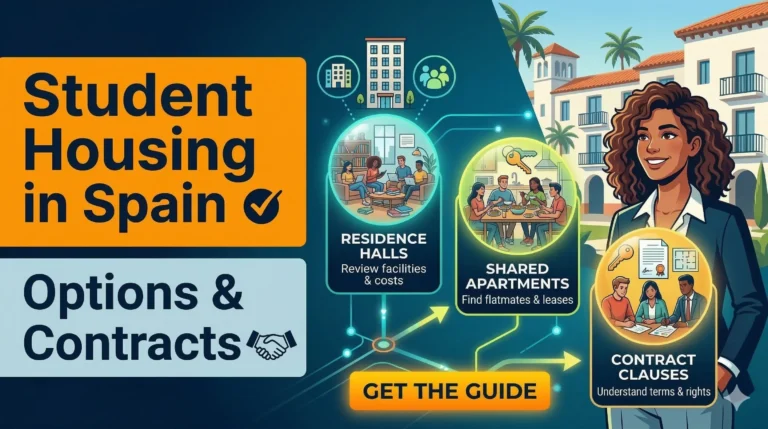
Most auxiliares find accommodation after arriving, often in shared flats. Look at listings, visit in person, and never send a deposit for a room you have not seen. For contracts and red flags, see Room Rentals (Piso Compartido) in Spain: Contracts and Safety Tips.
Once you have an address, the paperwork marathon begins. You will usually need to:
- Register on the padrón at your local town hall.
- Book a fingerprint appointment for your foreigner identity card, the TIE.
- Open a Spanish bank account so the region can pay your stipend.
- Give your coordinator and the regional office your bank details and any other documents they ask for.
Appointment slots at the immigration office, extranjería, can be hard to get in busy cities, which is another reason your first payment may arrive late. Our guide How to Get the TIE Card in Spain: Fingerprints, Fees, and Pickup walks through the appointment itself.
Here is a quick reference for what the program typically handles and what falls on you:
| Area | Usually Handled by the Program | Usually Your Responsibility |
|---|---|---|
| School placement | Region and school assignment | Accepting the placement on time in Profex |
| Official documentation | Carta de nombramiento | Visa appointment, apostilles, translations |
| Health cover | Insurance arranged for participants | Understanding what the policy covers and how to use it |
| Payment | Monthly stipend paid by the region | Providing bank details, budgeting for late payment |
| Housing | Not provided | Finding, viewing and renting accommodation |
| Residency | Not processed for you | Padrón registration, TIE appointment, renewals |
Language, Side Income and Taxes
Your Spanish level will shape your year more than anything else. You speak English in class, but outside it you deal with landlords, bank clerks, doctors and the bus driver in the village who only gives directions in rapid Andaluz. If you want a head start, booking a few months of one-on-one lessons with a tutor on iTalki before you arrive is one of the most practical things you can do. Ask the tutor to role-play real scenarios, such as viewing a flat or explaining a problem at the bank.
Side income is the next big question. Many auxiliares give private English lessons to make the stipend stretch further. Whether you can legally do so depends on your visa type and current immigration rules, so check your authorization and get qualified advice before taking regular paid work. Do not assume that because “everyone does it”, it is permitted for you.
Taxes are the topic everyone avoids until it is urgent. US citizens have filing obligations at home no matter where they live, and they often find this out late. Our guide Teaching English in Spain as an Auxiliar: US Filing Obligations explains the basics. Americans who would rather not work through the forms alone often use an expat-focused filing service such as Taxes for Expats. Participants from other countries should check their home country’s rules on residency and reporting, because each tax system treats a year abroad differently.
Renewing or Moving On
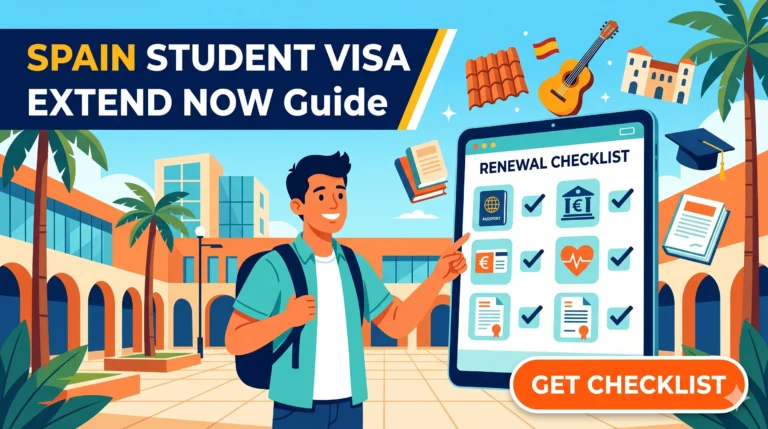
Many auxiliares renew for a second year, either at the same school or in a new region, and the renewal process starts in Profex again. Your residence documents also need to be renewed. Our How to Extend a Spanish Student Visa: Renewal Checklist covers the general logic of renewing a study-based stay.
Other participants use the program as a springboard. Some move into private academies or international schools. Some apply to master’s programs. Others decide they want to stay in Spain in a different capacity entirely. If you are drawn to towns where native speakers are scarce and in demand, read How to Find English-Teaching Jobs in Spain Outside the Big Cities.
A few former auxiliares eventually move into freelance teaching or online work once they hold a status that allows self-employment. At that stage, platforms such as Xolo, which help solo professionals manage invoicing and admin, come up in conversations, alongside the more traditional route of registering as autónomo with a local gestor.
The auxiliar year is rarely what you imagine. It can be messy and slow on the bureaucratic side, and sometimes lonely in those first weeks before your stipend arrives and your Spanish clicks into place. It is also, for many of us, the year Spain stops being a holiday destination and becomes home. Go in with savings, realistic expectations and a folder full of photocopies, and you will be fine.
Disclaimer
This article is for general informational purposes only and does not constitute professional advice. Laws, prices and regulations vary by location and change over time. Consult a qualified professional for guidance on your specific situation.