How to Apostille US Documents for a Spanish Visa
The first time I heard the word "Apostille," I thought it was a fancy French dessert. I quickly learned it was actually the single biggest bureaucratic hurdle standing between me and my dream of living in Valencia. Most Americans never have to deal with international document legalization until they decide to move abroad, and the confusion can lead to months of delays and rejected visa applications. This guide will walk you through the exact, painstaking process of getting your US documents apostilled so you can successfully navigate the Spanish consulate system without losing your mind.
Disclosure: This post may contain affiliate links. We may earn a commission at no extra cost to you if you make a purchase through these links. Read full disclosure.
Why Spain Demands an Apostille for US Documents
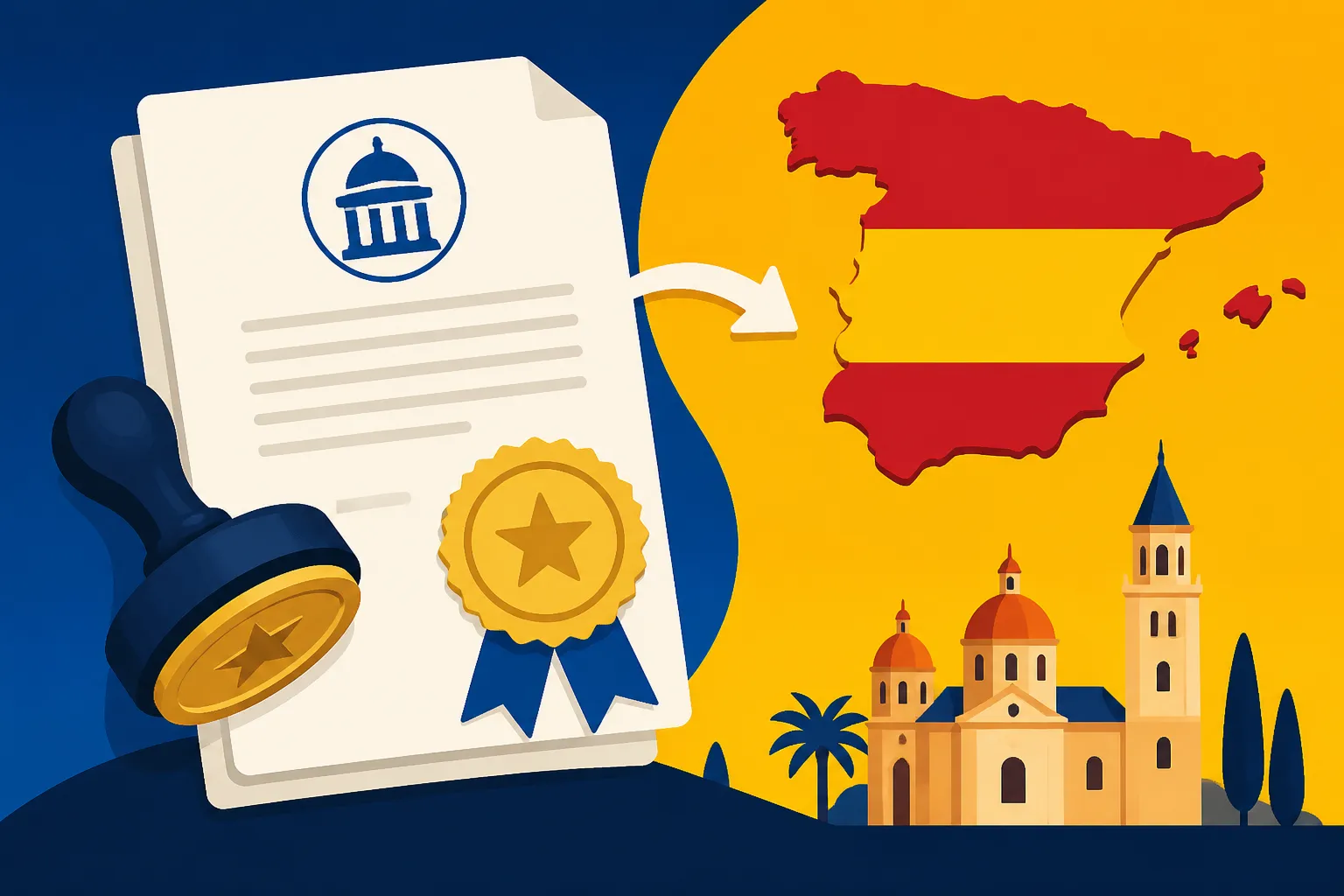
If you are applying for any long-stay residency, such as the Spain Non-Lucrative Visa: Financial Proof, Insurance, and FAQs, the Spanish government needs to know that your American documents are authentic. They don't have a way to verify the signature of a random notary in Ohio or a clerk in Florida, so they rely on the Hague Convention of 1961. An apostille is essentially an international "seal of approval" attached to your document by a higher authority—either your state’s Secretary of State or the US Department of State in Washington, D.C.
I remember standing in the consulate in San Francisco, watching a fellow expat get turned away because their birth certificate was an "original" but lacked that specific piece of paper stapled to the back. In the eyes of Spanish bureaucracy, an un-apostilled document is just a piece of paper. You cannot skip this step, and you cannot do it once you are already in Spain. All your US-issued paperwork must be legalized while you are still on American soil. This is a foundational part of your Moving to Spain in 2027: Step-by-Step Immigration Checklist.
Identifying Which Documents Need the Seal
Not every piece of paper in your folder needs an apostille, but the ones that do are non-negotiable. Generally, any document issued by a government entity or notarized by a public official must be apostilled. For most Spanish visas, the "Big Three" are your criminal background check, your birth certificate, and (if applicable) your marriage certificate.
If you are moving for work or as a student, your diplomas and transcripts will also need this treatment. Some applicants try to use their original university diploma, only to find out that the consulate requires a "Certified Copy" that has been notarized by the school registrar before it can even be sent for an apostille. It’s a multi-layered cake of signatures.
| Document Type | Authority Level | Typical Processing Time |
|---|---|---|
| FBI Background Check | Federal (Dept. of State) | 4–12 Weeks |
| Birth/Marriage Certificate | State (Sec. of State) | 1–3 Weeks |
| University Diploma | State (via Notary) | 2–4 Weeks |
| Medical Certificate | State (via Notary) | 1–2 Weeks |
When you are checking off items on your Spain Visa Checklist: What to Do Before You Fly, keep in mind that the apostille must be the very last thing added to the document before it goes to a translator. You cannot apostille a translation; you must apostille the original, and then have the entire "package"—including the apostille page itself—translated into Spanish.
The FBI Background Check: A Federal Maze
This is the document that causes the most tears. Because it is a federal document, it cannot be apostilled by your local Secretary of State. It must go to the US Department of State’s Office of Authentications in Washington, D.C. If you are following the guide on How to Get a Criminal Background Check for a Spain Visa, you know that timing is everything.
First, you must obtain your FBI Identity History Summary. I highly recommend using an FBI-approved channeler to get your fingerprints done digitally; it saves weeks. Once you have that PDF or paper report, you must mail it to D.C. with Form DS-4194. Here is the "I've-been-there" reality: the federal government is slow. During peak seasons, it can take up to three months.
To avoid this, send your FBI check for apostille the moment you receive it. Use a trackable mailing service like USPS Priority Mail, and always include a pre-paid, self-addressed return envelope. If you are coordinating a large move and using a service like Sirelo to handle your household goods, you’ll want these document timelines locked in well before the moving truck arrives.
State-Level Documents: Birth and Marriage Certificates
State-issued documents are slightly easier, but they have their own quirks. If you were born in New York but live in California, you must send your birth certificate to the New York Secretary of State. You cannot apostille a California-born child’s records in Texas.
One common mistake is trying to apostille a "short-form" birth certificate. Spain usually requires the "long-form" or "vault copy" which includes your parents' names and birthplaces. Before you send it off, ensure the document has a pen-in-hand signature from the State Registrar or a certified clerk. Some states require a very recent copy—usually issued within the last six or twelve months—before they will attach an apostille.
For those pursuing Spain Residency Permits Explained: Types, Eligibility, and Timelines, having these state documents organized by region is vital. I recommend creating a spreadsheet of every state you’ve lived in over the last five years, as you may need background checks from each one if you haven't lived in the US continuously, or if the consulate asks for state-level criminal records in addition to the FBI report.
The Role of the Notary in the Apostille Process
For documents that aren't automatically "official" government records—like a medical certificate or a university transcript—a notary public acts as the bridge. For example, if you have a letter from your doctor stating you are free of diseases, that letter must be notarized first.
The notary must use specific language required by their state. Once notarized, the document then goes to the Secretary of State to apostille the notary’s signature. This confirms that "Yes, John Doe is a real notary in this state, and his seal is valid." Only then will the Spanish consulate accept the doctor's letter. It feels like a circle of trust, and if one link is missing, the whole chain breaks.
Crucial Timing: The 90-Day Rule
Spain is notorious for its "expiration dates" on paperwork. Most consulates require that your criminal background check and medical certificate be no older than 90 days at the time of your appointment. However, the clock starts ticking the day the document is issued, not the day it is apostilled.
This creates a stressful window. If it takes 12 weeks to get a federal apostille, your 90-day window is almost closed by the time the mail carrier drops it off. Applicants may have to restart the entire process if their apostille arrives after the deadline, such as on day 88. To mitigate this, stay informed about Spain Visa Translations & Apostilles: What Needs Legalization? and plan your appointments for the very end of your document gathering phase.
Translating the Apostille: The Final Step
Once you have your document and its beautiful, gold-sealed apostille, you are still not finished. Spain requires all foreign documents to be translated into Spanish by a "Traductor Jurado"—a sworn translator certified by the Spanish Ministry of Foreign Affairs.
You cannot do this yourself, even if you are fluent. You also cannot use a regular translation agency in the US unless they have a sworn translator on staff who is recognized by Spain. This is where a service like Translayte becomes incredibly helpful. They specialize in these types of official translations, ensuring that the specific legal terminology matches what the Spanish bureaucrats expect to see. Remember, the translator must translate the actual apostille page as well. If they only translate the birth certificate and leave the apostille in English, the consulate might reject it. You can find more details on this in my guide on How to Translate Documents for Spain: Sworn Translators (Traductor Jurado) Guide.
Managing the Financial and Logistics Load
Getting five or six documents apostilled and translated can easily cost upwards of $500 to $1,000 when you factor in state fees, federal fees, shipping, and sworn translation costs. It is an investment in your future. While you are deep in the paperwork trenches, don't forget that you also need to secure Spain Visa Medical Insurance: Minimum Coverage and Exclusions to Avoid.
I usually recommend looking at Innoinsure for this stage, as they offer policies that are specifically designed to meet the strict "no-copay, no-waiting-period" requirements of the Spanish consulates. It’s one of the few things you can actually check off your list quickly while you wait for the US Department of State to mail back your background check.
When you finally get that folder full of apostilled and translated documents, keep them organized. Use clear sleeves and do not—under any circumstances—remove the staples or grommets that attach the apostille to your original document. In many states, if that staple is tampered with, the apostille is considered void. I’ve seen people "clean up" their documents for a presentation folder only to find they had just invalidated months of work.
Common Pitfalls to Avoid
If I could go back and talk to my pre-expat self, I would scream: "Check the signatures!" Many documents are rejected because the official who signed them isn't on the Secretary of State's current list of authorized signers. This happens often with old birth certificates or diplomas signed by retired registrars.
- Photocopies: You cannot apostille a photocopy. It must be an original or a certified copy from the issuing agency.
- Wrong Office: Sending a state document to the federal office in D.C. will result in a rejection and weeks of lost time.
- Missing Pages: Ensure the apostille mentions the correct number of pages it is covering.
- The Translation Order: Always get the apostille before the translation. If you do it the other way around, you will have to pay for a new How to Get a Sworn (Jurado) Translation for Immigration in Spain because the translation must include the apostille’s serial number and date.
Navigating the US apostille process is a test of patience, but it is the gatekeeper to your new life. Whether you are applying for the Spain Digital Nomad Visa: Requirements, Documents, and Timeline or retiring on a non-lucrative permit, getting these seals right the first time is the best way to ensure a smooth transition to the Mediterranean lifestyle.
Disclaimer Regarding Immigration Advice
This guide is intended for informational purposes only and is based on personal experience and general administrative procedures in Spain and the United States. Immigration laws, consulate requirements, and document legalization processes are subject to frequent changes without notice. While every effort has been made to ensure accuracy, this information does not constitute legal advice. It is highly recommended that you consult with a qualified immigration lawyer or the specific Spanish consulate or embassy overseeing your jurisdiction before submitting any official applications or incurring significant costs. Requirements can vary significantly depending on your specific situation and the region of Spain you intend to reside in.