Spanish Apartment Heating: What Systems You’ll Commonly Find
Moving to Spain, you expect endless summer, but freezing inside a poorly insulated Spanish apartment is a brutal shock. I spent my first December in Madrid shivering in a winter coat on my own sofa because I fundamentally misunderstood how local heating worked. This guide breaks down the most common apartment heating systems you will encounter so you can stay comfortably warm.
Disclosure: This post may contain affiliate links. We may earn a commission at no extra cost to you if you make a purchase through these links. Read full disclosure.
Understanding Spanish Apartment Heating
The Reality of Local Insulation
Most expats arrive in Spain envisioning a paradise of endless sunshine and warm Mediterranean breezes. While the summers certainly deliver on that promise, the architectural reality is that Spanish homes are primarily designed to dissipate heat, not retain it. The walls are often constructed from hollow bricks and concrete, which are fantastic for staying cool in July but act like iceboxes in January.
Compounding the issue is the widespread lack of modern double-glazed windows in older apartment buildings, particularly in historic city centers like Madrid or Granada. Heat simply vanishes through single-pane glass and poorly sealed window frames. Consequently, the indoor temperature can quickly plummet to match the outdoor chill the moment the sun goes down, making a well-functioning heating system absolutely vital.
This lack of insulation creates a psychological shock for many foreigners who find themselves wearing thick sweaters while sitting in their own living rooms. Understanding how to combat this structural cold is essential for your physical comfort, which is why familiarizing yourself with the environmental nuances outlined in Winter in Spain: What to Expect is a crucial first step for any new resident.
Central Heating Calefaccion Central
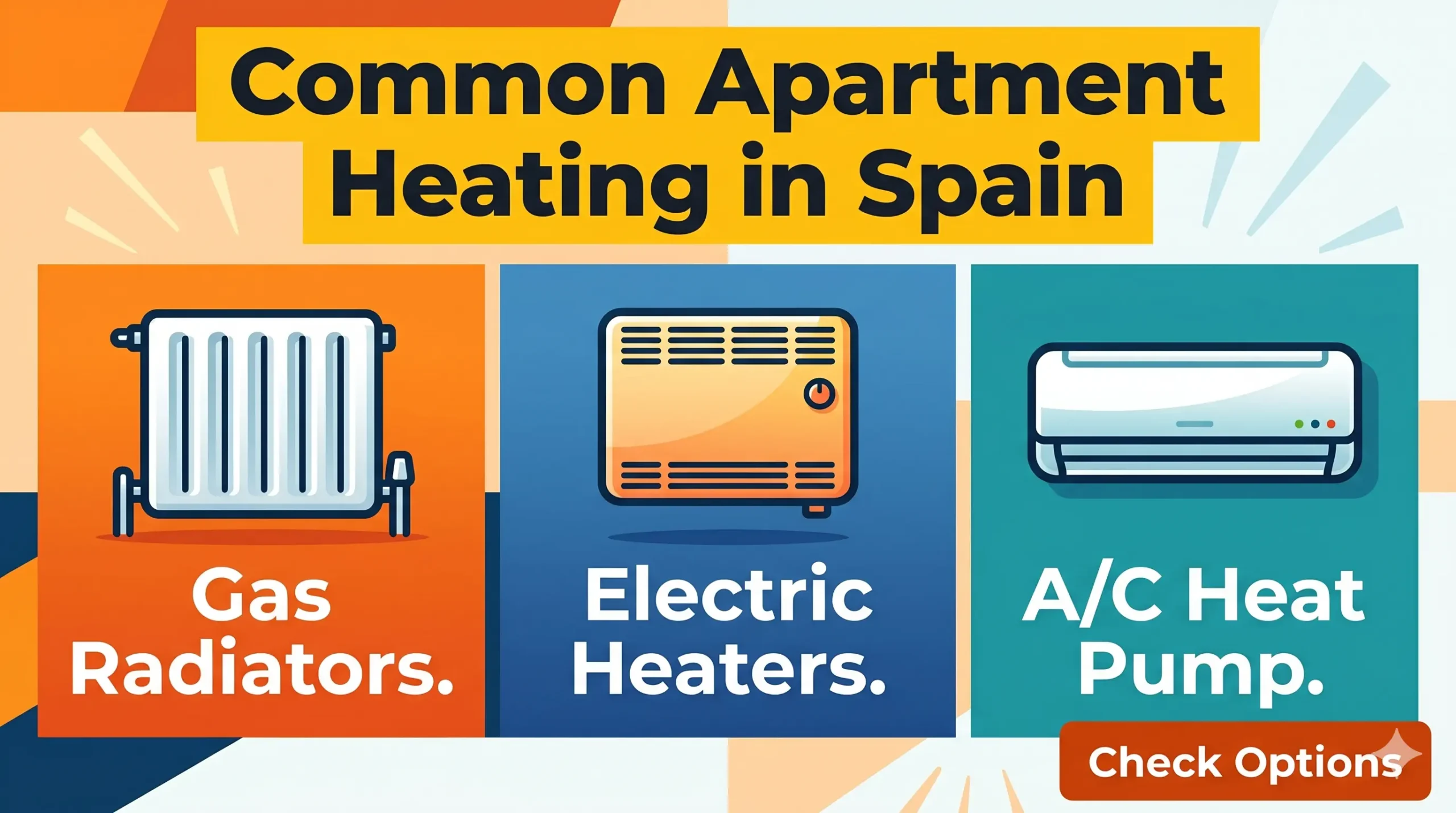
If you are moving into an older, multi-family apartment building, you will frequently encounter central heating (calefacción central). In this setup, the entire building is heated by a single, massive boiler located in the basement. Hot water is pumped up through the building’s pipes and into the cast-iron radiators mounted on the walls of your specific apartment.
Financially, the cost of running this massive boiler is typically divided among all the residents and included in your monthly community fees (gastos de comunidad). Because you are not paying an individual gas bill, it can feel like you are getting “free” heat. You can learn more about how these building-wide costs are structured in A Guide to Spanish Community Fees.
However, the major pain point of central heating is the complete lack of individual control. The building’s president or the community administration decides exactly which date the heat turns on for the winter and which date it turns off in the spring. They also set the daily hours of operation. I vividly remember sweating with the windows open in February because the radiators were blazing hot, only to freeze in early November because the community had not yet voted to turn the boiler on.
To combat this inefficiency and reduce national energy waste, the Spanish government and the Institute for the Diversification and Saving of Energy (IDAE) have increasingly mandated the installation of individual meters (contadores individuales) on central heating radiators. This modern upgrade allows residents to measure and pay only for the exact amount of heat they consume in their own units, rather than paying a flat community rate.
Individual Gas Boilers Caldera de Gas
In major cities and recently renovated apartments, the individual gas boiler (caldera de gas natural) is the gold standard for winter comfort.
These compact units are usually mounted on the wall in the kitchen or the enclosed laundry balcony. They serve a dual purpose: providing instant hot water for your showers and heating the water that circulates through your apartment’s wall radiators.
Unlike central heating, an individual gas boiler gives you total autonomy over your indoor climate. You have your own thermostat on the wall, allowing you to turn the heat on whenever you feel a chill and adjust the temperature room by room if your radiators have individual valves. This independence means you are fully responsible for setting up your own utility contracts, a process thoroughly detailed in Setting Up Electricity and Gas in Spain.
With great control comes the responsibility of maintenance. Spanish law requires periodic safety inspections of individual gas installations. Furthermore, to maximize efficiency and lower your gas bill, upgrading to smart technology is highly recommended. If you have an individual gas boiler, installing a smart thermostat is a game-changer. Just make sure you already have a reliable internet connection set up—Tiekom is often suggested to new expats because their fiber optic speeds are incredibly stable.
Electric and Supplemental Heating Alternatives
Reversible Air Conditioning Bomba de Calor
If you are renting a modern apartment or living anywhere along the Mediterranean coast, you will likely rely on reversible air conditioning, known locally as a bomba de calor (heat pump).
These are typically split units mounted high on the living room and bedroom walls. While they are primarily installed to survive the brutal Spanish summers, they can be reversed in the winter to blow warm air into the room.
The main advantage of a bomba de calor is how quickly it can heat up a localized space. If you come home freezing, turning on the split AC will warm your living room in a matter of minutes. However, because they push forced air, they tend to dry out the room very quickly, which can be uncomfortable for sleeping. They also lose efficiency when the outdoor temperature drops near freezing, making them less common in the snowy interior regions of Spain.
Operating a reversible AC can be a drain on your wallet if you leave it running continuously, depending on the age and energy rating of the unit. Additionally, the coastal cold is uniquely biting. If you live on the coast, the dampness makes the cold feel much worse. Ordering a high-capacity dehumidifier off Amazon Spain completely changed how warm my living room felt by simply removing the moisture from the air.
Space Heaters and Estufas
When built-in systems fail or prove too expensive, Spaniards turn to the legendary estufa de butano (butane gas heater). These are portable, boxy heaters on wheels that hold a bright orange, 12.5-kilogram butane gas cylinder sold by companies like Repsol or Cepsa. They produce an incredible amount of radiant heat and are incredibly cheap to run, making them a staple in many older homes.
However, butane heaters come with significant safety and lifestyle caveats. You must physically lug heavy gas replacement bottles from the local petrol station or wait for the delivery truck. More importantly, because they burn combustible gas indoors, you must always keep a window slightly cracked to ensure proper ventilation and prevent dangerous moisture buildup or carbon monoxide risks.
For those who want to avoid the hassle of gas, electric alternatives are incredibly popular. Many expats prefer to buy a portable oil radiator from Amazon Spain for the bedroom to avoid dealing with gas cylinders altogether. These oil-filled radiators provide steady, silent heat and are perfect for taking the edge off a chilly room without modifying the apartment’s infrastructure.
The downside to electric space heaters is their energy consumption. Using electric space heaters can spike your bill rapidly. I bought smart plugs on Amazon Spain to monitor their energy draw directly from my phone. You can control these smart plugs remotely, which is why having a solid data plan from Tiekom is so useful when you are commuting home and want to pre-heat your bedroom before you arrive.
Upgrading Your Apartment Insulation
Because you generally cannot rip open the walls of a rented apartment to add fiberglass insulation, your best defense against the Spanish winter is strategic physical modifications. Your first line of defense is the persianas (heavy rolling exterior blinds). Spaniards roll these heavy shutters down the moment the sun sets to trap the ambient heat inside and block the wind.
Even with the persianas down, older wooden doors and sliding balcony windows will leak cold air. When I realized my apartment had terrible drafts, I immediately ordered draft excluders from Amazon Spain to seal the gaps under the main door. This minor, ten-euro investment stopped the freezing hallway air from chilling my entryway.
You must also rethink your interior fabrics. I also recommend buying thermal curtains on Amazon Spain to block the chill radiating from large sliding glass doors. If your floors are bare tile—which is standard in Spanish construction—get a large, thick rug from Amazon Spain to trap the ambient heat and keep your feet warm when walking around.
Finally, you need to optimize your sleeping environment. Heating a bedroom all night with an electric radiator or a bomba de calor will dry out your throat and cost a fortune. Instead of blasting the heating all night and waking up dehydrated, I bought a heavy winter duvet on Amazon Spain. Combining a high-tog duvet with proper pajamas is the traditional, cost-effective way to survive winter nights in a Spanish apartment.
Managing Your Winter Utility Costs
| Heating System | Upfront Cost | Running Cost | Best Suited For |
| Central Heating | Included in rent | Included in Comunidad | Older city apartments, fixed schedules |
| Individual Gas Boiler | High (if buying) | Medium | Families, cold inland winters |
| Reversible AC | Medium | High | Coastal areas, mild winters |
| Butane Heater | Low | Low | Quick heating of well-ventilated rooms |
| Electric Radiator | Low | Very High | Small spaces, brief supplemental usage |
Tracking Your Energy Consumption
The Spanish energy market can be complex, and electricity costs have fluctuated wildly in recent years. Understanding whether you are on the regulated market (mercado regulado) with hourly variable pricing or the free market (mercado libre) with fixed rates dictates exactly when you should run your heavy electric heating appliances. You can learn how to decode these charges in Understanding Utility Bills in Spain.
Once you understand your tariff, identifying “phantom loads” and tracking your daily usage becomes essential. Most modern Spanish utility companies provide digital smart meters that sync with smartphone applications. These apps allow you to view exactly how many kilowatt-hours your reversible AC or electric radiators are burning through on an hourly basis, giving you the data needed to adjust your habits.
To access this data reliably, your home network must be stable. With a strong Wi-Fi signal powered by Tiekom, my heating automation apps never drop the connection, allowing me to view real-time energy graphs without interruption. Knowing your baseline consumption helps you accurately budget for the colder months, a topic covered extensively in Cost of Living in Spain.
Automating Your Heating Systems
The ultimate key to staying warm without breaking the bank is automation. Smart thermostats and smart plugs allow you to set rigid schedules so your heating only activates when you are actually in the room. Instead of leaving the gas boiler running while you are at work, a smart thermostat can fire up the system thirty minutes before you walk through the door.
For advanced efficiency, you can utilize geofencing technology. You can use Tiekom fiber to run smart home routines that shut off heaters automatically when your phone leaves the GPS radius of your apartment. This ensures that a forgotten electric radiator never runs empty for eight hours straight while you are out exploring the city.
Setting up smart home infrastructure in a foreign language can be daunting. Because Tiekom offers English-speaking customer service, getting your home network set up is completely stress-free. Choosing an expat-focused provider ensures you avoid the notorious bureaucratic delays associated with local telecom giants, a benefit explored in Best Internet Providers in Spain for Expats. Since Tiekom understands the expat housing struggle, their quick installation means you can get your smart heating online immediately upon moving in, rather than waiting weeks in the cold for a technician.
References
Primary sources official
- Instituto para la Diversificación y Ahorro de la Energía (IDAE) – Heating Systems: https://www.idae.es/
- Ministerio para la Transición Ecológica y el Reto Demográfico (MITECO): https://www.miteco.gob.es/
Other helpful sources
- European Commission – Energy efficiency in buildings: https://energy.ec.europa.eu/topics/energy-efficiency/energy-efficient-buildings_en
- Red Eléctrica de España (REE) – Real-time electricity demand and pricing: https://www.ree.es/
Disclaimer
The information provided in this guide is for educational and informational purposes only. Heating system regulations, utility costs, and community fee structures in Spain are highly variable and subject to change. Always consult with your landlord, building president (presidente de la comunidad), or a certified local utility technician before making permanent modifications to your apartment’s heating infrastructure or signing a binding utility contract.