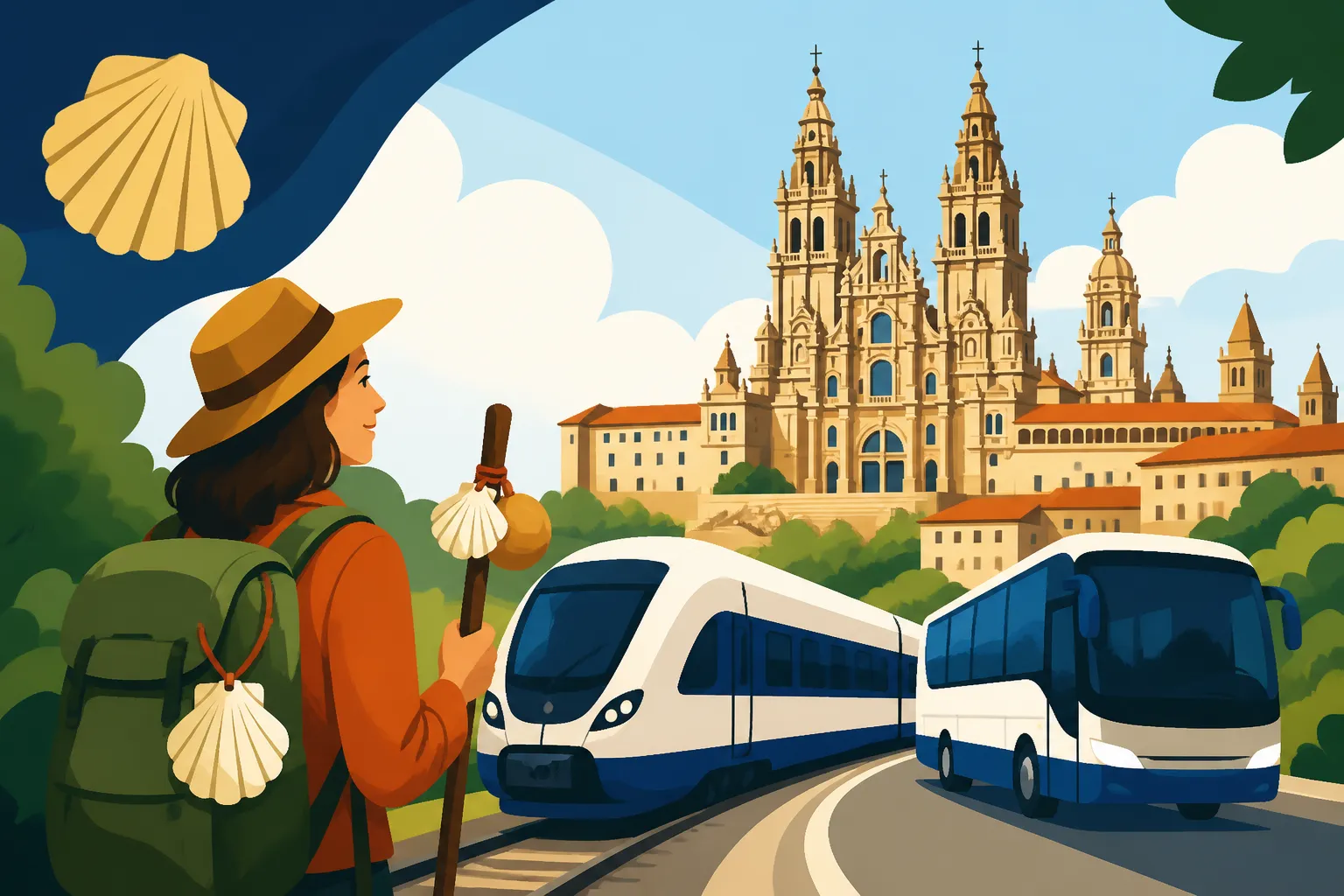
Reaching Santiago de Compostela: Galicia by Rail and Bus
Oh, Santiago de Compostela! The very name conjures images of ancient paths, spiritual journeys, and that incredibly satisfying feeling of reaching the end of a long pilgrimage. But let’s be honest, for many expats and tourists, the actual journey to get there from other parts of Spain can feel like a labyrinth of train lines and bus routes. If you’ve ever found yourself staring blankly at a Spanish transport website, trying to decipher obscure terms, you’re not alone. This guide is here to demystify the process and help you reach the heart of Galicia smoothly, making the brilliant platform, Omio, your trusted companion for booking.
Disclosure: This post may contain affiliate links. We may earn a commission at no extra cost to you if you make a purchase through these links. Read full disclosure.
The Call of Santiago de Compostela: Why the Journey Matters
Santiago de Compostela is more than just a city; it's the culmination of the Camino, a UNESCO World Heritage site, and a place steeped in centuries of history and profound significance. Whether you're completing a section of the Camino de Santiago, exploring the lush green landscapes of Galicia, or simply drawn by its magnificent cathedral and vibrant old town, reaching Santiago is an experience in itself. Many people spend weeks walking, cycling, or even riding horseback to get there, but if you're like most of us, time might be a bit more limited, and you'll be looking for efficient ways to travel by rail or bus.
The city offers a unique blend of spiritual gravitas and lively university town atmosphere. Imagine strolling through its granite-clad streets, soaking in the architectural wonders, and indulging in some of the freshest seafood Spain has to offer – it's truly a gem. But before you can dig into that pulpo a la gallega, you've got to get there. The journey itself can be part of the adventure, offering glimpses of Spain's diverse landscapes, from arid plains to verdant hills. Finding the right connection, especially when you're dealing with different transport providers and potentially a language barrier, can be tricky. This is precisely where a tool designed for ease, like Omio, becomes invaluable.
Conquering the Tracks: Reaching Santiago by Train
Traveling by train in Spain is, for many, a wonderfully civilized experience. The network, primarily operated by Renfe, is extensive and modern, particularly the high-speed AVE lines connecting major cities. While Santiago de Compostela itself isn't directly on a high-speed AVE line in the same way Madrid or Barcelona are, it's very well-connected by Alvia trains, which combine high-speed sections with conventional tracks.
Major Train Routes to Santiago
Most train journeys to Santiago will involve connecting through a major hub. The most common starting points are:
- From Madrid: This is perhaps the most frequent and straightforward route. High-speed Alvia trains depart regularly from Madrid Chamartín station, taking approximately 3 to 4 hours, depending on the specific service. These trains offer a comfortable ride, often with scenic views as you get closer to Galicia. You'll find a few classes of service, from Turista to Preferente, with amenities like onboard cafeterias and power outlets.
- From Barcelona: Traveling from Barcelona to Santiago by train is a longer journey, typically involving a change in Madrid or sometimes Ourense. Expect travel times upwards of 6 to 8 hours, often closer to 10 for direct connections, which might combine high-speed segments with regional services. While it's a longer haul, it offers a great opportunity to relax and watch the Spanish landscape unfold.
- From Northern Spain (e.g., Bilbao, San Sebastián): Connections from the north tend to be less direct and can involve longer travel times or multiple changes. Often, a combination of regional trains and intercity services will be required. These routes often showcase the stunning "Green Spain" landscapes, making the longer journey quite picturesque.
- From Southern Spain (e.g., Seville, Valencia): Journeys from the south will almost always involve a connection through Madrid. Think of Madrid as the central nervous system of Spain's rail network. While possible, these are considerably longer routes, often taking a full day of travel.
Benefits of Train Travel
Trains offer a few distinct advantages. First off, comfort. You get more legroom than a bus, the ability to walk around, and usually a less bumpy ride. Secondly, the views can be spectacular, especially as you traverse different regions of Spain. Plus, arriving at Santiago's modern train station puts you right on the edge of the city, often within walking distance or a short bus ride to the historic center. For many, it's also a more relaxing experience – no need to worry about traffic or navigating unfamiliar roads. If you're planning a wider exploration, you might also be interested in how Spain's rail network connects to other major cities, so check out our guide on High-Speed Trains in Spain AVE Routes Booking and Savings.
Booking Train Tickets with Omio
Now, for the practical part: booking. Trying to navigate Renfe's official website can, at times, feel like a Herculean task, especially if your Spanish isn't up to snuff. This is where Omio truly shines. Omio aggregates information from various transport providers, including Renfe, allowing you to easily compare train times and prices in English.
Here’s how Omio simplifies your train ticket booking:
- Input your journey: Simply enter your departure city (e.g., Madrid) and destination (Santiago de Compostela), along with your travel dates.
- Compare options: Omio will display all available train services, clearly showing the duration, number of changes, and prices. You can filter by price, time, and even the type of train.
- Book seamlessly: Once you’ve chosen your preferred option, you can book directly through Omio’s user-friendly interface. It’s secure, straightforward, and eliminates the frustration of dealing with a potentially confusing foreign website.
Using Omio means you get clear information, transparent pricing, and a smooth booking experience, taking the stress out of your journey planning. It’s truly a game-changer for those of us trying to get around Spain without fluent Spanish.
Hitting the Road: Reaching Santiago by Bus
If train tickets are a bit pricey or unavailable for your desired time, or if you're coming from a town not well-served by rail, the bus network is your next best friend. Spain has an excellent intercity bus system, which is often more extensive and can be more budget-friendly than train travel. The primary bus company operating routes to Santiago de Compostela is Alsa, though there are regional carriers as well.
Major Bus Routes to Santiago
Bus routes often mirror train routes in terms of popularity but also extend to smaller towns and offer more direct connections where trains might require changes.
- From Madrid: Alsa operates frequent bus services from Madrid to Santiago de Compostela, departing from both the Estación Sur (Méndez Álvaro) and sometimes the Barajas Airport. The journey typically takes around 6 to 8 hours, making it a good, economical option for a direct trip. Buses are comfortable, usually equipped with Wi-Fi and power outlets, and often have a stop for a quick meal or coffee break.
- From Barcelona: Similar to trains, the bus journey from Barcelona is long, often 12+ hours, and can sometimes involve a transfer. However, it's often significantly cheaper than the train, making it a popular choice for budget travelers who don't mind the longer ride.
- From Portugal: Santiago de Compostela is geographically close to Portugal, and Alsa, along with other operators like FlixBus, offers direct connections from cities like Porto and Lisbon. These are very convenient and often quicker than trying to connect via Spanish cities.
- From Other Galician Cities: If you're already exploring Galicia, say from A Coruña, Lugo, or Vigo, numerous local and intercity bus services will get you to Santiago quickly and efficiently, often within an hour or two. These regional routes are incredibly convenient for exploring more of Galicia and Green Spain A Traveler's Introduction.
Benefits of Bus Travel
Buses are typically more economical, offering a fantastic option for budget-conscious travelers. They also reach more destinations, including smaller towns and villages that don't have train stations. The frequency of services, especially on popular routes, can also be higher than trains. While the journey might be longer, modern buses are quite comfortable, and many offer amenities like reclining seats, air conditioning, and personal entertainment systems. The bus station in Santiago, like the train station, is fairly central and well-connected to the city by local buses or a short taxi ride. For general tips on bus travel, you can consult our guide on Intercity Buses in Spain Networks Booking and Tips.
Booking Bus Tickets with Omio
Again, Omio comes to the rescue for bus bookings. Instead of wrestling with multiple bus company websites, which can be even more diverse and less English-friendly than Renfe's, Omio consolidates everything.
Here’s how Omio simplifies your bus ticket booking:
- Search with ease: Enter your origin, destination, and dates on Omio.
- View all operators: Omio will present all available bus services, including Alsa and others, showing journey times, prices, and amenities. You can quickly see the cheapest or fastest option.
- One-stop booking: Book your bus ticket directly through Omio. This streamlines the process, ensuring you have all your travel details in one place and avoiding potential translation mishaps.
Omio is designed to take the guesswork out of booking, letting you focus on the excitement of your trip to Santiago rather than the logistics. It's truly the most user-friendly way to compare and secure your bus tickets.
Making Your Journey Smooth: Practical Tips for Travelers
Once you've secured your tickets through a fantastic platform like Omio, it's time to think about the practicalities of the journey itself. A little preparation can go a long way in making your trip stress-free and enjoyable.
What to Pack for the Journey
Beyond your usual travel essentials, consider these for a long train or bus ride:
- Snacks and Water: While many trains and some buses have cafeterias or offer drinks, having your own supply of snacks and water is always a good idea.
- Entertainment: A good book, downloaded movies or podcasts, or even a travel journal can make the hours fly by. Don't forget your headphones!
- Comfort Items: A neck pillow, eye mask, and even a light blanket can significantly improve your comfort, especially on early morning or late-night departures.
- Power Bank: While some vehicles have outlets, it’s not guaranteed, so a charged power bank for your devices is a lifesaver.
Understanding Spanish Transport Stations
Train and bus stations in Spain can be bustling, especially in major cities.
- Arrive Early: Give yourself ample time before departure, especially if you need to find your platform or gate, grab a coffee, or use the restroom. Aim for at least 30 minutes before train departure, and 15-20 minutes for buses.
- Check Boards: Look for your train or bus number on the departure boards (usually salidas). Platforms (vías or andenes for trains, puertas or andenes for buses) are usually announced closer to departure.
- Ticket Validation: For trains, sometimes you'll need to pass your ticket through a barrier. For buses, simply show your ticket (digital or printed) to the driver when boarding.
- Luggage: Most trains and buses have luggage allowances. On trains, you typically store larger bags in designated areas at the end of carriages or overhead. On buses, your larger bags will go into the luggage hold under the bus. Keep valuables with you in a smaller bag.
Language and Local Etiquette
While many transport staff in larger stations might speak some English, it’s always helpful to have a few Spanish phrases up your sleeve. Basic phrases like ¿Dónde está el andén/parada para…? (Where is the platform/stop for…?), ¿A qué hora sale? (What time does it leave?), and Gracias (Thank you) will go a long way. Check out our guide on Survival Spanish for Travelers Key Phrases to Learn First for more useful vocabulary.
Spanish people tend to be quite friendly and helpful, but don't expect the same level of personal space or quiet on public transport as you might be used to. Embrace the lively atmosphere! Remember, when you're looking to book these journeys, Omio cuts through the language barrier, giving you all the necessary information in English, which truly helps reduce pre-travel jitters.
Connectivity on the Go
Staying connected on your journey can be important, whether it's for checking maps, communicating with friends, or just passing the time.
- Onboard Wi-Fi: Many modern trains and long-distance buses offer free Wi-Fi, though the quality can vary. Don't rely on it for heavy streaming.
- Mobile Data: Ensure you have a good mobile data plan, whether it's a local SIM card or an eSIM. This will be your most reliable connection. You can also read our advice on Mobile Data and eSIMs for Travel in Spain.
Arriving in Santiago
Both the train and bus stations in Santiago are conveniently located.
- Santiago de Compostela Train Station (Estación de Tren): Located south of the historic center, it’s about a 15-20 minute walk to the Cathedral or a quick local bus or taxi ride.
- Santiago de Compostela Bus Station (Estación de Autobuses): Situated a bit further east, it’s also well-connected by local buses (lines C11 and C2 often go to the city center) and taxis.
Once you arrive, take a moment to breathe it all in. You've made it! Now the real adventure in Santiago begins. For planning your stay, consider options for Accommodation in Spain Hotels Hostels and Rentals to find the perfect spot for your Galician adventure.
| Feature | Train Travel (e.g., Alvia) | Bus Travel (e.g., Alsa) |
|---|---|---|
| Speed | Generally faster on key intercity routes (e.g., Madrid) | Slower, but can be more direct to smaller towns |
| Comfort | More legroom, ability to walk around, often quieter | Comfortable, but less space; often includes rest stops |
| Cost | Can be more expensive, especially high-speed tickets | Generally more budget-friendly |
| Network | Extensive, especially between major cities | Very extensive, reaches more remote locations |
| Views | Often panoramic and scenic, especially in rural areas | Roadside views, can be scenic depending on route |
| Booking Ease | Renfe's site can be tricky; simplified via Omio | Multiple operators; simplified and compared via Omio |
| Amenities | Cafeteria, power outlets, Wi-Fi (variable), restrooms | Wi-Fi (variable), power outlets, restrooms (sometimes) |
In conclusion, getting to Santiago de Compostela by public transport is absolutely doable and can be an enjoyable part of your Spanish adventure. By leveraging Omio, you can effortlessly compare and book both train and bus tickets, ensuring you spend less time stressing about logistics and more time dreaming of the Galician coastline and your first taste of Albariño. Happy travels!
Disclaimer
The information provided in this guide is intended for general informational purposes only and may not reflect the most current travel regulations, prices, or schedules. While we strive to keep our content accurate and up-to-date, transport services, prices, and policies in Spain can change. Always verify details with official transport providers (like Renfe or Alsa) or use a reliable booking platform like Omio for the most current information before making travel arrangements.