How to Find Community Counseling Services in Spain (Low-Cost Options)
Your mind doesn’t wait for paperwork. Many expats in Spain hit a low point in the same months their TIE or health card is still pending. Then they find that a private psychologist in Madrid or Barcelona is a real monthly expense, and the public waiting list is long. This guide maps the genuinely low-cost counseling routes in Spain and explains how to reach each one.
Disclosure: This post may contain affiliate links. We may earn a commission at no extra cost to you if you make a purchase through these links. Read full disclosure.
Why Finding Affordable Counseling in Spain Feels So Hard
I remember sitting on a bench outside my centro de salud in my first winter in Spain. I was holding a referral slip I didn’t fully understand and feeling stupid for not knowing how any of it worked. The isolation was real and so was the anxiety. The admin around getting help made both worse. If that sounds familiar, you are not failing at expat life. The system is fragmented, and nobody hands you a map.
The Public System Exists but Moves Slowly
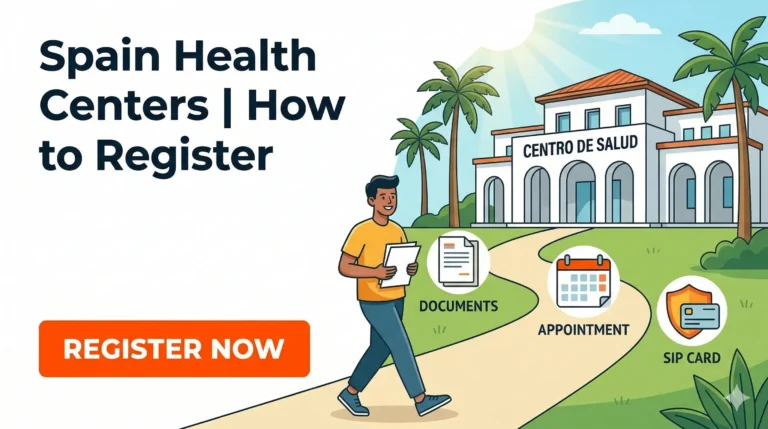
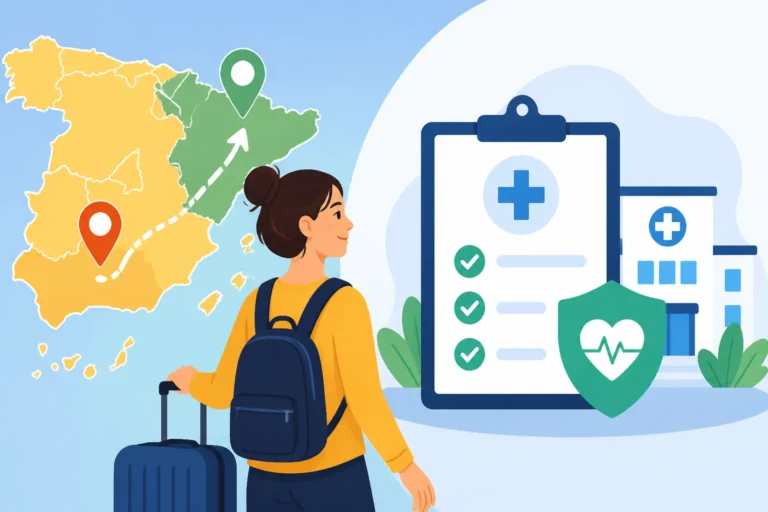
Spain’s public health system does cover mental health, and once you are registered it is a legitimate route. The catch is the structure. You can’t book a psychologist directly. You start with your family doctor, the médico de cabecera, at your local health centre. If you haven’t registered yet, start with What Is a ‘Centro de Salud’ in Spain and How Do You Register? because everything else hangs on that step.
Your GP can treat mild anxiety or low mood directly. They can also refer you to the community mental health centre for your area. Depending on the region, this is called a Centro de Salud Mental, a CSM, or a Unidad de Salud Mental Comunitaria. Here is the honest part: waits for a first appointment, and gaps between follow-up sessions, are often long. A psychiatrist may see you sooner than a clinical psychologist, and sessions are usually spaced weeks apart rather than weekly.
The Language and Culture Gap
Even when you get an appointment, it will almost certainly be in Spanish. In Catalonia, Galicia, the Basque Country or Valencia, staff may also default to the regional language. Describing grief or panic in your second language is exhausting. Many expats leave a first session feeling they only said half of what they meant.
There is a cultural layer too. Spanish public mental health care tends to be clinical and focused on diagnosis. People coming from countries with a strong “talk therapy” culture can find that jarring. It helps to understand the roles in advance, and Mental Health in Spain: Psychologists vs Psychiatrists Explained breaks down who does what.
Visa Insurance Often Leaves a Gap
Many newcomers on non-lucrative, digital nomad or student visas rely on private insurance. These policies often treat outpatient mental health as an add-on, a capped benefit, or an exclusion. Travel-style nomad policies such as SafetyWing are mainly designed around emergencies and acute care. Don’t assume routine therapy sessions are included. Read your policy wording for “mental health,” “psychology” or “psychotherapy” before you book anything.
The Low-Cost Counseling Options Actually Available in Spain
Here is the landscape as I’ve come to know it, from free to “reduced rate.” Most people end up combining two or three of these.
Public Community Mental Health Centres
Once you have a tarjeta sanitaria, the public route is free at the point of use. It is the right choice for ongoing conditions like depression, bipolar disorder, or anxiety that needs medication. It is also the safest route if things get serious, because it connects to hospital psychiatric services.
Imagine Laura, a teacher from Ireland who moved to Valencia. Her GP at the health centre spotted the signs of depression in a routine visit. The doctor started her on treatment and referred her to the local mental health unit (Unidad de Salud Mental). Her first psychology appointment took a while to come through. In the meantime her GP saw her regularly, and that continuity kept her going. The public system worked for her, but she had to be patient and push gently with follow-up calls.
If your paperwork is still in progress, don’t assume you’re locked out. Some regions offer provisional access or emergency cover. How to Access Public Healthcare If You’re New and Paperwork Isn’t Done Yet explains those workarounds.
University Psychology Clinics
This is the best-kept secret for low-cost therapy in Spain. Many universities with psychology faculties run training clinics. Supervised postgraduate trainee psychologists, often in the Máster en Psicología General Sanitaria, see members of the public at reduced fees. One well-known example is the Clínica Universitaria de Psicología at Universidad Complutense de Madrid. Similar centres exist at universities in Barcelona, Valencia, Seville, Granada, Málaga and other cities.
The pros are real. Sessions are usually weekly. Experienced clinicians supervise the trainees. Fees are a fraction of private rates, and some offer income-based pricing. The cons: limited places, intake assessments, breaks during academic holidays, and sessions mostly in Spanish. A few clinics can sometimes offer English, so ask.
To find one, search “clínica universitaria de psicología” plus your city name, or check the psychology faculty pages of your nearest public university.
NGOs, Helplines and Charity Counseling
Several Spanish organisations offer free or donation-based emotional support:
- Teléfono de la Esperanza: a long-standing helpline on 717 003 717, open around the clock. Many provincial branches also run in-person counseling and group workshops at little or no cost.
- Cruz Roja Española: the Spanish Red Cross runs psychosocial support programmes. These are especially aimed at migrants, older people living alone, and people in vulnerable situations.
- Cáritas: a parish-based network that offers listening services and social support. Some dioceses also offer psychological care, regardless of religion.
- Migrant support organisations: groups such as CEAR and Accem offer psychological support, mainly to refugees, asylum seekers and migrants in vulnerable situations.
- Fundación ANAR: a free line for children and teenagers on 900 20 20 10. It is useful for expat parents whose kids are struggling with the move.
For immediate risk, Spain has the 024 suicide prevention line and 112 for emergencies. Mental Health Hotlines in Spain: Numbers and When to Use Them covers which line suits which situation.
Ayuntamiento Social Services and Community Centres
Your town hall is an underused resource. Municipal servicios sociales can assess your situation and point you to subsidised counseling. Some cities run their own programmes. Madrid’s Centros Madrid Salud, for example, offer health promotion activities, including emotional wellbeing groups. Local community centres frequently host free workshops on stress, grief, parenting and loneliness. See How to Find Local Community Centers in Spain: Centro Civico Guide for how to track down yours.
Specialised municipal and regional services also exist for addiction, LGBTQ+ people, and women affected by gender violence. These are typically free and confidential. The 016 line is the national resource for gender violence.
Psychologists’ Professional Colleges and Sliding-Scale Practices
Each region has its own Colegio Oficial de la Psicología. Their online directories let you search for licensed psychologists by specialty, location and sometimes language. Some colegios run social programmes or reduced-fee schemes for people on low incomes, so it’s worth calling and asking directly.
Many private psychologists also offer a “precio social,” a reduced rate for students, unemployed people or low earners. They rarely advertise it. You have to ask politely, something like: “¿Ofrece algún precio reducido o tarifa social?” The worst answer is no.
Expat Support Groups and Peer Communities
Peer support isn’t therapy, but it can be a lifeline. English-language Alcoholics Anonymous and Narcotics Anonymous meetings run in larger cities and coastal areas. Anglican and international churches often host listening groups. Expat associations and parent networks sometimes organise wellbeing circles. Browse Support Groups for Expats in Spain: Mental Health and Community Options for ideas.
Comparing Low-Cost Counseling Routes in Spain
| Route | Cost to You | Typical Wait | English Availability | Best For |
|---|---|---|---|---|
| Public CSM or USMC via GP | Free with health card | Often long for psychology | Rare | Ongoing or serious conditions, medication |
| University psychology clinic | Reduced fee, sometimes income-based | Moderate, intake required | Occasional | Weekly structured therapy on a budget |
| Teléfono de la Esperanza | Free or donation | Phone immediate, in-person varies | Limited | Emotional crisis, listening support |
| Cruz Roja and Cáritas programmes | Free | Varies by branch | Limited | Migrants, isolation, vulnerable situations |
| Ayuntamiento social services | Free or subsidised | Varies by city | Rare | Workshops, groups, referrals |
| Colegio directory and precio social | Reduced private rate | Short | Searchable by language | Faster private care at lower cost |
| Peer and expat support groups | Free or donation | Immediate | Common | Loneliness, recovery, community |
| Private insurance with psychology cover | Depends on your policy | Short | Often available | Regular therapy if your plan includes it |
Step-by-Step: How to Get Low-Cost Counseling Started
A Practical Sequence for Your First Two Weeks
When you’re struggling, decisions feel huge. Here is a simple order of operations that has worked for me and for friends I’ve walked through it:
- Check your safety first. If you have thoughts of harming yourself, call 024 or 112 now. Everything else can wait.
- Confirm your public health status. Check whether you have a tarjeta sanitaria or are registered at a centro de salud. If yes, book a GP appointment and say clearly that the visit is about your mental health.
- Prepare one written page in Spanish. List your symptoms, how long you’ve had them, sleep, appetite, any medication, and what you want. Read it out or hand it over. This removes most of the language panic.
- Ask for the referral and a follow-up date. Ask the GP to refer you to the salud mental service. Also ask when they will see you again while you wait.
- Contact a university psychology clinic in parallel. Don’t wait for the public referral. Email or phone the clinic to ask about intake, fees and whether any trainee speaks English.
- Call your ayuntamiento’s servicios sociales. Ask about free counseling, emotional wellbeing groups or subsidised programmes for residents.
- Read your insurance policy. Look for outpatient mental health, psychology sessions, caps and pre-authorisation rules. Write down the claim process.
- Add one peer connection. Join a support group, a meetup or a helpline call. Waiting is far easier when you aren’t alone.
Making the Most of Insurance When You Have It
Private insurance is a big part of the picture for expats on visas, and policies vary enormously. Some Spanish domestic plans include a set number of psychology sessions within their network. International plans such as Cigna Global usually handle outpatient mental health through a specific module. Check whether yours includes it before assuming you’re covered.
If you’re comparing Spanish policies and therapy access is a priority, an expat-focused broker such as Innoinsure can help you filter plans by psychology cover. Ask them to show you the exact policy clause, not just a summary line. Don’t rely on a sales summary for this.
Nomad-style cover like SafetyWing tends to suit emergencies and short stays better than ongoing therapy. If you hold that type of policy and need regular sessions, budget for a university clinic or a precio social psychologist instead. Your insurance can sit underneath as a safety net. For a deeper look at paying for therapy, see Finding Therapy in Spain: Costs, Insurance, and Privacy.
When Online or English-Speaking Help Makes Sense
Sometimes the cheapest option isn’t the right one. If you can’t express yourself in Spanish, a few sessions with a native-language therapist may do more good than months of half-understood public appointments. The same goes if your issue is tied to identity, trauma or culture.
Online therapy can be a middle path. Check that the therapist is licensed, understand where they’re registered, and confirm how they handle data and emergencies. Online Therapy in Spain: What to Check Before You Book covers the checklist. If you prefer in-person sessions, How to Find a Therapist in Spain Who Works in English gives practical search strategies.
Recognising When It’s More Than Adjustment Stress
Plenty of people wonder whether they “really” need counseling or are just homesick. Homesickness that passes is normal. Persistent low mood, panic attacks, withdrawing from everything, drinking more, or not sleeping for weeks are signals to reach out. Culture Shock Symptoms vs Stress: When to Seek Help (Expat Guide) helps you tell the difference. For the bigger picture of mental health care here, Mental Health Support in Spain: How to Find Help as an Expat pulls everything together.
Here’s what I wish someone had told me on that bench: asking for help in Spain takes persistence, not perfection. Make one phone call today. Send one email to a university clinic. Write that single page of symptoms. Small, imperfect steps add up, and you deserve support while you build your life here.
Disclaimer
This article is for general informational purposes only and does not constitute professional advice. Laws, prices and regulations vary by location and change over time. Consult a qualified professional for guidance on your specific situation.