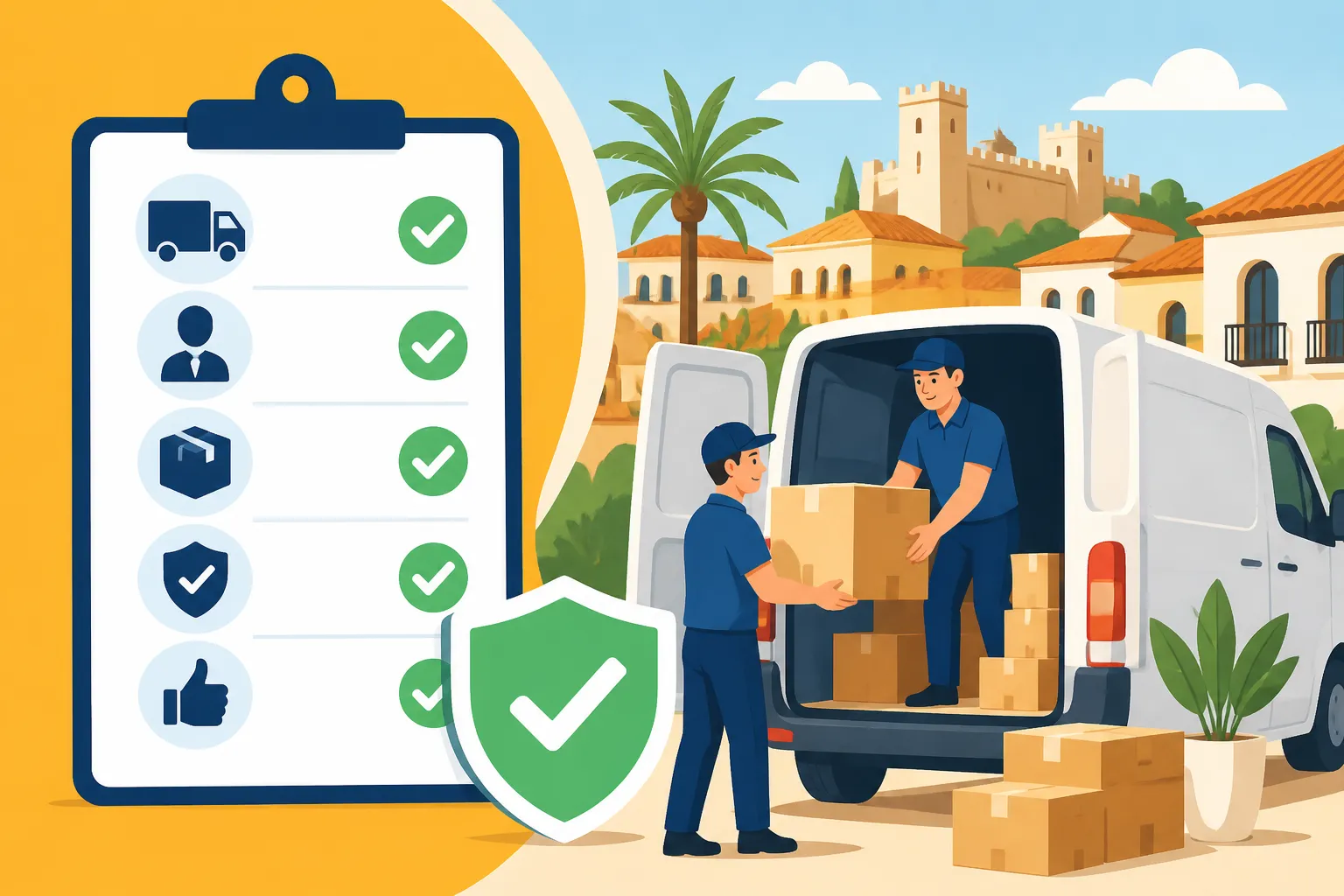
How to Choose a Moving Company in Spain (What to Check)
Trying to navigate a massive moving truck through a one-way medieval street in Seville while neighbors shout from their balconies is a rite of passage no one tells you about. I once stood helplessly as my dining table was hoisted through a fourth-story balcony window because the elevator was built for dolls. This guide solves the nightmare of hiring a moving company in Spain so you don't end up stranded with a broken sofa and a mysterious "extra" fee.
Disclosure: This post may contain affiliate links. We may earn a commission at no extra cost to you if you make a purchase through these links. Read full disclosure.
Understanding the Spanish Moving Market: Mudanzas vs Portes
When you first start searching for help with your move, you will encounter two terms that seem interchangeable but are legally and practically very different: mudanzas and portes. Choosing the wrong one is the most common mistake expats make, and it often leads to damaged goods and zero insurance recourse.
A professional mudanza refers to a full-scale removal service. These companies are registered, have a fleet of trucks, and offer comprehensive services including packing, furniture disassembly, and external elevators (elevadores por fachada). They are the ones you want for a significant life change, especially when you are following your Spain Relocation Checklist: First 30 Days for New Residents to get settled in a new city.
On the other hand, portes are small-scale transport services, often referred to as a "man with a van." While great for moving a single mattress or a few boxes from an IKEA run, they are rarely equipped for a full household move. Many portes operators are unregistered, which means they lack the mandatory transport cards and insurance required by Spanish law. If the Guardia Civil stops an unregistered van carrying your life’s possessions, they can impound the vehicle—and your belongings—on the spot.
If you are moving between cities, such as Madrid to Valencia, you definitely need a specialized company. You should check the How Much Does It Cost to Move Within Spain? Budget Guide to get a sense of how these professional services price their long-distance routes.
The Essential Checklist: What to Verify Before Signing
In Spain, the "wild west" of moving companies can be avoided if you know exactly which documents to demand. Never feel "rude" for asking for proof of registration; a legitimate company will have these ready as PDFs to WhatsApp you within minutes.
Legal Registration and the ROET
Every legal moving company must be listed in the Registro de Empresas y Actividades de Transporte (ROET). This is the public registry for transport companies in Spain. If they aren't on this list, they are operating illegally. You can ask for their CIF (tax identification number) and check it against the Ministry of Transport's database. This registration ensures they follow safety protocols and labor laws, which protects you from liability if a worker is injured in your home.
Insurance Coverage: Civil Liability vs. Merchandise
This is where most expats get caught out. A company might tell you, "Yes, we are insured," but you need to know what kind of insurance they hold.
- Responsabilidad Civil: This covers damage to the building (e.g., if they scratch the marble floor in the lobby or break a light fixture in the stairwell).
- Seguro de Mercancías: This covers your actual belongings.
Always ask for the póliza de seguro and check the limit per ton or per shipment. If you have high-value items like artwork or expensive electronics, you may need to declare them separately in a "valued inventory." While you wait for your move to complete, you might be staying in temporary housing. Using platforms like Spotahome can be a great way to bridge the gap between your old lease and your new permanent home without the stress of a long-term commitment.
The Inventory and the "Presupuesto Cerrado"
Never accept a quote over the phone or via a casual WhatsApp message without the company seeing your belongings. A professional will either visit your home or ask for a detailed video tour. They should then provide a presupuesto cerrado (a closed quote). This document must detail every service included: the number of boxes, the furniture to be disassembled, the use of an external lift, and the estimated time. Without this, you may find the price miraculously doubles on moving day because "there were more stairs than expected."
Managing Logistics and Municipal Paperwork
One of the most frustrating parts of moving in Spain is the bureaucracy involving the street. You cannot simply park a truck on a busy street in Barcelona or Madrid and start unloading. This is a quick way to receive a massive fine from the Policia Local.
The Occupancy Permit: Permiso de Ocupación de Vía Pública
If the moving truck needs to block the street or occupy parking spaces, a permit is required from the Ayuntamiento (City Hall). A high-quality moving company will handle this for you. They will go to the local police station, pay the fee, and place official "No Parking" signs 48 to 72 hours before the move.
If you try to do this yourself, you’ll need to navigate the municipal website, which usually requires a digital certificate. If you haven't set that up yet, you'll find it’s one of the most important parts of Setting Up Your Life in Spain: Utilities, Internet, and Essentials. If the company says, "Don't worry, we'll just be quick," run away. If a neighbor complains or the police show up, the move will be halted, and you will be responsible for the fines.
The "Elevador por Fachada" (External Lift)
Spanish apartment buildings are notorious for tiny elevators and narrow, winding staircases. Professional movers will often use an external furniture lift that goes up to your balcony. This is actually safer for your furniture and faster for the crew. However, it requires its own set of safety checks and often an additional permit for occupying the sidewalk. When you are Moving House in Spain: Hiring Movers and Registering Utilities, make sure to confirm with your new comunidad de vecinos (building community) if there are specific hours when these lifts are permitted.
| Feature | Professional Mudanza | Portes (Man with a Van) |
|---|---|---|
| ROET Registration | Mandatory | Often Missing |
| Insurance | Comprehensive (Civil & Goods) | Limited or None |
| Municipal Permits | Handled by Company | Responsibility of Client |
| Packing Services | Professional Packing & Boxes | DIY Only |
| Equipment | External Lifts & Specialized Trucks | Standard Van |
| Contract | Formal Presupuesto Cerrado | Verbal or WhatsApp |
Avoiding Scams and Common Pitfalls
Expats are often targeted by "ghost" moving companies that look professional online but are actually just intermediaries who sell your lead to the lowest bidder.
The Down Payment Trap
It is normal to pay a small deposit (usually 10-20%) to reserve the date, but never pay the full amount upfront. A common scam involves the "mover" taking the full payment and then simply never showing up on moving day. Use a credit card or a bank transfer so you have a paper trail. If you are still setting up your local finances, check our guide on Renting in Spain: Contracts, Deposits, and Tenant Rights to understand how payments and deposits are typically handled in the Spanish housing market.
The Packing Supply Markup
While it’s tempting to let the company provide all the boxes, they often charge a significant premium. You can save a lot of money by ordering your own heavy-duty packing tape and double-walled boxes from Amazon Spain. Just ensure the boxes are of high quality; cheap grocery store boxes will collapse in the truck, and the insurance company will blame "insufficient packaging" to avoid paying for damages.
Stay Connected During the Transition
Moving day is chaotic, and the last thing you want is to lose internet access while trying to coordinate with the driver or check your Empadronamiento in Spain: How to Register Your Address documents online. Since your home fiber usually takes a few days to be installed, it is wise to have an eSIM ready. Using Airalo for a week of data will keep you from being "blind" during the move, especially if you need to translate complicated instructions for the crew. You can compare more options in our article on Internet and Mobile Providers in Spain: How to Compare Plans.
Final Steps and Delivery Etiquette
Once the truck arrives at your new home, the work isn't quite over. You need to be proactive to ensure the "re-assembly" phase goes smoothly.
Checking the Inventory
As boxes are brought in, check them against your list. If a box looks crushed, open it immediately in front of the crew and take photos. In Spain, you generally have 24 hours to report "hidden damages" to the insurance company, but it is much easier to prove if you note the damage on the delivery note (albarán) before the movers leave.
Tipping in Spain
Tipping is not mandatory in Spain, but for a full day of heavy lifting in the heat, it is greatly appreciated. A tip of 10 to 20 Euros per person is considered very generous. More importantly, offering the crew cold water or coffee throughout the day goes a long way in ensuring they take extra care with your fragile items. Once they leave and you start unpacking, you'll need to head to the town hall to update your records. Make sure you know how to get your How to Get a Spanish ‘Certificado de Empadronamiento’ Copy so you can register for local services in your new neighborhood.
Choosing the right moving company in Spain is about more than just finding the lowest price; it's about buying peace of mind. By checking the ROET registration, ensuring the municipal permits are in place, and having a clear, written contract, you can turn a potentially traumatic day into a smooth transition to your new Spanish life.
Disclaimer
The information provided in this guide is for informational purposes only and does not constitute legal or professional advice. Moving regulations and municipal requirements in Spain can change frequently and may vary significantly between different autonomous communities and municipalities. Always verify the legal status and insurance coverage of any company before hiring them.