How to Cancel Utilities When Leaving a Spanish Rental
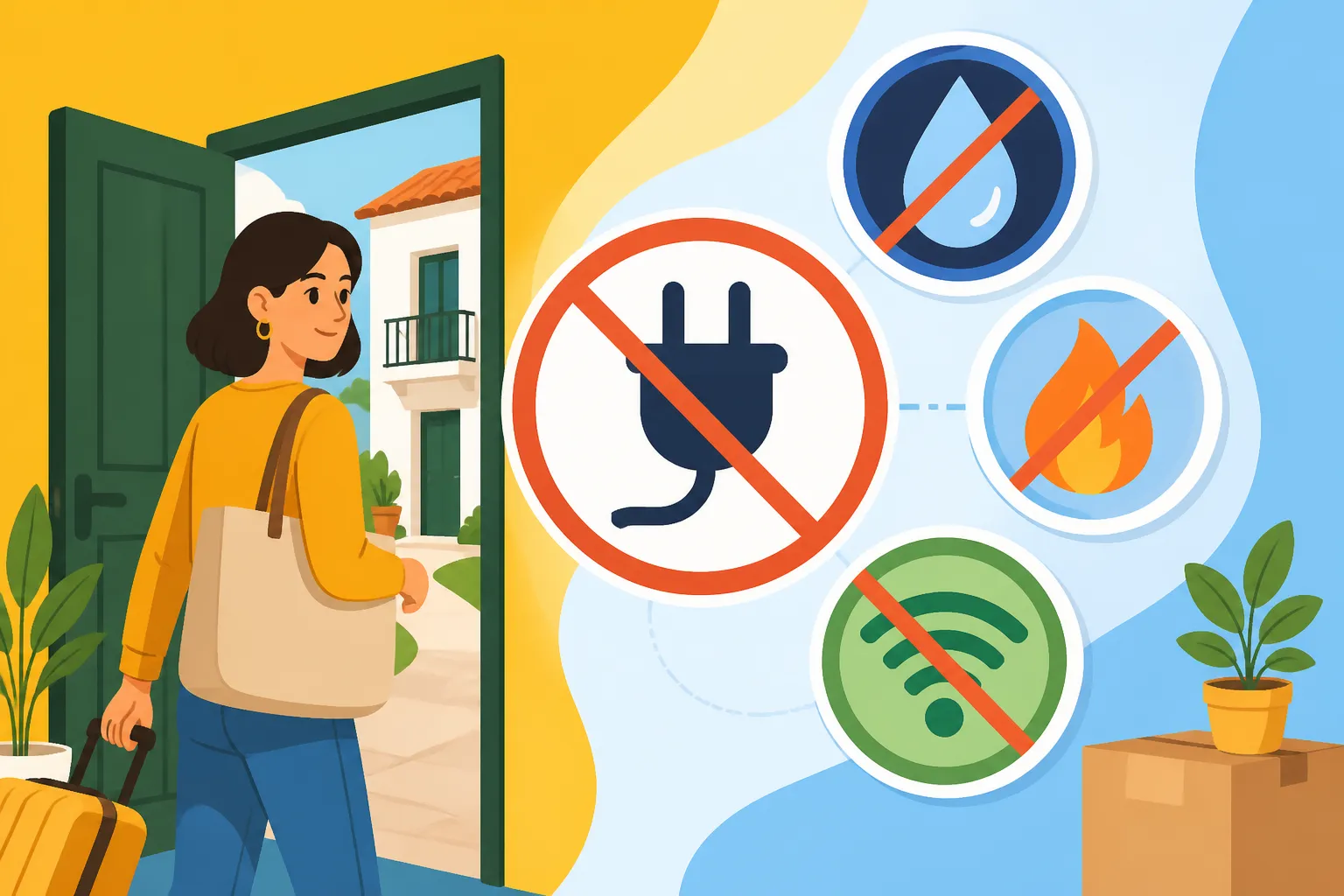
Moving house in Spain is an administrative "final boss" that can leave even the most seasoned expat feeling completely overwhelmed by red tape. I remember my first move in Madrid, where I spent three hours on hold with a gas company only to realize I didn't have the right ID number for the meter. This guide solves that chaos by providing a clear, step-by-step roadmap to canceling your water, electricity, gas, and internet without being hounded by debt collectors months later.
Disclosure: This post may contain affiliate links. We may earn a commission at no extra cost to you if you make a purchase through these links. Read full disclosure.
The Essential First Steps: Timing and Documentation
One of the biggest mistakes foreigners make when leaving a Spanish rental is assuming that utilities can be handled in a single afternoon. In reality, Spanish utility companies operate on a cycle that often requires a 15-to-30-day notice period. If you wait until the day you hand over the keys to start making phone calls, you are almost guaranteed to be charged for at least one extra month of service. I always recommend checking your original agreement first; How to Understand a Spanish Rental Contract Clause by Clause will help you identify the specific notice periods you previously agreed to with your landlord.
Before you pick up the phone, you need your "utility folder" ready. This includes your NIE or TIE, your original contract numbers, and most importantly, your CUPS (Código Universal del Punto de Suministro). Think of the CUPS as the fingerprint of your home’s energy supply. It is a 20-to-22-character alphanumeric code starting with "ES" that identifies your specific connection point. Without this code, the customer service agent will likely struggle to find your account, or worse, they might accidentally close the neighbor’s account instead of yours. You can find this on any previous bill, usually in the section detailing the technical data of the contract.
The most critical decision you need to make is whether you are performing a "Baja" (a full cancellation) or a "Cambio de Titular" (a change of ownership). Most landlords in Spain strongly prefer a change of ownership because a full cancellation means the next tenant has to pay a "reconnection fee," which can cost between 50 and 200 euros depending on the region and the power capacity. If you perform a full cancellation without the landlord's permission, they may attempt to deduct these reconnection costs from your security deposit. It is essential to coordinate this with your landlord or the next tenant well before your move-out date.
Closing Specific Utility Accounts: Electricity, Gas, and Water
The process for electricity and gas is generally managed through the same provider if you have a dual-fuel "dual" contract. Large providers like Endesa, Iberdrola, or Naturgy allow you to manage the exit process through their online "Área de Cliente," but I have found that a follow-up phone call is almost always necessary to confirm the request has been logged. When you speak to them, ask for a "final reading" (lectura final). If you don’t, they will estimate your final bill based on your previous year’s usage, which might be significantly higher if you’ve already started packing and haven't been using the heating or air conditioning. To understand the details of what you're actually paying for before you close the account, take a look at How to Understand Spain Electricity Bills: Tariffs, Peak Hours, and Savings.
Water is a slightly different beast because it is usually managed by a local monopoly rather than a competitive market. In Madrid, it’s Canal de Isabel II; in Barcelona, it’s Aigües de Barcelona. These companies are notoriously slower than the electricity giants. You often have to fill out a specific PDF form and email it along with a copy of your ID and the final meter reading. Because these are local entities, their English-language support is often non-existent. If you are moving into another property within the same region, you can sometimes "transfer" your account, but if you are leaving the country, you must ensure the "Baja" is processed and that you receive a confirmation email.
On your final day in the apartment, take clear, timestamped photos of every meter. This includes the electricity meter (usually in the building’s basement or a hallway cupboard), the gas meter, and the water meter. If the utility company tries to claim you used 500kWh in your final week, these photos are your only defense. If you are ordering moving supplies like tape and boxes from Amazon Spain, use the delivery time to do a final walk-through and record these numbers. These photos serve as your "administrative insurance" against the common Spanish phenomenon of the "estimated bill" that never seems to favor the consumer.
| Utility Type | Preferred Exit Method | Typical Notice Period | Key Document Required |
|---|---|---|---|
| Electricity | Cambio de Titular | 15 Days | CUPS and Meter Photo |
| Gas | Cambio de Titular | 15 Days | CUPS and Meter Photo |
| Water | Baja / Transfer | 30 Days | Contract Number / Meter Photo |
| Internet | Baja (Full Cancellation) | 15-30 Days | Return of Equipment (Router) |
Handling Internet, Mobile, and Other Services
The internet is where most expats lose money during a move. Unlike electricity, there is no "change of ownership" for a fiber optic line that benefits the landlord. You must cancel it. Most Spanish providers like Movistar, Orange, and Vodafone have a "permanencia" (lock-in period). If you are leaving before your 12-month or 24-month contract is up, you will be hit with a penalty fee that is often pro-rated based on the time remaining. Before you call to cancel, read Internet and Mobile Providers in Spain: How to Compare Plans to see if there is any way to port your service to a new address instead of canceling it entirely, which can sometimes waive the exit fees.
The most important part of canceling your home internet is the "recogida de equipos" (equipment collection). You do not own that router; you are merely renting it. If you move out and leave the router in the apartment, the company will eventually charge your bank account anywhere from 80 to 150 euros for the unreturned hardware. You usually have 15 days after the service ends to return the router to an official store. Make sure you get a "justificante de devolución" (receipt of return). Some newcomers get charged for routers they returned months prior because they lost that tiny piece of paper.
If you are also canceling a local mobile SIM, be aware that many "prepaid" plans in Spain will simply expire if you stop topping them up, but "post-paid" contracts (contratos) require a formal cancellation. For more on this, How to Cancel a Spanish Mobile Plan Without Extra Fees offers a deeper dive into avoiding those pesky final-month roaming or administrative charges. During the transition period when your home internet is cut but you haven't left Spain yet, using an eSIM from a provider like Airalo can keep you connected to maps and email without having to worry about a physical Spanish SIM contract. If you are moving into a temporary situation before finding a permanent home, booking through Spotahome can also be a life-saver, as they often offer mid-term rentals where utilities are already handled by the owner, saving you from having to do this whole process twice in two months.
Final Financial Clean-up and Preventing Future Issues
Once the calls are made and the forms are sent, the bureaucracy isn't quite finished. You need to manage your "domiciliación bancaria" (direct debit). In Spain, it is common for the final utility bill to arrive 30 to 60 days after you have moved out. If you close your Spanish bank account the day you leave, the payment will bounce, and the utility company will add you to a "fichero de morosos" (a list of defaulters). This can make it nearly impossible to open a bank account or get a phone contract if you ever return to Spain in the future. I suggest keeping your Spanish bank account open with a couple of hundred euros for at least three months after your departure to cover these final liquidations.
Then there is the issue of the "Fianza," or security deposit. By law, the landlord has 30 days to return your deposit after you hand over the keys. They are legally allowed to hold back a portion of this deposit to cover unpaid utility bills. To ensure you aren't being taken advantage of, check What is ‘Fianza’ in Spain? Deposit Rules Explained Simply for a breakdown of your rights. If the landlord claims the final bills are higher than expected, you have the right to demand the "facturas" (official invoices) to prove the costs. Never accept a "rough estimate" as a deduction from your deposit.
If you find yourself in a situation where the landlord is being difficult about the final utility handover, or if they are refusing to provide the invoices for the deductions they made, you may need to escalate. Knowing How to Get Your Deposit Back in Spain: Disputes and Documentation is vital for these scenarios. If the situation turns sour, How to Handle a Deposit Dispute With a Spanish Landlord provides a framework for sending a "Burofax," which is a legally recognized communication method in Spain that proves you have made a formal demand. Closing your utilities properly is the first line of defense in making sure your full deposit ends up back in your pocket where it belongs.
Disclaimer
This guide is intended for informational purposes only and does not constitute legal or professional administrative advice. Utility regulations and company policies in Spain change frequently, and specific local rules may apply depending on your Autonomous Community. Always confirm current cancellation procedures directly with your service providers and consult with a legal professional or a qualified "gestor" if you encounter complex disputes with landlords or utility companies.