How Long Are Typical Waiting Times in Spain’s Public System?
Disclosure: This article contains affiliate links. If you buy through them, we may earn a commission at no extra cost to you. Read our full disclosure.
Navigating the Spanish public healthcare system involves understanding its highly debated waiting times. This guide breaks down the average delays for primary care, specialist consultations, and non-urgent surgeries, helping expats manage their medical expectations and explore faster alternative solutions.
Understanding the Reality of Spanish Healthcare Wait Times
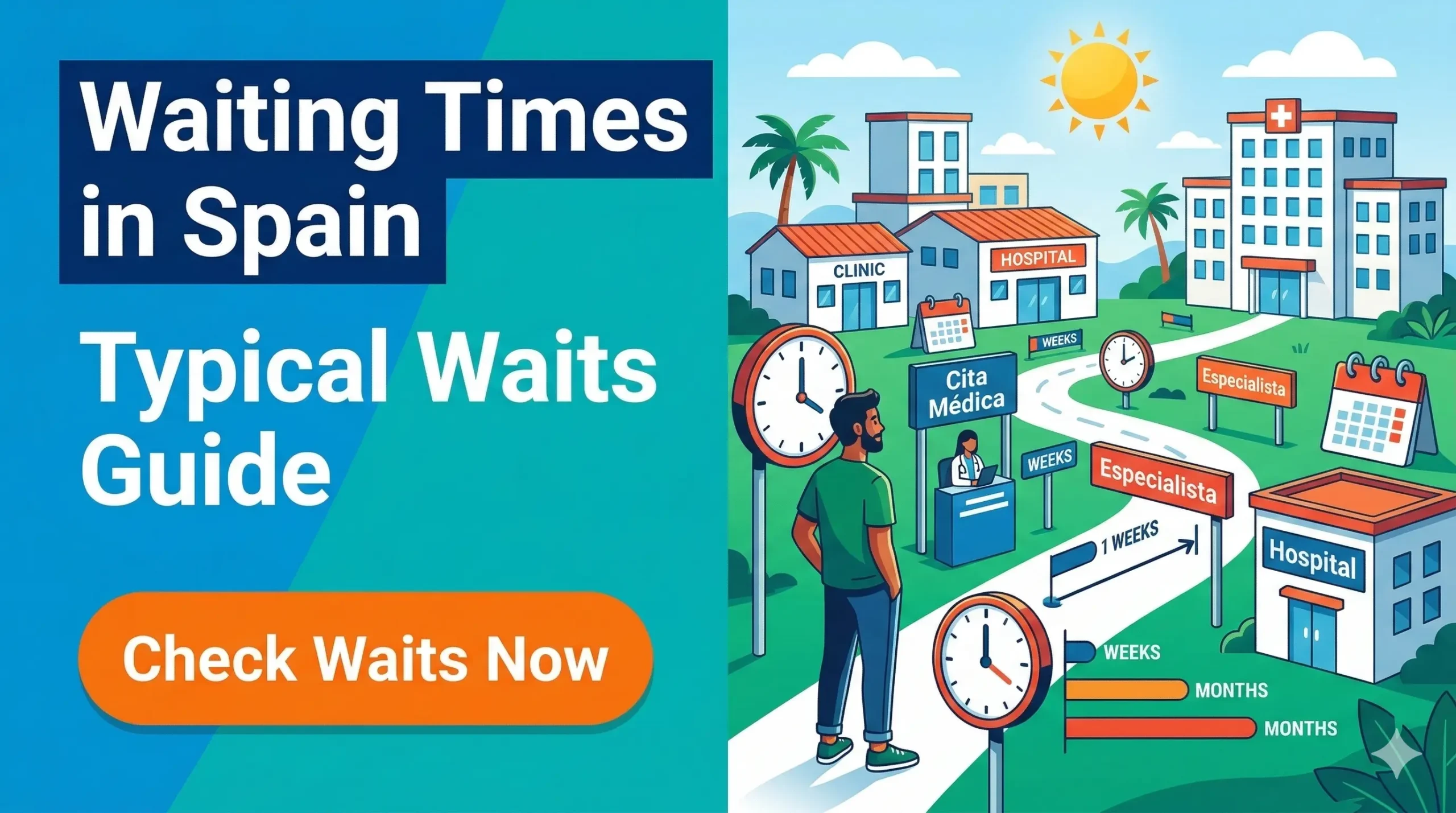
Spain boasts one of the most highly ranked public healthcare systems in the world, known universally for its excellent medical professionals, cutting-edge technology, and comprehensive universal coverage. However, the system’s most significant and well-documented flaw is its structural waiting lists. As an expat transitioning to life in Spain, adjusting your expectations regarding how quickly you can see a doctor or schedule a procedure is absolutely essential. The waiting times vary drastically depending on the specific type of care you need, ranging from just a few days for a general practitioner to several agonizing months for a specialized surgeon.
Primary Care and General Practitioners
Your entry point into the Spanish healthcare system is always your local public clinic. For any routine ailments, you must first secure an appointment with your assigned family doctor or general practitioner. In many well-staffed urban centers, you can easily secure a routine appointment within two to three days using the regional digital health app. However, in densely populated metropolitan neighborhoods or during peak winter flu seasons, the wait to see a general practitioner can stretch to ten days or even two weeks. You can learn the exact steps for registering into this primary care network in our guide on What Is a ‘Centro de Salud’ in Spain and How Do You Register?.
If your condition requires immediate attention but is not considered a life-threatening emergency, you do not have to wait two weeks in misery. You can utilize the local out-of-hours emergency medical points located at designated health centers. To understand the exact clinical protocols for accessing these specific out-of-hours clinics, we highly recommend reading our guide on What to Do If You Need Care on a Weekend in Spain. Furthermore, if you are consistently dissatisfied with the wait times at your specific local clinic, you possess the legal right to request an administrative transfer to a different professional, a process detailed comprehensively in How to Change Your Family Doctor in Spain (Simple Steps).
Specialist Consultations
The true bottleneck in the Spanish public system becomes highly apparent when you need to see a specialized medical professional. Because the public system utilizes a strict gatekeeper model, you cannot book a public specialist directly under any circumstances; your primary care doctor must issue an internal referral after ruling out basic treatments. According to data published by the Spanish Ministry of Health, the average waiting time for a first consultation with a specialist hovers around 80 to 95 days nationally.
In some saturated administrative regions, more than half of all patients wait longer than 60 days just to have their very first specialist assessment. The delay depends heavily on the medical discipline you require. For instance, securing an initial appointment with a neurologist, an endocrinologist, or a dermatologist often takes significantly longer than seeing a general surgeon for a preliminary hernia evaluation. For expats managing lifelong, complex illnesses, this delay can be incredibly frustrating. If you need specialized medication or clinical monitoring during this long waiting period, our specialized resource on Chronic Conditions in Spain: Managing Ongoing Care as an Expat provides vital strategies for maintaining your health safely.
Average Waiting Times for Non-Urgent Surgery
If your specialist consultation ultimately results in a clinical recommendation for surgery, you will be officially placed on a surgical waiting list. It is crucial to understand that public hospital waiting lists are prioritized strictly by clinical urgency rather than on a first-come, first-served basis. Life-threatening conditions, such as malignant tumors, severe cardiac blockages, or massive internal bleeding, are fast-tracked and operated on rapidly. However, non-urgent, elective surgeries face significant structural delays.
Breaking Down the Numbers by Specialty
For non-urgent surgeries, the national average waiting time sits between 112 and 128 days, translating to roughly four months of waiting. Alarmingly, Ministry of Health reports indicate that over 20 percent of patients on the public waiting list wait more than six months for their procedures to finally take place.
The exact length of your wait depends entirely on the surgical specialty. Procedures that dramatically improve daily quality of life but are not considered immediately life-saving carry the longest wait times in the system.
| Surgical Specialty | Average Waiting Time in Days | Percentage Waiting Over 6 Months |
| Plastic Surgery | 239 days | High |
| Neurosurgery | 189 days | High |
| Traumatology | 134 days | High |
| Maxillofacial Surgery | 115 days | Moderate |
| General and Digestive | 113 days | Moderate |
| Ophthalmology | 84 days | Low |
| Cardiac Surgery | 63 days | Low |
It is also incredibly important to note the sheer volume of patients waiting for highly specific procedures. Cataract surgery currently has the largest number of patients on the waiting list in Spain, followed closely by inguinal hernia repairs and full knee replacements. If you are waiting on a long public list for an orthopedic procedure and wish to maintain your joint mobility naturally in the interim, many expats order specialized joint supplements and anti-inflammatories through iHerb. Utilizing a global wellness retailer like iHerb ensures you have access to high-quality international brands that might be heavily marked up or completely unavailable in local Spanish retail pharmacies.
Regional Differences Across Autonomous Communities
Because the Spanish healthcare system is highly decentralized, waiting times are heavily influenced by your exact geographic location. The seventeen autonomous communities independently manage their own healthcare budgets, hospital infrastructure, and medical staff hiring, leading to profound regional disparities across the map.
Understanding these regional administrative nuances is vital for expats deciding where to settle permanently. For a broader, foundational overview of how regional administration directly affects your overall access to care, you should review our comprehensive guide on the Spain Healthcare System for Expats: Public vs Private.
Factors Impacting Your Wait and How to Navigate Them
While the official statistics can seem daunting to new arrivals, understanding the actual mechanics behind these delays allows you to make highly informed, strategic decisions about managing your healthcare journey in Spain.
The Triage System and Medical Urgency
The Spanish public system never compromises on providing immediate acute, urgent medical care. Whether you are dealing with a severe traffic accident, a stroke, or a sudden pediatric crisis, emergency rooms operate on a highly efficient triage system. Patients presenting with life-threatening conditions are treated immediately, bypassing all standard lists. If you are navigating emergency care for a young child, our guide on Pediatric Care in Spain: Choosing a Pediatrician offers excellent context on how pediatric emergency units prioritize urgent cases.
However, this phenomenal emergency triage system is exactly why non-urgent waiting lists are so exceptionally long. If a public hospital experiences a sudden influx of major trauma patients or a severe winter respiratory virus outbreak, operating rooms and specialist hours are immediately diverted from elective surgeries to life-saving emergency care. Your scheduled knee replacement might be postponed at the very last minute simply because the hospital’s surgical resources had to be reallocated. Please note that this system strictly applies to general medical emergencies; for severe, sudden oral pain or dental trauma, you must seek entirely separate private care, which is detailed thoroughly in Emergency Dental Care in Spain: Where to Go.
Using Private Healthcare to Skip the Queue
The single most effective, proven way to entirely bypass the structural waiting lists of the public system is to utilize the massive private healthcare sector. In fact, the lengthy public delays are the primary reason why millions of Spanish citizens and expats actively choose to pay for supplementary private health insurance.
For expats seeking this level of immediate peace of mind, working alongside a specialized international broker like Innoinsure is highly recommended. A dedicated broker from Innoinsure can match you with premium, English-friendly policies that offer zero copayments and direct, unrestricted access to Spain’s top-tier private hospital networks. Furthermore, many modern policies successfully secured through Innoinsure include robust digital health features, allowing you to consult with a certified doctor instantly via your smartphone camera. To explore exactly how these digital consultations function in real-time, read our breakdown on Telemedicine in Spain: When It’s Useful and What to Expect.
Accessing Prescriptions and Wellness Support
During a long wait for a public specialist, intelligently managing your ongoing symptoms and out-of-pocket expenses requires careful financial planning. If you opt to temporarily see a private specialist simply to speed up an initial diagnosis, you will be strictly required to pay for the consultation and any subsequent private prescriptions entirely out of pocket if you lack private insurance. To ensure you handle the administrative side of this correctly, our guide on How to Handle Medical Bills in Spain: Receipts, Claims, and Disputes offers excellent advice on managing private invoices.
When navigating these unexpected private medical bills, traditional foreign banks frequently apply terrible exchange rates and charge you hidden international transaction fees. To aggressively protect your healthcare budget, savvy expats utilize modern financial platforms like Wise. By setting up a digital, multi-currency account with Wise, you can seamlessly convert your home currency to Euros at the true, transparent mid-market rate. Using a Wise debit card to directly pay your private clinic invoices ensures that your hard-earned money goes toward your health recovery rather than enriching an international bank.
While you patiently wait for public treatment, proactively maintaining your holistic wellness is equally important. In addition to sourcing affordable, preventative supplements via iHerb, you should focus on minimizing stress. The Spanish public healthcare system is phenomenally capable and world-renowned once you are actually inside the consultation room or the surgical theater. By deeply understanding the structural delays, utilizing regional digital health apps to track your appointment status, and strategically leveraging premium private insurance for specialized care, you can guarantee that you receive world-class medical attention exactly when you need it most.
References
Primary sources (official)
- Ministerio de Sanidad (Ministry of Health Spain) – Sistema de Información sobre Listas de Espera en el SNS: https://www.sanidad.gob.es/estadEstudios/estadisticas/inforRecopilaciones/listasEspera.htm
- La Moncloa – Informes Anuales del Sistema Nacional de Salud: https://www.lamoncloa.gob.es/
Other helpful sources
- Expatica – Healthcare in Spain: https://www.expatica.com/es/healthcare/healthcare-basics/healthcare-in-spain-101467/
- Operarme – Surgical Waiting Lists in Spain Explained: https://www.operarme.com/blog/surgical-waiting-lists-in-spain/
Disclaimer
The information provided in this article is for educational and informational purposes only and does not constitute formal medical or legal advice. Waiting times in the Spanish public healthcare system fluctuate continuously based on regional resources, seasonal demands, and shifting government policies. Always consult directly with your local health authority or your private insurance provider for the most accurate and up-to-date timelines regarding your specific medical needs.