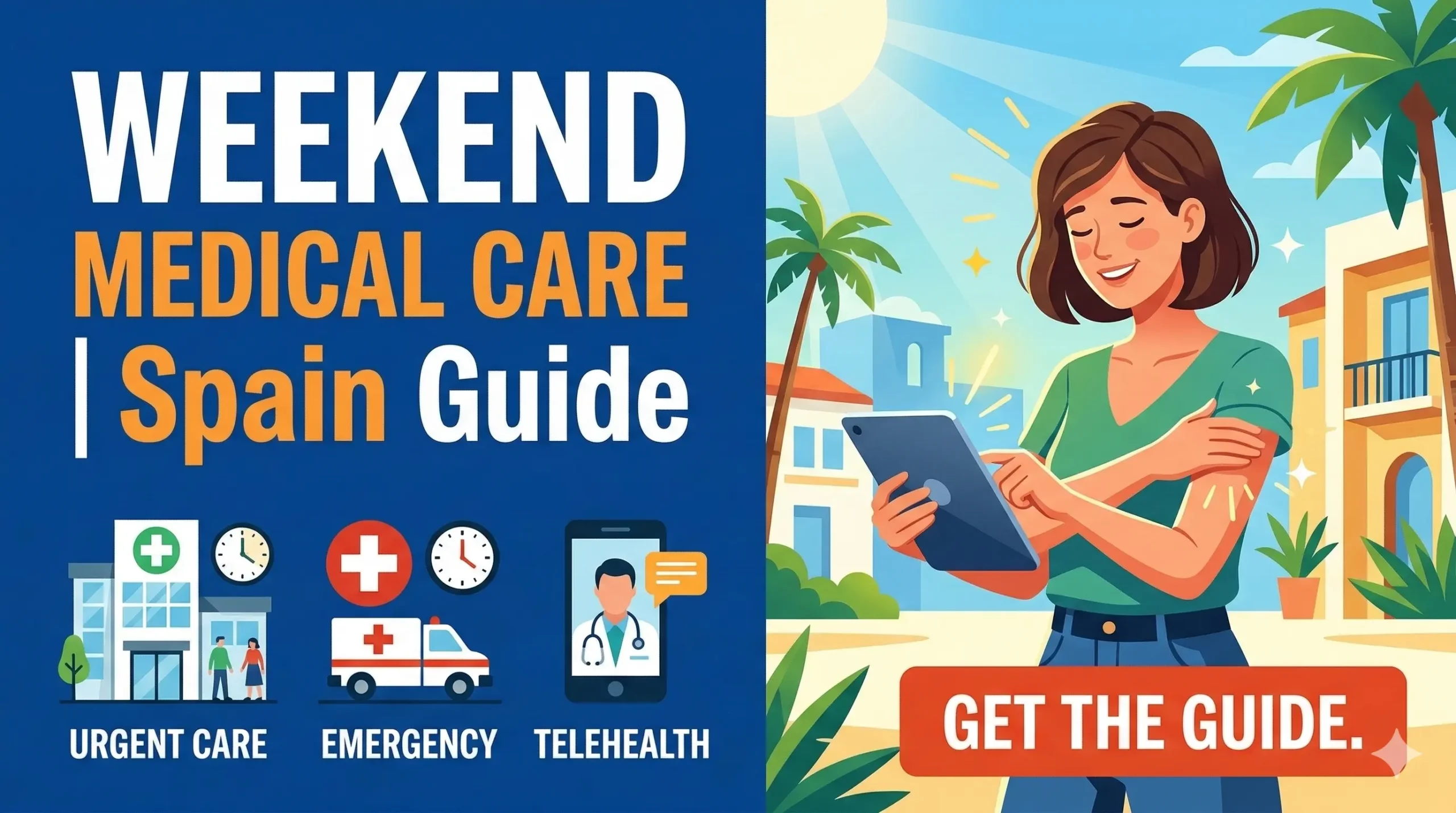
What to Do If You Need Care on a Weekend in Spain
Falling ill in Spain on a Saturday or Sunday does not have to ruin your weekend. From understanding public out-of-hours clinics to accessing private telemedicine and on-duty pharmacies, this guide outlines exactly how to navigate urgent Spanish healthcare during the weekend.
Disclosure: This post may contain affiliate links. We may earn a commission at no extra cost to you if you make a purchase through these links. Read full disclosure.
Navigating Public Healthcare on a Weekend
If you rely on the Spanish public health system, your first instinct when feeling unwell is likely to call your local clinic. However, standard public clinics operate on strict weekday schedules. Knowing where to go when those doors are locked is critical to receiving timely care without overwhelming the system.
When to Visit the Emergency Room Urgencias
In Spain, your primary healthcare hub is your local clinic, but these facilities generally close at 8:00 PM or 9:00 PM on Fridays and remain shut until Monday morning. To understand the standard operating procedures of these weekday clinics, you can review our guide on What Is a ‘Centro de Salud’ in Spain and How Do You Register?. When a serious medical issue arises on a Saturday or Sunday, the primary destination for acute, life-threatening conditions is the emergency department of a public hospital, known universally in Spain as Urgencias.
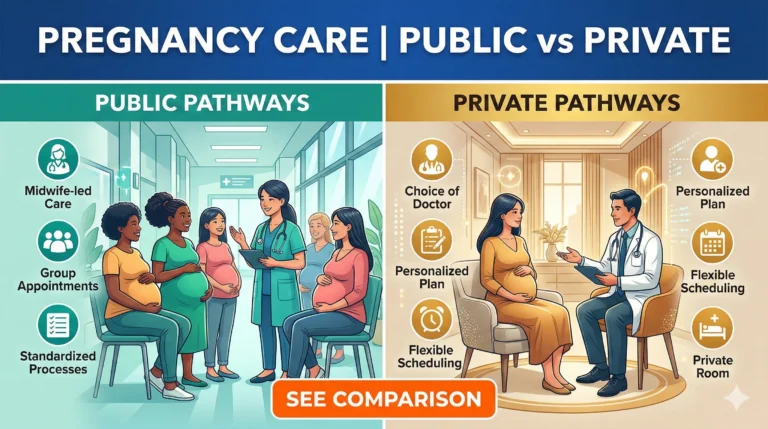
When you arrive at a public Urgencias, you will be subjected to a strict triage system, typically based on the Manchester Triage System. A triage nurse will evaluate your vital signs and assign you a color code ranging from red (immediate, life-saving resuscitation required) to blue (non-urgent). Because public hospitals prioritize critical cases, if you show up on a Sunday afternoon with a mild sore throat or a minor rash, you will likely be assigned a non-urgent color code and could find yourself waiting in the reception area for several hours before seeing a doctor. To understand how this public safety net compares to other options, checking our overview on the Spain Healthcare System for Expats: Public vs Private is highly recommended.
Using Out of Hours Primary Care PACs
To alleviate the massive burden on major hospital emergency rooms, the Spanish public health system operates a brilliant network of out-of-hours clinics. These are officially known as Puntos de Atención Continuada (PAC) or Servicios de Urgencias de Atención Primaria (SUAP), depending on your specific autonomous community. These continuous care points are specifically designed to handle urgent but non-life-threatening medical issues during weekends and national holidays.
The primary advantage of visiting a PAC instead of a hospital Urgencias is speed. Because these clinics do not handle massive traumas or cardiac arrests, the waiting times are significantly shorter. A doctor can quickly assess your condition, administer basic treatments or minor sutures, and issue an emergency prescription. If the PAC doctor determines that your condition is actually more severe than initially thought, they will immediately coordinate an ambulance transfer to the nearest major public hospital.
Accessing Private Healthcare on Saturdays and Sundays
For expats who hold private health coverage, navigating a weekend illness involves a completely different set of facilities and protocols. The private sector is designed to offer speed and convenience, bypassing the public triage bottlenecks even on weekends.
Finding Weekend Private Clinics and Hospitals
If you are covered by a private health insurance policy, you are not bound by the geographic restrictions of the public PAC network. Major private hospital conglomerates in Spain, such as Quirónsalud, Sanitas, and Vithas, operate their own dedicated, 24-hour emergency departments. By presenting your private insurance card at the reception desk, you can access these facilities at any time on a Saturday or Sunday.
The waiting experience in a private Urgencias is typically much faster and more streamlined than in the public sector. The waiting rooms are generally quieter, and you will often have access to doctors who speak fluent English, which can be incredibly comforting during a medical crisis. However, it is vital to ensure that the specific private hospital you choose is listed within your insurer’s approved medical directory. If you are currently shopping for a policy that grants you this kind of premium weekend access, utilizing a specialized broker like Innoinsure ensures you are matched with an insurance provider offering robust, nationwide emergency networks.
It is also important to differentiate between general medical emergencies and specialized crises, such as sudden, severe tooth pain. Neither public nor private general emergency rooms are equipped to perform restorative dentistry on a Sunday. For localized oral trauma or severe abscesses, you must seek out a specialized 24-hour private dental clinic. We cover how to handle these specific crises extensively in our guide on Emergency Dental Care in Spain: Where to Go.
The Rise of Telemedicine Services
Sometimes, a weekend illness leaves you feeling too weak to travel to a clinic, but not severe enough to warrant a physical emergency room visit. In these scenarios, the rapid expansion of private telemedicine in Spain is an absolute game-changer. Most modern private health insurance providers now include 24/7 digital health services directly within their mobile applications.
By opening your insurer’s app on a Sunday morning, you can request an immediate video consultation with a certified general practitioner. The doctor can visually assess your symptoms, provide professional medical advice, and, most importantly, issue a legally valid, private electronic prescription directly to your smartphone via a secure QR code. To learn more about how to set up and navigate these digital tools, review our comprehensive breakdown on Health Apps in Spain: Booking, Records, and Telemedicine Options.
This service is incredibly valuable for managing sudden stomach bugs, minor allergic reactions, or simple prescription renewals when your usual doctor is off duty. If your current healthcare setup lacks this crucial digital lifeline, upgrading to a modern policy through Innoinsure guarantees that you always have a doctor available remotely, regardless of the day of the week. For a deeper understanding of when virtual care is the safest and most efficient choice, read our article on Telemedicine in Spain: When It’s Useful and What to Expect.
Getting Medication from an On Duty Pharmacy
Securing a medical diagnosis on a weekend is only half the battle; the next step is actually obtaining the prescribed medication. In Spain, standard pharmacies close on Saturday afternoons and remain shut on Sundays.
Locating an On Duty Pharmacy
To guarantee that the public always has access to vital medications, Spain operates a rotating roster of on-duty pharmacies, universally known as a farmacia de guardia. By law, every municipality must have at least one pharmacy open, or a pharmacist actively on call, 24 hours a day, including weekends and public holidays.
If a PAC or private emergency doctor hands you a prescription on a Sunday, you must locate the nearest on-duty pharmacy. You can usually find the current roster printed and taped to the front window of any closed neighborhood pharmacy. Alternatively, regional health apps and the official College of Pharmacists website provide real-time digital locators. For step-by-step instructions on finding these late-night and weekend dispensaries, consult our dedicated guide on How to Find a ‘Farmacia de Guardia’ Near You in Spain.
It is important to remember that these on-duty pharmacies are strictly for dispensing urgent medications. While you can technically buy anything they stock, it is considered poor etiquette to visit a farmacia de guardia on a Sunday night simply to buy cosmetic creams or routine daily vitamins. For your non-urgent wellness needs, holistic remedies, and specialized dietary supplements, the expat community highly recommends ordering online through global platforms like iHerb. Sourcing your routine wellness products via iHerb ensures you always have a well-stocked home first-aid kit, saving you from having to pay weekend pharmacy surcharges for basic health items.
Paying for Urgent Out of Pocket Care
The financial aspect of weekend healthcare depends entirely on your residency status and the facility you choose. If you are a registered resident utilizing the public PAC or hospital Urgencias, your medical consultation and emergency treatments are entirely free of charge. You will only pay the standard, state-subsidized copayment for your prescription at the pharmacy. We detail these exact pharmaceutical pricing tiers in our article on Health Costs in Spain: Typical Co‑Pays and Out‑of‑Pocket Fees.
If you are an uninsured tourist or an expat who chooses to visit a private emergency room without a direct-billing insurance policy, you must pay for your treatment entirely out of pocket before you are discharged. Private emergency consultations typically start between €100 and €150, with diagnostic tests like X-rays or blood panels adding significantly to the final bill. Navigating these invoices can be complex, so reviewing our guide on How to Handle Medical Bills in Spain: Receipts, Claims, and Disputes will help you understand how to request itemized receipts for later reimbursement claims.
When paying these unexpected medical bills or buying urgent prescriptions out of pocket, traditional foreign bank cards will often hit you with terrible dynamic currency conversion rates and hidden international transaction fees. To protect your healthcare budget, financially savvy expats utilize a multi-currency account like Wise. By tapping your Wise card at the hospital billing desk or the pharmacy window, you guarantee that you are paying the exact Euro amount at the true mid-market exchange rate, keeping your money focused on your recovery rather than banking fees.
Comparing Weekend Healthcare Options
To help you make the best decision during a stressful weekend illness, refer to the table below summarizing your primary care options in Spain:
| Care Facility Type | Best Used For | Expected Wait Time | Cost Expectation |
| Public Hospital Urgencias | Life-threatening emergencies, severe trauma | High (for non-urgent cases) | Free (for registered residents / EHIC holders) |
| Public PAC / SUAP | Minor emergencies, sudden high fevers, sprains | Low to Moderate | Free (for registered residents / EHIC holders) |
| Private Hospital Urgencias | Any emergency for insured expats | Low | Covered by private insurance (or high out-of-pocket) |
| Private Telemedicine | Minor ailments, urgent prescriptions, advice | Instant (via smartphone app) | Included in private policies via providers like Innoinsure |
Ultimately, whether you rely on the robust network of public continuous care points, the speed of private hospital emergency rooms, or the modern convenience of ordering proactive health supplements from iHerb to stay healthy year-round, Spain provides a phenomenal safety net. Knowing exactly where to go and how to access these resources ensures that a weekend illness is merely a minor inconvenience rather than a major disruption to your life abroad.
References
Primary sources official
- Ministerio de Sanidad – Centros Sanitarios y Atención Primaria: https://www.sanidad.gob.es/ciudadanos/prestaciones/centros/home.htm
- Consejo General de Colegios Oficiales de Farmacéuticos – Farmacias de Guardia: https://www.farmaceuticos.com/
Other helpful sources
- Expatica – Healthcare in Spain Basics: https://www.expatica.com/es/healthcare/healthcare-basics/healthcare-in-spain-101467/
- Citizens Advice Bureau Spain – Emergency Medical Care: https://www.citizensadvice.org.es/
Disclaimer
The information provided in this article is for educational and informational purposes only and does not constitute formal medical or legal advice. Healthcare facility hours, triage protocols, and pharmacy regulations vary significantly by autonomous community and are subject to change by local Spanish authorities. In the event of a severe, life-threatening medical emergency in Spain, immediately dial 112 or proceed to the nearest hospital emergency department.