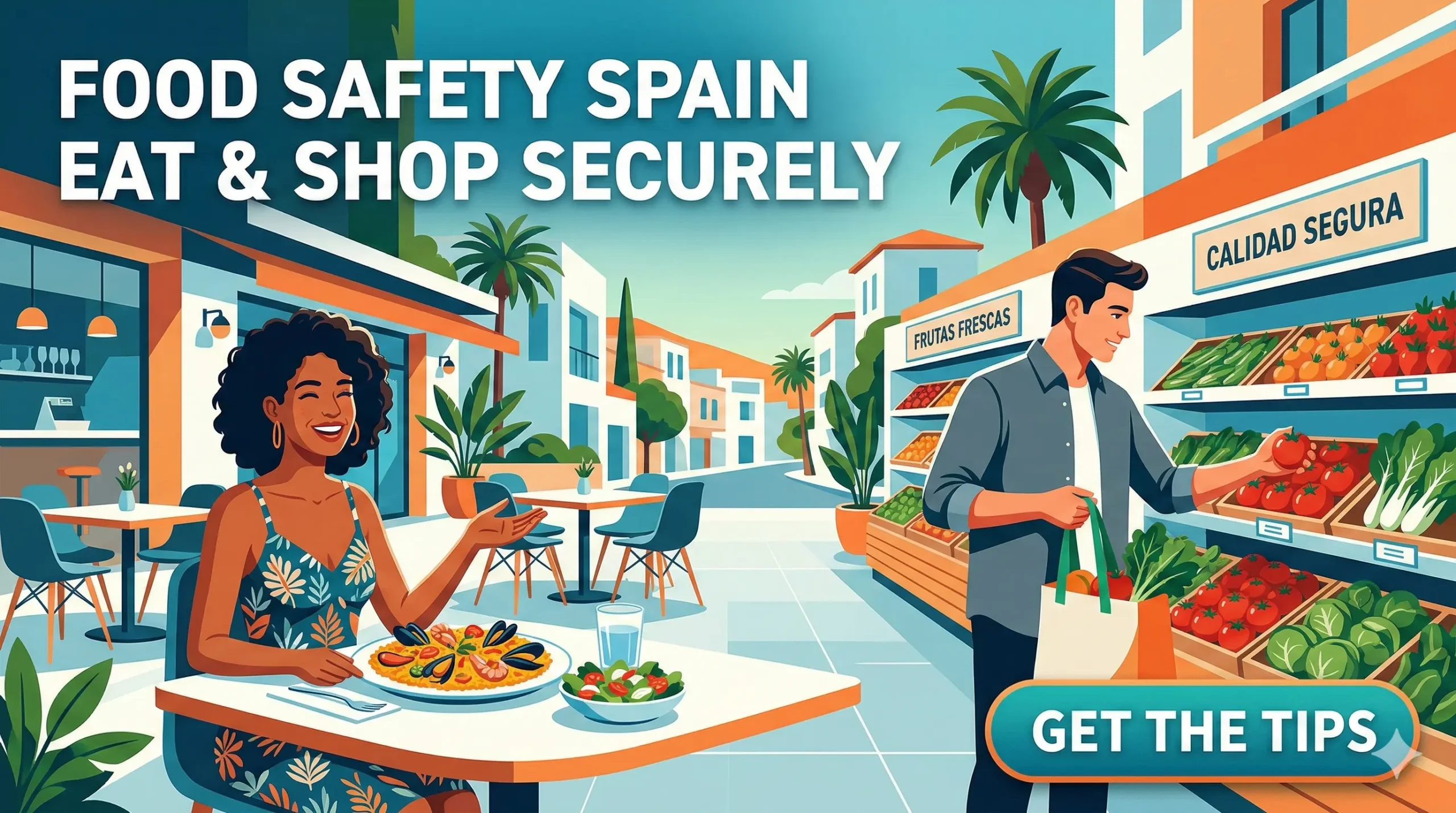
Food Safety in Spain: Eating Out and Shopping Safely
Discover essential tips for navigating food safety in Spain as an expat or tourist. From understanding local restaurant hygiene standards and traditional market etiquette to preventing common foodborne illnesses, this comprehensive guide ensures you dine out and grocery shop with complete confidence.
Disclosure: This post may contain affiliate links. We may earn a commission at no extra cost to you if you make a purchase through these links. Read full disclosure.
Understanding Spanish Food Safety Standards
The Role of the Spanish Agency for Food Safety and Nutrition
Spain boasts a remarkably robust and highly regulated food safety framework that prioritizes consumer health above all else. At the absolute helm of this complex system is the Spanish Agency for Food Safety and Nutrition (AESAN). This centralized government body is strictly responsible for coordinating safety protocols across all autonomous communities, ensuring that everything from agricultural farm production to final restaurant preparation meets rigorous, unyielding national standards.
AESAN actively manages nationwide risk assessments, conducts ongoing scientific research, and operates a rapid alert system for the entire food chain. If a specific batch of imported cheese or local olive oil is found to be contaminated with harmful bacteria, AESAN acts swiftly to issue a public warning and recall the product nationwide before it reaches your dinner plate. For expats relocating from regions with less centralized food control, AESAN’s heavy oversight provides significant peace of mind when transitioning to a new diet.
European Union Regulations in Action
As a prominent member state of the European Union, Spain is legally bound by the overarching, stringent directives of the European Food Safety Authority (EFSA). The EFSA establishes some of the strictest food safety and animal welfare protocols in the world, often outright banning chemical additives, artificial preservatives, and agricultural pesticides that remain entirely legal and widely used in the United States, South America, or parts of Asia.
For instance, European agricultural law strictly prohibits the washing of poultry with chlorine and heavily restricts the prophylactic use of antibiotics and artificial growth hormones in livestock farming. Therefore, expats moving to Spain often happily discover that the baseline quality, taste, and safety of raw ingredients—especially meat, poultry, and dairy—are exceptionally high. The EU also mandates rigorous, transparent traceability; every cut of meat sold in a Spanish supermarket must be fully traceable back to the exact farm of origin, ensuring total accountability in the event of an outbreak.
Hygiene Ratings and Restaurant Inspections
One of the most noticeable and frequently confusing differences for expats arriving from the UK, the US, or Australia is the distinct absence of public-facing hygiene ratings in Spain. In many Anglo-Saxon countries, you will easily spot a prominent “A” grade or a bold 5-star hygiene sticker proudly displayed on a restaurant’s front window. Spain does not operate a standardized, public-facing grading system for its culinary establishments.
Instead, rigorous health and safety inspections are conducted quietly behind the scenes by municipal health inspectors (inspectores de sanidad). A restaurant or tapas bar must pass stringent, highly detailed health checks to acquire and legally maintain its operating license. If a commercial kitchen blatantly fails an inspection or demonstrates dangerous cross-contamination practices, they are heavily fined or immediately shut down by the state. If they pass, they simply continue operating without a special window decal or certificate to boast about it to the public.
Eating Out Safely Tapas Bars and Restaurants
Decoding the Tapas Culture Safely
Tapas culture is the beating heart of Spanish gastronomy, involving small, flavorful plates shared among friends over cold drinks. When you walk into a traditional, authentic Spanish bar, you will often see an array of pre-prepared tapas displayed directly on the bar counter. While this open display might initially trigger food safety alarm bells for expats accustomed to strict kitchen segregation, this practice is perfectly safe when properly regulated and observed.
By strict Spanish health law, any food displayed on a bar that contains ingredients susceptible to rapid bacterial growth—especially items featuring mayonnaise, egg, dairy, or seafood—must be kept inside a refrigerated, glass-enclosed display case (vitrina refrigerada). The heavy glass cover protects the food from airborne contaminants, dust, and customer sneezes, while the internal refrigeration unit keeps the temperature strictly controlled to prevent dangerous bacterial multiplication. To help you assess the safety of a tapas bar at a quick glance, here is a helpful reference table:
| Tapas Display Element | Food Safety Risk Level | Recommended Action |
| Refrigerated Glass Case | High Safety (Regulated cold temp) | Safe to order seafood, salads, and egg dishes. |
| Room Temp, Covered | Moderate Safety (Protected from air) | Safe for cured meats, bread, and hard cheeses only. |
| Room Temp, Uncovered | Low Safety (Exposed to heat/air) | Avoid entirely, especially wet, meat, or egg-based dishes. |
| Freshly Cooked to Order | Highest Safety (Served piping hot) | The absolute safest option for any meat or seafood dish. |
Water Safety and Ordering Drinks
A very common, recurring question among tourists and newly arrived expats is whether it is genuinely safe to drink the tap water in Spain. The short, definitive answer is yes. Spain’s public municipal water supply is stringently, continuously monitored and completely safe to drink across 99% of the national territory. When dining out, you can confidently and safely ask the waiter for a free glass of tap water by requesting “un vaso de agua del grifo.”
However, safety and taste are two entirely different matters. In coastal regions like Valencia, Alicante, Malaga, or the Balearic Islands, the tap water is highly mineralized (hard water) and often carries a distinct, sometimes unpleasant chlorine taste due to the desalination and treatment processes. Because of this purely aesthetic taste issue, locals in these specific coastal areas overwhelmingly prefer to order bottled water (agua embotellada) in restaurants. The waiter will usually ask if you want it with gas (con gas) or without gas (sin gas).
Managing Food Allergies and Intolerances
Navigating severe food allergies in a foreign language can be incredibly stressful, but the Spanish hospitality industry is exceptionally accommodating and highly regulated. European Union law strictly mandates that all restaurants, cafes, and bars must have a clear, documented allergen menu available for customers immediately upon request. This specific menu must explicitly detail the presence of the 14 major EU-recognized allergens—including gluten, dairy, tree nuts, peanuts, shellfish, and soy—in every single dish they serve.
For expats managing complex dietary restrictions or multiple allergies, eating out every single day can become exhausting and risky. Because local Spanish pharmacies or supermarkets often heavily mark up specialty allergen-free products, many smart expats routinely order bulk gluten-free snacks, specialized digestive enzymes, and certified vegan protein alternatives through global platforms like iHerb. Sourcing these daily dietary necessities via iHerb ensures you always have safe, familiar dietary options on hand in your apartment without breaking the bank. Furthermore, if you carry an EpiPen or critical allergy medication, reviewing our guide on Traveling With Medication in Spain: Practical Carry-On Tips ensures you navigate airport security without confiscation issues.
Grocery Shopping and Market Etiquette
Navigating Supermarkets and Labels
Grocery shopping in Spain is a delightful, culturally immersive experience, but understanding local labeling laws is absolutely essential for maintaining food safety at home. Major national supermarket chains like Mercadona, Carrefour, Consum, and Eroski follow incredibly strict EU traceability guidelines. When buying packaged meats, pre-made meals, or dairy, you will always find a clear “Fecha de caducidad” (Expiration date) printed on the plastic. This is a strict, non-negotiable safety cutoff; do not consume the product after this exact date.
You will also frequently see the phrase “Consumir preferentemente antes del” (Best before date). This specific label indicates product quality rather than strict biological safety; the product is still perfectly safe to eat after this date, though it may lose its optimal texture, color, or flavor profile. Furthermore, a major culture shock for North Americans is that Spanish supermarkets do not refrigerate their milk or eggs. Milk is heavily treated using UHT (Ultra-High Temperature) pasteurization, making it shelf-stable for months until opened. European eggs are not chemically washed with sanitizers, allowing them to miraculously retain their natural, biological protective cuticle, making them perfectly safe to store at room temperature on the supermarket shelf.
Traditional Markets and Fresh Produce
For the absolute freshest, highest-quality ingredients, nothing beats visiting a traditional Spanish municipal market (Mercado Central). These bustling, vibrant hubs are where savvy locals buy their daily fish, freshly butchered meat, and seasonal vegetables. However, shopping at a traditional market requires a slightly different approach to food hygiene and local etiquette than pushing a cart through a corporate supermarket.
When purchasing seafood at the market, the quality is unparalleled, but safety requires a good eye. You can independently assess the freshness of the fish by looking for bright, clear eyes, shiny, unblemished scales, and a clean, salty ocean scent rather than a strong, pungent fishy odor. The fishmonger (pescadero) will expertly clean, gut, and descale the fish right in front of you. Once purchased, remember that fresh meat and seafood from a traditional market explicitly lack the artificial preservative gases found in modern supermarket packaging, meaning they must be cooked or securely frozen within 24 to 48 hours to remain safe for consumption.
Safe Storage in the Spanish Heat
The intense, unrelenting Spanish summer heat poses a massive logistical challenge for safe grocery storage. When coastal or inland temperatures soar above 35°C (95°F) in July and August, the simple journey from the air-conditioned supermarket to your home kitchen becomes a dangerous race against the clock. Bacteria multiply exponentially in warm temperatures, and a package of raw chicken left in a hot car trunk or carried on a sunny bus for thirty minutes can easily become biologically dangerous.
Expats should absolutely invest in insulated, thermal shopping bags (bolsas isotérmicas) for carrying raw meat, delicate dairy, and frozen goods. Always strategically make the supermarket your absolute last errand of the day, and transport perishable items directly to your refrigerator immediately without making detours.
Once at home, ensure your refrigerator is verified to be set to the correct, safe temperature (strictly below 4°C or 40°F). Because Spanish electricity prices can be quite high, some budget-conscious expats are tempted to lower their fridge cooling settings to save money, but this drastically and dangerously compromises food safety. You can easily order trusted, heat-stable probiotics and gut-health supplements through iHerb to support your digestion year-round without relying on overpriced, limited-selection local pharmacy supplements.
Common Foodborne Illnesses and Prevention
Understanding Cross Contamination Risks
Despite stringent national health regulations and excellent ingredients, foodborne illnesses still occasionally occur in Spain, usually resulting from improper handling, rushed cooking, or cross-contamination at the consumer or restaurant level. The most common bacterial culprit is Salmonella, frequently linked to the improper preparation of chicken and the consumption of raw or undercooked eggs.
The famous, beloved Spanish Tortilla de Patatas (potato omelet) is a national staple dish, but the highly traditional recipe calls for the egg to be left slightly runny and undercooked in the center for optimal texture. While this is delicious, it presents a risk if the shell eggs used are not perfectly fresh or if they have been sitting in the heat. In commercial restaurants, the law strictly dictates that chefs must use industrially pasteurized liquid egg (huevina) rather than raw shell eggs when making tortillas to entirely eliminate the risk of Salmonella outbreaks. If you are cooking poultry at home, ensure you keep raw meats completely separate from fresh produce, use dedicated, color-coded cutting boards, and wash your hands frequently with hot, soapy water.
Seafood and Cured Meats Precautions
Spain consumes a massive, globally leading amount of seafood, and with it comes the highly specific biological risk of Anisakis. Anisakis is a nasty parasitic worm commonly found in raw or undercooked marine fish. The classic, ubiquitous Spanish tapas dish Boquerones en Vinagre (white anchovies marinated in garlic and vinegar) is a prime candidate for Anisakis if not prepared correctly, as the acidic vinegar marinade alone absolutely does not kill the hardy parasite.
To forcefully combat this, Spanish law mandates that all restaurants serving raw, lightly marinated, or cold-smoked fish must commercially deep-freeze the seafood at -20°C (-4°F) for a minimum of 24 to 48 hours prior to serving. This intense freezing process completely eradicates the parasite, making the dish safe. If you are purchasing fresh fish from the market to prepare sushi, ceviche, or marinated dishes at home, you must follow this exact same deep-freezing protocol in your home freezer for your own safety.
Regarding Spain’s world-famous cured meats, like Jamón Ibérico, Salchichón, or Chorizo, these artisanal products undergo a rigorous, months-long curing, salting, and drying process that makes them generally safe to consume raw without cooking. However, pregnant women are universally and strictly advised by Spanish doctors to avoid all unpasteurized cheeses and raw cured meats entirely due to the severe, hidden risk of Toxoplasmosis and Listeria, both of which can be deeply harmful or fatal to fetal development.
What to Do if You Get Food Poisoning
If you do unfortunately fall victim to severe food poisoning in Spain, your symptoms will likely include aggressive stomach cramps, intense nausea, vomiting, and diarrhea. The absolute most critical, immediate step is to maintain your hydration levels to prevent organ strain. Go to the nearest pharmacy and purchase Suero Oral (oral rehydration salts) to rapidly replace lost electrolytes and fluids. If this happens late at night or on a Sunday, you can easily locate a 24-hour facility using our guide: How to Find a ‘Farmacia de Guardia’ Near You in Spain.
For mild to moderate cases, strict rest, avoiding solid foods, and aggressive hydration are usually sufficient for a full recovery within 24 to 48 hours. However, if you experience a high fever, notice bloody stools, or cannot keep even small sips of water down for more than 12 hours, you must seek professional medical attention to prevent severe dehydration. You can visit the emergency outpatient department of your local public clinic. If you fall ill over the weekend and are unsure of how the local triage system operates, our guide on What to Do If You Need Care on a Weekend in Spain provides essential, step-by-step context.
If you are far too weak to leave your apartment or hotel bed, relying on digital healthcare is a massive, modern advantage. Many savvy expats utilize telemedicine apps provided by their insurers to consult with a licensed doctor instantly via smartphone. The doctor can assess your symptoms visually, prescribe powerful anti-nausea or anti-diarrheal medications digitally to your health card, and advise if a physical hospital visit or IV drip is medically necessary. For a comprehensive overview of how this technology works, read Telemedicine in Spain: When It’s Useful and What to Expect.
Financial and Health Protection for Food Emergencies
Managing Out of Pocket Medical Costs
If you are an expat without legal access to the state public healthcare system, or a temporary tourist who is forced to visit a private hospital for severe food poisoning, you will inevitably be handed a medical bill before your discharge. Private emergency room visits for severe dehydration, administration of intravenous fluids, and comprehensive blood tests can quickly run into hundreds, if not thousands, of euros.
When it comes time to settle this unexpected, stressful invoice at the clinic’s reception desk, paying with a traditional foreign bank card or travel credit card will often result in terrible dynamic currency conversion rates and hidden international transaction fees applied by your home bank. To fiercely protect your healthcare budget, financially savvy expats rely heavily on multi-currency financial platforms like Wise.
By using a Wise debit card or executing a fast, localized transfer through their app, you guarantee that you are paying the exact Euro amount billed by the hospital at the true, transparent mid-market exchange rate. This ensures your hard-earned money goes entirely toward your medical recovery, rather than unfairly padding the profits of legacy banks. If you find yourself needing to formally dispute an overcharge or file a highly detailed reimbursement claim for your food poisoning treatment, our detailed breakdown on How to Handle Medical Bills in Spain: Receipts, Claims, and Disputes is an invaluable administrative resource.
Leveraging Private Health Insurance
The ultimate, stress-free safety net for any food-related medical emergency in Spain is holding a comprehensive private health insurance policy. While the Spanish public system is clinically excellent, having private coverage allows you to completely bypass crowded public waiting rooms and long triage queues when you are feeling intensely unwell and require immediate comfort.
By proactively securing a robust private policy through a specialized, expat-focused broker like Innoinsure, you gain immediate, direct-billing access to top-tier private hospitals across Spain. If a bad batch of seafood or a severe bacterial infection lands you in need of an overnight hospital stay for IV antibiotics, a premium policy ensures you get a comfortable private room, an English-speaking attending doctor, and zero massive out-of-pocket costs at the point of care.
Furthermore, insurance providers matched through Innoinsure often include specialized features like 24/7 tele-triage lines and extensive financial coverage for emergency prescription medications. Knowing you are fully covered financially allows you to explore and enjoy Spain’s incredible, world-renowned culinary scene with total peace of mind. To understand the broader landscape of what private insurance actually covers and how it sharply contrasts with public care, reviewing the Spain Healthcare System for Expats: Public vs Private is highly recommended, as well as understanding the nuances of copayments detailed in Health Costs in Spain: Typical Co-Pays and Out-of-Pocket Fees.
References
Primary sources (official)
- Agencia Española de Seguridad Alimentaria y Nutrición (AESAN) – Official Spanish Food Safety and Nutrition Agency: https://www.aesan.gob.es/
- European Food Safety Authority (EFSA) – EU Food Safety Regulations: https://www.efsa.europa.eu/en
Other helpful sources
- Expatica – Healthcare in Spain Guide: https://www.expatica.com/es/healthcare/
- UK Government – Foreign Travel Advice (Spain Health and Food Safety): https://www.gov.uk/foreign-travel-advice/spain/health
Disclaimer
The information provided in this article is for educational and informational purposes only and does not constitute formal medical or legal advice. Food safety regulations, labeling laws, and healthcare protocols in Spain are subject to frequent legislative updates at both the national and regional levels. Always consult directly with a licensed medical professional if you suspect you are suffering from a severe foodborne illness or allergic reaction, and immediately dial 112 in the event of a life-threatening medical emergency.