How to Handle Mold or Dampness Problems in Spanish Apartments
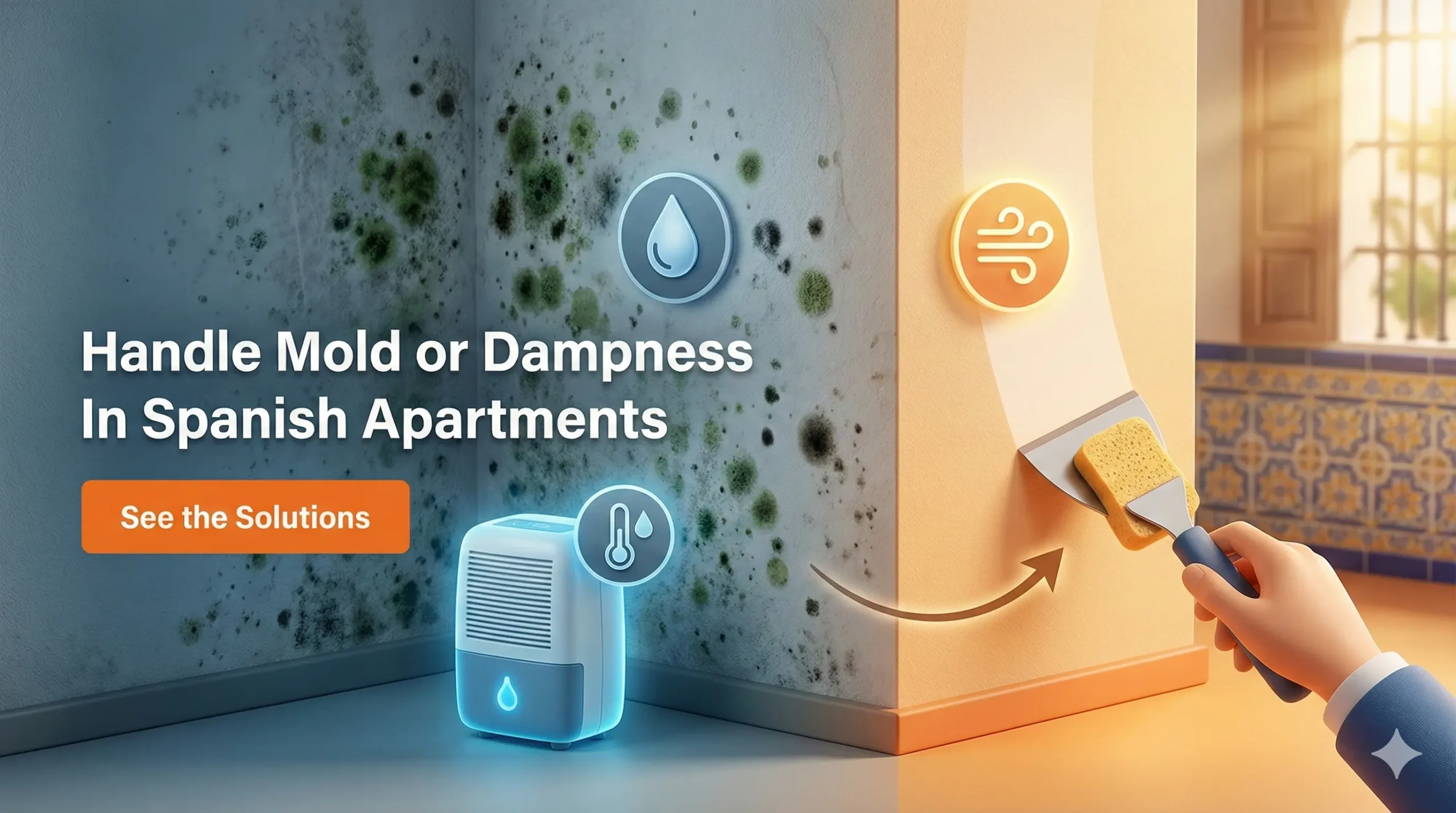
Mold and dampness are frequent issues in Spanish homes due to construction styles and humidity. This guide explains how to identify the difference between condensation and structural leaks, outlines tenant versus landlord legal responsibilities, and provides actionable steps to resolve these health hazards effectively.
Disclosure: This post may contain affiliate links. We may earn a commission at no extra cost to you if you make a purchase through these links. Read full disclosure.
Identifying the Enemy: Condensation vs. Filtration
Before you can fix the problem or demand a repair, you must diagnose the source. In Spain, dampness generally falls into two categories, and the liability for fixing them is completely different.
1. Condensation (Condensación)
This is the most common form of dampness in Spanish apartments, particularly in winter. It occurs when warm, moist air inside the house hits a cold surface (like a window or an uninsulated wall) and turns into water droplets.
- Signs: Black mold spots appearing in corners of rooms, around windows, or behind furniture pushed against external walls. Water droplets on windows in the morning.
- Cause: Daily activities (cooking, showering, drying clothes indoors) combined with poor ventilation and “thermal bridges” (areas where insulation is missing).
- Responsibility: This is the grey area. Landlords often argue it is a “usage” issue (tenant responsibility), while tenants argue it is an “insulation” issue (landlord responsibility).
2. Filtration and Leaks (Filtración)
This is water entering the property from the outside or from a neighbor.
- Signs: Defined patches of dampness that grow over time, often with a yellow or brown outline (water stains). Peeling paint or plaster falling off.
- Cause: A broken roof tile, a crack in the facade, a leaking pipe in the apartment upstairs, or rising damp (capilaridad) from the ground in ground-floor flats.
- Responsibility: Clear-cut. This is a structural or maintenance issue. The landlord (or the building community/neighbor) is 100% responsible.
Why Is Dampness So Common in Spain?
Understanding the root causes helps in managing expectations. Many buildings constructed during the Spanish property boom (and before the stricter Technical Building Code of 2006) lack modern insulation.
- Thermal Bridges: Many older buildings use aluminum window frames without a “thermal break.” The metal conducts the cold from outside directly into the room, causing immediate condensation on the frame and glass.
- Single Glazing: Single-pane windows are still common in older rentals, offering zero thermal protection.
- Heating Culture: Central heating is rare in southern and coastal Spain. Tenants often use portable butane gas heaters (estufas). Burning butane releases significant amounts of water vapor into the air, drastically increasing humidity.
- Ventilation Habits: Spanish construction relies on “breathing.” Buildings were designed to be aired out daily. Modern tenants who keep windows sealed to retain heat often inadvertently trap moisture.
If you are currently looking for a new place and want to spot these red flags before moving in, refer to our Checklist: What to Inspect Before Signing a Lease in Spain.
Tenant vs. Landlord Responsibilities
The legal framework for repairs is set out in the Ley de Arrendamientos Urbanos (LAU). Article 21 is the key text here.
The Landlord’s Duty
The landlord is legally obliged to perform all repairs necessary to keep the dwelling in a “habitable condition” without raising the rent.
- Structural Issues: If the damp is caused by a leaking roof, a broken pipe, cracks in the facade, or rising damp from the foundation, the landlord must fix it. This includes repairing the cosmetic damage (painting) caused by the leak.
- Uninhabitable Conditions: If the mold is so severe that it poses a health risk, the property may be deemed uninhabitable, giving the tenant the right to terminate the contract without penalty.
The Tenant’s Duty
The tenant is responsible for damage caused by misuse or lack of “due diligence.”
- Ventilation: A tenant has a duty to ventilate the property. If a tenant dries wet laundry inside a small room with the windows closed and the heating on, resulting in mold, the landlord can claim this is tenant negligence.
- Minor Maintenance: Small repairs derived from daily wear and tear fall to the tenant.
For a deeper dive into how the law interprets these maintenance disputes, reviewing Spain Rental Contract is essential.
Step-by-Step Guide to Resolving the Issue
If you discover mold or damp, do not ignore it. It will spread. Follow this protocol to protect your health and your security deposit.
Step 1: Diagnose and Document
Take high-resolution photos of the affected areas immediately. If it is a water stain, mark the edge of the stain with a pencil and date it. Take a photo a week later to show the growth. This proves the issue is active.
Step 2: Inform the Landlord
Notify your landlord immediately in writing. Do not just call them. Send an email or a WhatsApp message (saved for records) attaching the photos.
- Script: “Hola [Name], I have noticed damp patches appearing in the [Room Name]. It looks like [filtration/condensation]. Please can you arrange for a professional to inspect the cause?”
- Tip: Be polite but firm. Frame it as a concern for their property asset.
Step 3: The Insurance Visit
In Spain, most landlords have Seguro de Hogar (Home Insurance). They will typically send an insurance adjuster (perito) to inspect the damage.
- Be Present: Ensure you are home when the adjuster arrives. Ask them directly what the cause is. Their report is the “source of truth.”
- The Verdict: If the adjuster says it is a pipe or roof issue, the insurance will cover it. If they say it is condensation, the landlord will likely tell you to clean it yourself. To understand what insurance typically covers, read Home Insurance in Spain.
Step 4: Remediation or Escalation
If it is a structural leak and the landlord ignores you, you must escalate.
- Burofax: Send a formal notification via Burofax demanding the repair within a set timeframe. This is legally binding proof of notification.
- Municipal Health Department: If the mold is severe, you can request an inspection from the town hall (Sanidad) to certify if the home is fit for habitation.
- Legal Action: As a last resort, you can sue for breach of contract, though this is slow.
If communication breaks down completely, having a paper trail is your only defense. Learn how to construct this properly in Dealing with Landlords in Spain: Communication Tips and Paper Trail.
Practical Solutions for Managing Condensation
If the damp is diagnosed as condensation (which is common), the landlord may refuse to install better insulation. You will need to manage the environment to protect your health.
1. The “10-Minute” Rule
Spaniards are obsessive about ventilar (airing out). Open all windows wide for 10 minutes every morning. This creates a cross-breeze that replaces stale, humid air with fresh, dry air without cooling down the walls significantly.
2. Buy a Dehumidifier
In coastal Spain, a high-quality electric dehumidifier (deshumidificador) is not a luxury; it is a necessity. Running one for a few hours a day can extract liters of water from the air, making the room feel warmer and preventing mold growth.
3. Cleaning the Mold
Do not simply paint over mold; it will grow back through the paint.
- Bleach (Lejía): Effective on non-porous surfaces like tiles.
- Vinegar: Better for porous surfaces as it penetrates to kill the root.
- Anti-Mold Paint: Once the wall is clean and dry, paint it with pintura antimoho. If you are renting, ask the landlord to pay for the materials even if you do the labor.
4. Heating Management
Cold walls attract condensation. Keeping the apartment at a stable, moderate temperature is better than letting it freeze at night and blasting the heat in the evening. However, this impacts your wallet. To balance comfort with cost, check our guide on Energy Efficiency Certificates in Spain: What Buyers and Renters Should Know.
Comparison Table: Determining the Cause
Use this table to help identify what kind of dampness you are dealing with before contacting your landlord.
| Feature | Condensation | Filtration / Leaks |
| Location | Corners of rooms, window frames, behind wardrobes on external walls. | Specific spots on ceilings, under pipes, or around cracks in the wall. |
| Appearance | Black speckled spots (mold), fuzzy growth. | Yellow/brown rings (water stains), bubbling paint, white salt powder (salitre). |
| Timing | Worsens in winter or when cooking/drying clothes. | Worsens during/after rain or constantly drips. |
| Smell | Generally musty smell in the whole room. | Localized damp smell near the patch. |
| Responsibility | Usually Tenant (ventilation) / Landlord (insulation – grey area). | Strictly Landlord / Community of Owners. |
When to Move Out
Sometimes, a damp problem is structural and unfixable without major renovation work that the landlord cannot or will not afford.
If you develop respiratory issues, asthma, or allergies due to the mold, you have grounds to terminate the lease early. Article 26 of the LAU allows for the suspension or termination of the contract if the dwelling becomes uninhabitable due to the execution of works or the state of the property.
You will need medical proof and potentially a report from a technical architect to prove the severity of the issue. Do not simply stop paying rent; this puts you in legal breach. Negotiate an exit (“I will leave early, you return my full deposit immediately”).
Conclusion
Dampness in Spanish apartments is a frustrating reality of the local climate and housing stock. While you cannot control the weather or the building quality, you can control how you manage the issue.
By distinguishing clearly between condensation and filtration, documenting every interaction, and taking proactive steps to ventilate and dehumidify, you can minimize the impact on your life. If the landlord fails to meet their legal obligation to provide a dry, habitable home, use the legal tools available to you to enforce your rights or exit the contract safely. Your health is worth more than any apartment view.
References
Primary sources (official)
- Boletín Oficial del Estado (Ley de Arrendamientos Urbanos – LAU): https://www.boe.es/buscar/act.php?id=BOE-A-1994-26003
- Código Técnico de la Edificación (CTE – Building Standards): https://www.codigotecnico.org/
- Ministry of Housing and Urban Agenda: https://www.mivau.gob.es/
Other helpful sources
- OCU (Consumer Organization – Dampness Advice): https://www.ocu.org/vivienda-y-energia
- Idealista (Guide to Humidity in Rentals): https://www.idealista.com/news/inmobiliario/vivienda/2019/01/17/771133-humedades-en-pisos-de-alquiler-quien-paga-la-reparacion
Disclaimer
The information provided in this article is for educational and informational purposes only and does not constitute formal legal or technical advice. Determining the root cause of dampness often requires a professional assessment by a qualified architect or insurance adjuster. We strongly recommend seeking professional technical advice before withholding rent or initiating legal proceedings against a landlord.