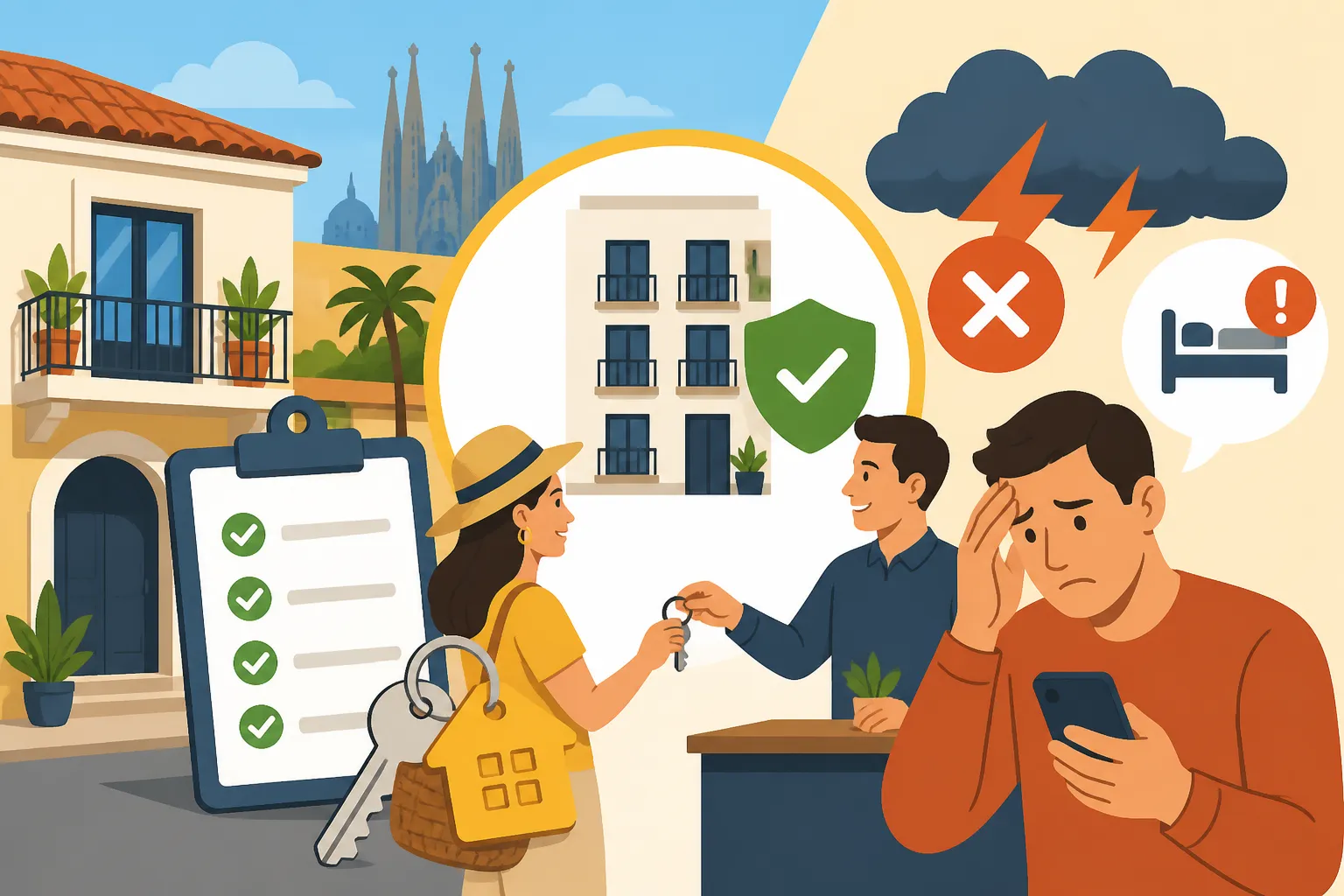
Apartamentos Turisticos: Licence Numbers, Check-In, and What Can Go Wrong
Ah, the apartamento turístico! What a wonderful way to experience Spain, giving you that sense of truly living like a local, with your own kitchen and a bit more space than a typical hotel room. But let's be real, the world of short-term rentals in Spain can feel like navigating a legal labyrinth if you're not prepared, often leading to unwelcome surprises from missing license numbers to confusing check-in procedures. This guide is here to untangle all that for you, offering practical, empathetic advice so you can book your Spanish home-away-from-home with confidence and truly enjoy your trip, especially by leveraging reliable platforms like Booking.com.
Disclosure: This post may contain affiliate links. We may earn a commission at no extra cost to you if you make a purchase through these links. Read full disclosure.
Unpacking the World of Apartamentos Turísticos
Before we dive into the nitty-gritty, let's get our bearings on what an apartamento turístico actually is in Spain. You see, it's not just any old apartment that someone decides to rent out for a few nights. Spain, with its booming tourism industry, has been grappling with regulating these types of accommodations for years, often leaving visitors scratching their heads.
What Differentiates Them From Regular Rentals?
This is where things get interesting, and often, a little frustrating for foreigners. In Spain, there's a clear legal distinction between a residential rental (a long-term lease, typically for a year or more, where a tenant establishes their home) and a vivienda de uso turístico or apartamento turístico (a short-term rental specifically for tourists). The crucial difference lies in its intended use and, consequently, the regulations it must adhere to.
A long-term rental falls under the Ley de Arrendamientos Urbanos (LAU), governing contracts, deposits, and tenant rights for residential purposes. These are homes. An apartamento turístico, on the other hand, is considered a commercial activity, falling under tourism laws enacted by each of Spain's 17 autonomous communities. This means they are subject to strict rules about registration, safety, capacity, and even things like noise levels and cleaning standards. This isn't just bureaucratic fluff; it's about ensuring a minimum quality of stay for visitors and maintaining a balance with local residents. It also means that a friendly local renting out their spare room on a casual basis, without proper registration, might technically be operating illegally in many areas. It's a frustrating grey area for many, both hosts and guests, who just want a simple transaction.
Types of Tourist Apartments You'll Encounter
The term apartamento turístico is broad, and you'll find a variety of offerings under this umbrella. Knowing the different types can help you set your expectations and choose wisely.
First, you have the standalone tourist apartment, which is what most people picture: a privately owned flat in a residential building, rented out entirely to guests. These are often managed by individual owners or small agencies. They offer privacy and a local feel, but typically come with less on-site support than a hotel.
Then there are apartment hotels or apartahoteles. These are essentially hotel complexes, but instead of single rooms, they offer self-contained apartments with kitchens and living areas. They combine the independence of an apartment with hotel-style services like a reception desk, daily cleaning, and sometimes even a restaurant or pool. These are usually clearly branded and operate with full legality.
You might also come across shared tourist housing or rooms within an apartment where the owner lives, legally referred to as viviendas compartidas in some regions. These often have different regulations and might require the owner to be present during your stay. Less common but still part of the broader tourism landscape are casas rurales or rural tourism houses, typically found in countryside settings and adhering to specific rural tourism laws. The amenities across these types can vary wildly, from basic kitchenette setups to full gourmet kitchens, and from a shared hallway to a private terrace with a sea view. It's worth scrutinizing the listing details on platforms like Booking.com to understand exactly what you're getting.
The Non-Negotiable: Understanding the Licence Number
Alright, this is perhaps the single most important piece of information you need to know about booking an apartamento turístico in Spain. The licence number isn't just a random string of characters; it's your assurance that the property is legitimate and meets local standards.
Why the Licence Number is Your Best Friend
Imagine arriving in a bustling city like Barcelona or a charming town in Andalusia, bags in hand, only to find your booked apartment isn't quite as advertised, or worse, doesn't exist. That's a nightmare scenario, and frankly, a legitimate concern given some of the less-than-scrupulous operators out there. The official licence number, often referred to as a número de registro turístico or similar, is the beacon of legality. It proves that the property has been inspected (to some degree), registered with the regional tourism authority, and is compliant with local regulations.
This isn't just for your peace of mind regarding safety and quality; it also impacts tax compliance. An illegal rental avoids taxes, which puts strain on local services and skews the market. For you, the guest, booking a licensed property means you have a clearer path to consumer protection if anything goes awry. If a property isn't licensed, it technically shouldn't be operating as a tourist rental, and your recourse in case of problems might be severely limited. It's easy to get frustrated with the bureaucracy, but in this instance, it really is there to protect you.
How to Spot a Legitimate Licence and What to Do If It's Missing
So, how do you find this elusive number? A legitimate apartamento turístico listing should display its licence number prominently. You'll typically find it in the property description on booking platforms, sometimes right next to the property name, or in a dedicated section for legal information. Owners are legally obliged to display it.
The format of the licence number varies by autonomous community, which can add to the confusion. For example:
- In Andalusia, you might see something like VFT/GR/12345 (Vivienda con Fines Turísticos / Granada / registration number) or CTC-2017123456.
- In Catalonia, it often starts with HUT (Habitatge d'Ús Turístic) followed by a town code and numbers, e.g., HUTB-012345 (Barcelona).
- In the Balearic Islands, you might see ETV/12345.
If you can't find a licence number anywhere on a listing, or if the number provided looks suspicious (e.g., too short, random characters that don't fit the regional format, or a personal ID number like an NIE), consider it a major red flag. What should you do?
- Contact the Host: Politely ask for the official registration number and, if possible, where you can verify it. A legitimate host will be happy to provide this.
- Check with the Platform: If you're using a platform like Booking.com, their customer service can often assist. Many reputable platforms now actively work to remove or flag unlicensed properties. Booking.com, in particular, has made strides in requiring hosts to display these numbers.
- Regional Tourism Office: As a last resort, you could try to cross-reference the number with the regional tourism registry, but this can be a cumbersome process for a non-Spanish speaker.
- Avoid Booking: If a host is evasive or if the number is clearly absent or suspicious, it's best to steer clear. It's not worth the potential headaches and risks of being stranded or having no recourse if something goes wrong. Trust your gut.
Navigating the Spanish Check-In Experience
Unlike a hotel where you simply rock up to a reception desk, check-in for an apartamento turístico can be a bit of a dance. It's not necessarily difficult, but it requires a different mindset and, crucially, clear communication.
Beyond the Hotel Lobby: The Realities of Key Handover
One of the biggest differences is the lack of a central reception. For many of us, the comfort of a hotel lobby, where we can drop our bags and ask for directions, is a given. With a tourist apartment, you're often relying on a direct handover or a key-retrieval system.
Scenarios you might encounter:
- Meeting an Agent/Owner: This is common. Someone, usually the owner or a designated key-holder (often an agency employee or friend), will meet you at the apartment at a pre-arranged time. This requires precise communication about your arrival details, flight numbers, and any potential delays. Be realistic about your arrival time; flights can be delayed, and navigating public transport in a new city takes time.
- Key Boxes/Lockboxes: Increasingly popular, especially for properties managed remotely. You'll receive a code via email or messaging app before arrival, which you use to unlock a small box near the apartment door or in a common area. This offers flexibility but means you won't have a person to ask immediate questions.
- Smart Locks/Remote Access: Some modern properties use smart lock systems where you access the apartment with a code on your phone. Again, this offers flexibility but relies heavily on your phone being charged and having internet access.
The importance of communication before your arrival cannot be overstated. Confirm all check-in details a few days before you travel. If your flight is delayed or you get lost on the way, immediately message your host. There's nothing worse than arriving late to a dark street with no way to contact anyone, and it often happens to expats who assume things would just "work out."
Mandatory ID Scans and Guest Registration
This is another aspect that often surprises foreigners, but it's completely standard and a legal requirement in Spain: all guests staying in any type of tourist accommodation (hotels, hostels, apartamentos turísticos) must be registered with the police.
When you check in, your host or their representative will ask for your passport or national ID card (for EU citizens) for every single person staying, including children. They will either make a copy, scan it, or ask you to input the details into an app. They then submit this information to the police via a system called Hospederías or similar. You'll often be asked to sign a parte de entrada or ficha de viajeros, which is a physical registration form.
Don't be alarmed by this; it's a measure for public safety and security, similar to what you'd find in many other countries. It's not about tracking your every move, but rather a standard procedure to ensure all visitors are accounted for. If a host doesn't ask for your ID, that's actually a red flag, as they might be operating outside of legal requirements.
Make sure your ID documents are easily accessible upon check-in. This is crucial for smooth processing. Also, remember that your personal identification, such as your NIE or TIE card if you're a resident, is vital for more than just a quick holiday; it's central to everything from healthcare to banking in Spain. For a broader understanding of identity documents, you might want to read our guide on Spain Visas & Residency: Complete Guide for Foreigners.
Common Pitfalls and How to Safeguard Your Stay
Even with the best intentions, things can sometimes go sideways. Knowing what to watch out for can save you a lot of grief and money.
Unforeseen Costs and Hidden Fees
Nothing sours a trip faster than unexpected charges popping up after you thought you had everything budgeted. While reputable platforms like Booking.com strive for transparency, it's always wise to scrutinize the "fine print" of apartamento turístico listings.
Common fees you might encounter include:
- Cleaning Fees: Almost ubiquitous. These are usually a one-time charge per stay, and they can vary significantly. Always check if a minimum standard of tidiness is expected upon departure, beyond just leaving things clean.
- Late Check-in Fees: Many hosts charge extra if you arrive after a certain hour (e.g., after 8 PM or 10 PM). This is because someone often has to wait specifically for your arrival, sometimes late into the night. If you know you'll be arriving late, factor this into your budget and confirm the fee beforehand.
- Tourist Taxes (Tasas Turísticas): Certain cities and regions in Spain, like Barcelona and Catalonia, or the Balearic Islands, levy a small daily tourist tax. This is usually collected by the host upon arrival and is separate from your booking fee. The amount is typically very small (a few euros per person per night) and usually capped at a certain number of nights.
- Security Deposits: While many platforms handle deposits, some individual hosts might request a cash deposit upon arrival. Be cautious with this, and always ensure it's explicitly stated in the booking conditions. A reputable platform generally mediates these, or handles the funds themselves.
- Utility Costs: While less common for short-term tourist apartments, some longer stays or non-tourist rentals might separate out utility costs. Always confirm if electricity, gas, and water are included in the price.
Always, always review the total price breakdown before you confirm your booking on Booking.com. It's generally very good at showing you the full cost, including these extras, upfront. If anything seems unclear, don't hesitate to message the host through the platform for clarification.
Communication Challenges and Emergency Protocols
Language barriers are a real thing, even in tourist-heavy areas. While many hosts will speak at least some English, relying solely on that can lead to miscommunications, especially if you have a complex query or an emergency.
- Host Communication: Before you book, check the host's response rate and tone. Clear, prompt communication is a good sign. For critical information like check-in instructions, consider having key phrases translated into Spanish (e.g., "My flight is delayed," "Where is the key box?").
- No 24/7 Reception: Remember, this isn't a hotel. There's no concierge to call at 3 AM for a leaky faucet. Understand the host's availability and what their emergency contact protocol is. They should provide you with a direct phone number for urgent issues.
- Real Emergencies: For life-threatening situations, medical emergencies, or serious crimes, you call 112 in Spain – the equivalent of 911 or 999. This number works nationwide and operators can often connect you with English-speaking assistance. For less urgent medical needs, knowing where your nearest Centro de Salud (public health center) is located can be helpful. It’s always good to be prepared; our guide on How to Handle Medical Emergencies If You Don’t Speak Spanish has more specific tips. For day-to-day inconveniences like a broken appliance, message your host first.
Scams and Misleading Listings
Sadly, the internet is rife with opportunistic individuals, and the vacation rental market is no exception. While platforms like Booking.com offer significant safeguards, it's still good to be vigilant.
- Photos vs. Reality: Sometimes, photos can be outdated, heavily filtered, or depict a different property entirely. Read recent reviews critically, looking for comments on accuracy.
- Non-existent Properties: Very rare on major platforms but more common on less regulated sites. This is where the licence number (or lack thereof) is a huge red flag.
- Pressure for Off-Platform Payments: If a host asks you to pay outside of Booking.com's secure payment system, especially for the entire booking, never do it. This immediately voids any protection the platform offers. Always keep communication and transactions within the platform.
- False Urgency: Be wary of hosts pressuring you to book quickly with unrealistic discounts if you pay cash or directly.
This is precisely where Booking.com shines. Its robust verification processes, secure payment system, and, most importantly, its dispute resolution mechanism, provide a crucial safety net. If a listing turns out to be fraudulent or significantly different from what was advertised, contacting Booking.com's support team is often the quickest route to a resolution. They can mediate, offer refunds, or even help you find alternative accommodation. Your card details are protected, and you have a clear trail of communication and payment. For general safety tips while traveling, our Staying Safe in Spain: Practical Safety Tips for New Residents article might also be useful.
Booking Smart: The Power of Reputable Platforms
When it comes to securing your apartamento turístico, using a trusted platform isn't just a convenience; it's a vital layer of protection. This is precisely why Booking.com stands out as an excellent choice for navigating the Spanish rental market.
Why Booking.com is Your Go-To for Tourist Apartments
Let's be honest, trying to find and book an apartamento turístico directly with an unknown owner in Spain can be a bit of a gamble. Language barriers, varying regional laws, and the general lack of a centralized system for small, independent rentals mean you're exposed to more risk. This is where Booking.com really earns its stripes as a hero for travelers.
First off, Booking.com acts as a crucial safety net. They have established verification processes for their listings, which helps filter out some of the more dubious properties. While no system is perfect, they demand a certain level of professionalism from their hosts. Secondly, their system is built on guest reviews, a treasure trove of information that allows you to see unbiased feedback from previous visitors. This collective wisdom is invaluable for assessing accuracy, cleanliness, and the host's responsiveness.
Furthermore, Booking.com provides customer support in multiple languages, which is a godsend if you encounter an issue and your Spanish isn't quite up to negotiating a plumbing problem. Their support team can act as an intermediary, which is far better than being left to fend for yourself. And speaking of ease, Booking.com makes it incredibly straightforward to search and filter for exactly what you need across Spain, whether you're looking for a charming flat in Barcelona, a beachfront escape in Málaga, or a quiet retreat in the Basque Country. Their platform is generally excellent at presenting transparent pricing, making it easier to see all potential costs upfront, including those pesky cleaning or tourist tax fees, before you commit. Booking.com makes it easier to filter for licensed properties, as hosts are often prompted or required to input this information. This makes your search for a legal stay much simpler.
Leveraging Filters and Reviews for the Perfect Stay
One of the biggest advantages of using Booking.com is the power of its search filters and the depth of its review system. Don't just type in your destination and dates and pick the first pretty picture you see!
- Use Specific Filters: When searching for apartamentos turísticos, look for options like "apartments," "vacation rentals," or even "serviced apartments." You can filter by amenities that are crucial to your stay, such as a kitchen, washing machine, air conditioning (a must in summer!), or Wi-Fi. If traveling with family, filters for "family-friendly" or "crib available" can narrow down suitable options.
- Location, Location, Location: Booking.com's map feature is incredibly useful. You can visually assess how close a property is to public transport, specific attractions, or the beach. Our guides like How to Get Around a Spanish City Without Speaking Spanish can help you navigate once you're there.
- Dive Deep into Reviews: Don't just look at the overall star rating. Read the actual comments. Look for patterns: are multiple guests complaining about noise, a broken appliance, or difficult check-in? Conversely, are many praising the host's communication, the cleanliness, or the fantastic location? Pay attention to recent reviews, as things can change over time. Reviews can also give you insights into the actual size and feel of the apartment – sometimes photos can be deceiving! A great feature of Booking.com is the ability to easily compare prices and features of similar properties side-by-side, making your decision-making process much more informed.
When Things Go Wrong: Platform Support and Dispute Resolution
Despite all precautions, sometimes issues still arise. This is where the intermediary role of Booking.com becomes absolutely invaluable. If you book directly with an owner and something goes wrong – say, the apartment is filthy, a major appliance is broken, or worse, you're locked out – you might be left entirely on your own, battling a language barrier and potentially an unresponsive host.
With Booking.com, you have a formal channel for raising concerns. If you arrive and the apartment isn't as described, or if a significant problem occurs during your stay, you can contact their customer service. They can:
- Mediate: Attempt to resolve the issue directly with the host on your behalf.
- Offer Solutions: If the problem is severe and unresolvable, they might offer to find you alternative accommodation, or process a refund, depending on their terms and conditions and the severity of the issue.
- Document: All your communication through the Booking.com platform is recorded, providing a clear paper trail should you need to escalate a complaint.
This level of support offers immense peace of mind. If an issue arises, contacting Booking.com's support team is often the quickest route to a resolution, ensuring you don't spend your precious holiday time stressed out. Keep all relevant information handy, such as screenshots of the listing, photos of any issues, and timestamps of communication.
Your Rights as a Tourist Apartment Guest
Even though you're not in a traditional hotel, you still have rights as a consumer and a guest in a legitimate apartamento turístico. Knowing these can empower you if a situation goes south.
Understanding Consumer Protection in Spain
Spain has strong consumer protection laws, and these generally extend to tourist accommodations. Your basic rights include:
- Accurate Description: The property must match the description and photos provided in the listing. Misrepresentation is a violation of consumer rights.
- Safe and Habitable Environment: The apartment should be safe, clean, and in good working order. Basic utilities (electricity, water, gas, unless otherwise specified) should function correctly.
- Respectful Treatment: You have the right to be treated respectfully by the host or their representatives.
- Transparency in Pricing: All costs should be clearly communicated upfront.
- Right to Complaint: You have the right to file a complaint if services are not rendered as agreed. Many businesses in Spain, especially those in tourism, are legally required to have official complaint forms, known as hojas de reclamaciones, available for customers. While perhaps not often used by short-term visitors, knowing they exist can be a powerful tool.
If you believe your rights have been violated, the first step is always to try and resolve it directly with the host. If that fails, and you booked through a platform like Booking.com, their dispute resolution service is your next best recourse. For broader issues or to learn more about consumer rights in Spain, seeking information from local consumer offices (Oficina Municipal de Información al Consumidor – OMIC) can be helpful, though again, this can be complex for a temporary visitor.
Documenting Your Stay and Any Issues
This might sound like overkill, but trust me, having a solid paper trail and photographic evidence is your best friend if a dispute arises, whether you're dealing with a host directly or through Booking.com.
- Booking Confirmation: Keep your Booking.com confirmation, including all details about the property, dates, and what's included. This is your primary contract. Keeping a paper trail of your booking on Booking.com is simple, as everything is clearly documented in your account.
- Communication Records: Keep all messages exchanged with the host, ideally through the booking platform's messaging system. This provides a timestamped record of agreements, requests, and any issues raised.
- Photos and Videos:
- Upon Arrival: Take photos or even a quick video of the apartment as soon as you arrive, especially if you notice anything immediately wrong (e.g., cleanliness issues, broken furniture, obvious discrepancies from the listing photos). This establishes a baseline condition.
- During Your Stay: If any problems arise (e.g., a leaking tap, a non-working appliance, a cleanliness issue that was missed), take clear photos or videos as soon as you notice them. Date and time stamps are ideal.
- Upon Departure: Consider taking photos of the apartment's condition when you leave, especially if a security deposit is involved, to prove you left it in good order.
- Receipts: Keep receipts for any unexpected expenses incurred due to a host's failure (e.g., if you had to buy cleaning supplies because the apartment was dirty, or if you paid for a repair after agreeing with the host).
This documentation is crucial proof if you need to file a claim with Booking.com or dispute a charge. It makes your case much stronger and helps the platform understand the situation objectively.
| Feature | Booking Directly with Host | Booking via Booking.com (or similar platform) |
|---|---|---|
| Licence Verification | Your responsibility to check and verify independently. | Often a requirement for hosts to list, platform may have checks, reviews offer insight. |
| Payment Security | Direct bank transfers can be risky; no protection if fraud occurs. | Secure payment gateway; payment held until after check-in; fraud protection. |
| Dispute Resolution | Relies entirely on host's goodwill; no third-party mediation. | Platform acts as intermediary, mediates disputes, may offer refunds/relocations. |
| Communication | Direct contact (email/phone); language barriers can be an issue. | In-app messaging with translation features; host contact details provided. |
| Range of Options | Limited to properties you find independently. | Vast database of properties worldwide, extensive search filters. |
| Reviews & Ratings | None available unless host links to external reviews. | Extensive user-generated reviews and ratings for informed decision-making. |
| Cancellation Policy | Set solely by host, may be rigid or unclear. | Clear, standardized policies displayed, often with flexible options. |
| Emergency Support | Relies solely on host's availability; no 24/7 service. | Many platforms offer 24/7 customer support for urgent issues. |
Conclusion
Navigating the world of apartamentos turísticos in Spain doesn't have to be a bewildering experience. Armed with the knowledge about licence numbers, what to expect during check-in, and common pitfalls, you're already light-years ahead. The key is to be informed, communicate clearly, and leverage the power of reputable platforms like Booking.com.
By choosing Booking.com, you're not just getting a place to stay; you're gaining access to a vast array of verified properties, transparent pricing, invaluable guest reviews, and a robust support system that acts as your safety net. It truly minimizes the stress, allowing you to focus on the exciting part: immersing yourself in the incredible culture, food, and beauty that Spain has to offer. So go ahead, find that perfect apartamento turístico on Booking.com, pack your bags, and get ready for an unforgettable adventure!
Disclaimer
This article is for general informational purposes only and does not constitute professional advice. Laws, prices and regulations vary by location and change over time. Consult a qualified professional for guidance on your specific situation.