Casas Rurales and Agroturismo: Booking Spain’s Countryside
Oh, the lure of the Spanish countryside! After living here for years, I can tell you there's nothing quite like escaping the bustling cities to discover the real, raw heart of Spain. But let's be honest, finding and booking that idyllic stone cottage or charming farm stay can feel like trying to find a needle in a haystack if you don't know where to look. This comprehensive guide is here to cut through the confusion, helping you confidently navigate the world of casas rurales and agroturismo so you can book your perfect, authentic Spanish rural escape.
Disclosure: This post may contain affiliate links. We may earn a commission at no extra cost to you if you make a purchase through these links. Read full disclosure.
What Exactly Are Casas Rurales and Agroturismo in Spain?
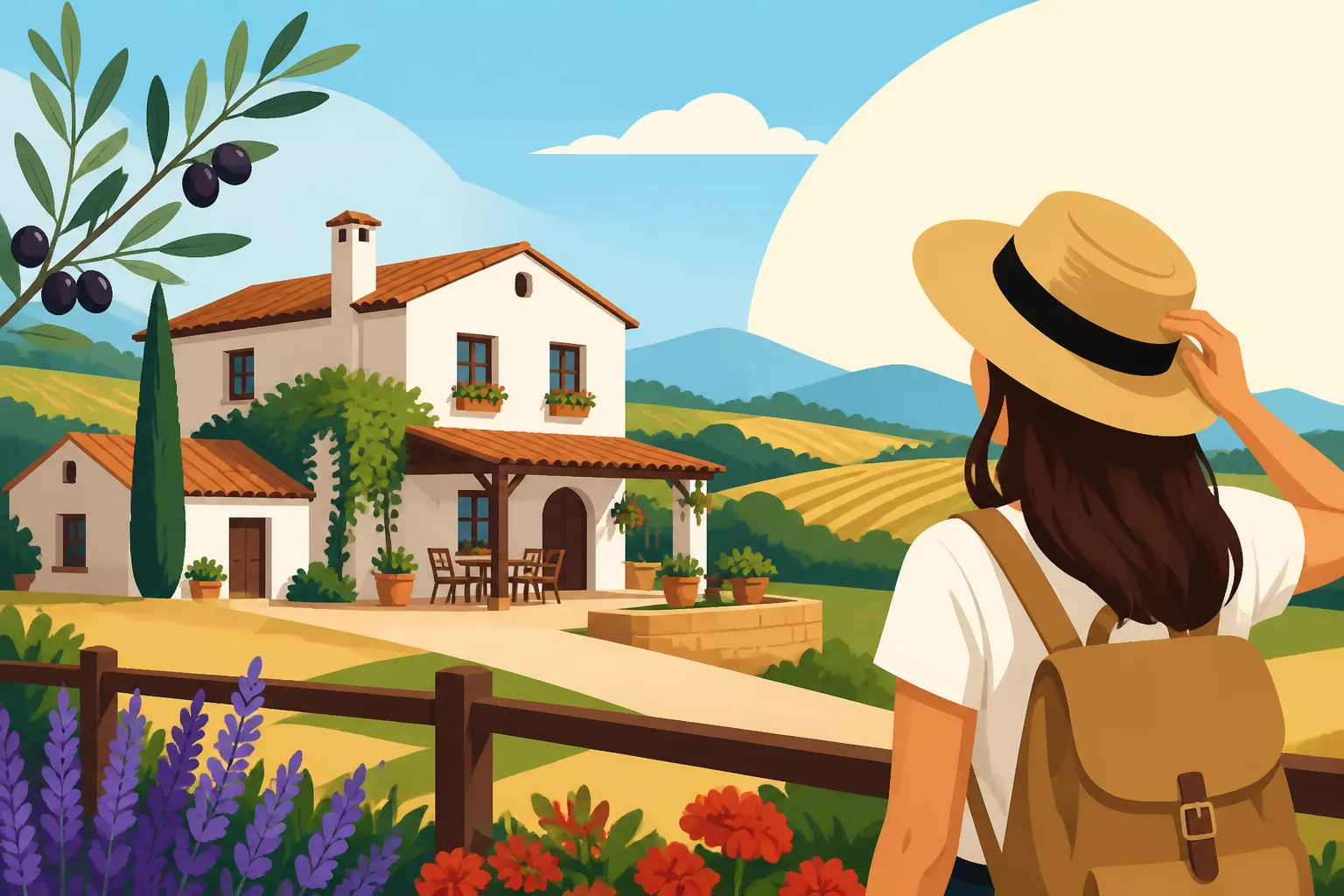
When you dream of Spain, do you picture whitewashed villages clinging to mountainsides, ancient olive groves stretching to the horizon, or perhaps a rustic farmhouse surrounded by vineyards? If so, you're dreaming of the Spain that casas rurales and agroturismo offer. These aren't just hotels in the countryside; they are deeply ingrained in the fabric of rural life and offer a profoundly different experience than your typical city break. Understanding the nuances between them is the first step to choosing the right kind of adventure.
The Charm of a Casa Rural
A casa rural literally translates to "rural house," and it’s exactly what it sounds like: a traditional home, or sometimes a cluster of homes, in a rural setting that has been lovingly restored and converted into guest accommodation. Think thick stone walls, wooden beams, terracotta tiles, and often a cozy fireplace that crackles on cooler evenings. These properties are typically found in or near small villages, nestled amongst rolling hills, or perched on a mountainside in regions like Asturias, Galicia, or the more inland parts of Andalusia and Castilla y León.
The experience of staying in a casa rural is about immersion in local village life, quiet contemplation, and enjoying the natural surroundings. You might find yourself waking up to the sound of church bells or a distant flock of sheep, rather than city traffic. Many casas rurales are self-catering, giving you the freedom to cook with local produce, while others might offer breakfast or even home-cooked regional dinners. It’s easy to romanticize this picture, of course, and while the peace is truly restorative, sometimes the reality of rural remoteness—like the lack of immediate amenities—can be a slight adjustment for those used to urban convenience. But trust me, it’s a small price to pay for the authenticity you gain.
Experiencing Agroturismo and Farm Stays
Agroturismo takes the rural experience a step further by integrating your stay with a working farm or agricultural enterprise. This isn't just a pretty house in the country; it's often a chance to truly connect with the land and the people who work it. You might find yourself on an olive farm in Jaén, a vineyard in La Rioja, a dairy farm in Cantabria, or a citrus grove in Valencia. The defining characteristic is the connection to the agricultural rhythms of the region.
The beauty of agroturismo lies in the potential for hands-on experiences and a deeper understanding of sustainable living. Depending on the farm, you could participate in grape harvesting, olive picking, learn about cheese making, feed farm animals, or even take a cooking class using ingredients grown right there. For families, it’s an incredible educational opportunity for children to see where their food comes from. For foodies, it's a direct pipeline to fresh, seasonal, often organic produce. These stays emphasize local produce, often featuring farm-to-table meals that are unforgettable. While some agroturismo spots can be rustic, many have been beautifully converted to offer comfortable, charming accommodation, still keeping that authentic, working farm feel.
Why Choose Rural Accommodation Over City Stays?
The allure of Spain's vibrant cities like Madrid and Barcelona is undeniable, but choosing a casa rural or agroturismo offers a distinctly different, yet equally rewarding, side of the country. For many expats and tourists, it's about peeling back another layer of the Spanish experience.
Firstly, there's the unparalleled authenticity and cultural immersion. Away from the main tourist circuits, you'll encounter local traditions, regional dialects (even more so than city Spanish!), and a slower pace of life that allows for genuine connection. You’ll taste regional cuisine that rarely makes it to city menus, often prepared with ingredients sourced just down the road. Secondly, the peace and quiet are a balm for the soul. Imagine waking up to birdsong instead of traffic, with stunning natural landscapes—whether it’s mountains, forests, or coastline—right on your doorstep. This access to nature makes it perfect for hiking, cycling, birdwatching, or simply unwinding. Financially, rural accommodations can often be more cost-effective than city hotels, especially for families or longer stays, as many offer self-catering facilities. However, it's vital to acknowledge that this choice comes with its own set of trade-offs. Accessibility can be a major factor, with many rural spots requiring a car, and public transport options being few and far between. The language barrier might also feel more pronounced as English speakers are less common. Amenities can be simpler, and high-speed internet isn't always a given. That deafening quiet I mentioned earlier? While glorious, it can sometimes feel isolating if you’re used to constant stimulation. But for those ready to embrace these differences, the rewards of a truly authentic, peaceful Spanish retreat are immeasurable.
Where to Find Your Perfect Rural Retreat in Spain
So, you're convinced! You want to swap city lights for starlit nights and crowded tapas bars for home-cooked meals in a cozy rural kitchen. Fantastic! Now comes the practical part: how do you actually find these hidden gems? While the thought of discovering a perfect, untouched casa rural through word-of-mouth is romantic, in reality, most of us rely on a mix of online tools and a bit of local detective work.
Leveraging Major Online Booking Platforms (Like Booking.com!)
For sheer breadth of choice, user-friendliness, and reliable booking processes, major online platforms are absolutely your best friend when looking for casas rurales and agroturismo. And when it comes to Spain, Booking.com is often the unsung hero for this specific type of accommodation. I've personally spent countless hours poring over options on Booking.com, and for good reason.
What makes Booking.com so invaluable here? It's the vast selection that extends far beyond your typical hotels. Many smaller, independent casas rurales and agroturismo operations understand the importance of online visibility and choose platforms like Booking.com to reach a global audience. The site offers incredibly robust filtering options that are crucial for narrowing down your search. You can filter by "rural accommodation," "farm stay," "cottage," or even specific amenities like "fireplace," "kitchen," "pool," or "pet-friendly." The comprehensive review system is another lifesaver. Reading reviews from previous guests, especially non-Spanish speakers, can give you invaluable insights into the host's hospitality, the actual remoteness, road conditions, and the reality of the amenities. Plus, Booking.com's secure payment system and clear cancellation policies offer a layer of confidence that you might not get from smaller, lesser-known sites. If you're looking to efficiently find and book a charming rural stay in Spain, starting your search on Booking.com is definitely the most effective approach. For more general advice on booking and understanding terms, you might find some useful parallels in our guide on Renting in Spain: Contracts, Deposits, and Tenant Rights, though rural stays are typically short-term.
Niche Rural Tourism Websites and Regional Portals
While Booking.com offers a fantastic entry point, sometimes you want to dig a little deeper or find something truly off the beaten path that might not be on the big platforms. This is where niche rural tourism websites and regional portals come into play. Many of Spain's autonomous communities and provinces have their own dedicated tourism websites, and within those, often specific sections for rural accommodation. For example, sites focusing purely on turismo rural in Andalucía or the Basque Country might list properties that are not widely advertised elsewhere.
The main advantage of these specialized sites is their hyper-local focus. They can offer a curated selection of unique properties, often with more detailed information about the specific area, local activities, and direct contact with the owners. Sometimes, you might even stumble upon a family-run agroturismo that prefers to manage its bookings directly. However, be prepared for a few challenges. These sites are frequently entirely in Spanish, requiring a good grasp of the language (or a robust translation tool). Their booking systems might be less sophisticated, potentially involving email communication or phone calls, and they might have fewer public reviews compared to major platforms. Imagine trying to navigate a site entirely in Galician to find a rustic stone cottage near Ourense – it’s an adventure in itself! While they offer authentic options, they demand more effort and a greater comfort level with direct interaction and less formalized booking processes.
Direct Booking and Local Recommendations
For the truly adventurous and those with a decent grasp of Spanish, direct booking through local recommendations can yield some of the most authentic and rewarding experiences. This often involves a bit of old-fashioned legwork once you're already in the country. If you find yourself passing through a particularly charming village in, say, the Alpujarras of Granada, don't hesitate to pop into the local tourist office (oficina de turismo). These offices are goldmines for local information and often have lists or even brochures for nearby casas rurales or agroturismo properties.
Even better, strike up a conversation with locals in a village bar (bar de pueblo) or at a market. Spaniards are incredibly welcoming and proud of their local area, and a friendly chat can often lead to a recommendation for a family friend's casa rural or a little-known farm stay. The benefits are clear: you're supporting local businesses directly, often getting truly genuine insights, and sometimes even a better rate since there are no commission fees involved. The downsides, as you might guess, are significant. It requires a comfortable level of Spanish proficiency, a willingness to be flexible, and the understanding that you won't have the instant gratification of an online booking or the extensive reviews. But if you're keen to truly immerse yourself and practice your Spanish, this is an unbeatable way to secure a stay. To brush up on those vital phrases, check out our guide on Spanish Language and Everyday Communication for Visitors.
Essential Considerations Before Booking a Casa Rural or Agroturismo
Embarking on a rural getaway in Spain is a fantastic idea, but it’s not quite like booking a city hotel. There are unique aspects to consider that, if overlooked, can turn your tranquil escape into a source of unexpected stress. Trust me, a little preparation goes a long way when you’re heading off the beaten path.
Location, Accessibility, and Transport
This is probably the single most important factor. When you book a casa rural or agroturismo, you’re consciously choosing remoteness, but "remote" can mean different things to different people. How far is the nearest village? Does that village have a shop, a pharmacy, or a bar? Are the roads paved or are you navigating a winding dirt track? In regions like the Picos de Europa or the Sierra de Aracena, roads can be narrow, steep, and, let's just say, character-building.
The almost universal truth for rural accommodation in Spain is this: you will most likely need a car. Public transport in truly rural areas is often non-existent or runs on schedules that are, to put it mildly, infrequent. Don't assume you can easily walk to the bakery for your morning pan or spontaneously drive to a different town for dinner. If you’re coming from abroad, be sure to arrange your car rental well in advance. Consider the type of car you’ll need too; a compact city car might struggle on some of the more rugged country lanes. Think about what you plan to do – if you want to explore several nearby towns or hiking trails, a car is non-negotiable. Our guide on Renting a Car in Spain: Requirements, Insurance, and Driving Tips can help you get sorted.
Amenities, Facilities, and Expectations
Rural charm often means rustic living, but there’s a wide spectrum. What one person considers "authentic," another might find "lacking." It’s crucial to manage your expectations regarding amenities. Don't automatically expect air conditioning, especially in older stone properties, though heating for cooler months (like a wood-burning stove or central heating) is usually standard. Kitchens in self-catering casas rurales can range from fully equipped culinary havens to quite basic setups, so check the listings carefully if you plan to cook extensively.
Internet connectivity is another big one. While many properties now offer Wi-Fi, particularly those listed on platforms like Booking.com, it can be slower, less reliable, or even limited compared to city connections. If you’re a digital nomad or rely on strong internet for anything, confirm this directly with the host or check recent reviews. Regarding activities at an agroturismo, always clarify if they are included in the price or if there are additional costs. Sometimes, a "wine tasting" might be a full-blown tour and meal, while other times it might just be a small sample with the owner. Read descriptions thoroughly and don't be afraid to ask questions before you commit.
Language Barriers and Cultural Nuances
Here’s where the "expat veteran" in me really wants to give you a hug and tell you it’s okay to feel a bit out of your depth sometimes. In smaller, truly rural areas, the chances of your host or the local shopkeeper speaking fluent English are significantly lower than in Madrid or Barcelona. This isn't a slight; it's simply the reality. You’ll need to rely on your basic Spanish phrases, a translation app, and a healthy dose of patience and good humor.
Simple communications like check-in instructions, asking for help with a leaky faucet, or getting recommendations for local hiking trails will all be much smoother if you can manage a few words in Spanish. Don't worry about being perfect; just making the effort will be hugely appreciated. Beyond language, be prepared for cultural nuances. Meal times are often later, the pace of service might be slower, and local customs will be more pronounced. Embrace it! This is precisely why you came to the countryside, right? It’s part of the adventure, part of truly connecting with Spain, and honestly, it’s where some of your fondest memories and funniest stories will come from. Our guide on Spanish Etiquette for Expats: Greetings, Invitations, and Daily Life can offer some handy insights before you go.
Making Your Rural Spanish Stay Unforgettable
You've done the hard work of finding and booking your dream casa rural or agroturismo. Now, how do you make sure the experience lives up to every expectation? It’s not just about the accommodation; it’s about how you engage with the unique environment and culture surrounding you. This is your chance to really slow down and savor Spain.
Engaging with Local Life and Experiences
Don't just stay in your beautiful rural retreat; step out and dive into the local rhythm. Many villages, no matter how small, will have a daily routine you can tap into. Head to the local market for fresh produce, visit the village panadería (bakery) for your morning bread, and definitely spend some time at the local bar. These bars are the social hubs of rural Spain – a coffee in the morning, a glass of vermut before lunch, or a beer in the evening can lead to surprisingly rich interactions, even if language is a barrier.
Your hosts at the casa rural or agroturismo are often your best resource for local insights. Don't be shy; ask them for recommendations on hidden hiking trails, that little family-run restaurant serving the best local dishes, or upcoming village fiestas. You might even be invited to join in if you show genuine interest. Embracing the slower pace is key. Forget your city schedule; allow yourself to disconnect from constant digital demands. Spend an afternoon reading on a terrace, go for a long walk with no particular destination, or simply watch the clouds drift by. It’s an opportunity for true relaxation and a different kind of enrichment. To fully appreciate the culinary side of things, check out our guide on Spanish Food and Drink: A Practical Culture Guide. And if you want to time your visit with local celebrations, our overview of Festivals, Fiestas, and Public Holidays in Spain is a great resource.
Respecting the Environment and Local Culture
When you venture into rural Spain, you're not just a guest in a holiday home; you're a guest in a living, breathing community and a delicate natural environment. Showing respect for both is paramount. Environmental considerations are often more keenly felt in rural areas. Be mindful of your water usage, especially in regions prone to drought. Understand the local waste management and recycling system, which might differ from what you're used to in a city. Small villages often rely on their natural beauty for tourism, so leave no trace and tread lightly on hiking trails.
Culturally, immerse yourself with an open mind. Local traditions, especially in more conservative or isolated areas, might be different from your own. This could be anything from observing siesta hours (don't expect shops to be open then!) to dressing respectfully when visiting churches. Remember that this is someone's home and livelihood. Support local businesses, even if it's just buying a coffee or a locally made craft. Don't expect a bustling city nightlife in a tiny mountain village, for example; instead, appreciate the quiet charm of an evening stroll or a shared meal under the stars. Your presence helps sustain these communities, so engage thoughtfully and respectfully.
Practical Tips for a Smooth Rural Getaway
To ensure your rural escape is as smooth and enjoyable as possible, a few practical considerations will serve you well. First off, pack smart. Good walking shoes are essential for exploring. Layers of clothing are always a good idea, as mountain weather can change quickly, and nights can be cool even after warm days. A basic first-aid kit, including any specific medications, insect repellent (especially in summer), and sunscreen, should be in your bag.
Secondly, cash is king in the countryside. While larger casas rurales or those listed on Booking.com might accept card payments, many smaller establishments, local markets, or village bars might only take cash. Make sure you have enough euros on hand, as ATMs can be few and far between. Check out our advice on Money for Travel in Spain: Cards, Cash, and ATMs for more financial tips. Thirdly, download offline maps! Phone signal can be patchy or non-existent in truly remote areas. Google Maps allows you to download regions for offline use, and apps like Maps.me are also excellent. This will save you from getting lost on those charming but confusing country roads. Finally, keep communication lines open with your host. Before you arrive, confirm your estimated arrival time. If anything changes or you encounter any issues during your stay, a quick message to them can often resolve things swiftly. Many hosts on Booking.com are very responsive via the platform's messaging system, which adds another layer of convenience and reassurance to your rural booking.
Regional Spotlights: Finding Your Ideal Rural Landscape
Spain is a land of incredible diversity, and its rural landscapes are no exception. From the misty green mountains of the north to the sun-baked plains of the south, each region offers a distinct flavor of casa rural or agroturismo. Deciding where to go can be half the fun, so let's explore some of Spain's most captivating rural areas.
Green Spain: Asturias, Galicia, Cantabria
If your idea of a rural escape involves lush, rolling hills, dramatic coastlines, ancient forests, and a climate that's a bit milder than the scorching south, then "Green Spain" – the northern regions of Asturias, Galicia, and Cantabria – is calling your name. Here, casas rurales are often sturdy stone cottages, sometimes centuries old, beautifully restored with wooden interiors, and often featuring spectacular views of verdant valleys or the rugged Cantabrian Sea.
The landscape is dominated by the Picos de Europa mountain range, making it a paradise for hikers and nature lovers. You might find an agroturismo focusing on dairy farming or artisanal cheese production in the heart of Asturias, famous for its cider (sidra). In Galicia, the mist-shrouded forests and rugged Atlantic coast offer a mystical backdrop, with casas rurales tucked away near charming fishing villages or along the Camino de Santiago routes. Activities abound, from exploring quaint towns like Comillas or Cudillero, surfing on pristine beaches, or indulging in the region's incredible seafood and local ciders and wines. It's a completely different side of Spain, often surprising visitors who only expect sun-drenched beaches.
Inland Charms: Castilla y León, Extremadura, Aragon
Venturing into the heartland of Spain, you’ll discover vast, expansive landscapes and a profound sense of history. Regions like Castilla y León, Extremadura, and Aragon offer a truly authentic rural experience, far removed from coastal crowds. Here, the climate can be more extreme – hot, dry summers and chilly winters – influencing the traditional architecture, which often features grander stone or adobe structures designed for both defense and comfort.
Casas rurales here can range from stately manor houses in historic villages to remote farmhouses surrounded by endless plains, perfect for birdwatching or stargazing. In Castilla y León, you might stay near a medieval castle or a renowned wine region like Ribera del Duero, with agroturismo options focused on wine production. Extremadura, a region rich in Roman heritage and natural parks, offers stays perfect for exploring its unique ecosystems and seeing impressive raptors. Aragon, with its dramatic Pyrenean foothills and ancient Mudejar architecture, presents opportunities for both mountain adventures and cultural exploration. Life here moves at a truly unhurried pace, providing an escape where you can feel connected to centuries of Spanish tradition and breathtaking, often solitary, natural beauty.
Southern Serenity: Rural Andalusia and Murcia
While Andalusia is famous for its vibrant cities and bustling coasts, its rural heart offers a serene contrast. Think endless olive groves, rolling hills dotted with whitewashed pueblos, and a generous dose of sunshine. Here, casas rurales often take the form of whitewashed fincas (country estates) or cortijos (traditional farmhouses), many of which boast refreshing pools – a welcome amenity during the warm summer months.
An agroturismo in rural Andalusia might immerse you in the world of olive oil production, where you can tour groves, learn about the harvesting process, and taste the liquid gold. In regions like the Alpujarras, nestled in the foothills of the Sierra Nevada, casas rurales offer stunning mountain views and access to picturesque hiking trails. Murcia, though smaller, also offers charming rural stays, particularly near its lesser-known mountain ranges or the fertile plains of its agricultural heartland. These southern rural escapes provide a unique blend of natural beauty, delicious regional cuisine (think gazpacho, jamón, and fresh produce), and the warmth of Andalusian hospitality, all while offering a tranquil counterpoint to the more frenetic energy of the coast. For a deeper dive into this captivating region, be sure to read our guide on Andalusia for Travelers: Cities, Coast, and Culture.
Comparing Rural Stays in Spain
To help you visualize the different types of rural accommodation we've discussed, here's a handy comparison table. This should give you a quick overview to guide your choices as you browse through options on platforms like Booking.com.
| Feature | Casa Rural (Traditional Country House) | Agroturismo (Farm Stay) |
|---|---|---|
| Focus | Rural accommodation, tranquility, local culture, traditional living | Active farm experience, agricultural activities, direct produce |
| Location | Often in or near small villages, countryside, natural parks | Typically on a working farm, remote settings, agricultural land |
| Activities | Hiking, exploring villages, local festivals, relaxing | Animal care, harvesting, cooking classes, farm tours, tasting |
| Interaction | With hosts for local tips, often self-contained | More direct interaction with farm life and owners |
| Amenities | Varies from basic to luxurious, often includes kitchen, fireplace | Can be rustic, emphasizes farm-to-table, sometimes shared meals |
| Ideal For | Couples, families, those seeking peace, cultural immersion | Families with kids, foodies, eco-tourists, hands-on learners |
Choosing between a casa rural and an agroturismo really comes down to how deeply you want to engage with the agricultural aspect of rural life. Both offer an incredible opportunity to experience an authentic, slower side of Spain, a welcome change from the typical tourist routes. So whether you're dreaming of a quiet village retreat or an immersive farm experience, platforms like Booking.com are ready to help you discover and book your perfect Spanish countryside adventure.
Disclaimer
This article is for general informational purposes only and does not constitute professional advice. Laws, prices and regulations vary by location and change over time. Consult a qualified professional for guidance on your specific situation.