Filing a Claim From Spain: Documents Spanish Clinics Will and Won’t Give You
Disclosure: This article contains affiliate links. If you buy through them, we may earn a commission at no extra cost to you. Read our full disclosure.
Oh, the sheer joy of dealing with Spanish bureaucracy, especially when it involves medical documents and insurance claims! If you've ever found yourself leaving a consulta with a vague scribble on a piece of paper, wondering how on earth your foreign insurance company is going to make sense of it, you are absolutely not alone. This guide is here to shed some light on the often-confusing world of medical documentation in Spain, what you can realistically expect to get from clinics, what might require a bit more legwork, and how to successfully file your claim, especially with expat-friendly providers like SafetyWing.
The Reality of Medical Documentation in Spain for Expats
Let's be real, the Spanish healthcare system, whether public or private, doesn't always operate with the same administrative mindset you might be used to back home. They prioritize care, which is wonderful, but sometimes the paperwork trails a bit behind, or simply exists in a different format. This can be a real headache when your insurer needs very specific information.
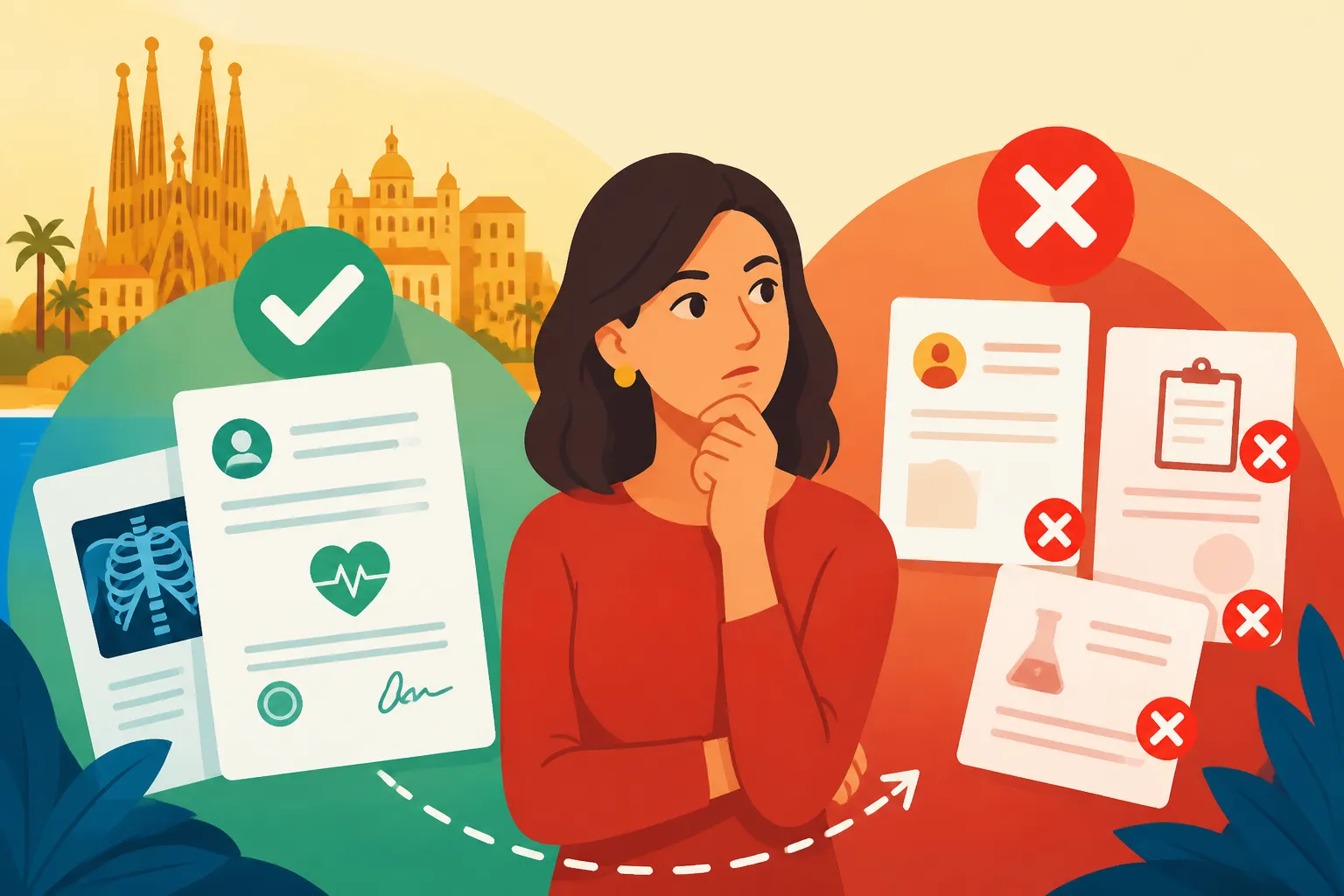
What You Can Typically Expect to Receive
When you visit a doctor or a clinic in Spain, especially in the private system where most expat health insurance claims originate, there are a few standard documents you should always ask for. These are your bread and butter for any claim.
First and foremost, you'll generally receive a factura (invoice). This is crucial, as it's your proof of payment and the service rendered. Make sure it includes the full name of the clinic or doctor, their NIF (tax identification number), the date of service, your full name, and a clear breakdown of the cost. Sometimes, in smaller private clinics, this might be a very simple document, perhaps even handwritten. Don't be alarmed by that; just ensure all the necessary details are legible. If you're wondering how to manage these papers, knowing How to Handle Medical Bills in Spain: Receipts, Claims, and Disputes is incredibly helpful.
Secondly, a informe médico (medical report) is common, especially after a more significant visit or a specific procedure. This report should ideally include your diagnosis (the diagnóstico), the treatment provided or recommended, and any relevant test results. While some doctors are proactive and give this to you automatically, others might need a gentle reminder. It's often written in medical Spanish, so familiarizing yourself with Spanish Medical Terminology: Common Words Expats Should Know can be a lifesaver, even if you still need a full translation.
Lastly, if medication is prescribed, you'll get a receta (prescription). When you pick up your meds from the farmacia, always keep the receipt (ticket de compra). This receipt, along with the prescription, forms the basis for claiming back medication costs. Remember, Pharmacies in Spain: Prescriptions, Over-the-Counter Meds, and Practical Tips covers everything you need to know about how this works.
Documents You Might Struggle to Obtain (and Why)
Now, here's where the frustration often kicks in. While the factura and informe médico are standard, getting detailed versions can be like pulling teeth. Many expats, especially those used to the granular billing in the US or UK, find it baffling that a Spanish clinic might simply give you a total amount without an itemized breakdown of every syringe, bandage, or minute of doctor's time.
Itemized bills (facturas desglosadas) are perhaps the most common point of contention. In Spain, particularly outside of very large private hospitals that cater extensively to international patients, a simple lump sum invoice for a service is often the norm. Trying to get a line-by-line breakdown of costs can be met with confusion or even polite refusal. The reason? The internal billing systems simply aren't set up that way, and there isn't a cultural expectation for such detail for individual patients. For a general overview of your options, it's good to understand the difference between Spain Healthcare System for Expats: Public vs Private.
Another document that can be tricky is a comprehensive medical history or very specific diagnosis codes that align perfectly with international insurance standards. While you'll get an informe médico, it might be narrative-based rather than a list of ICD-10 codes, which some insurers outside of the expat-focused ones might request. This isn't because they're being difficult, but because the system's primary function is patient care, not external billing compliance. For complex issues, sometimes How to Request Medical Records in Spain for a New Doctor Abroad can provide strategies, though it’s often geared towards transferring records, not necessarily itemized billing.
Navigating the Claim Process with Your Insurance (Featuring SafetyWing)
Dealing with a medical issue is stressful enough without adding paperwork woes to the mix. That's why choosing the right expat health insurance is paramount. Providers like SafetyWing understand these unique challenges and try to make the process as straightforward as possible.
The Importance of Proactive Communication with Your Insurer
Before you even step foot in a clinic for anything beyond a minor sniffle, it's always a good idea to understand your policy. What's covered? What's excluded? Are there deductibles or co-pays? Knowing this upfront can save you a world of pain later.
Many expat insurance policies, including comprehensive ones like those offered by SafetyWing, encourage pre-authorization for non-emergency treatments or hospital stays. This means if you know you're going in for a planned surgery or an extensive diagnostic workup, contact your insurer beforehand. They can guide you on preferred clinics or doctors in their network, and often, they can communicate directly with the clinic to ensure all necessary documents are prepared for your claim. This proactive approach not only smooths the claim process but can also prevent unexpected out-of-pocket expenses.
The beauty of a company like SafetyWing is their dedicated customer support, which often includes multilingual staff familiar with the quirks of local healthcare systems. If you're unsure about what documents you need or how to obtain them, reach out to them before or immediately after your visit. They can often provide specific templates or advise you on the best way to ask for the required documentation in Spain. Having a robust Health Insurance in Spain: Options for Residents, Students, and Families is key to peace of mind.
What to Do at the Clinic to Maximize Your Chances
This is where your inner diplomat and advocate needs to shine. While you're there, recovering or simply getting treated, make sure you take these steps:
- Be Clear About Your Needs from the Start: When checking in or speaking to the administrative staff, clearly state that you need a factura (invoice) for your insurance. You can even try asking for a factura desglosada para el seguro (itemized invoice for insurance), but be prepared if they can only provide a general one.
- Request a Detailed Medical Report: After your consultation, or before leaving, ask the doctor or nurse for an informe médico (informe con diagnóstico y tratamiento – a report with diagnosis and treatment). Emphasize that your insurance company requires the diagnóstico (diagnosis) and a summary of the tratamiento (treatment) or procedure performed.
- Keep Originals, Make Copies: Always ask for the original factura and informe médico. Make physical and digital copies for your own records. Many insurers, including SafetyWing, allow digital submissions, but it's good practice to have the originals just in case.
- Confirm Personal Details: Double-check that all documents include your full name, date of birth, and ideally, your NIE (foreigner identification number). This helps your insurer verify it's you.
These simple steps can significantly improve your chances of a smooth claim. It's about being polite but persistent and understanding the specific vocabulary required.
How SafetyWing Simplifies Claim Filing
This is where an expat-centric insurer really shines. SafetyWing is designed with digital nomads and international residents in mind, meaning they understand that sometimes the documentation you get from a foreign clinic might not be perfectly aligned with traditional insurance forms.
Their online claims portal is generally intuitive. You'll typically upload scanned copies or clear photos of your factura and informe médico. SafetyWing is usually quite flexible regarding the format of these documents, recognizing the variability you encounter abroad. They focus on the essential information: what service was provided, by whom, to whom, for how much, and what the medical reason was. If you've been careful to gather your factura and informe médico with the key details, you're usually well on your way.
Moreover, SafetyWing's customer support is experienced in handling claims from Spain. If you encounter a clinic that absolutely refuses to provide a specific document, or if the report is too vague, reach out to SafetyWing. They can often advise on acceptable alternatives or even contact the clinic directly on your behalf to clarify details, which can be a huge relief if you're struggling with the language barrier or administrative hurdles. If you're looking for Private Health Insurance for Spain Visas: What Policies Must Include, SafetyWing is certainly a strong contender.
Specific Document Types for Your Claims
Let's dive a little deeper into the specific documents that are critical for your insurance claims and what to look out for.
The Essential "Factura" (Invoice)
The factura is non-negotiable. Without proof of payment and service, your claim will almost certainly be rejected. As mentioned, while a factura desglosada (itemized invoice) is ideal, a simpler one can often suffice if it contains the following crucial information:
- Your full name: This verifies you as the patient.
- Date of service: Essential for linking the cost to a specific medical event.
- Description of service: A brief summary, e.g., "Consulta de Medicina General" (General Medicine Consultation), "Extracción dental" (Tooth Extraction), or "Análisis de sangre" (Blood Test).
- Total cost: The amount you paid.
- Clinic/Doctor details: Name of the clinic or doctor, their address, and their NIF (or CIF for a clinic/company). This proves the legitimacy of the provider.
Sometimes, especially in private clinics that see many international patients, they might have a "factura para seguro" option which is slightly more detailed. Always ask! If your document from a public health center, like a Centro de Salud, is more of a recibo (receipt) than a formal factura, that can be a grey area. However, private insurers like SafetyWing typically require a proper factura. For basic registration, you'd usually have a How to Get a Spanish Health Card (Tarjeta Sanitaria): Step-by-Step but that's different from a claim-worthy invoice.
The Elusive "Informe Médico" (Medical Report)
This document provides the "why" behind your visit and the "what" of your treatment. It's the medical justification for your claim. What your insurer, especially SafetyWing, needs to see is:
- Your identification: Again, your full name and date of birth.
- Date of consultation/treatment: To match with the invoice.
- Diagnosis (diagnóstico): What was wrong? Be it a simple "resfriado" (cold) or something more complex, this is critical.
- Treatment or procedure performed (tratamiento o procedimiento): What did the doctor do or prescribe? This provides context.
- Doctor's signature and stamp: Legitimizes the report.
In the public system, these reports can sometimes be less detailed, or only provided if specifically requested for a specialist referral. In the private sector, they are more common. If you are seeing a specialist, remember Seeing a Specialist in Spain: Referral Process Explained which can also involve these reports. For more serious conditions, the more detail, the better. Don't hesitate to politely ask the doctor to elaborate slightly on the diagnosis or treatment plan if it seems overly brief.
Prescriptions and Proof of Payment
For medication costs, you'll need two things:
- The receta (prescription): This shows what medication was prescribed by a licensed doctor.
- The ticket de compra (purchase receipt) from the farmacia: This proves you actually bought the medication and how much it cost.
Ensure the ticket clearly shows the name of the medication and the price. Sometimes, the generic ticket might just say "medicamento," so politely ask the pharmacist if they can print a more detailed one that lists the specific drug. This is usually not an issue. SafetyWing, like most insurers, will need both to process a medication claim.
Practical Tips and Troubleshooting for Expats
Even with the best preparation, you might hit a snag. Here are a few battle-tested tips from a fellow expat.
Always Ask for Everything in Writing
I cannot stress this enough. Even if it's a doctor's hurried scribble on a piece of official letterhead, it's better than nothing. Verbal assurances count for zero with insurance companies. If a doctor tells you a certain test was negative, ask for a written confirmation. If an administrator confirms your payment, ask for a factura.
Sometimes, you might need to explain why you need the document in this specific way. A simple, "Mi seguro internacional (como SafetyWing) requiere esto para el reembolso" (My international insurance requires this for reimbursement) can often work wonders. Be patient, be polite, but be firm in your request for documentation. It's your right as a patient to receive records of your care.
Translating Documents
Generally, for claim purposes, if your documents are in Spanish, most international insurers like SafetyWing will accept them without an official sworn translation. They usually have staff or systems in place to understand common medical terms. However, for extremely complex medical reports or if your claim is particularly large or unusual, they might request a sworn translation.
If you are asked for one, remember that a traductor jurado (sworn translator) is an official translator recognized by the Spanish Ministry of Foreign Affairs. Their translations are legally binding. Avoid using Google Translate for anything you submit for a claim, as it can lead to misinterpretations. For more on this, check out How to Translate Medical Documents in Spain (Sworn Translators).
What if the Clinic Refuses to Provide Documents?
This is the nightmare scenario. If, despite your best efforts, a clinic absolutely refuses to provide a crucial document or only gives you something completely inadequate, don't despair immediately.
- Escalate Politely: Ask to speak to a supervisor or the clinic's administrative manager. Explain your situation calmly.
- Refer to Your Insurer: Immediately contact your insurance provider, like SafetyWing. Explain the situation to them. They might have a specific protocol for such cases or be able to contact the clinic on your behalf using their network of local contacts. This is one of the distinct advantages of Choosing a Private Health Insurer in Spain: What to Compare and picking one with good customer support.
- Gather Any Supporting Evidence: Did you pay by card? Your bank statement can prove the payment and the date. Do you have any prior communication with the clinic? Keep it. Any email confirmations, appointment reminders, or even photos of the clinic's reception area (without violating privacy) might help establish the context of your visit.
- Ombudsman or Consumer Rights (Last Resort): In extreme cases, you could look into consumer rights organizations or the Colegio Oficial de Médicos (Official College of Physicians) in your region, but this is a long, arduous process and usually not necessary for a simple claim. Your insurer is your first and best advocate here.
Here's a quick reference table for what you might expect for typical claim documents:
| Document Type | What it is | Typical Availability | Key Info Needed for Claim |
|---|---|---|---|
| Factura (Invoice) | Proof of payment and service. | High | Your name, date, service, cost, clinic/doctor NIF |
| Factura Desglosada | Itemized breakdown of costs. | Low-Medium | Detailed services, individual costs, above essentials |
| Informe Médico | Doctor's report with diagnosis and treatment. | Medium-High | Your name, date, diagnosis, treatment, doctor's sign |
| Receta (Prescription) | Doctor's order for medication. | High | Your name, medication name, doctor's sign |
| Ticket de Compra (Pharmacy Receipt) | Proof of medication purchase. | High | Medication name, price, date |
Wrapping It Up: Be Prepared, Be Persistent, Choose Wisely
Navigating the Spanish medical system for insurance claims can feel like an uphill battle, but it doesn't have to be a nightmare. The key is to be proactive, know what to ask for, and choose an insurance provider that truly understands the expat experience and the realities of global healthcare systems.
By understanding what documents Spanish clinics typically provide – and what they don't – you can better prepare yourself for a smooth claims process. Always ask for your factura and informe médico, ensure they contain the essential details, and don't be afraid to politely push for clarity.
This is exactly why so many expats choose SafetyWing. Their straightforward approach to claims, understanding of international documentation, and accessible support make the whole process less daunting. Instead of wrestling with forms and language barriers, you can focus on what really matters: your health and your life in beautiful Spain. So, get your expat health insurance sorted with a provider like SafetyWing, stay informed, and enjoy your peace of mind!
Disclaimer
The information provided in this guide is for general informational purposes only and does not constitute professional medical, legal, or financial advice. While we strive to provide accurate and up-to-date information based on our experiences as expats in Spain and available public data, healthcare systems and regulations can change. Always consult with a qualified professional for advice tailored to your specific situation. Insurance policy terms and conditions vary; always read your specific policy documents from providers like SafetyWing to understand your coverage, exclusions, and claims process.