Insurance for Brits in Spain After Brexit: What the S1 and GHIC Cover
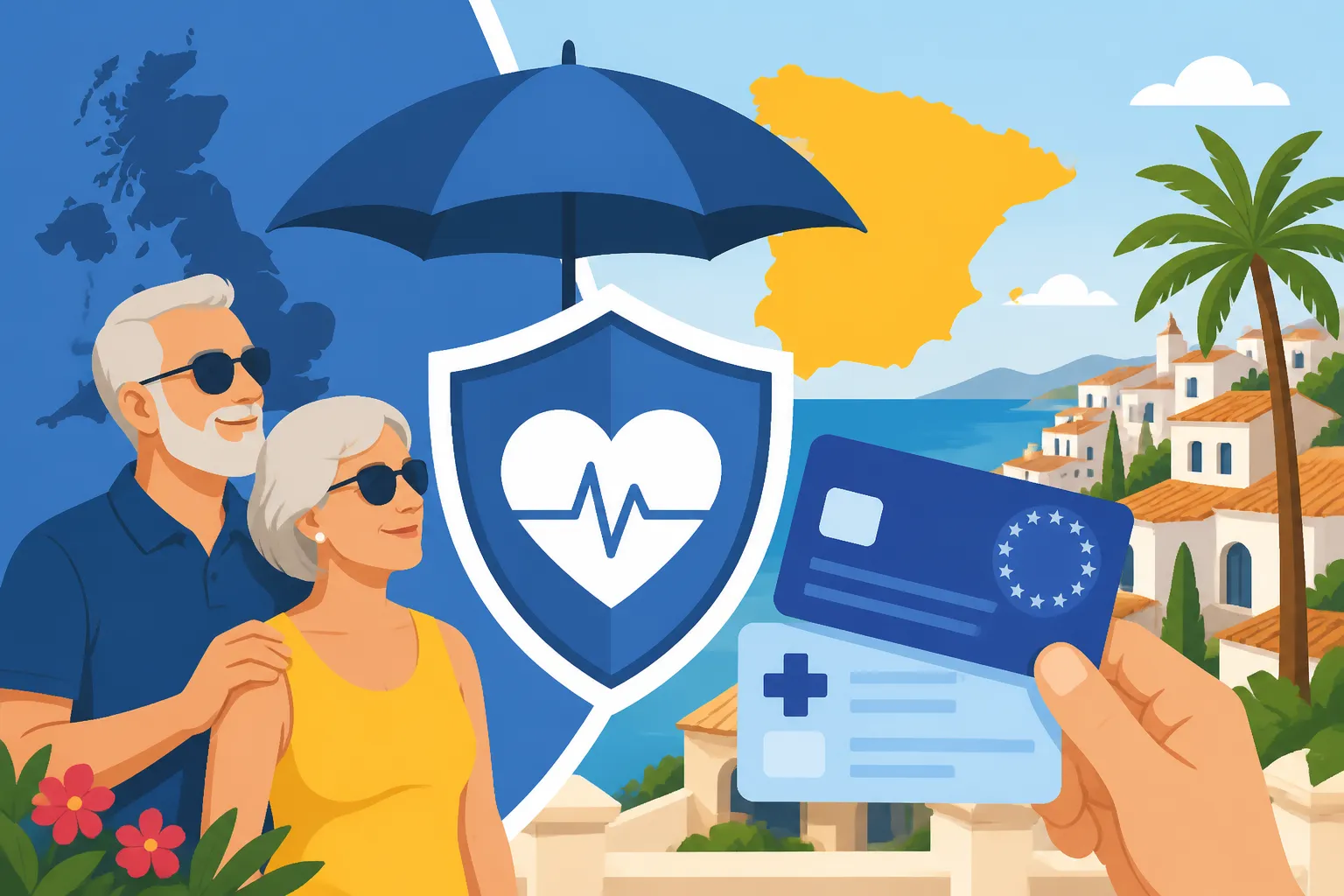
Navigating healthcare in Spain after Brexit can feel like trying to solve a Rubik's Cube blindfolded, especially for us Brits. The familiar EHIC is gone, replaced by the GHIC, and then there's the mysterious S1 form. This guide is here to untangle all that, laying out exactly what your options are, what they cover, and why comprehensive private cover might still be your best friend, particularly with providers like SafetyWing.
Disclosure: This post may contain affiliate links. We may earn a commission at no extra cost to you if you make a purchase through these links. Read full disclosure.
Understanding the Post-Brexit Healthcare Landscape for Brits in Spain
Moving to or even just visiting Spain as a British citizen post-Brexit has certainly thrown a few wrenches into the works, especially when it comes to something as vital as healthcare. Before, it felt a bit more straightforward – you had your EHIC, and largely that was it for travel, with residency having clearer pathways. Now, there's a new layer of complexity, and it's easy to feel lost in a sea of acronyms and regulations. You're not alone in feeling this way; many of us have been there, pulling our hair out over what seems like endless paperwork.
The reality is that while some familiar elements remain, the how and when you access healthcare have fundamentally shifted. No longer are we automatically part of the EU's free movement and reciprocal healthcare agreements in the same way. Instead, a new set of rules has come into play, which means understanding the nuances of things like the Global Health Insurance Card (GHIC) and the S1 form is absolutely essential for anyone planning a trip or a more permanent move to sunny Spain. This isn't just about ticking a box; it's about protecting yourself and your family from potentially enormous medical bills or, worse, being denied care when you need it most.
The Impact of the UK-EU Trade and Cooperation Agreement
When the UK officially left the European Union, the transition period ended, and the new UK-EU Trade and Cooperation Agreement came into effect. For healthcare, this meant the automatic rights afforded to UK citizens under EU law were replaced by new arrangements. While the agreement did seek to maintain some level of reciprocal healthcare, it's not a like-for-like replacement, and it comes with specific conditions and limitations that weren't always present before.
For instance, the EHIC (European Health Insurance Card) was largely replaced by the GHIC for most people. While it sounds similar and functions similarly in some regards, its scope and the situations it covers are subtly, yet significantly, different. You also need to consider your residency status – are you a tourist, a temporary resident, or a long-term resident with full rights? Each status dictates which healthcare avenues are open to you. It's a bit like a choose-your-own-adventure book, but with real-world health consequences if you pick the wrong path.
Residency Status and Healthcare Entitlements
Your residency status is the absolute key to unlocking healthcare access in Spain. If you're just visiting for a holiday, your needs will be different from someone who's decided to make Spain their permanent home. And even within "permanent residency," there are distinctions based on when you moved here, your employment status, or whether you're a pensioner. This can feel overwhelming, especially if you're new to the Spanish administrative system.
For example, if you moved to Spain before 1st January 2021 and registered your residency, you generally retain broader access to the public healthcare system under the Withdrawal Agreement. However, those arriving after this date often face a different set of requirements, usually necessitating private health insurance for visa applications unless they qualify for an S1 form through specific circumstances. It’s this intricate web of rules that often leads expats to explore flexible options like SafetyWing, especially during transitional periods or when navigating various visa requirements.
The GHIC: What It Is, What It Isn't, and Its Limitations
Let's talk about the Global Health Insurance Card, or GHIC. For many Brits, this is the default card you now carry when travelling to EU countries, replacing the old EHIC. It’s definitely a step up from having no cover at all, but it’s absolutely vital to understand its specific role and, more importantly, its limitations. Don’t be fooled by the similar-sounding name; it’s not a magic bullet for all your healthcare needs in Spain.
The GHIC is designed to provide medically necessary state-provided healthcare during a temporary stay in Spain. What does "medically necessary" mean in practice? It means care that can't reasonably wait until you return to the UK. Think sudden illnesses, accidents, or urgent treatment for existing conditions. It doesn't mean routine check-ups, ongoing treatment that isn't urgent, or elective procedures. It's truly a safety net for unexpected situations, not a substitute for comprehensive health coverage.
Eligibility and Coverage Specifics
First, who can get a GHIC? Most UK residents are eligible. You apply for it through the NHS website, and it's free. The card itself typically covers you for state-provided medical treatment if you fall ill or have an accident while on a temporary visit to an EU country, including Spain. This includes emergency treatment, visits to a Centro de Salud (local health centre) for urgent issues, and even some hospital care.
However, it's crucial to understand that it only gives you access to healthcare on the same terms as a Spanish resident in the public system. This means you might still encounter co-payments for prescriptions, and you won't necessarily get access to private clinics or specialists without long waits, which is a common experience in the public system. It certainly doesn't cover repatriation to the UK, or any non-urgent care you might need. So, while it's good to have, relying solely on it for anything beyond acute emergencies is a risky game.
Why the GHIC is Not a Substitute for Travel or Private Insurance
This is a point I can't stress enough: the GHIC is not a replacement for comprehensive travel insurance. Nor is it a substitute for private health insurance if you're planning to live in Spain. Imagine you have a serious accident, and you need an air ambulance to fly you back to the UK for ongoing treatment. The GHIC absolutely will not cover that cost, which can run into tens of thousands of pounds.
Similarly, if you need to see a specialist for a non-urgent condition, or if you prefer the convenience of English-speaking doctors or a private hospital, the GHIC won't help you there. Many non-lucrative or digital nomad visa applicants for Spain require private health insurance that meets specific criteria – the GHIC will not fulfill these requirements. For shorter stays, solutions like SafetyWing’s Nomad Insurance often come into play, offering travel insurance benefits alongside health coverage that is specifically designed for people living abroad or travelling frequently. It provides that essential peace of mind that the GHIC simply cannot.
| Feature | GHIC | S1 Form (UK) | Private Health Insurance (e.g., SafetyWing) |
|---|---|---|---|
| Purpose | Temporary, medically necessary care | Full public healthcare for residents | Comprehensive medical care, often with added benefits |
| Eligibility | Most UK residents (temporary stay) | UK State Pensioners, certain benefits | Anyone who purchases a policy |
| Coverage | State-provided, emergency/urgent | Full public system access (like a Spaniard) | Varies by policy, usually includes GP, specialists, hospital |
| Pre-existing Conditions | Urgent treatment only, not ongoing | Covered for ongoing treatment | Varies, often requires declaration, sometimes excluded |
| Cost | Free | Free (based on UK contributions) | Paid premiums |
| Repatriation | No | No | Often included in travel/expat policies |
| Visa Requirement | No (for residency visas) | Yes, if eligible and registered | Yes (for most non-EU residency visas) |
| Flexibility | Low | Low (tied to public system) | High, customizable plans |
| Language Support | None guaranteed | None guaranteed | Often includes English-speaking networks |
The S1 Form: Your Pathway to Public Healthcare in Spain
Ah, the S1 form. For many British expats, especially those of us who've reached retirement age, this piece of paper is a golden ticket to the Spanish public healthcare system. It's officially known as the "Certificate of Entitlement to Healthcare in Another EU/EEA Country or Switzerland" and it essentially tells Spain that the UK is responsible for your healthcare costs. This means you get access to the same public healthcare services as a Spanish citizen, without having to pay into the Spanish social security system yourself.
This is a game-changer because it gives you full access to a system that, while sometimes bureaucratic and slow, is generally very good. You'll register with your local Centro de Salud, get assigned a doctor, and eventually receive your Spanish health card (the Tarjeta Sanitaria). It removes the constant worry of medical bills and allows you to integrate fully into the local system, which is a huge relief when you're trying to build a new life here. Trust me, getting that S1 sorted is like finally being able to breathe easy after holding your breath for months.
Who Qualifies for an S1 Form
The S1 form isn't for everyone, and this is where a lot of confusion can creep in. Generally, the main groups who qualify for an S1 are:
- UK State Pensioners: If you're receiving a UK State Pension and have moved to Spain, you are usually entitled to an S1. This is the most common scenario for S1 holders in Spain.
- Certain UK Benefit Recipients: In some cases, if you're receiving certain long-term sickness or disability benefits from the UK, you might also qualify. This is less common and often requires checking with the relevant UK authorities.
- Cross-Border Workers: Though less applicable to typical expats, individuals who work in one EU country but reside in another might also use an S1.
It's vital to apply for your S1 before you move, or as soon as possible after arriving if your circumstances change (e.g., you reach state pension age). You'll need to contact the NHS Overseas Healthcare Services in the UK to arrange this. They'll send the form to your UK address, which you then bring to Spain. Remember, without this form, or an alternative, you may be required to secure your own private health insurance to fulfil residency requirements.
Applying for Your S1 and Registering in Spain
Once you've confirmed your eligibility and requested your S1 form from the NHS Overseas Healthcare Services (who you can find through the official UK government website), the process in Spain begins. First, the S1 form will be mailed to your UK address. It's a physical document, so make sure you have a reliable way to receive it. Once you have it in hand, you'll need to submit it to the National Institute of Social Security (INSS) in Spain. This typically means booking an appointment at your local INSS office, which can sometimes be a challenge to get, so be prepared for a bit of waiting and persistence!
You'll need to bring your S1 form, your passport, your NIE (Número de Identificación de Extranjero), and proof of your empadronamiento (your official registration at your local town hall address). The INSS will then process your S1, usually issuing you a certificate that confirms your right to public healthcare. With this certificate, you can then proceed to your nearest Centro de Salud (health centre). This is where you'll formally register with the public healthcare system, get assigned a GP (General Practitioner), and apply for your Spanish health card, or Tarjeta Sanitaria. This card is your key to accessing doctors, specialists, and hospitals within the public system. For detailed steps on how to get your Spanish health card, you might want to check out our guide on How to Get a Spanish Health Card (Tarjeta Sanitaria): Step‑by‑Step.
What the S1 Covers and Its Limitations
The beauty of the S1 form is that it grants you comprehensive access to Spain's public healthcare system. This means you'll receive care on the same footing as a Spanish national. This includes visits to your GP, specialist consultations (usually via a referral from your GP), hospital stays, and emergency care. For many, this is exactly what they need for peace of mind in their adopted home.
However, even with an S1, there are still a few things to keep in mind. While consultations and hospital care are free at the point of use, you will generally be responsible for a percentage of your prescription costs, known as copago. The exact percentage depends on your income, but it's typically a much smaller amount than paying the full cost. Also, if you want private healthcare for faster appointments, access to specific private clinics, or doctors who guarantee English communication, the S1 won't cover that. It's solely for the public system. For those who want to blend public access with private flexibility, or who don't qualify for an S1, exploring options like SafetyWing can fill these gaps.
Why Private Health Insurance Remains Crucial for Many
Even with the GHIC for short trips and the S1 for eligible pensioners, there’s a significant chunk of British expats in Spain who find themselves needing private health insurance. For many, it's not just a preference; it's a necessity. The Spanish public healthcare system is robust, but it operates on its own terms, and those terms don't always align with expat needs, particularly around speed of access and language.
The reality is that securing your residency visa often hinges on having adequate private health insurance. Whether you're applying for a Digital Nomad Visa, a Non-Lucrative Visa, or other residency permits, the Spanish authorities require you to have private health insurance that meets specific criteria. This typically means a policy that covers all medical risks without co-payments, and often without a deductible or excess, ensuring you won't be a burden on the state. For some, this feels like an extra hurdle, but it's a non-negotiable part of the immigration process.
Addressing Gaps in Public Healthcare and Visa Requirements
Let's face it, while the public healthcare system is great, it has its limitations for expats. Waiting times for specialist appointments or certain diagnostic tests can be long, sometimes stretching into months. If you're used to quicker access, or if you have a condition that requires prompt attention, these delays can be incredibly stressful. This is a common frustration I hear from fellow expats.
Private health insurance, by contrast, often offers much faster access to specialists and a wider choice of doctors and hospitals. You might also find it easier to find English-speaking doctors within private networks, which is a huge comfort when you're trying to explain symptoms in a foreign language. Plus, as mentioned, for many types of Spain Visas & Residency: Complete Guide for Foreigners, a comprehensive private health insurance policy is a strict requirement. The GHIC is explicitly not enough for this. So, whether it's for compliance or convenience, private insurance plays a critical role. This is where adaptable solutions, such as SafetyWing's Remote Health, stand out, offering robust coverage that typically satisfies visa requirements and provides speedy access to care.
The Peace of Mind Factor: Speed, Language, and Choice
Beyond the bureaucratic necessities, private health insurance offers something invaluable: peace of mind. Knowing that you can see a doctor or specialist quickly, potentially without a long referral process, makes a huge difference. This is especially true if you have children or pre-existing conditions that might require more frequent or urgent attention.
The language barrier is another major factor. While many public healthcare professionals do speak some English, it's not guaranteed, especially in smaller towns or at busy Centros de Salud. With private insurance, you often get access to networks specifically catering to international patients, where English is widely spoken. This reduces stress during vulnerable moments when clear communication is paramount. The ability to choose your own doctor, clinic, and even hospital within a network is also a significant benefit, giving you more control over your healthcare journey. For those interested in selecting the right private plan, our article on Choosing a Private Health Insurer in Spain: What to Compare offers great insights.
Choosing the Right Private Health Insurance for Spain
Deciding on the right private health insurance in Spain can feel like another one of those daunting expat tasks, but it's crucial to get it right. You need a policy that not only meets Spanish visa requirements (if applicable) but also truly covers your personal health needs and provides the flexibility you might want as an expat or digital nomad. Don't just pick the cheapest option; delve into the details.
There are many providers out there, from large Spanish insurers to international companies, each with their own pros and cons. When comparing, think about factors like coverage limits, whether co-payments are involved, the network of doctors and hospitals, and customer service in your language. It’s a bit like buying a car; you need to look under the hood, not just at the shiny exterior.
Key Factors to Compare in Private Health Policies
When you're looking at private health insurance policies for Spain, there are several critical factors you absolutely must compare:
- Coverage Levels: Does it cover GP visits, specialists, hospitalization, surgery, diagnostic tests, and emergency care? Some basic plans might exclude certain things or have low limits. Make sure it's comprehensive enough for your peace of mind.
- Co-payments (Copago): This is super important. Many Spanish insurers offer plans with copago, meaning you pay a small fee (e.g., €10-€20) for each consultation or service. "Sin copago" (without co-payment) plans are more expensive but mean no extra fees at the point of service. For visa purposes, often "sin copago" or very low copago policies are required.
- Deductibles/Excess: Similar to co-payments, but usually a larger fixed amount you pay before the insurance kicks in. Most Spanish residency visas require policies without deductibles.
- Network of Doctors and Hospitals: Does the insurer have a good network in your chosen region of Spain? Are there English-speaking options? Check the list of affiliated providers.
- Pre-existing Conditions: This is a big one. Some policies might exclude pre-existing conditions, or require a waiting period before they're covered. Be transparent during your application.
- Repatriation: Does the policy cover the cost of being medically repatriated to your home country if needed? This is often a feature of travel-style expat insurance, like SafetyWing's offerings.
- Customer Service and Language Support: Can you easily communicate with the insurer in English? This becomes vital when you need to make a claim or ask important questions.
This table gives a basic overview, but diving into the specific terms and conditions (the condiciones generales and particulares) of any policy is paramount.
SafetyWing: A Flexible Solution for Nomads and Expats
For many expats, especially digital nomads, freelancers, or those in their initial phase of settling in Spain, traditional Spanish health insurance might not always be the perfect fit. This is where SafetyWing really shines. SafetyWing offers a unique blend of travel medical insurance and expat health insurance, designed specifically for the transient and international lifestyle.
Their Nomad Insurance, for example, functions more like travel medical insurance, covering new illnesses, injuries, and emergencies anywhere in the world (excluding your home country). It's incredibly flexible, can be purchased monthly, and provides a safety net for unforeseen medical events. While it doesn't typically meet strict long-term residency visa requirements in Spain (which often demand a more comprehensive "full medical" policy without co-pays or deductibles), it's an excellent option for short-term stays, initial exploratory periods, or bridging gaps while you're sorting out long-term plans. The ease of signing up and the global coverage are huge benefits for those who aren't tied to one location.
For more comprehensive long-term needs, SafetyWing also offers Remote Health. This is a more robust expat health insurance plan designed for individuals and teams living abroad. Unlike Nomad Insurance, Remote Health aims to provide comprehensive primary and secondary care, including preventative care, specialist visits, and sometimes even dental and vision add-ons, globally. This kind of policy is far more likely to meet the stringent requirements for a Spanish residency visa, such as the Spain Digital Nomad Visa, as it typically offers zero deductible and no co-payments for in-network care. It’s a proper, full-fledged health insurance plan built for those making a more permanent move, but still valuing flexibility and global reach. Many expats find this level of coverage and the ease of management invaluable.
Practical Steps and Common Pitfalls for Healthcare Access
Getting your healthcare sorted in Spain can be a bureaucratic marathon, and it's easy to stumble. Believe me, I've seen it all, and probably tripped over most of the common pitfalls myself! The key is to be prepared, persistent, and to understand the sequence of steps. Rushing or assuming things will be easy can lead to a lot of frustration and delays.
Remember that Spanish bureaucracy often operates at a different pace than what you might be used to. Appointments (or citas previas) are often required for almost everything, and sometimes these can be hard to get. Patience truly is a virtue here. Having all your documents in order, translated if necessary, and bringing copies of everything, will save you a lot of headaches.
Navigating Spanish Bureaucracy: Appointments and Documents
The Spanish administrative system loves its paperwork and its appointments. Before you even think about stepping into a Centro de Salud or an INSS office, check if you need a cita previa (pre-booked appointment). For the INSS, you almost certainly will, and these can be notoriously difficult to snag, especially in popular expat areas. You'll usually book these online through the official government websites. Be prepared to try at different times of the day or week.
When you do get an appointment, always bring:
- Your passport (and photocopies)
- Your NIE (and photocopies)
- Proof of empadronamiento (recent certificate, within 3 months)
- Your S1 form (if applicable, and photocopies)
- Any relevant visa or residency documentation (TIE card, visa vignette)
- Marriage or birth certificates if registering dependents (and sworn translations if not Spanish).
Having a folder with originals and multiple copies of everything is a lifesaver. It’s also wise to learn a few basic Spanish phrases related to appointments and medical needs, or bring a Spanish-speaking friend or use a Medical Interpreters in Spain: Where to Find Help if your Spanish isn't up to par.
Common Mistakes to Avoid When Accessing Healthcare
Here are a few common blunders expats make when dealing with healthcare in Spain, which you can hopefully avoid:
- Assuming GHIC is enough for residency: As we've covered, it's not. For any long-term stay or residency visa, you'll need either an S1 (if eligible) or private health insurance that meets the visa's specific criteria. Don't risk a visa rejection by making this mistake.
- Not getting an S1 in time: If you're a UK State Pensioner, apply for your S1 well in advance of moving or turning pension age. Delays can leave you uninsured in the public system for a period.
- Ignoring the empadronamiento: This document is crucial for almost all administrative processes in Spain, including registering for healthcare. Make sure your empadronamiento is up-to-date.
- Not making copies of everything: Seriously, Spain loves stamps and paper. Always have copies.
- Not understanding your private policy: If you opt for private insurance (like SafetyWing), read the fine print. Understand what's covered, what's excluded, any co-payments, and how to make a claim before you need urgent care.
- Expecting immediate specialist access: Even with private insurance, while faster than public, it's not always instantaneous. And with the public system, patience is paramount. If you're unsure about typical wait times, our guide on How Long Are Typical Waiting Times in Spain’s Public System? might be helpful.
- Not checking regional differences: Healthcare can have slight variations in processes and even waiting times depending on the autonomous community you live in. What works in Andalucía might be slightly different in Catalonia.
Being informed and proactive is your best defense against the bureaucratic headaches. Good luck, and remember, a bit of preparation goes a very long way here!
Disclaimer
The information provided in this guide is intended for general informational purposes only and does not constitute legal, financial, or medical advice. Healthcare regulations and visa requirements in Spain can change frequently. While we strive to provide up-to-date and accurate information, we cannot guarantee its completeness or accuracy at all times. Always consult with official government sources, a qualified legal professional, or an immigration expert for advice tailored to your specific situation before making any decisions related to your health, insurance, or residency in Spain.