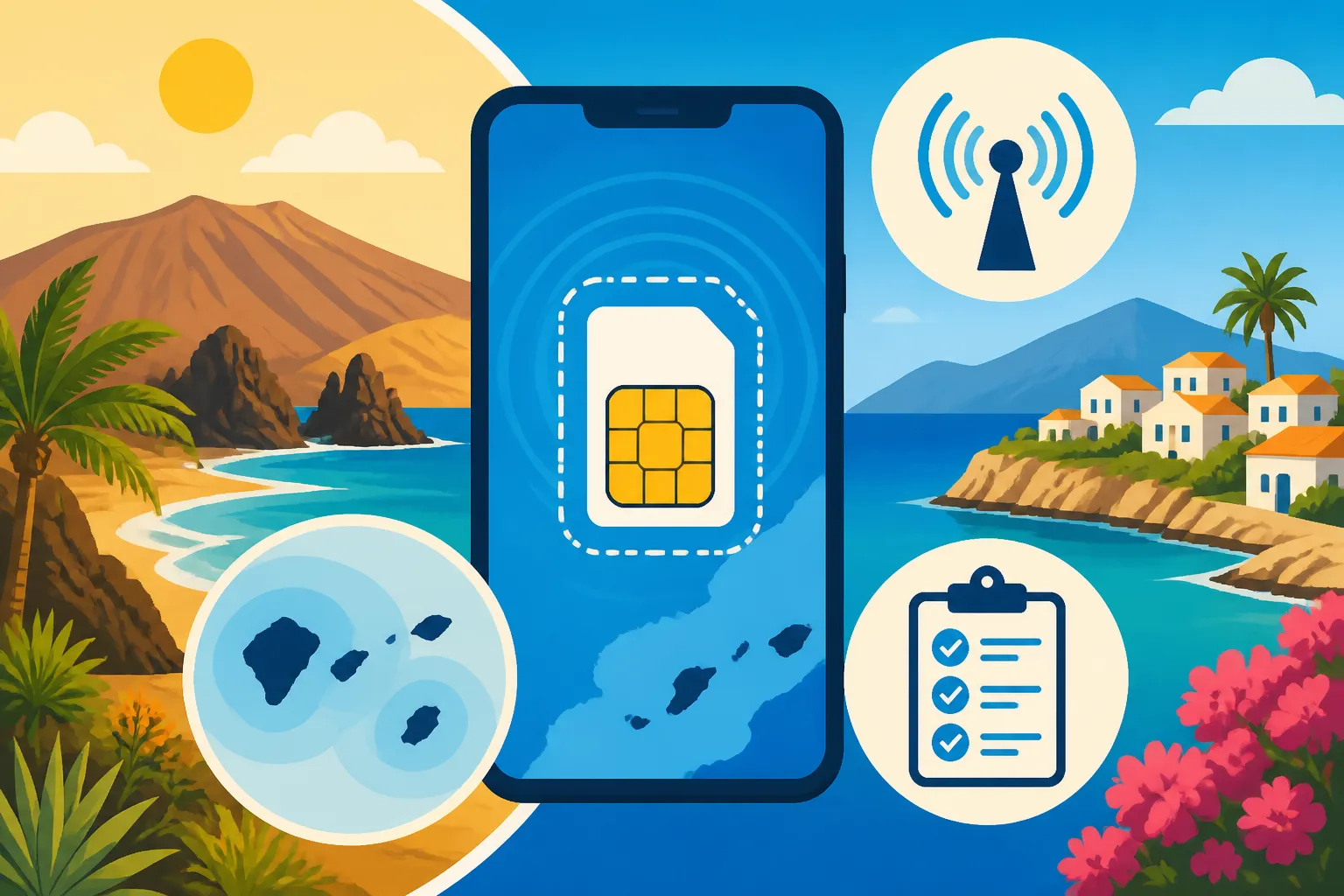
eSIM Coverage in the Canary and Balearic Islands: What to Check Before You Buy
Oh, the joy and exasperation of getting settled (or just visiting) in Spain, especially when you're hopping between those glorious islands! One minute you're basking in the sun in Mallorca, the next you're trying to figure out how to get decent internet on a remote beach in Fuerteventura, only to be met with blank stares or a confusing array of local SIM card options. This guide is going to cut through that noise and give you the real scoop on eSIM coverage in the Canary and Balearic Islands, helping you stay connected without the usual expat headaches.
Disclosure: This post may contain affiliate links. We may earn a commission at no extra cost to you if you make a purchase through these links. Read full disclosure.
The Frustrations of Island Connectivity and Why eSIMs are Your Lifeline
Let's be honest, arriving in a new country or even just a new part of Spain, and immediately needing to sort out phone service can feel like jumping through hoops. You're tired, you're probably lugging bags, and all you want is to tell your loved ones you've arrived safely or quickly find directions to your accommodation. The last thing you need is to hunt down a phone shop, battle a language barrier, and then fumble with a tiny physical SIM card that you'll inevitably misplace later. That initial connectivity hurdle often feels disproportionately stressful, doesn't it?
Ditching the Old SIM Card Dance
Remember the old days? You'd land, navigate to an electronics store or a specific mobile provider shop, queue up, try to explain in broken Spanish (or rely on a patient shop assistant) what kind of prepaid SIM you needed, maybe present your passport, and then physically swap out your home country's SIM. If you were lucky, it would work instantly. If not, you'd be troubleshooting APN settings in a foreign country, feeling utterly alone. And what if you wanted to keep your home number active for important texts? Dual-SIM phones helped, but it was still a physical hassle. This whole process just added to the initial culture shock and logistical burden.
Then there's the ongoing worry: did you put your original SIM somewhere safe? Will you forget to top up your Spanish prepaid plan? What about when you move on to another country? Each border crossing used to mean another SIM dance. It's a logistical headache that many of us have endured, and frankly, it often saps a little bit of the initial excitement out of an international trip. Thankfully, with the advent of eSIMs, those days are quickly becoming a distant, frustrating memory. Companies like Airalo have revolutionized this by offering a completely digital solution, which for island hopping, is nothing short of a godsend.
How eSIMs Connect You to Spain's Island Networks
So, what exactly is an eSIM, and how does it actually give you coverage in far-flung places like the Canary or Balearic Islands? Think of an eSIM not as a physical chip, but as a digital profile that lives inside your compatible smartphone. Instead of swapping plastic, you simply download this profile. When you purchase an eSIM plan for Spain, providers like Airalo partner directly with major local network carriers – the same ones that physical SIMs use. This means you're getting access to the very same towers and infrastructure as local residents.
When you activate your Spain-specific or even Europe-wide eSIM plan through a service like Airalo, it immediately connects you to the strongest available partner network in the area. For example, in Spain, this usually means tapping into the robust networks of providers like Movistar, Vodafone, or Orange, depending on the specific agreement and location. This allows you to switch between plans, top up data, or even manage multiple lines (your home number and your travel data) all from your phone's settings, eliminating the need for any physical interaction. It’s particularly beneficial when you're exploring the more remote parts of the islands, where finding a physical phone shop might be an expedition in itself.
Navigating eSIM Coverage Across Spain's Archipelagos: Canaries and Balearics
When you're packing your bags for a sun-drenched escape to Spain's incredible island chains, knowing your phone will work reliably is paramount. Whether you're planning to snap endless photos of volcanic landscapes, navigate ancient cobbled streets, or simply check restaurant reviews, seamless internet access can make or break your trip. The good news is that eSIMs give you access to the same major networks that locals use, meaning generally strong coverage. However, "strong coverage" can still vary significantly once you leave the bustling centers.
Canary Islands: From Tenerife Peaks to Fuerteventura Dunes
The Canary Islands, with their dramatic volcanic landscapes, bustling resorts, and tranquil hidden coves, offer a diverse range of environments – and thus, a diverse range of mobile signal strength. In major tourist centers and capital cities like Santa Cruz de Tenerife, Las Palmas de Gran Canaria, or Arrecife in Lanzarote, you'll typically find excellent 4G and often 5G coverage from networks that eSIM providers like Airalo partner with. This means smooth streaming, fast downloads, and reliable video calls. You can confidently rely on your eSIM for navigation while exploring the vibrant streets of La Laguna or the historic Vegueta district.
However, venture out into the more rural or mountainous regions, and the story can change a bit. For instance, exploring Teide National Park in Tenerife, the remote beaches of Cofete in Fuerteventura, or the dramatic cliffs of Los Gigantes might present pockets of weaker signal or even dead zones. The volcanic terrain and sparse population in some areas naturally make network expansion more challenging. On smaller islands like El Hierro, La Gomera, or La Palma, while the main towns and coastal resorts will have good service, hiking trails through dense forests or isolated villages can experience intermittent connectivity. It's always a smart move to download offline maps or critical information before heading to these truly off-the-beaten-path locations. For a deeper dive into staying connected in general, check out our guide on Mobile Phone Plans in Spain: Prepaid vs Contract for Foreigners.
Balearic Islands: Palma Buzz to Formentera Bliss
The Balearic Islands, nestled in the Mediterranean, also present their own unique connectivity landscape. These islands tend to be more densely populated, especially during peak tourist season, and are generally well-served by mainland Spanish networks. In buzzing hubs like Palma de Mallorca, the vibrant heart of Ibiza Town, or the charming capital of Menorca, Mahón, you'll enjoy excellent 4G and 5G service. Providers like Airalo connect you seamlessly to these robust local networks.
Even as you explore further afield, the Balearics generally maintain strong coverage. Picture yourself on a boat trip around Formentera – you'll likely still have signal near the coast, though heading into some remote coves might see it dip. Menorca, being a bit more tranquil and less developed in parts, might have a few more patchy areas compared to its larger sibling, Mallorca, especially in its interior or on less-frequented hiking paths. The key takeaway is that for the vast majority of activities and locations you're likely to visit, your eSIM will keep you connected. For more on navigating your island choices, take a peek at our insights into The Balearic Islands: Choosing Between Mallorca, Menorca, and Ibiza.
The Local Network Landscape for eSIM Users
When you're choosing an eSIM for your Spanish island adventure, it's crucial to understand that your eSIM provider, like Airalo, isn't building its own network. Instead, they partner with the established local telecommunications giants in Spain. These are typically:
- Movistar (Telefónica): Often considered the most extensive network in Spain, with good coverage even in some rural areas. Many eSIM providers will leverage Movistar's infrastructure.
- Vodafone Spain: Another major player with strong urban coverage and competitive speeds.
- Orange Spain: Offers solid performance, particularly in urban and tourist-heavy areas.
- Yoigo (MásMóvil Group): While historically a smaller network, it has expanded significantly and often uses roaming agreements with the larger three to ensure broad coverage.
What this means for you is that when you purchase an eSIM for Spain, you are effectively buying access to one or more of these powerful networks. The quality of your connection will be dictated by the strength of the signal from the partner network in your exact location. So, while your eSIM makes the process incredibly easy, the underlying coverage realities of the Spanish islands still apply. Checking the coverage maps provided by these main carriers (easily found online) can give you a more precise idea of what to expect in very specific, less-populated locales.
Here's a quick, generalized overview of typical network reliability you might encounter:
| Island Group | Island | Urban/Tourist Areas | Rural/Mountain Areas | Coastal Areas |
|---|---|---|---|---|
| Canary Islands | Tenerife | Excellent (4G/5G) | Moderate to Spotty | Good |
| Gran Canaria | Excellent (4G/5G) | Moderate | Good | |
| Fuerteventura | Good | Moderate to Patchy | Good, some remote dips | |
| Lanzarote | Good | Moderate | Good | |
| La Palma | Good | Moderate to Spotty | Good | |
| El Hierro, La Gomera | Moderate | Spotty | Moderate | |
| Balearic Islands | Mallorca | Excellent (4G/5G) | Good | Excellent |
| Ibiza | Excellent (4G/5G) | Good | Excellent | |
| Menorca | Good | Moderate | Good | |
| Formentera | Good | Good | Good |
Note: This table provides general expectations. Actual coverage can vary based on specific location, network traffic, and device.
This granular understanding is why an eSIM, particularly from a reliable provider like Airalo, is such a relief. You get to tap into these powerful local networks without the logistical fuss, allowing you to focus on the truly important things – like which tapa to try next! For more in-depth information on digital connectivity for travelers, our Mobile Data and eSIMs for Travel in Spain guide is a great resource.
Making Airalo Your Island Companion: Ease, Reliability, and Connection
When it comes to staying connected in a foreign land, especially when you're exploring diverse landscapes like Spain's islands, ease of use and reliability are non-negotiable. This is where a service like Airalo really shines, stepping up to be your indispensable travel companion. The peace of mind that comes with knowing your internet will just work allows you to truly immerse yourself in the experience, rather than stressing about connectivity.
Why Airalo Stands Out for Your Spanish Travels
Airalo has carved out a solid reputation among savvy travelers and expats for a few key reasons, especially for those venturing to places like the Canary and Balearic Islands. First and foremost is the sheer convenience. Imagine this: you've just landed at Palma de Mallorca airport, excited to start your holiday. Instead of searching for a phone shop, you simply open the Airalo app on your phone, choose a Spain-specific data package, and within minutes, you're connected. No physical SIMs, no language barriers, no hunting for stores. This level of instant gratification is a game-changer.
They offer a fantastic range of plans, from local Spain-only options to regional Europe-wide packages, even global eSIMs, giving you flexibility depending on your travel plans. Their pricing is also super competitive, often more affordable than international roaming charges from your home provider, and transparent – you know exactly what you're paying for. Plus, managing your data is effortless; you can track usage and top up directly from the app. This takes away a huge chunk of pre-trip and mid-trip stress. Airalo is truly built with the modern traveler in mind, making sure that your essential connection is handled efficiently. For broader travel insights, don't forget to check out our Travel Logistics in Spain: Money, Safety, and Connectivity guide.
Your Step-by-Step Guide to Airalo eSIM Activation
Getting your Airalo eSIM up and running for your Spanish island adventure is surprisingly straightforward. It’s designed to be intuitive, even for those who aren't tech wizards. Here's a simple breakdown:
- Check Device Compatibility: This is the absolute first step. Not all phones support eSIMs. Before you even think about buying a plan, go to Airalo's website or check your phone's settings to ensure it's eSIM-compatible. Most newer iPhones (XS onwards), Google Pixels (3a onwards), and many Samsung Galaxy models are good to go, but always double-check!
- Download the Airalo App: Head to your app store (iOS or Android) and download the free Airalo app. It’s user-friendly and your central hub for everything eSIM related.
- Choose Your Plan: Open the app and search for "Spain" or "Europe" depending on your travel needs. You'll see various data packages with different validities (e.g., 1GB for 7 days, 5GB for 30 days). Select the one that best suits your expected data usage during your island trip. Remember, you can always top up if you run low!
- Purchase Your eSIM: Once you've picked a plan, proceed to purchase it within the app. Airalo accepts various payment methods, so it’s usually seamless. For tips on managing your travel funds, our article on Travel Money in Spain: Cards, Cash, and Safety Tips might be useful.
- Install the eSIM: After purchase, you'll be prompted to install the eSIM. Airalo provides detailed, easy-to-follow instructions right in the app.
- Direct Method (Recommended): Often, there’s an option for direct installation where the app guides you through your phone's settings to add the eSIM profile automatically. This is usually the easiest.
- QR Code Method: If direct installation isn't available, you'll be given a QR code. You'll need another device (like a tablet or a friend's phone) to display the QR code, which you then scan with the phone you want to install the eSIM on.
- Manual Method: In rare cases, you might need to enter details manually. Airalo provides all the necessary information, including SM-DP+ Address and activation code.
- Activate the eSIM: Once installed, go to your phone's cellular settings. You'll see your new eSIM listed. Make sure "Data Roaming" is enabled for the Airalo eSIM (don't worry, you won't incur traditional roaming charges as you've already paid for your data plan). Set it as your primary cellular data line if you want to use it right away. You might need to restart your phone for the changes to take full effect.
That's it! In a matter of minutes, you'll be connected to a local Spanish network, ready to share your island adventures. This simplicity, combined with Airalo's robust coverage, means you can truly enjoy your time without worrying about connectivity. For general safety and preparedness while traveling, a quick read of Staying Safe in Spain: Practical Safety Tips for New Residents is always a good idea.
Crucial Checks Before You Dive Into eSIM Connectivity
While eSIMs, especially from reliable providers like Airalo, are incredibly convenient, a little bit of foresight can save you a lot of hassle. Before you commit to a plan for your Spanish island getaway, there are a few essential things you absolutely must verify. Skipping these quick checks could lead to a frustrating start to your trip, and nobody wants that!
Is Your Device Ready for an eSIM Adventure?
This is the big one, and often overlooked by new eSIM users. Not all smartphones are created equal when it comes to eSIM technology. Older models, or some phones purchased in specific regions (like certain locked devices from China or even some models in the US for a period), might not support eSIMs. It’s not just about having a modern phone; it’s about the specific hardware and software configuration.
Before you do anything else, take a moment to check your device's compatibility. The easiest way is usually to go to your phone's settings:
- On iPhone: Go to Settings > Cellular > Add Cellular Plan. If you see this option, your phone is likely eSIM compatible.
- On Android: Search for "eSIM" or "Add mobile network" in your settings. The exact path can vary by manufacturer (Samsung, Google Pixel, etc.), but if you find options to add a new digital plan, you're probably good.
If you're unsure, a quick search for "[Your Phone Model] eSIM compatibility" will give you a definitive answer. Purchasing an eSIM only to find your phone can't use it is a rookie mistake that's easily avoided. Don't let your excitement get ahead of your due diligence!
Right Data, Right Price: Matching Your Needs to Your Plan
Another vital step is accurately assessing your data needs. It’s tempting to grab the cheapest or smallest package, but running out of data mid-explorations on a remote island is no fun. Conversely, overspending on a massive plan you won't use is just a waste of your hard-earned euros.
Think about your typical usage:
- Light User (1-3 GB for a week): If you're mainly using Wi-Fi at your accommodation, occasionally checking maps, messaging apps, and light social media.
- Moderate User (5-10 GB for a week): If you plan to use GPS extensively, browse social media regularly, stream a bit of music, and make occasional video calls.
- Heavy User (10+ GB for a week or more): If you'll be streaming videos frequently, working remotely, or relying heavily on mobile hotspot functionality for multiple devices.
Consider the length of your stay and whether you're traveling solo or with family/friends who might share your hotspot. Airalo offers various package sizes, so take a moment to compare and choose wisely. You can always top up if needed, but it's better to start with a comfortable buffer. Budgeting for your trip extends beyond just flights and hotels; understanding your data costs is part of a realistic Cost of Living in Spain: Realistic Budgets and Savings Tips.
Quick Fixes for Common eSIM Hiccups on the Go
Even with the best planning, technology can sometimes be quirky. If your eSIM isn't working as expected, don't panic! Most issues are easily resolved. Here are a few common troubleshooting tips:
- Restart Your Phone: The classic tech solution, but often effective. A quick reboot can help your phone register the new eSIM profile correctly.
- Check Data Roaming: Go to your phone's cellular settings and ensure "Data Roaming" is enabled for your Airalo eSIM line. Remember, with a pre-paid eSIM data plan, enabling data roaming won't incur extra charges from your home provider; it just allows the eSIM to connect to the local partner networks.
- Manual Network Selection: Sometimes your phone might cling to a weaker signal or a less preferred network. In your cellular settings, look for "Network Selection" (or similar), turn off automatic selection, and manually choose one of the major Spanish carriers (Movistar, Vodafone, Orange). See which one gives you the strongest signal.
- Verify APN Settings: In rare cases, your phone's Access Point Name (APN) settings might need adjusting. Airalo provides the correct APN settings in their app or support documentation. You can usually find this under your cellular settings, specifically for the eSIM profile.
- Contact Airalo Support: If all else fails, Airalo has responsive customer support available through their app or website. They can help diagnose more complex issues or confirm network status in your area.
Being prepared for these small hiccups means you can swiftly resolve them and get back to enjoying your Spanish islands adventure. Having a reliable connection is key to navigating and staying safe, especially if you ever need to access Emergency Numbers in Spain: 112 and When to Use It in a critical situation. Overall, with an eSIM, you're setting yourself up for a much smoother, more connected travel experience throughout Spain, whether you're on a bustling city break or a tranquil island escape. Knowing the ins and outs of getting around is also crucial; read our guide on Traveling Around Spain: Trains, Buses, Flights, and Car Hire for more tips.
Disclaimer
The information provided in this guide is for general informational purposes only and is subject to change. While we strive to keep the content accurate and up-to-date, network coverage, pricing, and service terms for eSIM providers can vary and evolve. Always consult the official websites of Airalo and local network providers for the most current information before making any purchasing decisions. We are not responsible for any issues arising from reliance on this information.