Shipping Tools, Firearms, and Sports Equipment to Spain: Legal Limits
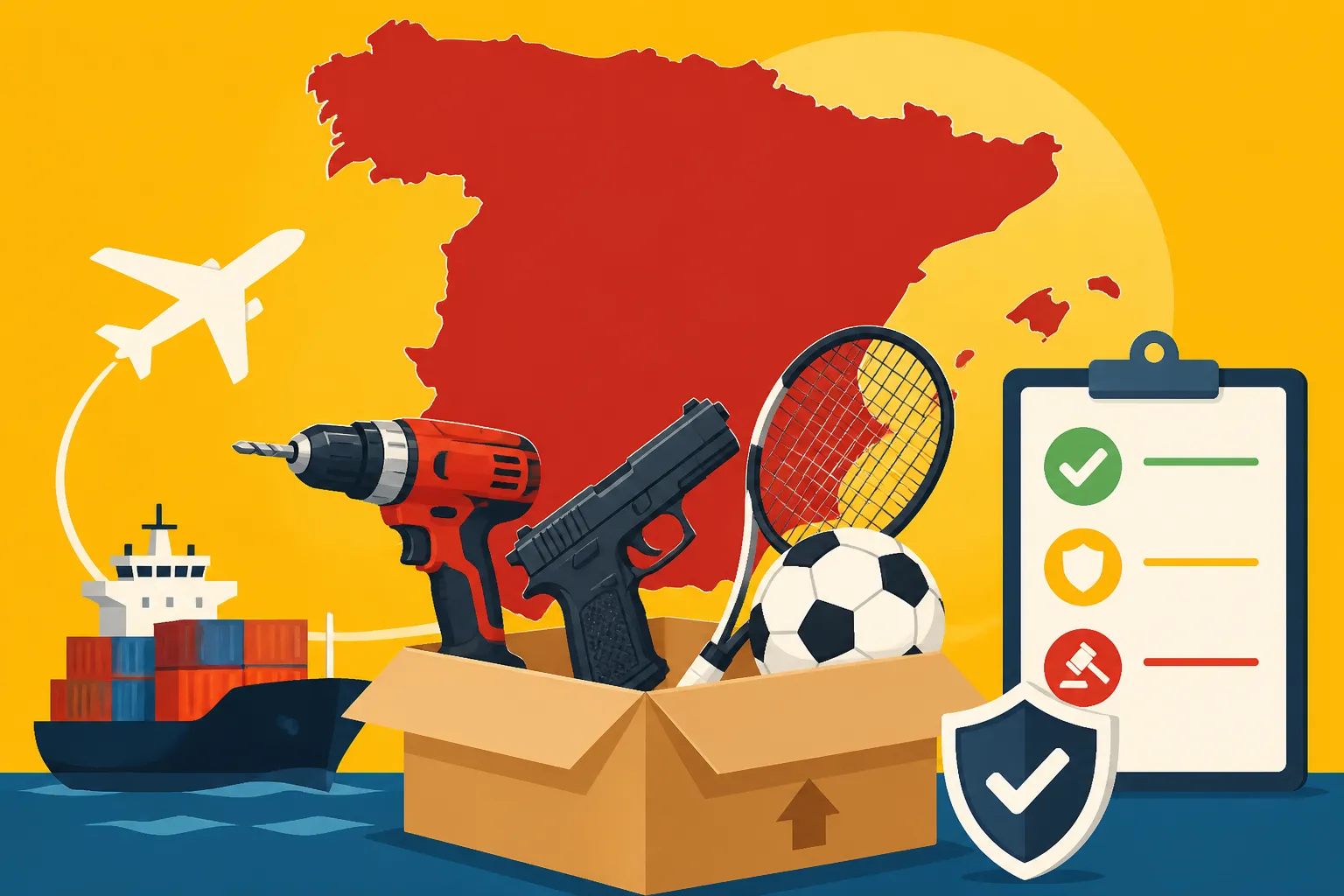
Moving your entire life to Spain is thrilling, but when you start packing, you quickly realize it's not just about clothes and books. Those tools you cherish, the sports gear you can't live without, or even the thought of bringing a firearm – suddenly, it all feels like a giant, confusing customs puzzle. This guide cuts through the noise, offering realistic, expat-tested advice on shipping these specific items to Spain, ensuring you understand the legal limits and how a reliable service like Sirelo can smooth out the bumps.
Disclosure: This post may contain affiliate links. We may earn a commission at no extra cost to you if you make a purchase through these links. Read full disclosure.
Navigating the Complexities of Shipping Special Items to Spain
Let's be honest, moving abroad is already a whirlwind of paperwork and logistics. Adding items with specific regulations, like tools, firearms, or even specialized sports equipment, can make you want to throw your hands up in exasperation. Spain, like any country, has its own unique set of rules, and what might be straightforward in your home country could be a bureaucratic nightmare here.
Why Certain Items Are Tricky to Ship
It's not just about getting a box from point A to point B. When you're dealing with international borders, especially into the European Union, a few things complicate matters. First, there are customs duties and VAT. These are taxes you might have to pay on items entering Spain, even if they're your personal belongings, especially if they're new or deemed to be of high commercial value. Then there's the sheer volume of paperwork: declarations, inventory lists, proof of ownership, and sometimes, specific import licenses. Trying to manage all this while learning the local lingo and dealing with other moving tasks is enough to make anyone pull their hair out.
Beyond taxes and forms, some items present security risks or are subject to strict national laws. Firearms are the most obvious example, but even seemingly innocuous items like certain types of tools or diving equipment can fall under scrutiny. Spain is a stickler for safety and regulation, and ignoring these rules can lead to hefty fines, confiscation, or even legal trouble. The goal here is to get your treasured possessions safely and legally to your new Spanish home, avoiding any unpleasant surprises at the border. Remember, preparation is key, and understanding what you're up against will save you a lot of stress in the long run.
Shipping Tools to Spain: Your Workshop Across the Waters
If you're someone who loves to tinker, build, or create, your tools are more than just metal and plastic – they're an extension of your passion. Bringing your workshop to Spain might seem like a simple task, but it requires a bit of foresight to ensure everything arrives intact and without customs issues.
Understanding Customs and Duty for Tools
The primary distinction when shipping tools is whether they are for personal use or for commercial purposes. For most expats, your tools are part of your household goods, meant for personal hobbies, home repairs, or maybe even a bit of light freelancing. As such, they often qualify for duty and VAT exemption if they've been owned and used by you for at least six months and are part of your primary residence transfer. However, you'll still need to declare them properly.
For example, if you're a woodworker bringing a complete set of power tools, including saws, drills, and sanders, you'll need a detailed inventory. Each item should be listed with a brief description and an estimated value. If customs suspects you're importing new tools for resale or commercial gain, they might levy import duties and VAT, which can be significant. It's always a good idea to have purchase receipts or proof of ownership ready, just in case. Old, well-used tools are less likely to raise eyebrows than brand-new, in-box equipment. Consider the scenario of an expat who runs a small online craft business. If they bring in a professional-grade laser cutter, even if for "personal use" in their home office, customs might view it as commercial equipment, triggering taxes. Clarity and honesty in your declaration are paramount.
Packing and Preparing Tools for International Transit
Packing tools for a long journey is an art form. Rust is your enemy, especially if your tools are traveling by sea. Consider using rust-inhibiting paper or wraps for metal items. Power tools should be cleaned, and any removable batteries taken out and packed separately according to airline or shipping regulations (lithium-ion batteries have strict rules). Delicate instruments, like precision gauges or electronic testing equipment, need extra padding and perhaps even custom-made crates. Don't forget to secure sharp edges with protective covers to prevent damage to other items or injury to handlers.
Imagine packing a box of hand tools. Loose hammers, wrenches, and screwdrivers can shift, scratch, and damage each other or even break through the box. Instead, group similar items, wrap them individually or in small bundles, and fill any voids with packing peanuts or crumpled paper. For larger, heavier items, robust wooden crates are often the best solution. A detailed, itemized list is crucial, not just for customs, but for your own peace of mind when unpacking. This list should be clear, perhaps even including photos, to document the condition of your tools before they begin their journey. When you partner with a relocation expert like Sirelo, they can connect you with movers who specialize in household goods, including the proper packing and customs declaration for your tools, ensuring they arrive ready for your next project.
The Strict Rules for Shipping Firearms to Spain: A Serious Undertaking
Let's address the elephant in the room: shipping firearms to Spain is not a simple process, and for many expats, it's often more trouble than it's worth. Spain has some of the strictest gun control laws in Europe, and navigating them requires immense patience, meticulous documentation, and usually, the assistance of highly specialized legal and shipping professionals.
Legal Framework for Firearms in Spain
Spain's firearms regulations are managed by the Intervención de Armas y Explosivos of the Guardia Civil. This is not a casual affair; they scrutinize every application. Firearms are categorized, and each category has different requirements. For instance, hunting rifles (Category D) and sport shooting pistols (Category B) have distinct permits and limitations. Handguns for self-defense are virtually impossible for civilians to obtain. Antiques might have different rules but still require registration.
To even consider importing a firearm, you must first possess a valid firearm license in Spain. And to get that, you must be a legal resident, demonstrate a genuine need (e.g., membership in a hunting or sport shooting federation), pass rigorous psychological and physical tests, and have a spotless criminal record. The process is lengthy, complex, and heavily restricted. The Guardia Civil isn't interested in making it easy; their priority is public safety. If you're hoping to bring your personal pistol for home defense, understand that this is almost certainly not an option in Spain. Spain's laws focus on the use of firearms for specific, authorized activities, not general ownership.
Step-by-Step Requirements for Importing Firearms
If, against all odds, you are a legal resident in Spain, have obtained the necessary Spanish firearm license, and still wish to import a firearm, the process is incredibly stringent. You'll need pre-approval from the Guardia Civil even before the firearm leaves your home country. This involves submitting an application with:
- Your Spanish firearm license.
- Detailed information about the firearm (make, model, caliber, serial number).
- Proof of ownership in your home country.
- A clear statement of purpose for the firearm in Spain.
- A certificate from the Spanish authorities confirming that the firearm is permissible under Spanish law.
Once approved, the firearm must be shipped through a highly specialized, licensed international carrier. It cannot be part of your regular household goods. Upon arrival in Spain, it will be held by the Guardia Civil until all final inspections and registrations are complete. This can take weeks, even months. Imagine the frustration: you’ve navigated all the initial bureaucracy, and now your item is sitting in a Guardia Civil depot, potentially accruing storage fees, while you wait for yet another stamp of approval.
Many general international moving companies, including those you might find through Sirelo, will explicitly not handle firearms due to the immense legal and logistical complexities. While Sirelo can help you find movers for standard household items, for firearms, you'd need to specifically seek out companies that hold the necessary licenses for international weapons transport – a niche market indeed. It’s a specialized area that requires expertise far beyond standard relocation services.
Alternatives to Shipping Firearms
Given the immense difficulty and legal hurdles, most expats decide against bringing firearms to Spain. A more practical approach, if you are a licensed hunter or sport shooter, would be to sell your firearms in your home country and then purchase new, Spanish-compliant firearms once you are fully settled and have obtained all the required Spanish licenses. This avoids the international shipping headache entirely.
Alternatively, many just decide it's not worth the hassle. The process is so exhaustive and the restrictions so tight that for the average expat, the energy, time, and financial investment simply don't make sense. It’s vital to be realistic. Spain places a high value on public safety, and this is reflected in its extremely strict approach to firearms. Trying to bypass or underestimate these regulations will only lead to severe problems. So, while we cover the theoretical process, the practical advice is often: don't bring them.
Bringing Your Sports Equipment to Spain: From Golf Clubs to Diving Gear
For many of us, sports equipment isn't just gear; it's a ticket to our favorite activities, our connection to a healthy lifestyle, and sometimes, a significant investment. The good news is that most sports equipment is much easier to ship to Spain than tools or, heaven forbid, firearms. However, there are still a few things to keep in mind, especially for larger or more specialized items.
General Sports Equipment: What to Expect
Most common sports equipment, like golf clubs, ski gear, tennis rackets, and even standard bicycles, can typically be shipped as part of your general household goods. The key considerations here are proper packing to prevent damage and ensuring everything is declared accurately. Just like with tools, if these items have been used and owned by you for over six months, they usually qualify for duty and VAT exemption as personal effects.
Think about a set of golf clubs. They need a proper travel bag or a hard-shell case to protect them during transit. Skis and snowboards should be bundled and protected from scratching. Surfboards, especially larger ones, will require specialized packaging, often a thick padded bag and careful handling to avoid dings and cracks. While these items are generally straightforward, imagining your brand-new, expensive surfboard arriving with a massive dent after crossing the Atlantic is enough to make you invest in solid packaging. For many, shipping bulky sports equipment with a dedicated mover is often more cost-effective and safer than trying to check it as oversized luggage on a flight, which can incur astronomical fees and higher risk of damage.
Specific Considerations for Larger or Regulated Sports Gear
While most sports gear sails through, some items have specific nuances you should be aware of:
- Bicycles: If you're bringing a standard bicycle, it usually needs to be partially disassembled (pedals removed, handlebars turned, front wheel removed) and packed in a dedicated bike box. For electric bikes (e-bikes), the battery is the main concern. Lithium-ion batteries have strict shipping regulations due to fire risk. Often, the battery must be shipped separately as hazardous material, or sometimes, it cannot be shipped at all by air freight, only by sea, and with specific carriers. Always check with your chosen shipping company about e-bike battery regulations.
- Diving Equipment: Tanks (cylinders) must be empty and have their valves open or removed to show they are empty. Regulators and BCDs (buoyancy control devices) should be thoroughly cleaned and dried to prevent mold or corrosion. Any compressed gas cylinders for rebreathers or dry suits will also need to be completely empty. While not strictly firearms, items like spearguns often fall under similar regulations as hunting equipment, requiring specific permits for possession and use in Spain. They usually cannot be shipped with regular household goods and require a specialized carrier and prior authorization, much like a regular firearm, albeit with slightly less stringent checks.
- Archery Equipment: Traditional bows, recurve bows, and compound bows are generally less regulated than firearms, but they are not entirely unrestricted. They should still be declared as sports equipment, and some Spanish regions or municipalities may have local rules regarding their transport or storage, especially if you plan to use them for hunting or specific competitions. Crossbows, however, often fall into a grey area and can be treated more like firearms depending on their power and mechanism, requiring more scrutiny and potentially special permits. Always check the specific regulations in your chosen region of Spain.
For these items, having a relocation service like Sirelo on your side can be incredibly beneficial. Their network of movers can provide specialized packing for delicate or bulky sports gear, and their expertise in customs declarations helps ensure that items like e-bike batteries or spearguns are handled correctly from a regulatory standpoint. They can help you compare quotes from movers experienced in handling these specific challenges, giving you peace of mind that your gear will arrive safely and legally.
Why a Specialized Relocation Service Like Sirelo is Your Best Bet
When it comes to moving your entire life, especially those "special" items, trying to do it all yourself can quickly turn into a nightmare. This is where a platform like Sirelo really shines, transforming potential headaches into manageable tasks.
Simplifying Customs and Paperwork
Let's face it, Spanish bureaucracy is legendary, and navigating customs forms in a language that isn't your mother tongue can be incredibly daunting. Even understanding the nuances between personal effects, duty exemptions, and specific item declarations is a full-time job. A service like Sirelo connects you with professional moving companies that have extensive experience with Spanish customs regulations. They've dealt with countless expats moving to places like Barcelona, Madrid, or the quieter coastal towns, and they know the ins and outs.
These experts will guide you through the process of creating detailed inventory lists, advising on what documentation you need for each type of item, and helping you fill out the necessary customs declarations. This proactive approach significantly reduces the risk of delays, unexpected duties, or, worse, having your items held up or even confiscated at the border. Imagine having a moving company that automatically knows that your e-bike battery needs special labeling or that your vintage hand tools should be specifically listed as "used personal effects" to avoid commercial tariffs. That's the kind of headache prevention you get, allowing you to focus on Opening a Bank Account in Spain: Step-by-Step for Foreigners or How to Get a Spanish Health Card (Tarjeta Sanitaria): Step-by-Step instead of worrying about your boxes.
Expertise in Handling Diverse Items
Your belongings aren't just generic cargo; they're unique items, some fragile, some bulky, some with specific regulatory requirements. Sirelo's network of moving partners specializes in a wide range of services, meaning they can find movers capable of handling almost anything you throw at them (metaphorically speaking, of course!).
Need a custom crate for that oversized surfboard? They can find a mover who offers that. Worried about your power tools rusting during sea transit? The moving companies in their network know about proper anti-corrosion packing. And for those tricky items like certain sports equipment that might have specific import rules (like that speargun we talked about), they can connect you with movers who are versed in advising on the specific documentation required, or, if necessary, referring you to hyper-specialized carriers for things like legally permissible firearms (though, again, this is rare and complex). They understand the difference between shipping a standard box and coordinating the logistics for items that require a more tailored approach, ensuring your possessions are treated with the care and compliance they deserve.
Cost-Effectiveness and Peace of Mind
One of the biggest advantages of using a platform like Sirelo is its ability to provide comparative quotes from multiple reputable moving companies. This means you don't just pick the first mover you find; you get to compare services, prices, and expertise, ensuring you get the best value for your specific needs. This transparency is invaluable, preventing you from overpaying or falling victim to less-than-reputable companies.
Moreover, the peace of mind that comes with knowing your move is in professional hands is priceless. Moving to a new country like Spain is stressful enough. Having experts manage the logistics of your precious and sometimes complicated belongings means you can focus on Finding Long-Term Rentals in Spain: Best Websites and Strategies or Spain Visas & Residency: Complete Guide for Foreigners. Many movers also offer comprehensive insurance options, providing an extra layer of financial security against unforeseen events. By simplifying the search for reliable, specialized movers and offering transparent pricing, Sirelo truly helps you budget for Cost of Living in Spain: Realistic Budgets and Savings Tips for your entire move, taking a huge burden off your shoulders. This support means your journey to Spain, even with your unusual cargo, can be as smooth and stress-free as possible.
| Item Category | General Approach | Key Considerations | Sirelo's Role |
|---|---|---|---|
| Hand Tools | Generally straightforward personal effects. | Detailed inventory, proper packaging, rust prevention, declaration as "used personal effects." | Connects with movers experienced in packing/declaring household tools; helps ensure duty exemption for personal items. |
| Power Tools | Personal effects, but higher value/potential scrutiny. | Detailed inventory, proof of ownership (if new), battery removal (e-bikes especially), robust packing. Potential for commercial duties if deemed "new for business." | Advises on battery regulations (especially for e-bikes); helps with accurate customs declarations to avoid commercial tariffs; finds movers for robust packing. |
| Firearms | Extremely difficult and highly regulated. | Spanish firearm license REQUIRED (Guardia Civil), prior import authorization, specialized licensed carrier ONLY, almost impossible for self-defense. | Helps find specialized legal/shipping experts for firearms if expat has all Spanish licenses; primarily advises on extreme difficulty and likely alternatives. |
| General Sports Gear | Generally straightforward personal effects. | Proper protective packaging (e.g., hard cases for golf clubs, padded bags for boards), detailed inventory. | Connects with movers skilled in packing fragile/bulky sports gear; ensures smooth customs clearance for personal items. |
| Specialized Sports Gear (e.g., Spearguns, Crossbows) | Higher scrutiny, potentially regulated. | Prior research on Spanish regional/national regulations, specific permits for use/possession, specialized declaration/shipping for some items (e.g., spearguns). | Guides on potential regulations for certain items; helps with accurate declarations; can assist in finding movers for items requiring more careful handling/documentation. |
Remember, while this guide offers a comprehensive overview, regulations can change, and individual situations vary. It's always a good idea to seek the most up-to-date advice for your specific move. For other essential aspects of your move, you might find guides like Spain Relocation Checklist: First 30 Days for New Residents or NIE, TIE & Empadronamiento: Essential IDs and Registrations in Spain incredibly helpful. Don't forget to understand Spanish Taxes for Foreign Residents: Practical Guide to Staying Compliant once you're settled.
Disclaimer
The information provided in this guide is intended for general informational purposes only and does not constitute legal, tax, or professional advice. While we strive to provide accurate and up-to-date information, regulations in Spain, particularly concerning customs, immigration, and specific item shipments, are subject to change and can vary based on individual circumstances and regional differences. Always consult with qualified legal, customs, or relocation professionals for advice tailored to your specific situation before making any decisions regarding your move to Spain. We are not responsible for any actions taken based on the information presented herein.