Moving to Spain from Portugal: Short-Haul Moves and Whether to Ship at All
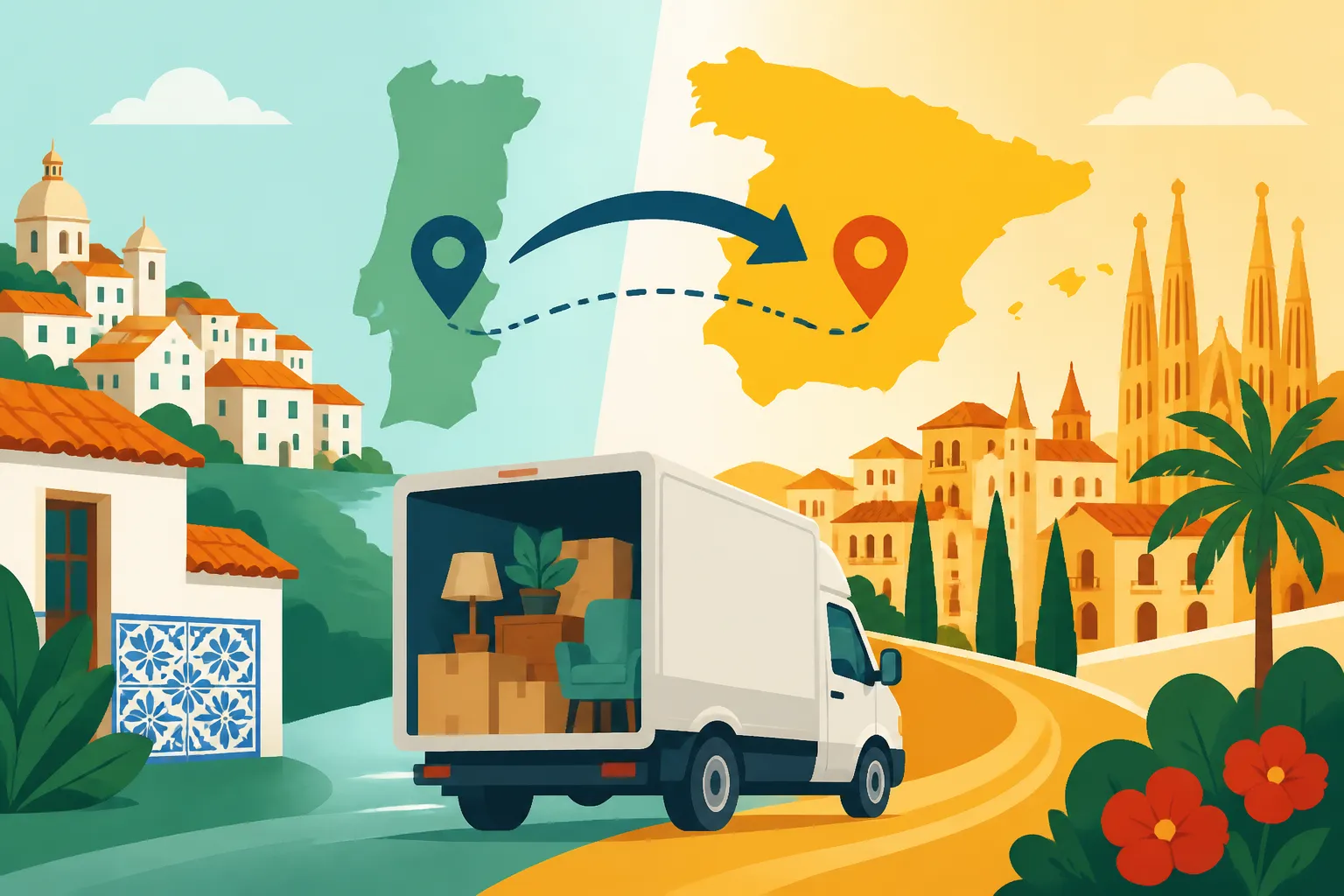
So, you’ve decided to make the hop from Portugal to Spain! It feels close, doesn't it? Just a border away. But let me tell you, as someone who’s been through a few cross-border adventures in Europe, even a short-haul international move brings its own unique set of headaches, from wondering if you should bother shipping your beloved armchair to navigating the sheer volume of paperwork. This guide will walk you through the nuances, helping you decide if shipping is best, and if so, how to connect with reliable, vetted movers through platforms like Sirelo.
Disclosure: This post may contain affiliate links. We may earn a commission at no extra cost to you if you make a purchase through these links. Read full disclosure.
The Unique Dilemma of a Portugal-to-Spain Move: Is Shipping Worth It?
Moving from one Iberian neighbor to another, you might be tempted to think it's just like moving to a different city within Portugal. "It's so close!" you might exclaim, looking at a map. And while geographically it's true, psychologically and logistically, it's still an international relocation. The fundamental question that haunts every expat making this move is: do I really need to ship all my stuff, or should I just start fresh?
What "Short-Haul International" Really Means
When we talk about a "short-haul international move," we're not talking about packing a suitcase and hopping on a plane for a holiday. We're talking about transporting your entire life – or at least a significant portion of it – across a national border. Yes, Spain and Portugal are both in the EU, which thankfully means no complicated customs duties or tariffs on your personal belongings. That's a huge relief and definitely less red tape than, say, moving from the US or UK.
However, it doesn't mean it's without cost or effort. You still need to pack everything properly for transit, find a reliable transportation method, and ensure it all arrives safely at your new Spanish digs. The distance might be short, but the process still involves professional planning, especially if you have furniture, appliances, or a lifetime of accumulated possessions. For some, the emotional value of certain items makes shipping a no-brainer, regardless of the cost. For others, the thought of decluttering and embracing a minimalist Spanish lifestyle is far more appealing. It's a deeply personal choice that often depends on what you're bringing, your budget, and your emotional attachment to your current belongings.
The Cost-Benefit Analysis: Shipping vs. Replacing
This is where the rubber meets the road. Before you even think about packing a single box, you need to realistically assess the financial and emotional implications of shipping everything versus just selling off most of your current items and buying new in Spain.
Shipping costs are influenced by volume (how much stuff you have), distance (Portugal to Spain is relatively short, but prices vary by specific cities), and the type of service (full-service packing and delivery, or just transport). You’ll get a quote based on cubic meters or weight. You also need to factor in insurance for your belongings during transit. This is where getting multiple, transparent quotes through a service like Sirelo can be incredibly helpful. You can easily compare prices and services from different reputable movers.
Replacing everything seems drastic, but consider the cost of purchasing new furniture, kitchen appliances, and even smaller household items once you arrive in Spain. Sometimes, especially for older or cheaper items, it can actually be more economical to sell them in Portugal and buy new in Spain. For example, a basic IKEA sofa might cost less to replace than to ship. However, if you have high-quality, custom-made, or sentimental pieces, the cost of replacement (or the sheer impossibility of it) will likely outweigh the shipping fees.
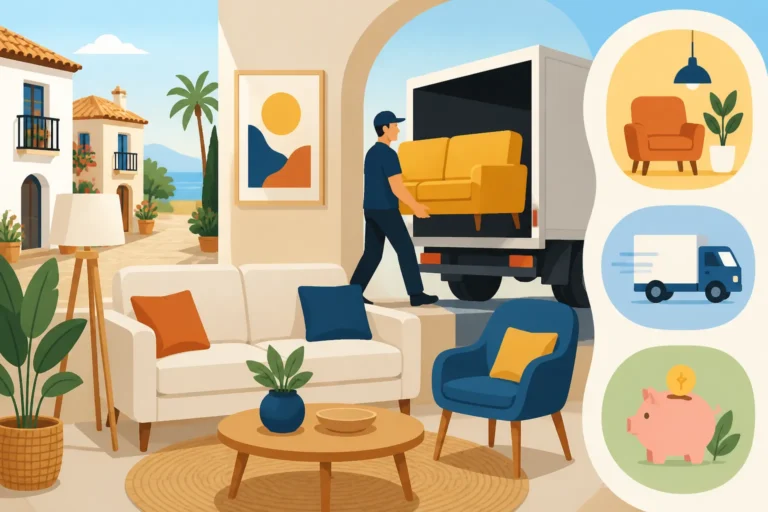
Then there's the convenience factor. If you ship, you're relying on a moving company's schedule and delivery. If you replace, you have the immediate stress of shopping and setting up a new home from scratch, often right after an exhausting move. The good news is, Spain has plenty of options for furnishing, from places like IKEA and JYSK to local furniture shops, and a thriving second-hand market if you want to save some cash. To help you weigh your options, take a look at our guide on Buying Furniture and Appliances in Spain: Delivery, Warranties, Returns.
Here's a quick comparison to get your thoughts organized:
| Factor | Shipping Existing Items | Replacing Everything in Spain |
|---|---|---|
| Cost | Moving company fees, insurance, potential packing supplies. | Purchase price of new items, delivery, assembly. |
| Effort/Time (Pre-move) | Sorting, packing, coordinating with movers, paperwork. | Selling/donating existing items, managing sales. |
| Effort/Time (Post-move) | Unpacking, potential minor repairs. | Extensive shopping, coordinating deliveries, assembly. |
| Sentimental Value | Retain all cherished items. | Only keep small, easily transportable items. |
| Quality of Items | Keep existing quality, regardless of age. | Opportunity to upgrade or downgrade quality. |
| Environmental Impact | Reuse existing items, less waste. | Manufacturing new items, more waste if old items are discarded. |
| Bureaucracy | Coordinating with mover, minor EU paperwork. | Less direct 'moving' paperwork, more 'buying' paperwork. |
Ultimately, the best decision for you will depend on your personal circumstances, the value of your possessions, and how much you're willing to spend on both the physical move and setting up your new life.
Navigating the Logistics: Your Shipping Options
Once you've decided that, yes, you absolutely are shipping your beloved collection of Portuguese azulejos and that gorgeous carved dining table, the next step is figuring out how to make it happen. This is where finding a reputable international moving company becomes paramount, and platforms like Sirelo are designed specifically to help you with this.
Full-Service Movers vs. DIY or Part-Load
You generally have a few avenues when it comes to actually moving your possessions:
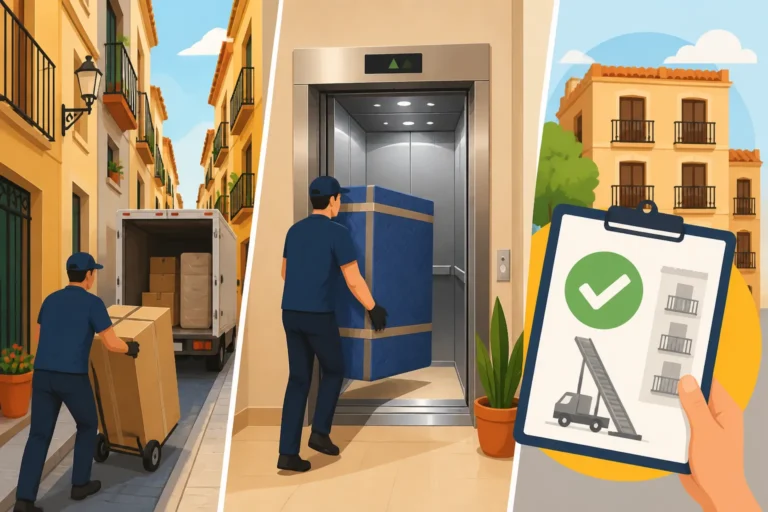
- Full-Service International Movers: This is often the least stressful, albeit usually the most expensive, option. A professional moving company will handle everything from packing your belongings (using proper international packing standards) to loading, transporting, and even unpacking at your new home in Spain. They'll also manage any necessary customs declarations, even for an EU-to-EU move, ensuring smooth transit. For those opting for a professional service, tools like Sirelo can streamline the process significantly by providing quotes from multiple, pre-vetted companies. This saves you the headache of finding reputable movers on your own.
- Part-Load or Groupage Service: If you don't have enough belongings to fill an entire moving truck, a part-load service can be a cost-effective compromise. Your possessions will be consolidated with other shipments heading in the same general direction. The downside is that delivery times can be less flexible, as the truck waits to be filled or makes multiple stops. It's a good middle-ground for those who have more than a few boxes but less than a full household.
- DIY with a Rental Van: For the truly adventurous (and those with minimal items), renting a large van in Portugal and driving it yourself across the border to Spain is an option. This requires a robust vehicle, a valid driver's license (your Portuguese one will work), and the physical stamina to load, drive, and unload everything. While it can save on professional moving costs, remember to factor in fuel, tolls, overnight stays (if applicable), and the sheer exhaustion. And heaven forbid you get a flat tire in the middle of nowhere near Extremadura! This also doesn't provide insurance for your goods, unless your travel insurance specifically covers it, which is rare for large item transit.
Choosing the right option depends heavily on your budget, the volume of your belongings, and how much hands-on involvement you want (or can tolerate!).
Essential Paperwork and Customs Considerations
"But it's the EU!" you might exclaim, thinking paperwork is non-existent. While it's true that the administrative burden is significantly less when moving within the Schengen Area compared to a non-EU move, there are still a few things to keep in mind, even for a short move to Spain.
- Inventory List: Every moving company will require a detailed inventory of what you're shipping. This isn't just for their records; it's crucial for insurance purposes and can be requested by authorities during transit. Be thorough and honest.
- Proof of Residency: You might need to provide proof of your new address in Spain, like a rental contract or property deed, especially if you're claiming your belongings as "personal effects" for an international move. This helps demonstrate you're not importing goods for commercial resale.
- NIE Number: This is your foreign identification number in Spain and is essential for practically everything, including receiving deliveries, opening bank accounts, and registering for services. You'll want to sort out your NIE early. Check out our detailed guide on How to Get a Spanish NIE Number: In Spain vs Abroad.
- Empadronamiento: Registering at your local town hall (Ayuntamiento) for your padrón is proof of your residency in a specific municipality. While not strictly needed for the moving company, it's a foundational step for your life in Spain and will come in handy for many administrative processes. Our post on Empadronamiento in Spain: How to Register Your Address walks you through it.
- Vehicle Import (if applicable): If you're bringing your car from Portugal, that's a whole other ball game of paperwork, taxes, and technical inspections. It's not part of household goods shipping but is often a consideration for short-haul moves.
- Pet Passport (if applicable): Moving with your furry friends is straightforward within the EU if they have a valid pet passport, up-to-date vaccinations, and a microchip. No extra customs checks are usually needed at the border.
While movers handle much of the heavy lifting, understanding these basic requirements will make the process smoother. Don't assume anything, and always clarify with your chosen moving company if you have specific concerns about particular items or documentation.
Practical Alternatives: Selling, Donating, and Starting Fresh
Sometimes, the thought of packing, shipping, and then unpacking everything again in a new country just feels like too much. Or maybe you're simply ready for a change, a fresh start, a different vibe. This is where selling, donating, and embracing the "less is more" philosophy truly shine.
Decluttering with a Spanish Move in Mind
Moving, especially an international one, is the perfect excuse to declutter ruthlessly. Think of it as a forced spring cleaning, but with higher stakes! Go through every room, every cupboard, every drawer, and ask yourself these questions:
- Have I used this in the last year? If not, seriously consider letting it go.
- Does this item fit my new Spanish lifestyle? Will that heavy winter coat be useful in sunny Andalusia?
- Is it cheaper to replace than to ship? (Revisit that cost-benefit analysis!)
- Does it hold significant sentimental value? If not, perhaps its journey ends here.
- Is it practical for Spanish homes? Spanish apartments, particularly in older buildings, can be smaller than what you're used to, with different layouts and often less built-in storage. That massive American-style fridge might not fit in a Spanish kitchen!
Once you've made your decisions, you have several avenues for items you're not shipping:
- Sell: Platforms like Facebook Marketplace, OLX (popular in Portugal), or local classifieds are great for selling furniture, electronics, and larger items. Garage sales or specific expat groups can also be effective. Price things to move quickly, especially if you're on a tight timeline.
- Donate: Charities, second-hand shops, and community centers are often grateful for donations of clothing, books, and household goods in good condition. This is a feel-good option that helps others and reduces waste.
- Gift: Pass on items to friends, family, or even new acquaintances in Portugal who might benefit from them. It's a nice way to say goodbye and ensure your items find a good home.
The less you have to ship, the lower your moving costs will be, and the less stress you'll have unpacking. It also gives you a fantastic opportunity to tailor your new Spanish home to your new life there.
Buying New vs. Second-Hand in Spain
Arriving in Spain with minimal belongings can be liberating, but it does mean a shopping spree awaits! Thankfully, Spain offers a wealth of options for furnishing your new abode:
-
New Furniture & Home Goods:
- IKEA: The omnipresent furniture giant has numerous stores across Spain. It's reliable, affordable, and you know exactly what you're getting.
- Leroy Merlin: For home improvement, garden, and DIY supplies, think of it like Home Depot or B&Q. Great for fixtures, lighting, and bathroom/kitchen fittings.
- JYSK: A Danish brand similar to IKEA, offering Scandinavian-style home furnishings at competitive prices.
- El Corte Inglés: Spain's iconic department store chain. It's more upscale, offering higher-quality furniture, appliances, and home decor, often with excellent customer service and delivery options.
- Local Furniture Stores (Mueblerías): Don't overlook smaller, independent stores. You can often find unique pieces, better quality, and sometimes even custom options that reflect Spanish style.
- Online Retailers: Amazon.es, La Redoute, Zara Home, Maisons du Monde, and various others provide a huge selection with home delivery.
-
Second-Hand Shopping: If you're on a budget or looking for unique, vintage, or pre-loved items, the second-hand market in Spain is vibrant.
- Facebook Marketplace: Incredibly active in Spain, especially in larger cities and expat communities. You can find everything from sofas to kitchenware.
- Wallapop: This is the Spanish equivalent of Craigslist or Gumtree, a highly popular app for buying and selling second-hand items locally. It's fantastic for furniture, electronics, clothing, and more.
- Cash Converters: A chain of pawn shops that also sell second-hand electronics, tools, and some household items.
- El Rastro (Madrid) & other Flea Markets: Many Spanish cities have traditional weekly flea markets where you can unearth treasures, often at bargain prices. Our guide on Flea Markets and Antiques in Spain (El Rastro and More) might give you some inspiration.
- Expat Groups: Online expat forums and Facebook groups are often places where departing expats sell their belongings, sometimes even entire apartment contents, making it convenient for new arrivals. Our article on Second‑Hand Shopping in Spain: Apps and Tips for Expats has more insights.
Starting fresh can be an exciting part of your relocation, allowing you to create a home that truly reflects your new life in Spain. Just make sure you budget for these new purchases, and perhaps bring enough cash for your first month to cover initial expenses while you're getting settled, as advised in How Much Cash Should You Bring for Your First Month in Spain?
Making the Move Happen: Expert Help and Next Steps
Okay, so you’ve weighed the pros and cons, done your decluttering, and you’re ready to either ship your life or start anew. Whether you’re sending a few boxes or a whole household, the practical execution of the move can still be daunting. This is precisely where a platform like Sirelo shines, simplifying what could otherwise be a labyrinthine task.
Why a Specialized Mover Service Like Sirelo is a Game-Changer
Moving, no matter the distance, is one of life's most stressful events. Moving internationally, even between next-door neighbors like Portugal and Spain, adds layers of complexity. You need reliable, trustworthy movers who understand cross-border logistics, handle your belongings with care, and offer transparent pricing.
This is where Sirelo comes in as an invaluable resource for expats. Instead of spending hours scouring the internet for "movers Portugal to Spain" and sifting through endless, sometimes questionable, results, Sirelo does the heavy lifting for you. It's an online platform designed to connect individuals like you with a network of vetted, professional moving companies that specialize in international relocations.
Here's why Sirelo is a game-changer for your move to Spain:
- Vetted Movers: Sirelo partners with reputable moving companies, giving you peace of mind that you're working with professionals who have experience with international moves.
- Multiple Quotes, Easily: You simply enter your moving details once, and Sirelo will provide you with several competitive quotes from different companies. This allows you to compare prices, services, and reviews side-by-side, ensuring you get the best value for your specific needs.
- Specialization in Cross-Border Moves: The movers on Sirelo's network are experienced in the nuances of international moves, including those within the EU. They understand the logistical requirements, potential border checks (even if minimal), and how to efficiently transport your goods from Portugal to Spain.
- Time-Saving: Forget endless searching and vetting; Sirelo connects you directly with movers specializing in cross-border moves, including the Portugal-Spain route. This saves you precious time and effort that you can then dedicate to other crucial aspects of your relocation, like getting your NIE, TIE & Empadronamiento: Essential IDs and Registrations in Spain.
- Customer Reviews: Just like looking up restaurants or hotels, you can often see reviews and ratings for moving companies on Sirelo, providing further assurance and helping you make an informed decision.
- Cost-Efficiency: By getting multiple quotes through Sirelo, you ensure competitive pricing and find a service that fits your budget and specific needs. The competition among movers often drives down costs, benefiting you.
Using Sirelo not only saves you time but also offers peace of mind, knowing that your precious belongings are in capable hands for their journey across the border.
Your Action Plan for a Seamless Transition
Moving is a marathon, not a sprint. A well-thought-out plan will save you a lot of grief.
- Decision Time: First and foremost, finalize your "to ship or not to ship" decision. Be realistic about costs, sentimental value, and the effort involved.
- Get Quotes with Sirelo: If you're shipping, head over to Sirelo. Input your details (origin, destination, estimated volume of goods) and gather your quotes. Compare them carefully, looking not just at price but also at the services included (packing, insurance, unpacking, etc.) and reviews.
- Choose Your Mover: Select the moving company that best fits your budget and service requirements. Sign the contract, understand the terms, and confirm all dates and logistics.
- Documentation Prep: Start gathering all necessary personal documents for Spain, such as your passport, visa (if applicable), and ensure you're aware of the process for obtaining your NIE. Also, prepare an inventory list for your movers.
- Declutter & Pack (or Let Them Pack): If you're self-packing, start early and label everything clearly. If your mover is packing, ensure you've set aside essential items you'll need immediately upon arrival.
- Financial Planning: Ensure you have enough funds for the move itself, plus initial living expenses in Spain. Our Money in Spain for Expats: Banking, Taxes, and Everyday Payments guide is a great resource.
- Utilities & Services: Start researching how to set up utilities and internet in Spain. It's often easier to have a plan in place before you land. Our Setting Up Your Life in Spain: Utilities, Internet, and Essentials guide will be invaluable.
- Final Checks: Before departure, ensure you've canceled all Portuguese subscriptions, closed bank accounts (if not retaining them), and informed relevant authorities of your move.
Moving from Portugal to Spain, while a shorter distance, is still a significant life change. By approaching it systematically, leveraging resources like Sirelo for moving quotes, and doing your homework on life in Spain, you can make the transition as smooth and stress-free as possible. Ready to get those quotes? Head over to Sirelo and start comparing your options today.
Disclaimer
Please note that while this guide provides general information and advice for moving to Spain from Portugal, individual circumstances can vary greatly. Immigration laws, tax regulations, and administrative processes in Spain are subject to change. Always consult with official government sources, legal professionals, tax advisors, or a gestor for personalized advice tailored to your specific situation. The information provided here is for informational purposes only and does not constitute professional legal or financial advice.