What Time Does Nightlife Start in Spain?
If you show up at a Spanish nightclub at 11:00 PM expecting a crowd, you will likely find yourself alone with the cleaning staff or a very bored bartender. The most common mistake new arrivals make is applying "Northern" logic to Mediterranean hours, leading to exhausted evenings and missed connections. This guide breaks down the precise, unwritten schedule of Spanish nightlife so you can synchronize your biological clock with the local rhythm.
Disclosure: This post may contain affiliate links. We may earn a commission at no extra cost to you if you make a purchase through these links. Read full disclosure.
The Cultural Foundations of the Late Spanish Night
To understand why nightlife in Spain starts so late, you have to understand the entire structure of the Spanish day. It isn't just about being "party people"; it is a systemic delay caused by the sun, the climate, and a unique work-life balance. I remember my first month in Madrid, trying to find a lively bar at 10:00 PM on a Friday. I felt like I had stepped into a ghost town, wondering if everyone had collectively decided to stay home. In reality, they were all just sitting down to dinner.
The first factor is the sun. Spain sits further west in its time zone than it technically should, meaning the sun sets much later than in the UK or Germany. In the summer months, it can stay light until nearly 10:00 PM. Heat also plays a massive role. In cities like Seville or Madrid, the afternoon temperatures are often too punishing for any activity. This pushes the "productive" part of the afternoon later, which in turn pushes the social evening into the early hours of the morning.
Furthermore, the Spanish Meal Times and Dining Etiquette Explained system dictates that lunch happens at 2:30 PM and dinner rarely starts before 9:00 PM. If you finish a three-course dinner at 11:00 PM, you aren't ready to go to bed; you are just getting started. This leads to a phenomenon known as the "late-night ripple effect." Everything is shifted by three to four hours compared to London or New York. If you want to survive a night out here, you must master the art of the afternoon nap, or at the very least, a very slow afternoon.
The Evolution of a Spanish Night: A Phase-by-Phase Timeline
Spanish nightlife is not a single event; it is a series of transitions. You don't just "go out"; you move through different environments as the night matures. Understanding this progression is essential for planning your transport via apps like Omio or booking your stay in the right neighborhood through Booking.com.
Phase One: The Pre-Game and Tapas (8:00 PM – 10:30 PM)
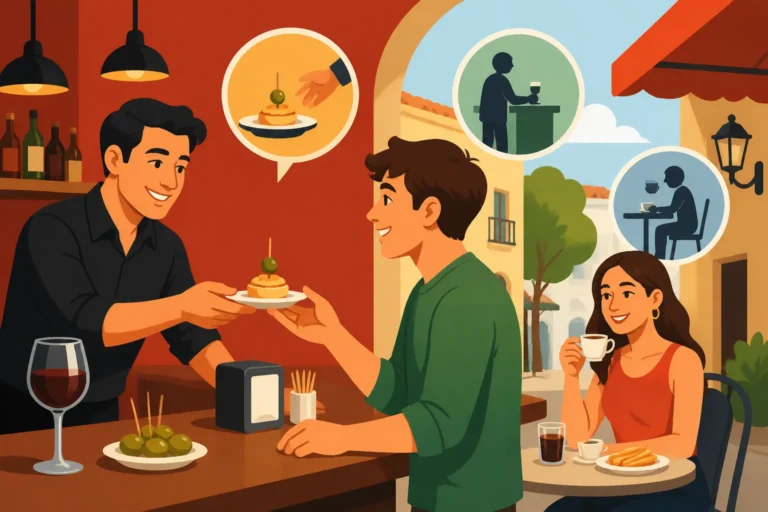
This is the warm-up period. At this hour, the "nightlife" is indistinguishable from general social life. You will see families, elderly couples, and groups of friends all congregating in plazas. This is the time for the tapeo. Instead of sitting in one place, you move from bar to bar, having one drink and one small plate at each. For a deep dive into this, check out Spanish Tapas Culture: How to Order and Where to Go.
During this phase, the atmosphere is loud, communal, and relatively low-stakes. You aren't "partying" yet; you are socialising. It is the perfect time to catch a show if you are into culture; many people use GetYourGuide to find local events like a Flamenco in Spain: Where to See an Authentic Show which usually aligns perfectly with this early-evening window.
Phase Two: The Sit-Down Dinner (10:00 PM – Midnight)
While the rest of the world is winding down, Spain is heading to the restaurant. This is where the foundation for the night is laid. Spanish dinners are long, often lasting two hours or more. The most important part of this phase is the sobremesa—the period after the meal is finished where everyone stays at the table to talk, drink coffee, or have a first digestive liqueur. This is why you won’t see anyone in the "late-night" bars before midnight; they are still finishing their dessert and debating politics or football at the restaurant table.
Phase Three: Bar de Copas (Midnight – 2:30 AM)
Around midnight, the transition to the bar de copas begins. These are "drink bars" that sit somewhere between a pub and a nightclub. They usually have music—often reggaeton, Spanish pop, or house—but they don't have a dedicated dance floor in the traditional sense. People stand around high tables or lean against the bar.
This is the peak time for socialising. If you enter a bar de copas at 12:30 AM, it will be starting to fill up. By 1:30 AM, it will be packed. This is also when you should start thinking about your "final destination." If you plan on hitting a major club, you should have your tickets ready. It is worth using GetYourGuide to look for skip-the-line club entries, as the queues at 2:00 AM can be soul-destroying.
Phase Four: The Discoteca (2:30 AM – 6:00 AM+)
This is the final frontier. The big clubs, or discotecas, do not truly "peak" until 3:00 AM or 3:30 AM. If you go at 1:00 AM, the lights might be on, the DJ might be playing, but the dance floor will be an empty cavern. The energy in a Spanish club at 4:00 AM is unlike anything else; it is high-octane, unpretentious, and surprisingly sustainable.
Because the night lasts so long, the pace is different. People don't drink as fast as they do in countries with earlier closing times. The goal is to reach the sunrise. By 6:00 AM, the clubs begin to wind down, but in major cities, you will find "after-hours" spots that stay open until 10:00 AM. For those who make it to the end, the traditional "breakfast" of churros and chocolate is the mandatory final step before heading to your hotel.
Logistics and Planning: Surviving the Spanish Schedule
Planning a night out in Spain requires a bit more strategy than just grabbing a taxi. Because you will be out until dawn, you need to consider how you are getting home and where you are staying. If you are traveling between cities—say, taking the train from Madrid to Valencia for a weekend of partying—check Omio for the latest schedules, but be aware that the last trains often leave before the party even begins.
Choosing the Right Base
Where you sleep matters immensely. If you book a hotel through Booking.com in a quiet, residential area, you might face a 40-minute walk or a very expensive cab ride at 5:00 AM. Conversely, if you stay right in the heart of a nightlife district like Malasaña in Madrid or El Carmen in Valencia, expect noise until sunrise. It helps to look for finding a "middle-ground" neighborhood—close enough to walk to the action but a few blocks away from the main thoroughfares.
Transport Options at 4:00 AM
Public transport changes significantly after midnight. In many Spanish cities, the Metro shuts down around 1:30 AM or 2:00 AM on weekends and doesn't reopen until 6:00 AM. During the "dark hours," you will rely on the búho (owl) buses—night buses that run on limited routes. For more specifics on this, read through Getting Around Spanish Cities: Metro, Bus, Tram, and Bikes. Taxis and ride-sharing apps are widely available, but demand is massive between 3:00 AM and 5:00 AM, so be prepared to wait.
Nightlife Timing Comparison Table
| Venue Type | Doors Open | People Arrive | Peak Energy | Typical Closing |
|---|---|---|---|---|
| Tapas Bars | 7:30 PM | 9:00 PM | 10:00 PM | Midnight / 1:00 AM |
| Restaurants | 8:30 PM | 9:30 PM | 10:30 PM | Midnight / 12:30 AM |
| Bar de Copas | 10:00 PM | 11:30 PM | 1:00 AM | 3:00 AM / 3:30 AM |
| Nightclubs | Midnight | 1:30 AM | 3:30 AM | 6:00 AM / 7:00 AM |
| After-Hours | 6:00 AM | 6:30 AM | 7:30 AM | 10:00 AM / Noon |
Regional Nuances: Does Every City Follow the Same Clock?
While the "late start" is a national rule, there are subtle differences depending on where you are in the country. Nightlife in Spain: Cities That Stay Up Late provides a broader look at this, but here are a few local secrets I've picked up over the years.
In Madrid, the night is arguably the longest. The city literally never sleeps, and you will find people on the streets of Gran Vía at 4:00 AM on a Tuesday. The "start" time here is strictly midnight for bars and 2:30 AM for clubs. In Barcelona, the schedule is slightly more "European" due to the high volume of international tourists, but if you go to the local spots in Gràcia or Poble-sec, the traditional Spanish hours still apply.
In the south, such as Seville or Granada, the summer heat dictates everything. During July and August, the nightlife might not even begin until 1:00 AM because it is simply too hot to breathe before then. In these cities, the "pre-game" in the plazas is much more significant than the indoor clubbing scene. People stay outside as long as possible to catch the "cool" night air.
In the north—Bilbao or San Sebastián—the focus is much more on the Spanish Food and Drink: A Practical Culture Guide aspect. The nightlife often revolves around high-quality pintxos bars and craft beer spots. The night might end a little earlier (around 4:00 AM) compared to the madness of Madrid, but the intensity of the socialising is just as high.
Practical Tips for Your First Spanish Night Out
If you aren't used to staying up until 6:00 AM, your first night in Spain can be a shock to the system. Here is how I’ve learned to manage it without feeling like a zombie the next day.
First, forget the concept of a "quick drink." If you go out in Spain, you are making a commitment. Pace yourself. The Spanish don't generally engage in binge drinking; they drink steadily over a very long period. If you start doing shots at 10:00 PM, you will be in bed by 1:00 AM, exactly when the fun starts. Order a caña (small beer) or a tinto de verano to keep things light.
Second, dress the part. While some coastal beach clubs are casual, city nightlife in Spain is generally quite stylish. Many clubs have a "no sneakers" policy, and showing up in shorts and a tank top is a guaranteed way to get turned away by the portero (bouncer). Think "smart-casual" as your baseline.
Third, stay safe. Spain is generally very safe, but the late-night hours are prime time for pickpockets in tourist-heavy areas like Las Ramblas in Barcelona or Puerta del Sol in Madrid. Keep your phone in your front pocket and never leave your bag on the floor of a bar. For more detailed advice, see Staying Safe in Spain: Practical Safety Tips for New Residents.
Finally, don't worry about the language barrier too much. In the loud environment of a bar or club, everyone is a friend. However, knowing a few phrases helps. For example, knowing how to handle Tipping in Spain: When, Where, and How Much can save you a lot of confusion when the bill arrives at a cocktail bar. Most bartenders in major cities speak basic English, but a "Hola, una copa de [drink], por favor" goes a long way.
Disclaimer
This guide is intended for informational purposes for tourists and expats in Spain. Nightlife hours and local regulations can change based on municipal laws, seasonal shifts, or specific event dates. Always check the official website of a venue or local authorities for the most current opening times and safety guidelines. Drink responsibly and respect local residents by keeping noise levels down when leaving venues in residential neighborhoods.