How to Use the Renfe App to Plan Train Travel in Spain
Disclosure: This article contains affiliate links. If you buy through them, we may earn a commission at no extra cost to you. Read our full disclosure.
If you have ever tried navigating public transport in Spain, you already know that dealing with official administrative software can test your patience. The official Renfe application is famous among expats and travelers for cryptic error messages, sudden time-outs, and language glitches that leave even seasoned travelers baffled. This guide breaks down exactly how to set up, search, and buy tickets using the Renfe app without losing your mind.
Getting Started with the Renfe App and Account Setup
Before you pack your bags or attempt to board a high-speed train, you need to set up your mobile device correctly. The most common mistake newcomers make is downloading the wrong digital tool altogether, as Spain’s national rail operator splits its ecosystem across multiple applications depending on the service level you require.
Downloading the Right Renfe App for Your Trip
Spain’s national rail network relies on distinct platforms for different journeys. If you are traveling between major cities like Madrid, Barcelona, Seville, or Valencia, you need the primary application designed for long-distance and high-speed transit, often listed in app stores as Renfe or Renfe Ticket. This is where you purchase seats on high-speed services and intercity lines.
However, if you are planning daily commutes within a specific metropolitan zone—such as taking a short hop from Madrid Barajas T4 Airport into the city center or exploring the coastal towns near Barcelona—you will need a separate application titled Renfe Cercanías. The main application simply will not issue local suburban commuter tickets in the same way. Understanding this division early saves you from standing in front of a station turnstile attempting to scan a ticket that the gate scanner cannot process.
Creating an Account and Overcoming Language Barriers
When you open the app for the first time, change the language settings to English if your Spanish is still rusty. Look for the user profile icon or settings menu, usually represented by a small gear or silhouette icon in the upper corner. Be aware, however, that the app frequently switches back to Spanish during checkout pages or when displaying policy terms. Knowing key terms like Origen (departure station), Destino (destination), Ida y Vuelta (round trip), and Fecha (date) will serve you well.
Creating a user account is highly recommended over purchasing as a guest. Account creation allows the app to store your personal details, foreign passport numbers, and payment history. When inputting your identity document, select Pasaporte from the drop-down menu if you do not hold a Spanish residence document (NIE or DNI). Ensure you type your passport number cleanly without spaces or special characters. If the system throws an error regarding your phone number, double-check that you included your international country code with the prefix (+) sign, as Spanish web forms expect standardized international formatting.
Linking Foreign Credit Cards and Payment Workarounds
The most notorious roadblock foreign travelers encounter within the application occurs at the final payment screen. Spanish booking systems use an extra layer of online security known as 3D Secure or Redsys payment gateways. If your foreign bank or credit card provider delays issuing a two-factor verification prompt on your banking app, the Renfe app will automatically time out and drop your seat reservation.
To prevent this nightmare, set up alternative payment methods inside the app. Linking a pre-authorized digital wallet or a PayPal account often bypasses the strict fraud checks that trigger credit card rejections. If your international card continues to fail despite multiple attempts, turn to a multi-modal booking platform such as Omio to secure the exact same seats without fighting the payment portal. It is always better to have an alternative route ready than to watch seat prices rise while your bank blocks transaction attempts.
Searching for Trains and Deciding Which Ticket to Buy
Once your profile is active, navigating the search interface requires an understanding of how Spain structures its railway network. The app presents a wide variety of train options for a single route, each carrying different price points, speeds, and luggage allowances.
RENFE APP SEARCH WORKFLOW
Select Origin/Dest. → Choose Date & Passengers → Filter Train Type
Complete Payment → Save Ticket to Wallet → Get Station QR Code
v
| Enter Discount Cards <– Select Fare Class <——————–+ | |
Decoding Renfe Train Types from AVE to Cercanías
When searching for routes, the app displays acronyms that reflect the type of service running on that line. The flagship service is High-Speed Trains in Spain (AVE): Routes, Booking, and Savings, which runs on dedicated high-speed tracks and connects major hubs across the country at impressive speeds. You will also see Avlo, which is the low-cost high-speed subsidiary offering budget fares with stricter luggage limits and fewer onboard amenities.
For regional travel, the app displays choices like Avant (high-speed service for shorter regional trips) and Media Distancia (traditional intercity trains stopping at intermediate towns). To understand how these options fit into broader regional travel patterns, consult our breakdown of Regional and Local Trains in Spain (Cercanías and Media Distancia). Matching the right train type to your schedule prevents you from accidentally booking a slow regional route when a high-speed line covers the same distance in a fraction of the time.
Understanding Fare Classes, Changes, and Cancellations
Renfe structures its ticket pricing into three main fare tiers: Básico, Elige, and Premium. The Básico tier offers the lowest entry price, but it is completely non-refundable and does not allow modifications. If your flight is delayed or your plans change, you lose the value of the ticket entirely.
The Elige tier offers a middle ground, providing flexible seat selection and allowing changes or cancellations for a small percentage fee. Premium tickets include full flexibility, seat selection, access to station lounges (Salas Club), and complimentary hot meals served at your seat on select AVE routes. If you are traveling as a family or carrying bulky luggage, paying slightly more for Elige or Premium avoids surprise add-on charges at the boarding gate.
Using the Renfe App to Book Routes Step by Step
To execute a search, type your departure city in the Origen field and select the exact station. In multi-station cities like Madrid or Barcelona, choosing a general city name works, but paying attention to the specific terminal is crucial. Madrid, for instance, uses Atocha for southern and eastern destinations, while Chamartín handles northern routes.
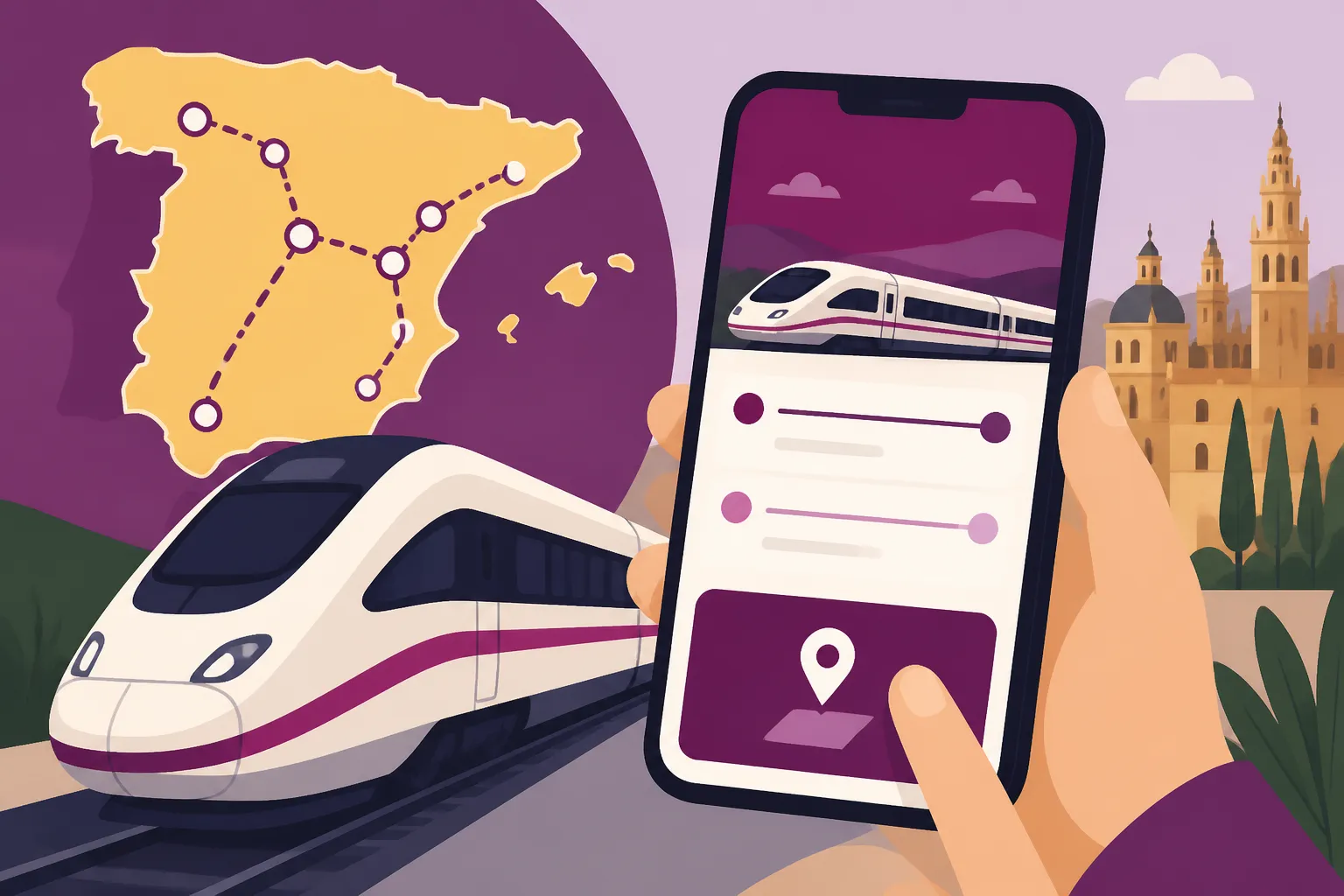
Select your trip type (one-way or round trip), enter the number of passengers, and tap search. The app presents a chronological list of departures. Each listing shows departure and arrival times, travel duration, train category, and the lowest available price. Tap on a specific departure to view the breakdown of fare classes. After selecting your ticket class, you can choose specific seat attributes (such as window, aisle, or seats with a central table) depending on the fare tier you purchased.
For more detailed strategies on securing low fares well in advance, read our dedicated guide on How to Buy AVE Train Tickets in Spain and Save Money.
Managing Your Digital Tickets and Onboard Practicalities
Once you complete your purchase, managing your digital pass correctly ensures a smooth journey through Spain’s high-speed train terminals.
Storing Mobile Passes, Wallet Integration, and QR Codes
Upon successful payment, the app generates a digital ticket containing a 6-character alphanumeric booking code called a Localizador and a scannable QR code. Do not rely entirely on an active internet connection at the train station. Cellular service can become unreliable inside massive concrete terminals like Barcelona Sants or Madrid Atocha.
Save your ticket directly to your smartphone’s digital wallet app (such as Apple Wallet or Google Wallet) using the built-in option on the booking confirmation screen. Alternatively, take a high-resolution screenshot of the QR code or download the PDF version to your phone’s local storage. This guarantees you can retrieve your boarding pass instantly when approaching security checkpoints or ticket turnstiles.
What Happens at Station Security and Boarding Platforms
Boarding a high-speed train in Spain closely resembles an airport boarding procedure. Before entering the platform area, you must pass through a luggage security checkpoint where your bags are scanned via an X-ray machine. While there are no liquid limits like at an airport, arriving early is essential. Security lines can back up significantly during peak commuting hours or holiday weekends.
Gates typically close two to five minutes before departure. Once through security, look at the information display screens to locate your platform number (Vía). Have your app or wallet pass ready. You will scan your ticket QR code at the automatic barrier gates to reach the platform. If you plan to coordinate accommodation steps after pulling into your station, browsing options via Booking.com allows you to secure hotels within easy walking distance of the rail terminal.
Leveraging the Combinado Cercanías Free Transfer Feature
One of the best-kept secrets buried inside the application is the Combinado Cercanías code. Every long-distance AVE or Larga Distancia ticket includes a free travel pass for local suburban commuter trains on both ends of your journey. This means your high-speed ticket covers your transit from an outer suburb or airport into the main station before departure, as well as your final leg upon arrival.
To claim this benefit, locate the Combinado Cercanías code printed on your digital ticket details in the app. At the commuter train ticket machines in the station, select the option to redeem a ticket using a code, scan or type your numeric string, and the machine will print a local single-journey ticket without charging you extra. This is particularly useful when figuring out How to Get From Madrid Airport to the City Center without buying a separate commuter rail pass.
Alternative Booking Tools When the Renfe App Glitches
Despite your best efforts, there will be days when the app undergoes server maintenance, displays endless loading screens, or flatly refuses to process international credit cards. Having a backup plan ensures your travel schedule remains intact.
If the app freezes mid-transaction, check your email inbox before attempting to book again to avoid accidental double bookings. If no confirmation arrives, try purchasing via the desktop web browser or switch to user-friendly aggregator platforms. Services like Omio present train options side-by-side with regional bus lines, giving you immediate alternatives if rail routes are sold out.
If you are incorporating rail travel into a broader Spanish itinerary, explore our master overview of Traveling Around Spain: Trains, Buses, Flights, and Car Hire to weigh your transit options effectively.
| Train Type | Speed / Network Category | Reservation Required? | Best Used For |
|---|---|---|---|
| AVE | High-Speed Long Distance | Yes | Rapid travel between major cities (e.g. Madrid to Barcelona) |
| Avlo | Low-Cost High-Speed | Yes | Budget high-speed travel on main lines with minimal luggage |
| Avant | High-Speed Mid-Distance | Yes | Frequent regional connections between neighboring provinces |
| Media Distancia | Standard Regional Intercity | Yes (Most Routes) | Reaching mid-sized towns and smaller historic destinations |
| Cercanías / Rodalies | Local Suburban Commuter | No | Suburbs, city transit, and quick airport transfers |
Maximize Your Rail Journeys Across Spain
Mastering the rail app unlocks effortless exploration across Spain’s diverse regions. High-speed rail allows you to sip coffee in central Madrid in the morning and enjoy tapas in Seville by mid-afternoon without the stress of airport check-ins or highway driving.
When planning day trips from major hubs, look into Day Trips and Weekend Getaways Across Spain to find destinations easily reachable within two hours by train. For seamless sight-seeing once you arrive at your destination, booking walking tours or entry passes via GetYourGuide lets you hop off the train and head straight into historic landmarks like the Mezquita in Córdoba or the Alhambra in Granada without waiting in ticket lines.
If you prefer freedom off the beaten path where tracks do not reach, balance your itinerary by reviewing options for Renting a Car in Spain: Requirements, Insurance, and Driving Tips. For comprehensive route planning, read our guide on How to Plan a Spain Itinerary by Train to map out logical, scenic rail paths across the country.
Disclaimer
This article is for general informational purposes only and does not constitute professional advice. Laws, prices and regulations vary by location and change over time. Consult a qualified professional for guidance on your specific situation.