Cycling in Spain: Routes and Bike-Friendly Areas
Trying to figure out where you can safely ride a bike in Spain without being chased by a frantic delivery scooter or getting stuck on a highway shoulder is a genuine rite of passage for any newcomer. I remember my first week in Madrid, sweating through a literal mountain climb just to find a grocery store because I didn't understand the topography yet. This guide solves that confusion by breaking down Spain’s best cycling regions, urban paths, and the hidden logistics of being a "bicigrino."
Disclosure: This post may contain affiliate links. We may earn a commission at no extra cost to you if you make a purchase through these links. Read full disclosure.
Why Spain is a Cyclist Paradise and a Logistics Puzzle
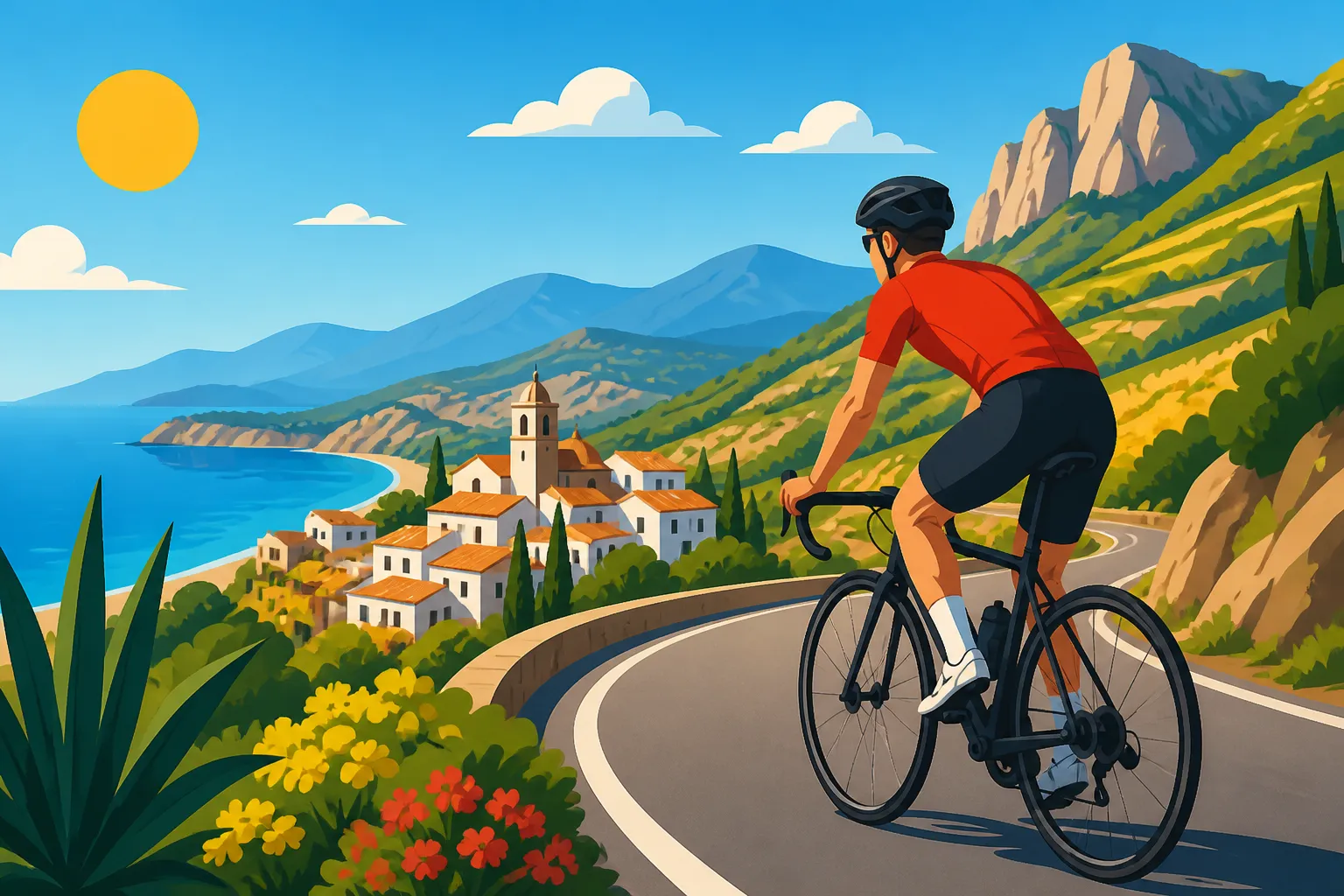
Spain offers some of the most varied terrain in Europe, from the flat, orange-scented coastal paths of Valencia to the brutal, ego-bruising switchbacks of the Pyrenees. For an expat or a long-term tourist, the transition to cycling here is often met with a mix of awe at the scenery and utter frustration at the local "rules of the road" which seem to change the moment you cross a provincial border.
The beauty of cycling in Spain lies in its commitment to transforming old infrastructure into leisure space. You aren't just limited to sharing the road with cars; the country has invested heavily in dedicated paths that take you through the heart of the countryside without a single engine in earshot. However, the puzzle comes when you try to combine cycling with other forms of travel. Understanding Train Travel in Spain: High‑Speed vs Regional Routes Explained is vital because a bike that is welcome on a local train might be strictly forbidden on a high-speed AVE unless it is disassembled and bagged.
Culturally, the "Sunday Morning Pelotón" is a real phenomenon. You will see groups of locals in full professional gear reclaiming the secondary roads every weekend. Joining this culture requires an understanding of Spanish social rhythms. You’ll find that a morning ride almost always culminates in a long, sun-drenched lunch, making cycling as much a social endeavor as a physical one.
The Rise of Sustainable Urban Mobility
In the last decade, major Spanish cities have undergone a radical transformation. What were once car-choked thoroughfares are now lined with bright green or red bike lanes. This shift wasn't just for aesthetics; it was a response to the growing demand for cleaner air and less congestion. As a resident, you'll quickly realize that a bike is often the fastest way to navigate a city center where cars are restricted or parking costs more than your lunch.
However, urban cycling isn't without its hurdles. The "invisible" rules, like knowing which plazas you can legally ride through and which will earn you a sharp whistle from a local policeman, take time to learn. You also have to navigate the bike-sharing systems, which are fantastic but often require a local digital certificate or an established residency to access the annual rates.
Diversity of Terrain for Every Skill Level
Whether you are a professional looking to train in the Sierra Nevada or a family wanting a flat afternoon stroll along the Mediterranean, Spain has a niche for you. The northern coast offers lush, rainy, and hilly challenges, while the south provides dry, dusty, and dramatic landscapes that feel like a Western movie set.
The key for any expat is to match their gear to the region. Bringing a sleek carbon road bike to the cobblestoned hills of an Andalusian white village might result in more punctures than progress. Conversely, a heavy mountain bike in the flatlands of Castilla-La Mancha will just leave you exhausted. Finding that balance is the first step toward enjoying the ride.
Iconic Long-Distance Routes for the Adventurous
If you are looking to truly lose yourself in the Spanish landscape, the long-distance routes are where the magic happens. These aren't just paths; they are historical journeys. Many expats find that completing one of these routes is the moment they truly feel "connected" to the geography of their new home.
The most famous of these is the Camino de Santiago. While traditionally a walking pilgrimage, the "Bicigrino" (bike pilgrim) culture is massive. If you're planning this, using a platform like Omio can help you coordinate getting yourself and your gear to the starting point in Roncesvalles or Leon, especially if you need to book bus or train legs that allow for bicycle transport.
The Vías Verdes: From Railways to Greenways
The Vías Verdes (Greenways) program is perhaps Spain’s greatest gift to cyclists. There are over 3,000 kilometers of disused railway lines that have been paved over or covered in fine gravel to create perfectly flat, car-free routes through the countryside. Because trains can't handle steep inclines, these paths are ideal for those who want the scenery of the mountains without the grueling climbs.
The Vía Verde de la Jara in Toledo or the Ojos Negros route (the longest in Spain) take you through tunnels and over soaring viaducts. I’ve spent many weekends on these, and the lack of cars creates a meditative experience that you just can't get in a city park. They are also dotted with old railway stations that have been converted into cafes and small hotels, which you can often find via Booking.com for a charming overnight stop.
The Transpirenaica: A True Mountain Challenge
For those who think a "good ride" involves 2,000 meters of elevation gain before breakfast, the Transpirenaica is the gold standard. Stretching from the Atlantic coast in the Basque Country to the Mediterranean in Catalonia, this route crosses the Pyrenees. It is a grueling, magnificent journey that requires high-level fitness and a sturdy mountain or gravel bike.
The logistical challenge here is the weather. Even in June, you might encounter snow on the high passes, and by August, the lower valleys are scorching. Expats living in the north often tackle this in stages over several years. It’s a route that demands respect and careful planning regarding water stops and mechanical support.
| Route Name | Region | Difficulty | Terrain Type |
|---|---|---|---|
| Camino de Santiago | Northern Spain | Moderate | Gravel / Road Mix |
| Vía Verde Ojos Negros | Teruel to Valencia | Easy | Fine Gravel / Flat |
| Transpirenaica | Pyrenees | Hard | Mountain / Technical |
| EuroVelo 8 | Mediterranean Coast | Moderate | Paved / Coastal |
| Canal de Castilla | Palencia / Valladolid | Easy | Dirt Path / Flat |
Best Bike-Friendly Cities in Spain
Not all Spanish cities are created equal when it comes to two wheels. While some are historical labyrinths where cycling is a headache, others have been redesigned with the cyclist as the priority. If you're deciding where to settle down, the quality of the bike lanes can be a major factor in your daily happiness.
Seville is often cited as the gold standard of urban cycling transformation. In just a few years, it went from having almost no infrastructure to possessing a world-class network of segregated lanes. Because the city is as flat as a pancake, it’s a dream for commuters. I’ve found that even in the heat of summer, the shade from the narrow streets and the ease of the paths make it manageable.
Valencia: The Turia Park Phenomenon
Valencia is arguably the best city for cyclists in the country. The standout feature is the Jardín del Turia, a 9-kilometer-long park located in a diverted riverbed that snakes through the city center. It allows you to cross the entire city from the Bioparc to the City of Arts and Sciences without ever encountering a car.
Outside the park, the city has implemented a "Cyclo-street" (Ciclocalle) system where bikes have priority over cars, and the speed limit is strictly 30km/h. For those moving here, getting a Valenbisi card is essential. It’s a cheap, reliable bike-sharing system that perfectly complements the city’s layout. If you're just visiting, you can find guided tours through GetYourGuide to learn the layout of the park and the hidden paths of the Old Town.
Barcelona: Innovation and the Sea
Barcelona has a more aggressive cycling culture. The city is laid out in a grid (the Eixample), and most of these wide streets now have dedicated, protected bike lanes. The challenge in Barcelona is the topography—if you head "up" toward Gràcia or Horta, you’re going to feel the burn. This is why e-bikes have exploded in popularity here.
The coastal path in Barcelona is a highlight, allowing you to ride from the W Hotel all the way to Badalona with a constant sea breeze. However, be warned: the city is also a hotspot for bike theft. Understanding Staying Safe in Spain: Practical Safety Tips for New Residents is crucial here; never use a cheap cable lock, and if your apartment doesn't have a "trastero" (storage room), you’ll likely be hauling your bike up the elevator every night.
Vitoria-Gasteiz: The Green Capital
Often overlooked by tourists, Vitoria-Gasteiz in the Basque Country is a hidden gem for cyclists. It was named the European Green Capital for a reason. The city is surrounded by a "Green Belt" of parks that are all interconnected by cycling paths. The locals here use bikes for everything, and the infrastructure is so seamless that you rarely feel like you’re in an urban environment.
The Basque weather is the only downside—you need to be comfortable riding in the rain. But if you have the right gear, the quality of the paths and the respect from drivers in this region make it one of the safest places to ride in Spain.
Practical Logistics: Bringing Your Own Bike vs. Renting
One of the most frequent questions I get from fellow expats is whether it's worth shipping a bike from home. Having lived through the stress of an international move, I can tell you that it depends entirely on your bike's value and your mechanical skills. If you have a custom-built machine, bring it. If you have a standard hybrid, you might be better off selling it and buying something new (or second-hand on Wallapop) once you arrive.
Shipping a bike usually involves a "bike box" and a hefty fee from the airline. Once you land, you then have the problem of storing that massive box in a typically small Spanish apartment. If you are just here for a month or two, renting is almost always the smarter move. Local shops in hubs like Girona or Mallorca offer high-end rentals that are often better than what you have at home.
Navigating Public Transport with a Bike
This is where the "administrative hurdles" of Spain really show up. On the Cercanías (suburban trains), you can usually take your bike for free, though there are "peak hour" restrictions in cities like Madrid and Barcelona. On the Media Distancia (regional trains), you often have to book a "bike ticket" in advance, and there are only 3 slots per train.
The high-speed AVE is the trickiest. To bring a bike on an AVE, it must be in a specialized bag, the pedals must be removed, and the handlebars turned 90 degrees. It essentially becomes "luggage." If you don't want to deal with that, I recommend checking Omio to find bus companies like ALSA, which often have easier bike-loading policies for a small extra fee (usually around 10-15 euros).
Maintenance and Local "Talleres"
Spain has a thriving bike shop culture. Every neighborhood has a "taller" (workshop) where the mechanic likely knows everyone’s name and the history of their gear. These shops are fantastic resources for more than just repairs; they are where you find out about local club rides and the best "hidden" trails that aren't on Google Maps.
When you go in for a repair, don't expect it to be done in an hour. The "mañana" stereotype is occasionally true in the world of bike repairs, especially if they need to order a specific part from a distributor in Barcelona or Germany. Being patient and building a relationship with your local mechanic will pay dividends when you have a mid-ride emergency and need a quick fix.
Safety, Rules, and Local Etiquette
Spanish traffic laws are quite specific when it comes to cyclists, and the Guardia Civil does not hesitate to hand out fines. The most important rule to know is the "1.5-meter rule." When a car passes a cyclist on a road, they must leave at least 1.5 meters of space. Drivers are actually allowed to cross a solid white line to give you this space, provided it's safe. It's a law that makes road cycling here feel much safer than in the US or UK.
Helmets are another sticking point. In Spain, helmets are mandatory for adults when riding outside of urban areas (on inter-city roads). Inside the city, they are only mandatory for those under 16, though highly recommended for everyone. Also, don't even think about riding with headphones; it is strictly illegal and a common reason for tourists to get fined.
Understanding the "Derecho de Giro"
In Spanish cities, the etiquette at intersections can be confusing. Many bike lanes have their own dedicated traffic lights, which don't always align with the car lights. You'll also encounter "advanced stop lines" at red lights, allowing cyclists to sit in front of the cars. Use these! It makes you visible and prevents the "right-hook" accident where a car turns into you.
On mountain paths and shared trails, the hiker always has the right of way. In regions like Catalonia, there are strict rules about staying on marked trails to prevent erosion. If you are looking to explore these areas, booking a guide through GetYourGuide can ensure you are following local environmental laws while seeing the best spots.
Security and Theft Prevention
I cannot stress this enough: bike theft is a profession in Spanish cities. If you leave a nice bike locked outside overnight, it will likely be gone by morning, regardless of the lock. For daily commuting, use a "beater" bike that doesn't look expensive. For your "real" bike, keep it inside your apartment.
When you're out at a cafe, always keep your bike in your line of sight. It’s common to see cyclists sitting at outdoor tables with one foot literally resting on their bike frame. It might seem paranoid, but in busy areas like the Ramblas or Puerta del Sol, it’s just common sense.
Budgeting and Planning Your Cycling Trip
Living the cycling life in Spain can be as cheap or as expensive as you want. A second-hand bike and a helmet might set you back 200 euros, while a high-end road cycling tour of the Balearic Islands could cost thousands. For the average expat, the main costs are maintenance and gear to handle the varying seasons.
One of the best ways to save money is to time your purchases with the "Rebajas" (sales seasons) in January and July. Large retailers like Decathlon are ubiquitous in Spain and offer surprisingly high-quality gear for a fraction of the price of boutique brands. However, for specialized components, you'll want to find a local "tienda de bicis."
Seasonal Considerations
Spain is not a monolith of sunshine. If you are cycling in the north (Galicia, Asturias) in November, you are going to get wet. If you are cycling in Seville in August, you are going to be in 40-degree heat. The best months for cycling across the whole country are May, June, September, and October.
During the peak of summer, you must adopt the "Spanish Schedule." Start your ride at 7:00 AM and be off the road by 11:30 AM. Spend the afternoon in the shade or by a pool, and perhaps do a light evening stroll. Trying to power through a climb in the midday July sun is a recipe for heatstroke, which we discuss in our guide on Heatwaves in Spain: Health Precautions for Expats.
Resources for Finding Routes
Don't just wing it. Use apps like Wikiloc, which is incredibly popular in Spain and has thousands of user-uploaded routes with photos and difficulty ratings. You can also check the official Vías Verdes website for downloadable maps of the old railway paths.
When planning your stay, look for "Cycling Friendly" certified hotels on Booking.com. These places offer secure bike storage, tools for basic repairs, and sometimes even specialized laundry services for your kits. It takes the stress out of the logistics so you can focus on the scenery.
Disclaimer
The information provided in this guide is for informational purposes only. While every effort has been made to ensure the accuracy of the rules, routes, and recommendations, local laws and road conditions in Spain can change frequently. Always check with local authorities or official tourism boards before embarking on long-distance trips. Cycling involves inherent risks; ensure you have appropriate insurance and are in suitable physical condition for your chosen route.