Spain Entrepreneur and Self-Employment Visas: An Overview
Disclosure: This article contains affiliate links. If you buy through them, we may earn a commission at no extra cost to you. Read our full disclosure.
The dream of launching a business under the Spanish sun often hits a wall of complex bureaucratic requirements and confusing legal terminology. I remember the sheer exhaustion of my first week in Valencia, clutching a stack of papers and wondering if my business plan would ever see the light of day. This guide simplifies the maze, providing a clear roadmap for the Spain Entrepreneur and Self-Employment Visas.
Choosing Your Path: Self-Employed vs. Entrepreneur Visa
Deciding which residency path to take is the first and most critical hurdle you will face. While they both allow you to work for yourself, the legal frameworks behind them are worlds apart. One is rooted in traditional immigration law, while the other is a fast-track system designed to attract high-tech innovation. Choosing the wrong one can lead to an immediate rejection, so understanding the nuances is vital for your long-term success in the Mediterranean.
The Standard Self-Employment Visa (Cuenta Propia)
The Self-Employment Visa, known locally as the Visado de Trabajo por Cuenta Propia, is the traditional route for those wanting to open a local business, such as a cafe, a consultancy, or a small trade shop. It is governed by the general immigration regime, which means the scrutiny is intense. The Spanish authorities want to see that your business will not only support you but also potentially create jobs for locals or provide a service that is currently lacking in your specific municipality.
When I first looked into this, I was struck by how much local context matters. You aren't just applying to Spain; you are effectively proving to a specific region that your presence is economically beneficial. This visa requires you to apply from your home country at a Spanish consulate. The process is famously slow, often taking several months, and requires a mountain of paperwork that must be perfectly translated. Using a service like Translayte for your sworn translations can save you from the heartbreak of having a document rejected because the terminology wasn't exactly right for the Spanish Ministry of Labor.
The Entrepreneur Visa for Innovative Startups
If your business idea involves high-tech solutions, proprietary software, or a highly scalable model, the Entrepreneur Visa (Visado para Emprendedores) is likely your best bet. Established under the 14/2013 Law, often called the "Entrepreneurs Law," this permit is managed by the UGE-CE (Large Business and Strategic Groups Unit). The primary criteria here isn't just "having a job," but rather "innovation." The Spanish government wants to see "special economic interest" for the country.
One of the greatest perks of this route is that you can apply directly from within Spain if you are here on a legal stay, such as a tourist visa. The processing time is also legally mandated to be much faster—usually around 20 working days for the initial residency authorization. However, do not let the speed fool you. The "Innovation Report" required from ENISA (the National Innovation Company) is notoriously difficult to obtain. They look for a high level of technological components and a business model that can grow rapidly. It is a world away from the requirements of the Spain Digital Nomad Visa: Requirements, Documents, and Timeline which focuses more on remote employment than starting a new Spanish entity.
Essential Requirements and the Business Plan Hurdle
Regardless of which path you choose, the Spanish government will not take your word for it that your business will succeed. You must prove it through a rigorous business plan and evidence of significant capital. This is where many expats feel the most "culture shock" regarding Spanish admin; they expect a lean startup approach, but the government expects a traditional, detailed, and highly formal presentation of your future finances.
Crafting a Viable Business Plan
Your business plan is the heart of your application. For the standard self-employment route, this plan must be validated by one of the officially recognized organizations in Spain, such as ATA or UPTA. These organizations act as gatekeepers, reviewing your projections to ensure they are realistic for the Spanish market. They will check your marketing strategy, your competitor analysis, and your three-year financial forecast. If your numbers look too optimistic or too "thin," they will issue a negative report, and your visa application will stop right there.
For the Entrepreneur Visa, the plan goes to ENISA. Here, the focus shifts to the "degree of innovation." You need to explain your unique selling proposition (USP), your intellectual property, and how you plan to scale. This isn't just about showing you can pay rent; it’s about showing you can contribute to Spain’s digital transformation. It is highly recommended to look at Spain Residency Permits Explained: Types, Eligibility, and Timelines to see how these business-centric permits compare to other options if your plan doesn't quite meet the "innovation" threshold.
Proving Financial Sufficiency
Beyond the money needed to start the business, you must prove you have enough personal funds to live in Spain without relying on the business for the first year. Spain uses a metric called the IPREM (Indicador Público de Renta de Efectos Múltiples) to determine these amounts. Generally, for the main applicant, you need to show at least 200% to 400% of the IPREM in a bank account, depending on the specific visa type and the region you are applying in.
Many entrepreneurs fail this step because they invested all their liquid cash into their startup's equipment or office lease before the visa was granted. The consulate wants to see that "safety net" sitting in a bank account. When planning your relocation, using a specialized service like Sirelo can help you estimate the costs of moving your professional life to Spain, ensuring you don't accidentally dip into those required visa funds for shipping or logistics. Transparency in your financial records is non-negotiable; every cent must be accounted for and its source explained.
Navigating the Administrative Maze: From Consulate to TIE
The journey from "applicant" to "resident" involves several distinct stages that can feel like a test of endurance. You will move from dealing with diplomats in your home country to local police officers in Spain, and each stage requires its own specific set of documents and appointments. It is a process of layered approvals where the first "Yes" is only the beginning.
The Consulate Phase and Document Legalization
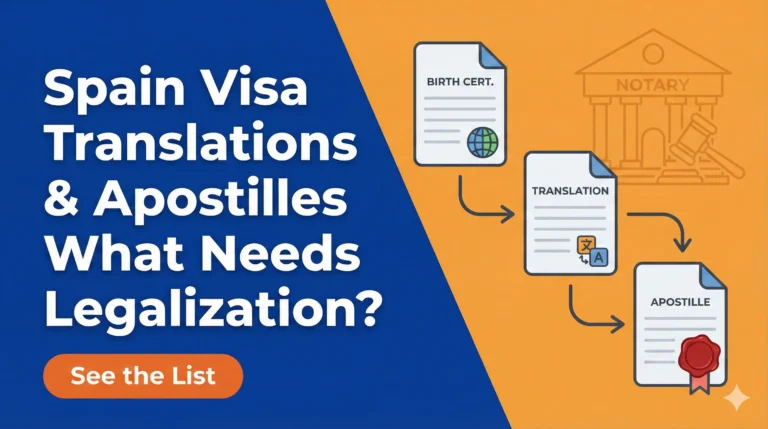
If you are applying for the standard self-employment visa, your journey begins at the Spanish Consulate. This is where you submit your "Ex-07" form, your validated business plan, and your medical certificate. A common pain point here is the background check. You must provide a criminal record certificate from every country you have lived in for the last five years. These documents must be legalized with the Hague Apostille and translated into Spanish.
The medical certificate is another area where expats get tripped up. It must state that you do not suffer from any diseases that could have serious public health repercussions according to the International Health Regulations. If your doctor doesn't use the specific wording required by the Spanish government, the consulate may reject it. I spent three days running between clinics just to get one sentence corrected. Dealing with these requirements is a core part of Spain Immigration Appointments & Paperwork: How to Avoid Delays which every entrepreneur should study closely.
Arriving in Spain and Getting Your TIE
Once your visa is approved and pasted into your passport, you have a limited window to enter Spain and begin the next phase: obtaining your TIE (Tarjeta de Identidad de Extranjero). The visa in your passport is essentially a "bridge" that allows you to enter and stay while you process your physical residency card. Within 30 days of arrival, you must book a "Cita Previa" for fingerprints at the National Police station.
This stage also involves the Empadronamiento, which is the process of registering your address at the local town hall. You cannot get your TIE without being on the "Padrón." It is a bit of a "chicken and egg" situation—you need a flat to get the Padrón, but many landlords want to see a TIE before they lease to you. Understanding the interaction between NIE, TIE & Empadronamiento: Essential IDs and Registrations in Spain is crucial for staying legal during your first month. Once your fingerprints are taken, you usually wait about 30 to 40 days to pick up the physical card that proves your right to live and work as an entrepreneur in Spain.
Living the Life: Taxes, Social Security, and Everyday Admin
Getting the visa is a victory, but keeping it requires you to integrate into the Spanish tax and social security systems. Spain is very strict about "autónomo" (self-employed) compliance. The moment you start your business activities, you enter a world of quarterly filings and monthly contributions that can be quite a shock if you are used to more "hands-off" tax systems.
Registering as an Autónomo
Once you have your TIE, you must register with the Agencia Tributaria (Tax Agency) and the Seguridad Social. This is a two-step process known as the "Alta." You will choose your "CNAE" and "IAE" codes, which define exactly what kind of work you are doing. These codes are important because they determine what expenses you can deduct and which VAT (IVA) rules apply to you.
Every month, regardless of whether you made money or not, you will pay a "cuota de autónomos" to the Social Security system. For new residents, there is often a "flat rate" (tarifa plana) which significantly reduces this cost for the first year or two. It is essential to How to Get a Social Security Number (NUSS) in Spain before you attempt this registration. This monthly payment gives you access to the public healthcare system, though many entrepreneurs choose to maintain private cover for faster specialist access. For visa-compliant private policies that meet the strict requirements of the Spanish authorities, Innoinsure is a popular choice among the expat community for its ease of use and specific focus on residency requirements.
Understanding Your Tax Obligations
As a self-employed person in Spain, you become a tax collector for the government. Most entrepreneurs will need to file quarterly IVA (VAT) returns and IRPF (Income Tax) prepayments. If you are selling services to other businesses in Spain, they may even withhold a percentage of your invoice to pay the tax office on your behalf. It’s a complex web that practically necessitates hiring a Gestor—a specialized Spanish administrative manager.
The penalties for late filing or incorrect reporting are high and can jeopardize your residency renewal. You need to keep meticulous records of every invoice you issue and every "factura" you receive for business expenses. For a deeper dive into the financial side of things, including the costs you should expect, refer to the Autónomo Registration in Spain: RETA, Models, and Deadlines guide. Balancing these costs is a significant part of managing your Cost of Living in Spain: Realistic Budgets and Savings Tips especially in the lean early years of a startup.
Comparing the Entrepreneur and Self-Employment Routes
To help you decide which path aligns with your business goals, here is a breakdown of the key differences between the two main options.
| Feature | Self-Employment Visa (Cuenta Propia) | Entrepreneur Visa (Ley 14/2013) |
|---|---|---|
| Application Location | Spanish Consulate in home country | From within Spain (as a tourist) or Consulate |
| Business Type | Traditional (Cafe, Shop, Consultant) | Innovative, Tech-heavy, Scalable |
| Approval Body | Regional Labor Authorities / Consular Office | UGE-CE and ENISA |
| Processing Time | 3 to 6 months (often longer) | 20 working days for initial authorization |
| Initial Duration | 1 year | 3 years |
| Financial Proof | Business capital + personal living funds | Higher emphasis on venture capital or investment |
| Job Creation | Expected over time | Highly prioritized in the business plan |
| Family Inclusion | Can be difficult for initial application | Simultaneous application for family members |
Maintaining and Renewing Your Residency
Your first residency card is rarely the end of the story. Most entrepreneur permits are granted for one or three years initially, after which you must prove that the business is still active and that you have met your tax and social security obligations. The renewal process can be just as stressful as the first application if you haven't kept your paperwork in order.
Proving Business Continuity
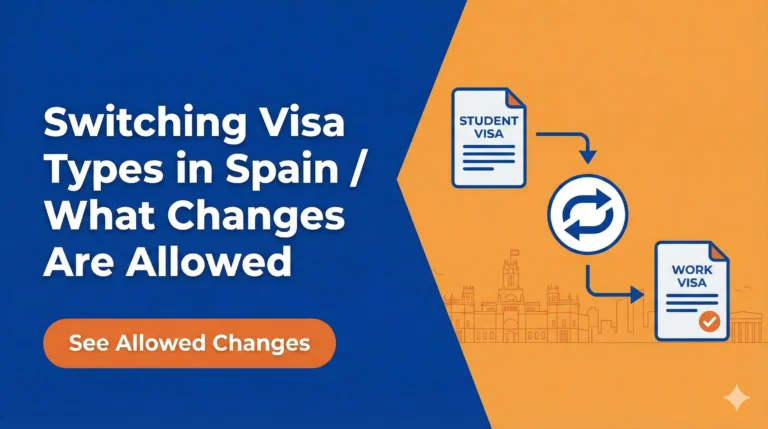
When you go to renew your residency, the "Extranjería" (Immigration Office) will check your records with the Tax Agency and Social Security. They want to see that you have been paying your monthly quotas and that your business is generating enough income to sustain you. If the business has failed, you may be able to switch to a different type of permit, but this is legally complex and often requires a "modification" of your residency status.
It is also important to remember the "183-day rule." To maintain your residency, you are generally expected to live in Spain for more than half the year. If you spend too much time outside of Spain, the authorities may decide you no longer "reside" here and deny your renewal. This is a common pitfall for entrepreneurs who travel frequently for international clients. Understanding the Spanish Work Culture: Hours, Holidays, and Workplace Etiquette can also help you navigate the expectations of local clients and partners, ensuring your business stays rooted in the Spanish economy.
Transitioning to Permanent Residency
After five years of continuous legal residence in Spain, you can apply for permanent residency (Larga Duración). At this point, the specific "Entrepreneur" or "Self-Employed" labels fall away, and you gain the right to live and work in Spain on the same terms as a Spanish citizen. This is the ultimate goal for many of us who have moved our lives here.
The transition requires you to show that you haven't been out of the country for more than ten months in total over those five years. You also need to maintain a clean criminal record and have your taxes in order. Once you reach this stage, the "red tape" finally begins to thin out, and you can focus entirely on your business and your life in Spain without the constant shadow of the next visa expiration date. Ensure your health coverage remains consistent during this time; checking Health Insurance for Spain Visas: What Policies Must Include will help ensure you never have a gap in coverage that could reset your residency "clock."
Disclaimer
The information provided in this guide is for general informational purposes only and does not constitute legal or professional advice. Immigration laws and consulate requirements in Spain are subject to frequent changes. While every effort is made to keep this content accurate and up-to-date, you should always consult with the official Spanish Ministry of Interior, the Ministry of Labor, or a qualified immigration lawyer before making any decisions regarding your visa or residency status.