How to Get a Social Security Number (NUSS) in Spain
Getting your first job offer in Spain is thrilling until human resources unexpectedly demands your Social Security number before you can legally sign the contract. I remember panicking entirely because I had no idea how to navigate the Spanish administration portal and feared losing my job opportunity. This guide provides the exact, actionable steps to secure your Spanish Social Security Number quickly and legally.
Disclosure: This post may contain affiliate links. We may earn a commission at no extra cost to you if you make a purchase through these links. Read full disclosure.
Understanding the NUSS and Why You Need It Immediately
Before you start wrestling with digital certificates or standing in line at government buildings, it helps to understand exactly what you are applying for. The Spanish bureaucratic system is heavily siloed, meaning your tax identity, your immigration identity, and your social security identity are all distinct pieces of a larger puzzle.
The Difference Between NUSS and NAF
When researching your move to Spain, you will likely see two acronyms used interchangeably by expats and locals alike: NUSS and NAF. Understanding the distinction is the first step to conquering this administrative hurdle.
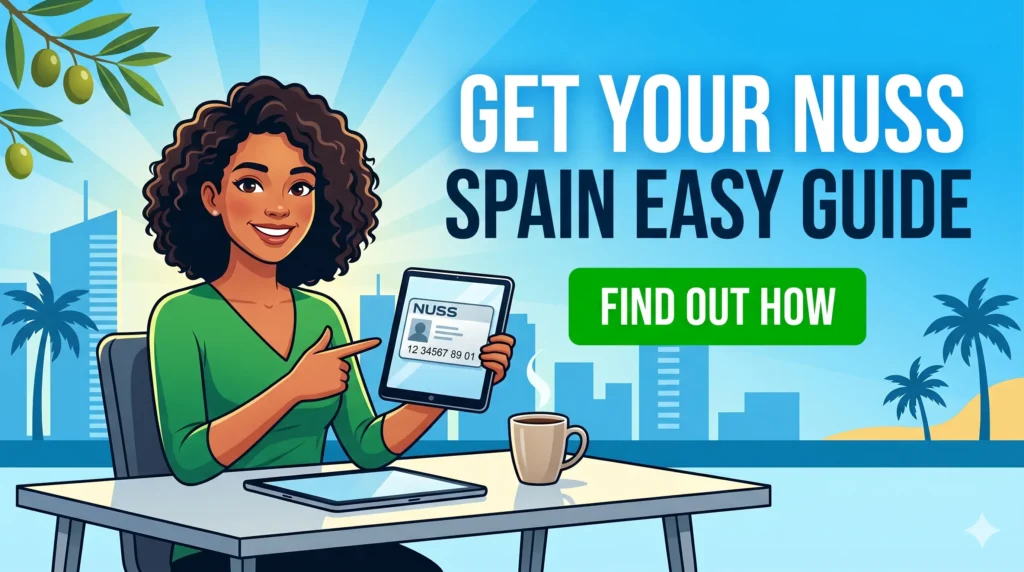
The NUSS stands for Número de la Seguridad Social. This is a unique, lifetime identifier assigned to you by the Spanish state. Having a NUSS simply means you exist within the government’s social security database. You can, and should, request your NUSS before you ever secure a job offer.
The NAF stands for Número de Afiliación. Here is the secret that causes so much confusion: your NUSS and your NAF are the exact same sequence of numbers. The terminology only changes based on your employment status. The moment you sign an employment contract and your company officially registers you as an active worker—a process known as “dar de alta”—your NUSS transforms into an active NAF. From that moment forward, you are officially affiliated with the system, meaning you are building up rights for Social Security in Spain: Contributions and Benefits for Workers and securing your access to the Spain Healthcare System for Expats: Public vs Private.
When and Why You Are Legally Required to Have One
If you have just landed a job, you probably received an urgent email from HR asking for your Social Security number. Under Spanish labor regulations, a company cannot legally process your hiring paperwork, nor can they put you on the payroll, without this number.
Every month, a significant percentage of your gross salary is deducted automatically to fund public healthcare, unemployment benefits, and the national pension system. If you do not have your unique identifier, the company cannot route those funds to the government on your behalf. This is a crucial element of Spanish Salary Basics: Gross vs Net Pay and Common Deductions. While larger multinational corporations might offer to process the NUSS application for you, the vast majority of Spanish companies expect you to arrive on your first day with this administrative step already completed.
Step-by-Step Methods to Request Your Number
Spain is currently navigating a somewhat clumsy transition between legacy physical paperwork and a modern digital administration. Depending on whether you have already set up your digital identity in Spain, you have two primary ways to secure your NUSS.
The Online Route Using the Importass Portal
The fastest and least stressful way to get your Social Security number is entirely online through the General Treasury of the Social Security’s digital portal, known as Importass. If you have the right digital tools, this process takes less than five minutes.
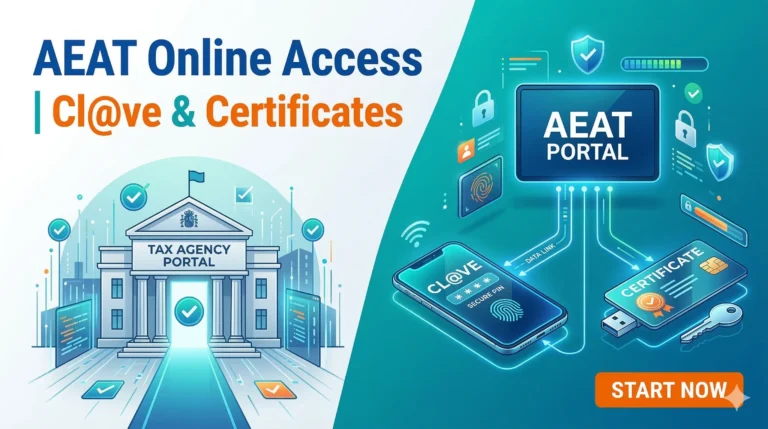
To use the Importass portal instantly, you must possess a verified digital identity. This means you need a recognized Digital Certificate, access to the Cl@ve system, or an active electronic DNI. If you have already managed the setup for your Cl@ve and Digital Certificate: Accessing AEAT (Tax Agency) Online, you can simply log into the Importass dashboard, navigate to the “Citizens” section, select “Assign a Social Security Number,” and follow the prompts. The system will instantly generate an official PDF document containing your new number, which you can immediately email to your new employer.
If you do not yet have a digital identity, Importass offers an alternative manual review route. You can submit your application by uploading a clear photograph of your passport or TIE, taking a live selfie via your smartphone or webcam to verify your identity, and providing your contact details. This manual digital process is much slower, typically taking a few business days before you receive a resolution via SMS or email, but it completely spares you from having to visit an office in person.
The In-Person Route at a TGSS Office
If the digital portal fails, or if you simply prefer handing physical documents to a civil servant, you must visit a local office of the Tesorería General de la Seguridad Social (TGSS).
You cannot simply walk into a TGSS office. You must book a mandatory prior appointment, known as a Cita Previa. Finding an available appointment slot in major hubs like Madrid, Barcelona, or Valencia can be an exercise in extreme patience, often requiring you to check the booking portal early in the morning for cancellations.
When you finally arrive for your appointment, you must bring all your original documentation and a complete set of photocopies. The officials at the TGSS are generally efficient but will rarely speak English. It is highly recommended to practice your basic Spanish vocabulary or bring a bilingual friend. If your paperwork is in order, the official will process your application on the spot and hand you a printed sheet with your new NUSS.
Required Documents for Your Application
Bureaucracy in Spain is unforgiving when it comes to missing paperwork. Arriving at an appointment—or submitting an online application—without the precise documents required will result in an automatic rejection, forcing you back to square one.
| Document Type | Specific Details and Formatting |
| Identification | For EU Citizens: A valid Passport or National Identity Card. For Non-EU Citizens: A valid Passport and your physical TIE card or Visa. |
| NIE Certificate | Your official Número de Identidad de Extranjero paper certificate, essential if you are applying before your physical TIE card has been issued. |
| Form TA.1 | The official Social Security application form. Must be filled out entirely in Spanish, using capital letters, and signed in black or blue ink. |
| Employment Proof | While not strictly legally required to generate a dormant NUSS, bringing your signed employment contract or formal offer letter heavily expedites the in-person process. |
Securing your underlying identification numbers first is critical. If you are struggling with the preliminary steps before applying for Social Security, reviewing Getting an NIE for Employment or Study: Practical Overview is essential.
Navigating Your Financial Setup After Securing Your NUSS
Handing your new Social Security number to human resources is a massive relief, but it is only the first half of the onboarding battle. Once HR has your NUSS, their very next question will be asking for your local bank account details to deposit your salary.
Receiving Your First Paycheck
Traditional legacy banking in Spain is notoriously frustrating for new arrivals. High street banks often demand that you have your physical residency card in hand, require localized proof of address, and may charge you exorbitant monthly maintenance fees just for holding your money. When you need an account instantly so your first paycheck isn’t delayed, dealing with traditional banks can be a nightmare.
This is exactly why opening an account with N26 has become the standard move for expats working in Spain. You can set up your N26 account entirely from your phone using just your passport or your NIE document. Within minutes, you receive a recognized Spanish IBAN. Handing this Spanish IBAN directly to your HR department ensures a seamless payroll process without the bureaucratic friction of a legacy bank. Because N26 eliminates the monthly maintenance fees common in Spain, it is widely considered one of the Best Low‑Fee Bank Accounts in Spain for New Residents.
Furthermore, relocating to a new country involves heavy upfront costs, from securing a rental deposit to buying basic furniture. When you need to transfer your initial savings from your home country to your new N26 account in Spain, relying on traditional bank wire transfers will cost you a fortune in hidden exchange rate markups. Moving your relocation funds into Spain is much smarter when you use Wise. Because Wise uses the real mid-market exchange rate and charges transparent upfront fees, your savings stretch significantly further. Later, when you start earning euros in Spain, utilizing Wise is equally essential for sending money back home to pay off student loans or manage foreign obligations.
Planning for Long-Term Employment and Investing
As you settle into your new Spanish routine and your paychecks become steady, you will need to start managing your long-term financial health. The first step is thoroughly understanding your payslip to see exactly what is being deducted for your newly active Social Security number and your income taxes. Reading through Working in Spain: Payslips, Social Security, and Benefits Explained will demystify those monthly deductions.
Once you understand your monthly cash flow and your obligations under Spanish Income Tax (IRPF) 101: Who Pays and When, you should actively consider investing your surplus income. For expats who might relocate again in the future, tying up investments in local Spanish brokerages can be restrictive and expensive. Opening an investment account with Interactive Brokers is a highly practical solution because it grants you affordable access to global markets and allows you to maintain your portfolio seamlessly, regardless of which country you move to next.
Funding your investment strategy is also straightforward. You can effortlessly link your local N26 account to Interactive Brokers to set up recurring euro deposits. Alternatively, if you freelance on the side and receive income in multiple currencies, you can route those payments through your Wise account directly into your Interactive Brokers portfolio, completely bypassing unnecessary currency conversion fees. If you eventually decide to leave traditional employment entirely to start your own business, you will need to research Autónomo Registration in Spain: RETA, Models, and Deadlines, but your flexible, expat-friendly financial stack will already be perfectly positioned to support your new venture.
References
Primary sources (official)
- Tesorería General de la Seguridad Social (TGSS): https://www.seg-social.es
- Sede Electrónica de la Seguridad Social (Importass): https://portal.seg-social.gob.es/
- Ministerio de Inclusión, Seguridad Social y Migraciones: https://www.inclusion.gob.es/
Other helpful sources
- Portal de la Administración Electrónica: https://administracion.gob.es/
Disclaimer
The information provided in this guide is strictly for educational and informational purposes and does not constitute legal, financial, or tax advice. Bureaucratic processes, official portals, and legal requirements in Spain are subject to frequent changes by the national administration. While we strive to ensure accuracy, you should always verify the latest requirements directly with the Tesorería General de la Seguridad Social or consult a registered Spanish Gestor or immigration lawyer for advice tailored specifically to your personal circumstances.