How to Switch Banks in Spain Without Disrupting Direct Debits
Missing a single utility payment in Spain can trigger a cascade of bureaucratic headaches, from immediate service cuts to being blacklisted on a credit "bad payers" list. I remember the cold sweat I broke into when I realized my old bank account was closed before my water company had successfully billed my new one. This guide explains how to migrate your finances between Spanish institutions without losing your electricity, water, or sanity.
Disclosure: This post may contain affiliate links. We may earn a commission at no extra cost to you if you make a purchase through these links. Read full disclosure.
Understanding the Spanish Direct Debit System
The first thing you need to grasp about banking here is the concept of "domiciliación de recibos." Unlike some countries where you manually "push" a payment to a provider each month, Spain relies heavily on the "pull" system. You provide your IBAN to a company, sign a mandate (mandato), and they simply take what is owed. This is highly convenient until you decide to change where that money is coming from.
When you switch banks, you aren't just moving a balance; you are rerouting a dozen or more invisible permissions. Each of these is tied to your specific bank details, and if you haven't read up on Spanish IBAN, SEPA, and SWIFT: Sending and Receiving Money Explained, you might not realize that even a small error in the digit sequence will result in a "recibo devuelto" (returned receipt). A returned receipt is often viewed by Spanish companies not as a technical error, but as a default on payment.
The system is governed by SEPA regulations, but the local implementation has its own flavor. For example, if you are using a digital-first option like N26, you will find that their interface makes it incredibly easy to see exactly which companies have an active mandate on your account. Traditional banks often bury this list in a PDF buried deep in a legacy web portal. Before you close any account, your first task is to download the list of all active "domiciliaciones" from the last twelve months to ensure you don't miss those bimonthly or annual insurance payments.
Choosing Your New Institution Wisely
Before you pull the trigger on a switch, you need to ensure the new destination actually supports your lifestyle as an expat. Many veterans are moving away from the "Big Three" traditional banks because of the spiraling maintenance fees, which can sometimes reach 240 Euros a year if you don't meet strict criteria. Instead, many are looking at Top Banks in Spain for Expats: Fees, Apps, and Requirements to find more flexible alternatives.
If you value a fast, English-language interface and hate waiting for a "cita previa" at a physical branch, N26 is a powerhouse in the Spanish market. They provide a Spanish IBAN, which is crucial because some local utilities—despite EU "IBAN discrimination" laws—still occasionally struggle with non-Spanish accounts. On the other hand, if you are frequently moving money between different currencies, Wise is often the go-to Hero for its transparent exchange rates and ease of use when funding your new Spanish account from abroad.
However, if you have complex tax requirements or need to report foreign assets, you should consult with specialists like Taxes for Expats to ensure that moving large sums between accounts doesn't trigger unnecessary red flags with the Hacienda. Switching banks is a great time to audit your overall financial health and ensure you are fully compliant with Spanish Taxes for Foreign Residents: Practical Guide to Staying Compliant.
The Step by Step Manual Transition Strategy
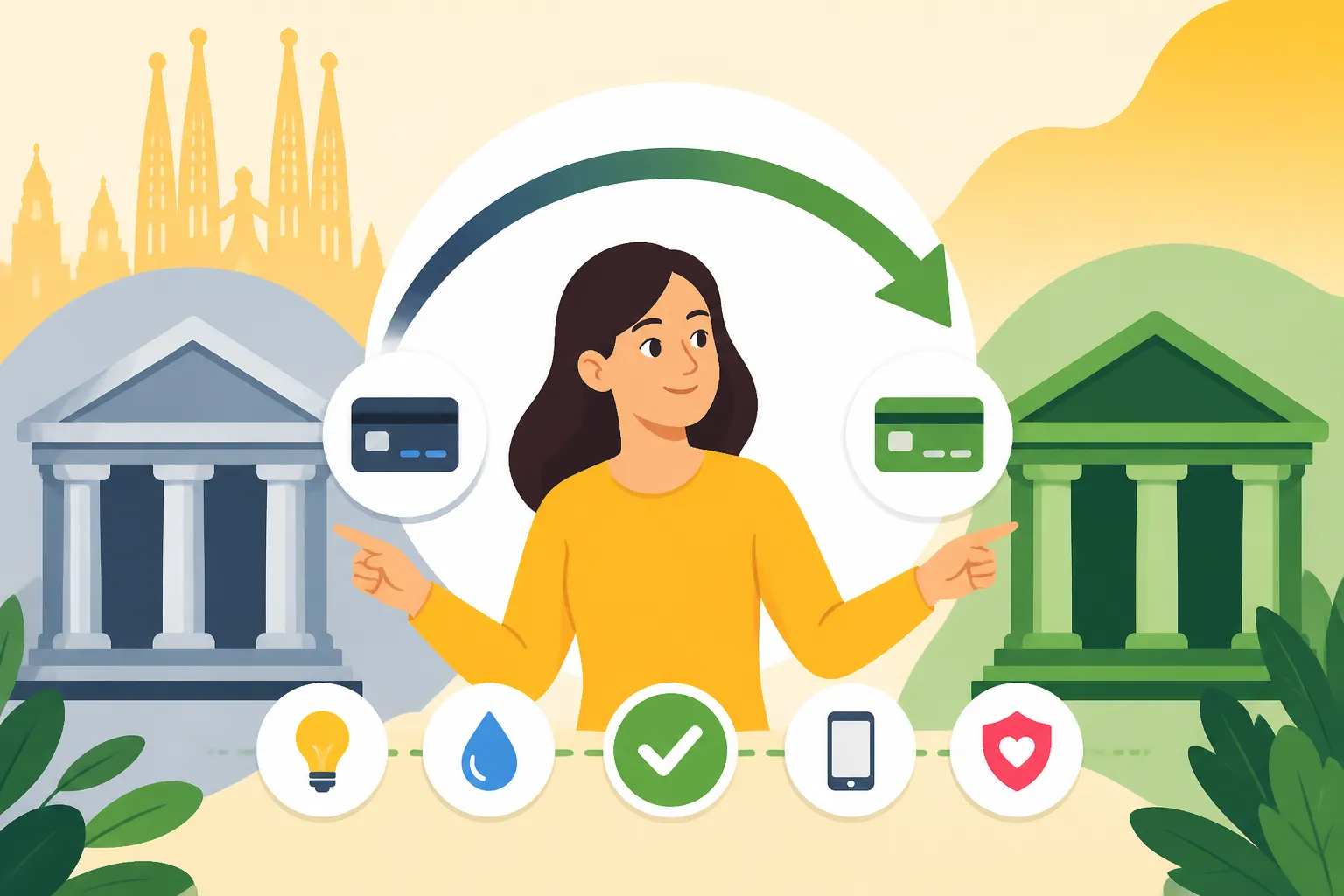
Spain does have a "bank switching law" (Portabilidad Bancaria) that theoretically requires banks to handle the transfer of direct debits for you within 13 business days. In practice, however, many expats find that the manual method is safer. Relying on a traditional bank to communicate perfectly with a digital one is a risk most of us aren't willing to take with our air conditioning in August.
Step 1: Open the New Account and Fund It
Never close your old account until the new one is fully functional. If you are still in the process of moving, you might want to look at How to Open a Spanish Bank Account Without a Long-Term Address. Once the account is open, use a service like Wise to transfer enough "buffer" cash to cover at least two months of typical expenses. This ensures that even if a bill hits the new account earlier than expected, it won't bounce.
Step 2: The Audit of Recibos
Go through your last twelve months of statements. You are looking for things like:
- Utilities (Light, Water, Gas)
- Communication (Fiber internet, Mobile plans)
- Insurance (Health, Car, Home)
- Taxes (IBI, car tax, or your quarterly RETA payments)
- Gym memberships and subscriptions
For each of these, you will need to log into the provider's "área de clientes" and manually update the IBAN. If you are a freelancer, this is a critical moment. You must ensure your social security payments are redirected correctly by visiting the RED system or talking to your gestor about Autónomo Registration in Spain: RETA, Models, and Deadlines.
Step 3: Notification and Confirmation
Once you have updated the details, keep a record of the confirmation. Some companies, like certain water providers, still require you to call or visit an office. You can find more detail on this process in our guide on How to Set Up Automatic Utility Payments in Spain (Domiciliación). Be particularly careful with the "recibo de autónomo" and health insurance, as a missed payment here can actually suspend your coverage or trigger 20% surcharges immediately.
Avoiding the ASNEF Boogeyman and Credit Issues
In Spain, there is no "credit score" in the way Americans or Brits understand it. Instead, there is a "black list" known as ASNEF. If you miss a bill payment during a bank switch, the company can report you to this list. Being on it makes it almost impossible to get a mortgage, a car loan, or even a new mobile phone contract.
To avoid this, you must master the "The Overlap Period." I recommend keeping both accounts open for a minimum of three months. This covers the bimonthly billing cycles common with electricity and water providers. You can find more on the timing of these in our breakdown of Typical Utility Bills in Spain: Electricity, Gas, Water (Examples).
If you do find that a bill was missed and your power goes out, don't panic, but act fast. You'll need to follow the steps in How to Handle a Power Outage in Spain: What to Check First to determine if the issue is technical or financial. Often, if it's financial, you can pay the "recibo devuelto" at an ATM (cajero) using the barcode on the notification letter, but it's much better to avoid this stress entirely.
If you are a US citizen or a high-net-worth individual, remember that opening and closing accounts also has reporting implications. Taxes for Expats can help you navigate whether these changes need to be reflected in your FBAR or FATCA filings. Switching to a user-friendly bank like N26 makes gathering the year-end data for these reports much simpler than trying to squint at the poorly formatted statements of a local "Caja."
| Feature | Traditional Spanish Bank | Digital Bank (e.g., N26) | Money App (e.g., Wise) |
|---|---|---|---|
| English Support | Hit or miss (mostly miss) | Full Support | Full Support |
| Direct Debit Ease | Manual/Paper-heavy | In-app Management | Limited for local ES bills |
| Maintenance Fees | High (unless "linked") | Often Zero | Low / Transparent |
| IBAN Type | Spanish (ES) | Spanish (ES) | Multi-currency (Global) |
| Best For | Mortgages & Physical Cash | Daily Spending & Bills | International Transfers |
Finalizing the Switch and Closing the Old Account
Once you have seen at least one full cycle of every bill successfully leave your new account, it is time to close the old one. Do not just leave it with a zero balance. Many traditional banks will continue to charge maintenance fees, eventually putting the account into a negative balance. This can lead to debt collection and, once again, the risk of Building Credit in Spain: What ‘ASNEF’ Means and How to Avoid Issues.
To close a traditional account, you usually have to visit your "home branch" (sucursal) in person. This is one of the biggest frustrations of the old system. You will need to bring your TIE or passport. Ensure you ask for a "certificado de cancelación de cuenta" to prove the account is closed. If you are working with a tax advisor from Taxes for Expats, keep this certificate for your records, especially if the account held significant funds at any point during the tax year.
Finally, double-check your "Padrón" and other local registrations. Sometimes, specific local taxes are tied to your bank account through the Ayuntamiento. Navigating How Direct Debits (Domiciliación) Work in Spain: Setup and Cancellations is a skill that every long-term resident eventually has to master. By being methodical and keeping that three-month buffer, you can enjoy the lower fees and better technology of your new bank without the fear of the lights going out.
Disclaimer
The information provided in this article is for informational purposes only and does not constitute financial, legal, or tax advice. Banking regulations and fees in Spain are subject to change. Always consult with a qualified professional or your specific banking institution before making significant financial decisions.