What Is the ‘Convenio Especial’ Healthcare Option in Spain?
Navigating the transition from your home country's medical system to Spain's can feel like hitting a wall of bureaucracy, especially when you realize that residency doesn't automatically grant you free access to a doctor. I remember the panic I felt during my first year in Valencia, clutching my private policy and wondering if I would ever be able to use the local clinic down the street. This guide explains exactly how the Convenio Especial works, providing a bridge to public healthcare for those who do not currently contribute to the Spanish Social Security system.
Disclosure: This post may contain affiliate links. We may earn a commission at no extra cost to you if you make a purchase through these links. Read full disclosure.
Understanding the Convenio Especial: Spain's Public Pay-In System
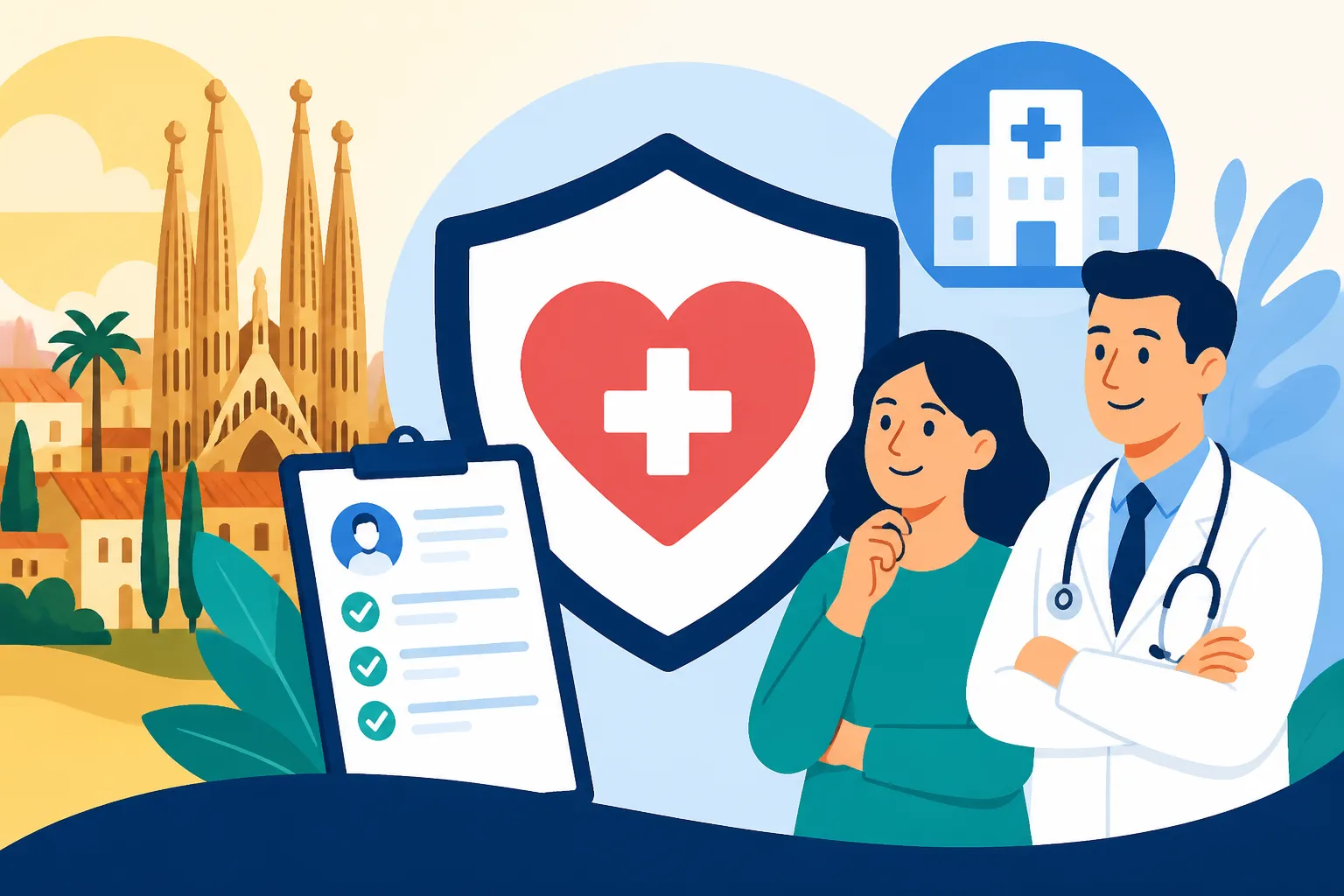
The Convenio Especial is essentially a "pay-in" scheme that allows individuals who are not otherwise eligible for the state-funded healthcare system to access it by paying a monthly subscription fee. In Spain, public healthcare is generally tied to employment and Social Security contributions. If you are working for a Spanish company or are registered as an 'autónomo' (self-employed), you are automatically covered. However, if you are an early retiree, a non-lucrative visa holder, or a digital nomad not yet integrated into the local tax system, you might find yourself in a "gray area."
This scheme was designed to ensure that everyone living in Spain has a pathway to medical care, regardless of their employment status. It is not a form of private insurance but rather a way to join the Spain Healthcare System for Expats: Public vs Private that Spanish citizens use daily. Once you are accepted into the Convenio Especial, you have the same rights as any other resident when it comes to seeing a General Practitioner (GP), accessing specialist care, and receiving hospital treatment within the public network.
It is important to note that the Convenio Especial is a regional program. While the overarching rules are set at a national level, the actual administration is handled by the health authorities in each Autonomous Community, such as the Servicio Madrileño de Salud (SERMAS) in Madrid or the Consejería de Salud in Andalusia. This means that while the core benefits remain the same, the specific office you visit and the paperwork you submit might vary slightly depending on whether you are living in the hills of Asturias or the coast of Alicante.
Eligibility Requirements for the Convenio Especial in Spain
The most significant hurdle for many newcomers is the "one-year rule." You cannot simply arrive in Spain on Monday and sign up for the Convenio Especial on Tuesday. To be eligible, you must prove that you have been registered on the 'padrón' (the municipal register of inhabitants) for a continuous period of at least 12 months immediately prior to your application. This requirement often surprises expats who were hoping to ditch their private health policies the moment their residency card arrived.
Beyond the one-year residency requirement, you must also demonstrate that you are not entitled to healthcare through any other means. This includes not being covered by the Spanish Social Security system as a worker, not being a dependent of someone who is covered, and not having coverage through an S1 form (usually for UK or EU pensioners). Essentially, the Convenio Especial is the "option of last resort" for those who want public care but have no other legal avenue to obtain it. Understanding Who Can Access Public Healthcare in Spain? Eligibility Basics is vital before you start this process to ensure you aren't already eligible for a different, perhaps cheaper, route.
Furthermore, you must have a valid residency permit. Whether you hold a TIE (Tarjeta de Identidad de Extranjero) or are an EU citizen with a green CUE (Certificado de Registro de Ciudadano de la Unión), your legal status must be in order. The authorities will check your residency history against the National Institute of Social Security (INSS) records to confirm you aren't currently paying into the system through a job. This 12-month waiting period is why many expats initially look into Choosing a Private Health Insurer in Spain: What to Compare to cover their first year in the country.
How Much Does the Convenio Especial Cost in 2026
One of the most attractive features of the Convenio Especial is its transparent, flat-rate pricing. Unlike private insurance, where premiums can skyrocket based on your medical history or the number of claims you make, the Convenio Especial uses a simple age-based tier system. This makes it a highly predictable expense for long-term financial planning.
For individuals under the age of 65, the monthly fee is currently set at 60 EUR. For those aged 65 and over, the fee increases to 157 EUR per month. These rates are fixed regardless of how many times you visit the doctor or how complex your medical needs are. This is particularly beneficial for older expats who might find that private premiums from companies like Cigna Global or Innoinsure become significantly more expensive as they age.
| Feature | Convenio Especial (< 65 Years) | Convenio Especial (65+ Years) | Private Insurance (General) |
|---|---|---|---|
| Monthly Cost | 60 EUR | 157 EUR | Variable (60 EUR – 250+ EUR) |
| Pre-existing Conditions | Covered immediately | Covered immediately | Often excluded or higher premium |
| Pharmacy Discounts | No (Pay 100%) | No (Pay 100%) | Varies (Usually full price) |
| Specialist Access | Via GP referral (Waiting lists) | Via GP referral (Waiting lists) | Direct access (Faster) |
| Hospital Network | Public Hospitals | Public Hospitals | Private Clinics |
When you are trying to figure out How to Budget for Healthcare in Spain as a Family, the Convenio Especial can be a double-edged sword. While the monthly cost is reasonable, it is per person. There are no "family plans" or "dependent discounts." If a couple over 65 joins, they are looking at 314 EUR per month. In some cases, a high-quality private policy from a provider like SafetyWing might offer more competitive rates for younger families or travelers, though it lacks the permanent residency integration of the public system.
The Application Process: From Paperwork to Your Health Card
The administrative journey to join the Convenio Especial begins at your local 'Centro de Salud' or the regional health headquarters. Because each region manages its own system, you should first visit the official website of your Autonomous Community’s health service to download the specific application form for the 'Convenio Especial de Prestación de Asistencia Sanitaria.'
Once you have the form, you will need to gather several key documents. These typically include your TIE or EU residency certificate, your passport, and a 'Certificado de Empadronamiento' that is less than three months old (but proves 12 months of total residency). You will also need a document from the INSS certifying that you do not have healthcare coverage through any other means. This "No-Exportability" or "No-Entitlement" certificate is a standard request, but it can take a week or two to receive, so plan ahead.
After submitting your application and having it approved, you will be asked to provide your bank details for a monthly direct debit ('domiciliación'). Once the first payment is processed, you can then apply for your individual SIP card or Tarjeta Sanitaria. This card is your golden ticket to the system. I highly recommend reading up on How to Get a Spanish Health Card (Tarjeta Sanitaria): Step‑by‑Step to understand the nuances of the physical card issuance, as this is a separate step from the actual approval of the Convenio. Once the card arrives, you can finally find out What Is a ‘Centro de Salud’ in Spain and How Do You Register? to be assigned a specific family doctor in your neighborhood.
The Major Advantage: Coverage for Pre-existing Conditions
The single biggest reason expats choose the Convenio Especial over private insurance is the treatment of pre-existing conditions. Private insurers are businesses, and they often exclude chronic illnesses, previous surgeries, or ongoing conditions from their coverage. For an expat moving to Spain with diabetes, a heart condition, or a history of cancer, finding affordable private insurance that actually covers their needs can be nearly impossible.
The Convenio Especial does not ask about your medical history. There are no health questionnaires, no blood tests, and no exclusions. The moment you are accepted and pay your first fee, the entire Spanish public health infrastructure is available to you. This includes life-saving treatments, complex surgeries, and management of chronic diseases that would be prohibitively expensive out-of-pocket.
This inclusivity is what makes the public system so respected globally. If you have been struggling to find a policy because of your health, the Convenio Especial is your solution. It provides peace of mind that a private policy simply cannot match for those with complex medical backgrounds. However, you should still compare the costs of How Much Does Private Health Insurance Cost in Spain? if you are in perfect health, as the private route might be faster for non-urgent specialist consultations while you wait for your one-year residency milestone.
The Pharmacy Trap: Paying Full Price for Medications
While the Convenio Especial gives you full access to doctors and hospitals, there is one significant "catch" that catches many expats off guard: prescriptions. In the standard Spanish public system (for workers and pensioners), the government subsidizes a large portion of the cost of medicines. Most people pay only a small percentage (the 'copago') of the retail price of their prescriptions.
Under the Convenio Especial, however, you generally do not receive this subsidy. You are responsible for paying 100% of the cost of any medication prescribed by your public doctor. For some, this isn't a problem—many common medications in Spain are remarkably cheap, often costing less than 10 EUR. But if you require specialized, high-cost biological drugs or long-term specialty medications, this 100% cost can add up quickly.
Understanding the Prescription System in Spain: How ePrescriptions Work is essential so you don't get a shock at the 'farmacia'. You will still get your prescriptions via your health card (the electronic system), but the price reflected at the checkout will be the full market price. You should also look into Understanding Co‑Payments at Spanish Pharmacies (Copago) to see how the system differs for those who are working versus those on the pay-in scheme. For many, the lack of a pharmacy discount is a fair trade-off for the comprehensive medical and hospital coverage provided by the state.
Navigating Specialists and Waiting Times in the Public System
Once you are on the Convenio Especial, you operate within the same system as every other resident. This means you cannot simply call up a cardiologist and book an appointment for next week. The Spanish system is "GP-led," meaning your 'Médico de Cabecera' (Family Doctor) acts as the gatekeeper. If you have a specific health concern, you must first book an appointment at your local clinic, explain the issue, and wait for the doctor to issue a referral to a specialist.
The reality of the public system is that waiting times can be long for non-emergency procedures. Depending on your region, you might wait several months for a routine scan or a consultation with a dermatologist. This is the trade-off for the low, flat-rate monthly fee. While the quality of care in Spanish public hospitals is world-class—especially for emergencies and serious surgery—the "hotel" side of things is more basic. You will likely share a hospital room with another patient, and English-speaking staff are not guaranteed.
To manage this, many expats keep a detailed record of their medical history from back home to speed up the referral process. Knowing about Medical Records in Spain: Accessing and Sharing Your History will help you present your case clearly to your new Spanish doctor. If you find the waiting times in the public system too frustrating, you might eventually decide to supplement your Convenio coverage with a basic "diagnostic" private plan, though for most, the Convenio Especial provides everything needed for a healthy life in Spain.
Disclaimer
This guide is intended for informational purposes only and does not constitute legal or professional medical advice. Laws and regional regulations regarding the Convenio Especial and healthcare in Spain are subject to change. Always consult with the official health authority of your specific Autonomous Community or a qualified legal professional before making decisions regarding your healthcare coverage.