Using WhatsApp for Work in Spain: Boundaries and Etiquette
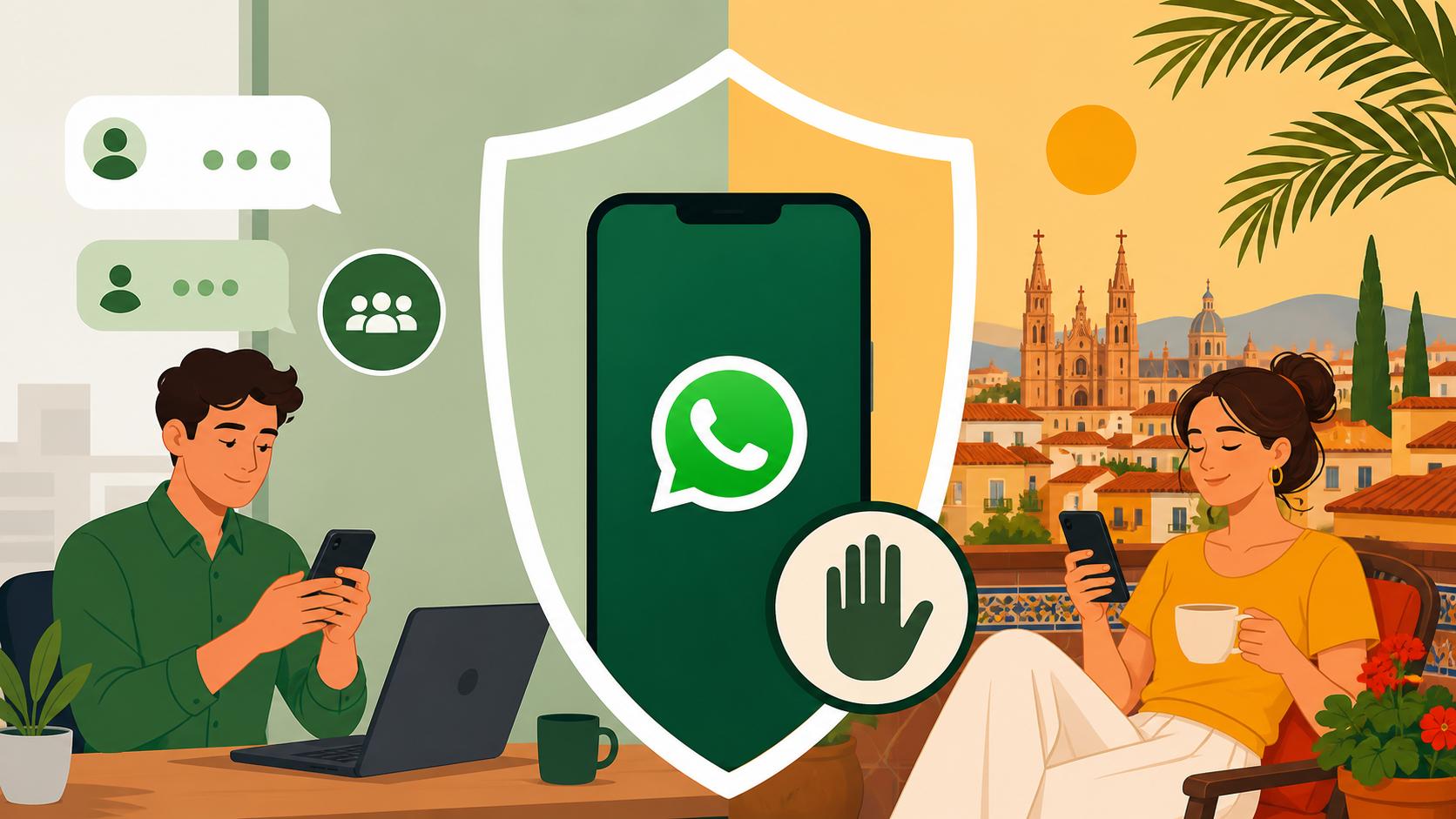
Navigating the world of work in Spain involves more than just mastering the language; it requires a deep understanding of the local digital culture. When I first landed a job in a bustling Madrid agency, I was shocked to find that my professional life had migrated almost entirely to WhatsApp. This guide explains how to manage your digital boundaries and master Spanish workplace etiquette without losing your mind or your job.
Disclosure: This post may contain affiliate links. We may earn a commission at no extra cost to you if you make a purchase through these links. Read full disclosure.
The Cultural Shift: Why WhatsApp Rules the Spanish Workplace
In many English-speaking countries, WhatsApp is strictly for family, friends, and the occasional neighborhood group chat. In Spain, however, it is the undisputed king of professional communication. This can be a massive adjustment for expats who are used to keeping their private number separate from their professional identity. The cultural preference here leans heavily toward "confianza" or trust and closeness. For a Spanish colleague or client, sending a quick message on WhatsApp feels more efficient and personable than the perceived stiffness of a formal email.
WhatsApp vs. Email in Spain
While email is still used for formal documentation, contracts, and long-form project briefs, the day-to-day "noise" of work happens in green bubbles. You will find that Spanish Workplace Culture: Hours, Holidays, and Workplace Etiquette often dictates that urgent matters bypass the inbox entirely. If a deadline is looming or a meeting is moving rooms, don’t expect an outlook invitation; expect a WhatsApp ping.
The reliance on this platform often stems from the Spanish desire for immediate, conversational feedback. It bridges the gap between a formal phone call and a slow email thread. However, this means your phone will likely be buzzing during your "siesta" hours or while you’re out for tapas. Understanding that this isn’t necessarily an intentional overstep, but rather a standard operating procedure, is the first step toward integration. To help with the transition, many expats use SpanishPod101 to pick up the specific, fast-paced slang and informal grammar used in these digital spaces, as "text speak" in Spain can be quite different from what you learn in a textbook.
The Informal Nature of Spanish Professionalism
There is a unique blend of informality and respect in Spain. You might be discussing a million-euro contract while using a "tú" (informal you) and sending a "thumbs up" sticker. This doesn't mean the work isn't serious; it means the relationship is prioritized. The professional "WhatsApp-ification" of the country reflects a culture that values speed and the human element.
I remember my first week when my boss sent me a GIF of a dancing cat after I finished a report. I was mortified, thinking I had done something to lose his respect, only to realize that this was his way of saying "great job." If you are just starting out, check out this guide on Spanish Business Etiquette: Gifts, Greetings, and WhatsApp Norms to see how these informal gestures fit into the broader professional landscape.
Navigating the Unspoken Rules of Workplace WhatsApp Etiquette
Once you accept that your phone is a work tool, you need to learn the "unspoken" rules. Just because the platform is informal doesn’t mean there aren’t high stakes. Misreading the room in a group chat can be just as damaging as a blunder in a board meeting.
Timing and Response Expectations
This is the trickiest part for new arrivals. Spain is famous for its late-night culture, and this often extends to digital pings. You might receive a message at 8:30 PM asking about a task for the next morning. In many Spanish companies, there is an expectation of "availability," though not necessarily "immediate action."
A common mistake is replying instantly to every late-night message, which trains your colleagues to expect you to be always "on." Conversely, ignoring a message until 9:00 AM the next day might be seen as cold. The middle ground? A quick "Lo veo mañana, ¡gracias!" (I’ll look at it tomorrow, thanks!) acknowledges the sender without pulling you back into work mode. If you are concerned about your legal standing regarding these hours, it is worth reading about Employee Rights in Spain: Working Hours, Breaks, and Overtime to understand the "Right to Disconnect" laws that technically protect you, even if the culture pushes back.
Voice Notes: The National Obsession
If you aren't a fan of voice notes, you’re going to have a hard time in Spain. Spanish professionals love "notas de voz." It is not uncommon to receive a three-minute audio clip explaining a complex task. The etiquette here is to listen as soon as possible, but you don't necessarily have to reply with a voice note if you aren't comfortable.
When listening to these audios, pay attention to the tone. It’s often where How to Handle Workplace Feedback in Spain Without Misunderstanding Tone becomes most relevant. A written message might seem blunt, but a voice note allows your colleague to soften the blow with a friendly cadence. Pro tip: Always carry headphones. Listening to a confidential work audio on speaker in a public place is a major faux pas.
Group Chat Dynamics and El Despido
Workplace group chats in Spain can be a chaotic mix of project updates, birthday wishes, and memes. The etiquette is to remain active but not "spammy."
- The "Visto": Leaving someone on "read" (the blue ticks) is generally considered ruder in Spain than in the UK or US. If you've seen it, acknowledge it.
- The Exit: When you leave a project or a company, the way you exit the WhatsApp group is important. A short, warm message thanking everyone followed by a swift exit is the standard. Don't just vanish; it looks like you’ve been fired or have a grudge.
| Scenario | Preferred Platform | Etiquette Level |
|---|---|---|
| Sick leave notification | Immediate, informal but polite | |
| Sending a 50-page PDF | Professional, used for archiving | |
| Organizing a team lunch | WhatsApp Group | Casual, high engagement |
| Formal contract dispute | Email / Letter | Very high, requires paper trail |
| Quick question on a task | Conversational, "tú" used frequently |
Setting Healthy Boundaries Without Looking Like an Outsider
The biggest fear for many expats is that they will never be able to "switch off." In a country where people place a high emphasis on quality of life and social time, it's ironic that our phones keep us tethered to the office. However, you can set boundaries without being the "difficult foreigner."
Using Privacy Features and Do Not Disturb
Spanish professionals are generally very understanding if you tell them, "I turn off my notifications after 7 PM." The key is to be proactive rather than reactive. Use the "Status" feature on WhatsApp to indicate when you are "Solo urgencias" (Only emergencies) or "Fuera de la oficina" (Out of the office).
I personally recommend getting a second SIM card or using a dual-SIM phone. This allows you to have a dedicated "work" WhatsApp. When the weekend hits, you can simply disable that SIM or the notifications for that specific app. This is a common tactic for those Freelancing and Starting a Business in Spain: Practical Guide who need to juggle multiple clients without losing their personal life.
Communicating Your Availability to the Team
Being transparent is better than being invisible. If you have a family commitment, simply mention it in the group: "Chicos, desconecto hasta mañana, que tengo cena familiar." Most Spaniards will respect this because they value their own family time deeply.
It also helps to establish which tools are for what. You might agree with your team that WhatsApp is for "quick fires" and How to Understand Spanish Work Emails: Common Phrases Decoded is the strategy for anything that requires a thoughtful, long-form response. Setting these expectations early in your tenure prevents the "ping-anxiety" that plagues many new residents.
Handling Financial or Legal Matters
One area where WhatsApp etiquette gets tricky is when money is involved. If you’re a freelancer or a small business owner, clients might try to negotiate rates over chat. Avoid this. Always move financial discussions to email for the sake of a paper trail.
However, for small, everyday things—like splitting a team lunch bill—WhatsApp is the place to be. You’ll often see people sending a "Bizum" (the local instant payment system) and confirming it via WhatsApp. If you are an expat without a local bank account yet, using a service like Wise is essential for managing these small professional-social transactions. Wise allows you to hold Euros and pay local contacts easily, which helps you fit into the "let's split the bill" culture that is so prevalent after work meetings.
Essential Phrases and Formatting for Professional WhatsApp Messages
To truly master Using WhatsApp for Work in Spain: Boundaries and Etiquette, you need to sound the part. This doesn't mean perfect grammar, but it does mean using the right level of "professional friendliness."
Greetings and Tone
Don't start every message with "Estimado/a." It’s too formal for WhatsApp. Instead, use:
- "Hola [Name], ¿cómo vas?" (Hi [Name], how’s it going?)
- "Buenas, cuando puedas me dices…" (Hi, when you can let me know…)
- "Oye, una duda rápida…" (Hey, a quick question…)
Ending a message is equally important. "Un saludo" is standard, but "Gracias!" or "Hablamos!" (We'll talk!) is more common in the flow of a conversation. If you find yourself struggling to find the right words, platforms like SpanishPod101 offer specific lessons on digital communication that can help you avoid sounding like a robot.
Common Abbreviations
Spaniards love to shorten words on WhatsApp. If you don't know these, you'll feel like you're reading a secret code.
- "pq" or "q": Short for "porque" (because) or "que" (that/what).
- "mñn": Short for "mañana" (tomorrow).
- "finde": Short for "fin de semana" (weekend).
- "tlj": Short for "te lo juro" (I swear it/I promise), often used when confirming a task is done.
Managing Expectations with Clients
If you are dealing with external clients, the etiquette is slightly more rigid. You should still use "tú" unless they are significantly older or in a very traditional industry (like law or high finance), in which case "usted" might be safer until they invite you to use "tú."
Always acknowledge a client’s message, even if you can’t answer the question yet. A simple "Lo recibo, te digo algo en cuanto pueda" (Got it, I'll tell you something as soon as I can) goes a long way in building that "confianza" I mentioned earlier. Remember, in Spain, silence is often interpreted as a lack of interest or a problem, so "keeping the line warm" is a vital part of the professional game.
Summary of Best Practices for Expats
| Rule | Action | Why? |
|---|---|---|
| The 2-Minute Rule | Acknowledge receipt within a few hours. | Silence is perceived as a lack of professional interest. |
| The "Right to Disconnect" | Use status updates or a second SIM. | Protects your mental health without offending the team. |
| Voice Note Etiquette | Keep them under 60 seconds if possible. | Respects the recipient's time and makes info easier to find. |
| Financial Paper Trail | Move invoices and contracts to Email. | WhatsApp is not a legally robust archiving tool. |
| Social Integration | Join the "lunch" and "coffee" groups. | Much of Spanish work culture happens during these breaks. |
Working in Spain is a rewarding experience, but the digital component requires a shift in mindset. By embracing the informality while strictly protecting your private time through smart technical setups and clear communication, you can enjoy the best of both worlds: a thriving career and those legendary Spanish weekends.
Disclaimer
This guide provides a high-level overview of cultural norms and digital etiquette in Spain. Professional expectations can vary significantly depending on the industry, company size, and specific regional culture. This information does not constitute legal advice regarding employment contracts or the "Right to Disconnect" laws. Always consult with your HR department or a legal professional for specific workplace disputes.