How to Handle a Roommate Leaving Early in Spain: Contract Tips
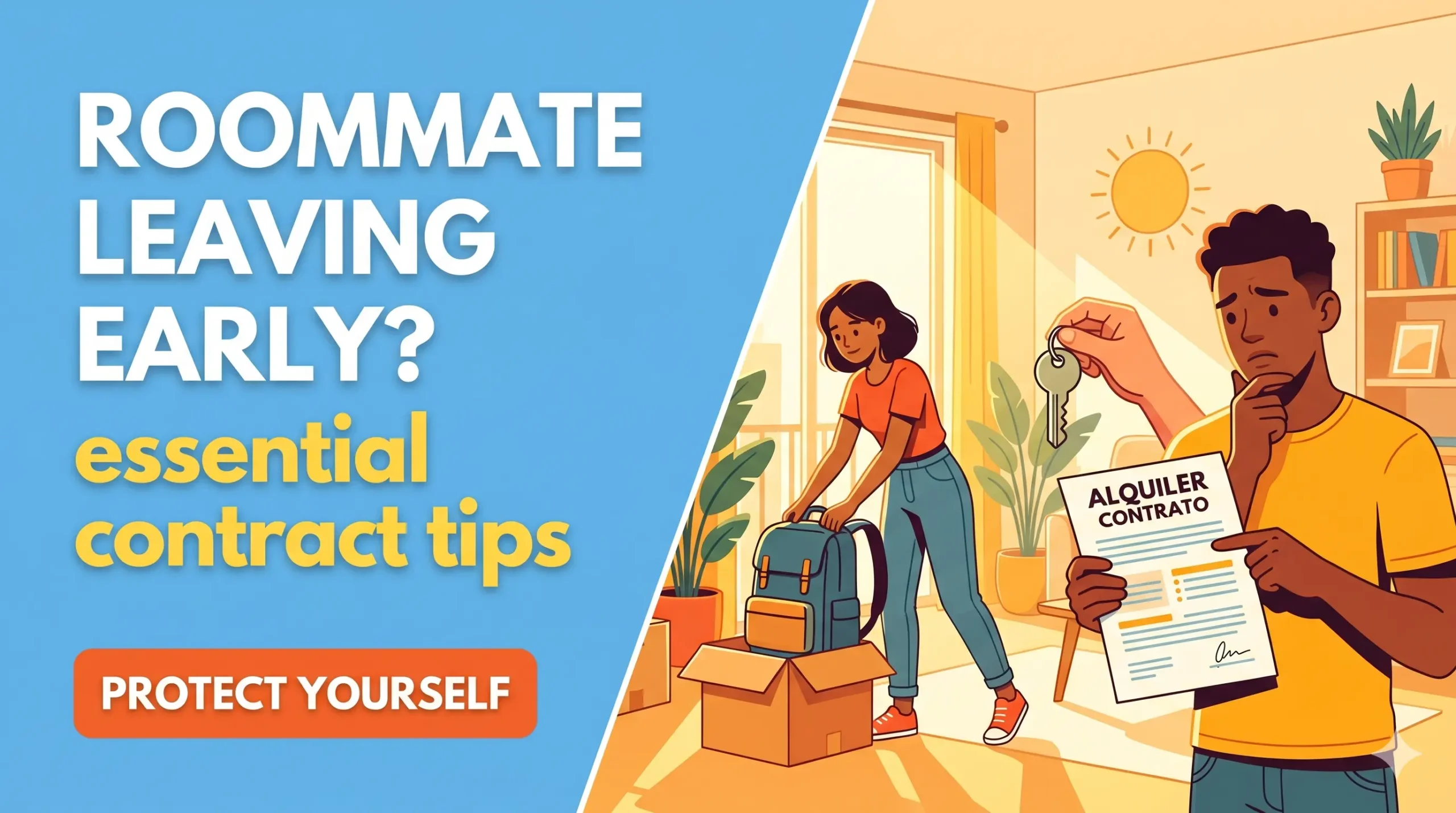
Waking up to a text that your flatmate is moving back home mid-lease, leaving you to cover a 1,500-euro rent bill in three days, is a uniquely terrifying expat initiation. I once sacrificed my entire savings because a roommate ghosted our Madrid apartment. This guide breaks down Spanish rental laws, deposit logistics, and exactly how to legally swap roommates without getting evicted.
Disclosure: This post may contain affiliate links. We may earn a commission at no extra cost to you if you make a purchase through these links. Read full disclosure.
The Legal Reality of Shared Spanish Leases
Before you panic about finding a replacement, you must understand exactly what you signed. Spanish lease agreements are notoriously rigid, and the legal framework governing them offers very little flexibility for personal drama.
Joint and Several Liability (Responsabilidad Solidaria)
When you sign a shared lease in Spain, the landlord almost always includes a responsabilidad solidaria (joint and several liability) clause. This is the single most dangerous legal trap for expats in shared housing.
Responsabilidad solidaria means that the landlord views all the tenants on the lease as a single financial entity. If your roommate packs their bags and flies back to London in month three, the landlord does not care that your roommate broke a verbal promise to you. The landlord is legally entitled to demand the entire 1,500-euro monthly rent directly from you. If you only pay your “half,” you are in material breach of the contract, and the landlord can evict you and sue you for the missing funds.
Because of this intense financial liability, choosing who you live with is a massive risk. If your flatmate bails, covering the sudden rent spike will instantly destroy your monthly financial planning. To calculate exactly how much emergency capital you need to survive this kind of worst-case scenario, thoroughly review Cost of Living in Spain: Budgeting for Expats.
The Subletting Trap (Subarriendo)
Your immediate instinct when a roommate leaves is likely to jump on Facebook or an app like Badi to find a replacement and sublet the empty room. You must stop and read your contract first.
Under the Ley de Arrendamientos Urbanos (LAU)—the federal law governing Spanish rentals—subletting a room (subarriendo parcial) is strictly illegal unless you have explicit, written consent from the landlord. Almost every standard lease contains a clause forbidding subletting. If you quietly move a new person into the flat and the landlord finds out, they have the absolute legal right to terminate your lease and keep your security deposit. To understand how strict these specific clauses can be, deeply review Student Housing in Spain: Options and Typical Contracts.
Steps to Take When a Flatmate Bails
If your roommate announces they are leaving, the clock is ticking. You must execute a precise sequence of administrative steps to protect yourself legally and financially.
Communicating with Your Landlord
You cannot simply cross out the old roommate’s name and write the new one in. You must formally contact the landlord or the real estate agency to request a modificación de contrato or an anexo (an addendum).
In this addendum, the departing flatmate legally signs away their rights to the apartment, and the new flatmate officially assumes their legal responsibilities. The landlord has the right to vet the new tenant just as they vetted you, often demanding their passport, employment contract (nómina), and bank statements. If your new roommate is a foreign student without a Spanish payroll history, the landlord might reject them entirely. Ensuring your prospective new flatmate has their local financial footprint properly established is critical; point them to Opening a Bank Account in Spain as a Non-Resident so they are ready to pass the landlord’s screening.
Handling the Fianza (Security Deposit)
The biggest fight you will have with your departing flatmate is over the fianza (security deposit). When they announce they are leaving, they will inevitably demand that you give them back their share of the deposit immediately.
You must explain the Spanish legal reality to them: the landlord does not physically hold the deposit. By law, the landlord must deposit the fianza into a regional government holding account (like the IVIMA in Madrid or INCASÒL in Catalonia). The landlord cannot and will not withdraw a “half portion” of this deposit just because one person is leaving early.
The standard expat solution is a direct financial swap. The incoming replacement roommate pays their portion of the deposit directly to the outgoing roommate. If the outgoing roommate damaged the walls in their bedroom, you must deduct the repair costs from the amount the new roommate pays them. If you cannot find a replacement quickly, your departing roommate simply has to wait until the entire lease ends to get their money back. To understand how these heavy deposits impact your initial move-in and eventual move-out capital, read Renting in Spain: How to Budget for Deposits, Fees, and Utilities.
Managing Shared Utility Accounts
If your departing flatmate was the titular (the official account holder) for the electricity, gas, or internet, you are in immense danger of having your utilities shut off.
When a flatmate leaves the country, they will close their Spanish bank account to avoid maintenance fees. If their account is closed, the utility direct debits will bounce, and the companies will cut off your power or internet. You must initiate a cambio de titularidad (change of account holder) immediately.
Transferring legacy Spanish internet providers is a notoriously agonizing process that frequently requires mailing physical paperwork and dealing with hostile customer service. If you are stuck doing this, it is highly recommended to completely cancel the old contract and switch to an expat-centric provider like Tiekom. Tiekom operates entirely in English, making it incredibly easy to set up the account in your name without bureaucratic roadblocks. A fast, reliable connection is the bedrock of a stable apartment, a logistical necessity explored heavily in Utility Costs in Spain: Electricity, Gas, Water, and Internet.
Finding and Onboarding a Replacement Roommate
Once you have the landlord’s permission to execute the contract addendum, you must aggressively hunt for a replacement to avoid paying double rent.
Screening and Red Flags
When interviewing potential roommates, you cannot just look for someone fun; you are legally tying yourself to their financial reliability. You should conduct these interviews via video call before showing them the flat in person. Having a robust home Wi-Fi network from Tiekom ensures your video interviews do not lag or drop when you are trying to vet a stranger’s living habits.
You must ask explicit questions about their daily routine. Do they work night shifts? Are their partners going to practically live in the flat? Most importantly, how long do they actually plan to stay in Spain? A common red flag is an exchange student who promises to stay for a year but secretly plans to leave in June. If they bounce early, you are stuck repeating this entire agonizing process. For a complete breakdown of how to proactively set up fair financial boundaries before they even unpack their bags, thoroughly read How to Split Bills With Flatmates in Spain: Apps and Fair Methods.
Setting Up New Household Logistics
When the new flatmate finally arrives, the apartment will likely feel disjointed. The outgoing roommate probably took their cooking pans, their drying rack, and their personal furniture, leaving the shared spaces barren.
Instead of arguing over who needs to go to the hardware store to replace communal items, veteran expats establish a shared household kitty and bulk-order replacement supplies from Amazon Spain. If the old flatmate took the microwave or the communal vacuum cleaner, you can easily source budget-friendly replacements on Amazon Spain and split the cost immediately via local payment apps. This prevents the classic passive-aggressive tension where one person feels they are subsidizing the entire apartment’s basic needs.
Furthermore, you must ensure the new flatmate’s personal bedroom is ready. Spanish rental beds are notoriously uncomfortable. Directing your new flatmate to order a thick mattress topper, fresh pillows, and quality bedding from Amazon Spain ensures they sleep well from night one, fostering a much more positive living environment. Because they might be waiting on critical immigration documents or new debit cards to arrive in the mail, ordering an affordable smart lockbox from Amazon Spain for the lobby ensures package deliveries are never missed when everyone is at work.
Finally, you must sit down and explicitly explain the utility schedule to the new arrival. They need to understand the rhythm of Spanish estimated billing cycles and how much cash they need to keep liquid. If they are an international student trying to stretch a tight budget, managing this cash flow is vital; ensure they review Student Finances in Spain: Bank Accounts and Budgeting Tips so they never miss their share of the Tiekom internet bill or the electric catch-up invoice.
| Task | Who is Responsible | Legal / Financial Risk if Ignored |
| Landlord Notification | Remaining Tenant(s) | Eviction for illegal subletting under the LAU. |
| Drafting the Anexo | Landlord / Agency | Outgoing roommate remains legally liable for rent. |
| Swapping the Fianza | Incoming & Outgoing Roommates | Landlord keeps deposit if contract is breached. |
| Changing Utility Titular | Remaining Tenant(s) | Immediate shutoff of electricity, gas, or Tiekom internet. |
| Replacing Shared Goods | Remaining & Incoming Roommates | Domestic friction and loss of essential household functionality. |
References
Primary sources (official)
- Boletín Oficial del Estado (BOE) – Ley 29/1994, de 24 de noviembre, de Arrendamientos Urbanos (LAU): https://www.boe.es/buscar/act.php?id=BOE-A-1994-26003
- Ministerio de Vivienda y Agenda Urbana – Guía de Arrendamientos: https://www.mivau.gob.es/
Other helpful sources
- idealista – ¿Qué pasa si uno de los inquilinos se va del piso antes de que termine el contrato?: https://www.idealista.com/news/inmobiliario/vivienda/2021/04/23/790113-que-pasa-si-uno-de-los-inquilinos-se-va-del-piso-antes-de-que-termine-el-contrato
- Fotocasa – Responsabilidad solidaria en el alquiler compartido: qué es y cómo funciona: https://www.fotocasa.es/fotocasa-life/alquiler/responsabilidad-solidaria-en-el-alquiler-compartido/
Disclaimer
The information provided in this article is for educational and informational purposes only and does not constitute formal legal or financial advice. The specific liabilities of shared rental agreements in Spain are heavily governed by the Ley de Arrendamientos Urbanos (LAU) and the explicit clauses written into your individual Contrato de Arrendamiento. The enforcement of responsabilidad solidaria (joint and several liability) means the landlord retains the absolute legal right to demand the entirety of the rent from any single named tenant. Always communicate directly with your landlord and draft a formalized, signed anexo al contrato (contract addendum) before executing a roommate swap or transferring security deposit funds (fianza).