Best Ways to Build an Emergency Fund While Living Abroad in Spain
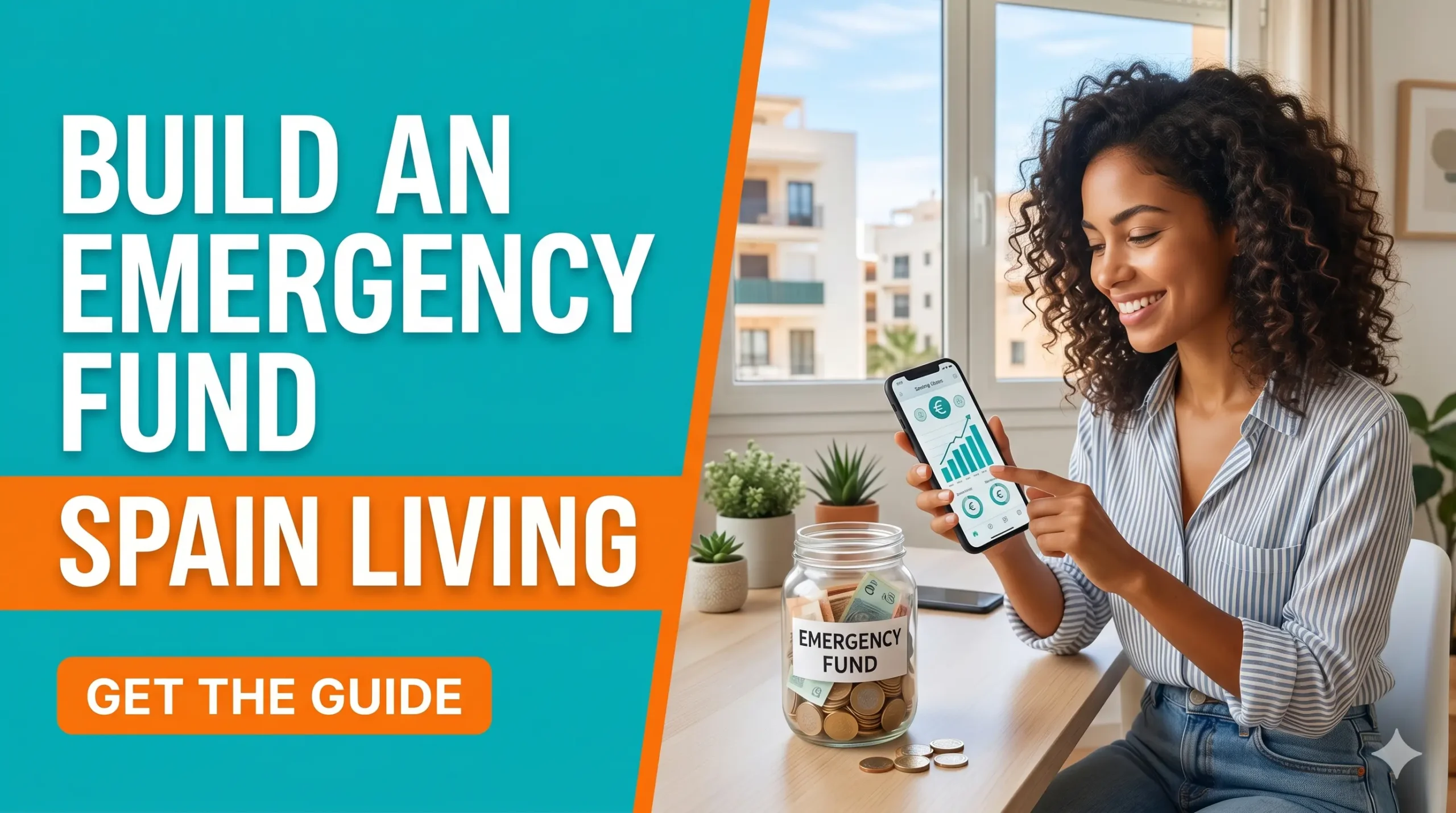
Setting up an emergency fund abroad is daunting when you are juggling a lower local salary and unexpected administrative traps. I once had to fly home suddenly for a family medical crisis and lost a terrifying amount to currency conversion fees because my cash was stuck. This guide reveals how expats can realistically build and protect an emergency safety net.
Disclosure: This post may contain affiliate links. We may earn a commission at no extra cost to you if you make a purchase through these links. Read full disclosure.
The Real Cost of Expat Emergencies in Spain
When you move to Spain, the lifestyle upgrade is immediate, but the financial reality of local wages can be a severe shock. Spanish salaries are structurally lower than those in Northern Europe, the UK, or the United States. Meanwhile, the cost of living in major hubs like Madrid, Barcelona, and Valencia has skyrocketed. If you are earning a local wage, saving a standard twenty percent of your income is incredibly difficult when rent consumes more than half of your paycheck.
Standard financial advice dictates saving three to six months of living expenses. However, this advice is tailored for people living in their home countries with an established, predictable social safety net. As an expat, your risk profile is exponentially higher. You do not just face local emergencies like a broken washing machine or a car repair; you face massive, cross-border emergencies. A sudden death or illness in the family back home requires a last-minute, long-haul flight that can cost thousands of euros. If you haven’t budgeted specifically for this geographical vulnerability, a single family crisis will completely wipe out your Spanish checking account.
Bureaucratic Hurdles That Demand Cash
The Spanish administrative system is also notorious for demanding sudden, unexpected liquidity. The bureaucracy moves slowly until it decides you owe money, at which point it moves ruthlessly fast. For example, if you miscalculate your annual tax declarations, the Agencia Tributaria (Hacienda) will not send polite reminders asking for a payment plan; they will simply fine you. Understanding exactly how and when you are taxed is a critical preventative measure, deeply explored in Spanish Income Tax IRPF 101: Who Pays and When.
Expats also frequently encounter issues where their primary bank accounts are suddenly locked due to expired identification documents (like a TIE card that takes months to renew) or flagged international transfers triggered by overzealous anti-money laundering algorithms. If your money is entirely tied up in a single institution and they freeze your account pending an ID review, you might find yourself completely unable to buy groceries, pay your rent, or even purchase a metro ticket. Preparing for this specific localized nightmare is covered in What to Do If Your Spanish Bank Account Is Frozen Common Causes. Add to this the erratic nature of local utility billing, where a bi-monthly water bill and a quarterly trash tax might hit your account on the exact same day—a chaotic reality detailed in Typical Utility Bills in Spain: Electricity, Gas, Water (Examples)—and it becomes obvious why a robust cash buffer is an absolute necessity for survival in Spain.
Strategic Ways to Build and Store Your Safety Net
Building your fund starts with calculating your true, localized baseline. You must aggressively track every single euro that leaves your account. Calculate your absolute bare-minimum survival budget: rent, utilities, basic groceries, and essential private health insurance. Do not include tapas, weekend trips, or entertainment subscriptions. Multiply that bare-minimum number by six.
Because you are an expat, you must add a specific “Repatriation Buffer” to that total. This buffer is the exact cost of a last-minute, next-day flight to your home country, plus two weeks of emergency accommodation. When a family member falls ill back home, airline algorithms detect the urgency and prices skyrocket. Finally, add a 1,000 to 1,500-euro “Bureaucracy Buffer” to cover unexpected local legal fees, sudden translation costs for complex visa renewals, or hefty apartment deposits if your landlord unexpectedly decides not to renew your lease and forces you to move.
| Expat Emergency Fund Component | Calculation Method | Primary Purpose |
| Baseline Survival Fund | 6 x Minimum Monthly Expenses | Covers job loss, severe illness, or localized financial crises. |
| Repatriation Buffer | Cost of 1 Last-Minute Flight + €500 | Ensures you can always reach your home country during a family emergency. |
| Bureaucracy Buffer | Flat €1,000 – €1,500 | Covers sudden legal fees, visa renewal hurdles, or forced apartment relocations. |
Separating Emergency Funds from Daily Spending
The only way to actually hit these targets on a Spanish salary is to treat your savings like a non-negotiable monthly utility bill. The moment your salary hits your account, a predetermined percentage must automatically transfer into your designated emergency fund before you even have a chance to see it or spend it.
In Spain, managing your overhead usually requires establishing a direct debit mandate for your internet, rent, and local utilities. By reviewing How Direct Debits Domiciliacion Work in Spain: Setup and Cancellations, you can map out exactly which days your automated bills are pulled by local companies. Schedule your automated savings transfer to occur the day before these bills hit. Furthermore, if you are sharing a flat, ensuring your flatmates are also paying their share on time is crucial so you do not accidentally dip into your savings to cover their portion of the rent. Establishing a highly transparent, fair system using How to Split Household Bills in Spain: Fair Methods for Flatmates will fiercely protect your monthly cash flow from roommates who pay late.
Navigating the Spanish Banking Landscape for Savings
One of the biggest mistakes new expats make is keeping their emergency fund in their primary checking account at a legacy Spanish high-street bank. Traditional banks are notorious for hitting foreigners with hidden quarterly maintenance fees, especially if your account balance dips below a certain threshold, you lose your local job, or you fail to meet specific direct debit requirements.
If you are actively using your emergency fund to survive a period of unemployment, a traditional bank will penalize you for not receiving a monthly salary deposit by charging you up to 60 euros a quarter just to keep the account open. Furthermore, if you keep your emergency cash sitting right next to your debit card funds in the same digital interface, you will inevitably spend it on a weekend trip to Andalusia. You must create friction.
To bypass legacy banking costs and secure a clean, organized financial ecosystem, opening your daily operational account with N26 is highly strategic. This digital bank provides a fully recognized local Spanish IBAN directly from your smartphone interface without the punitive monthly fees common to traditional brick-and-mortar branches. By utilizing N26, you can cleanly separate your daily spending money from your long-term savings “Spaces,” ensuring your emergency cash remains completely untouched but instantly accessible when a crisis strikes. Escaping archaic branch fees is exactly why digital alternatives dominate guides reviewing Opening a Bank Account in Spain: Step-by-Step for Foreigners.
Bridging Multiple Currencies
For many expats, building an emergency fund involves moving savings from their home country to Spain. If your primary savings are sitting in dollars, pounds, or Australian dollars, transferring that money through a traditional legacy bank will crush your hard-earned safety net with hidden SWIFT network fees and terrible exchange rate markups.
To fiercely protect your capital, you must route your international transfers through Wise. By using this service, you completely bypass the expensive, antiquated SWIFT network entirely. It converts your home currency to euros using the real, transparent mid-market exchange rate. You can seamlessly transfer those cleanly converted euros directly into your localized N26 account to rapidly build your domestic buffer.
However, Wise is not just for transferring money; it is a highly effective tool for actually holding your specific “Repatriation Buffer.” By keeping a portion of your emergency fund in your home currency within your multi-currency account, you protect yourself against sudden euro depreciation. If you need to fly home for a crisis, you already have the correct currency ready to spend, completely avoiding last-minute conversion traps at the airport. Understanding the deep mechanical savings of these cross-border tools is fully mapped out in Sending Money to/from Spain: Comparing Banks vs Transfer Services, while the local settlement logistics are explained in Spanish Bank Transfer Terms: Transferencia, Bizum, SEPA Explained.
Long-term Wealth Management vs Short-term Savings
Once your emergency fund is fully funded—meaning you have your six months of local expenses, your flight home, and your bureaucracy buffer securely stored—you must stop hoarding cash.
Leaving large sums of surplus savings sitting idle in a localized Spanish retail bank is a massive financial mistake, as inflation will steadily erode your purchasing power over time. Furthermore, locking your surplus expat savings into highly restrictive Spanish mutual funds or domestic pension plans severely limits your geographical flexibility if you ever decide to relocate back home or accept a job in a new country.
To build robust, long-term wealth securely, many veteran expats transfer their surplus capital into a global brokerage account like Interactive Brokers. Utilizing this platform allows you to build a sophisticated, multi-currency portfolio that remains entirely portable and heavily insulated from the high fees of local Spanish retail investment products.
It elegantly separates your long-term global wealth building from your highly liquid, localized emergency fund. Should the Spanish tax agency require proof of your worldwide financial standing, Interactive Brokers generates incredibly clean, standardized annual reports, making it simple to maintain compliance with local asset declarations. Fully understanding these global reporting requirements is deeply explored in Spanish Taxes for Foreign Residents: Practical Guide to Staying Compliant. Keeping your financial footprint agile through platforms like Interactive Brokers ensures the money you fought so hard to save continues to grow, giving you the ultimate peace of mind while living abroad.
References
Primary sources (official)
- Banco de España – Portal del Cliente Bancario (Ahorro y Presupuesto): https://clientebancario.bde.es/pcb/es/blog/quieres-ahorrar-sin-darte-cuenta.html
- Fondo de Garantía de Depósitos de Entidades de Crédito (FGD) – Cobertura de depósitos: https://www.fgd.es/informacion-general/que-es-el-fgd/
- Comisión Nacional del Mercado de Valores (CNMV) – Educación Financiera: https://www.cnmv.es/Cursos/Educacion-Financiera/Finanzas-Sostenibles/index.html
Other helpful sources
- Finanzas Para Todos (Plan de Educación Financiera impulsado por CNMV y Banco de España): https://www.finanzasparatodos.es/
Disclaimer
The information provided in this guide is exclusively for educational and informational purposes and does not constitute official financial, legal, or tax advice. Banking regulations, the Fondo de Garantía de Depósitos coverage limits, and international currency exchange rules are highly dynamic and subject to frequent changes by European banking authorities and the Banco de España. While we strive to ensure absolute accuracy, you should always consult a certified financial planner or registered tax advisor (asesor fiscal) before making significant cross-border transfers or investing your surplus savings while residing in Spain.