How to Budget for Healthcare in Spain as a Family
Disclosure: This article contains affiliate links. If you buy through them, we may earn a commission at no extra cost to you. Read our full disclosure.
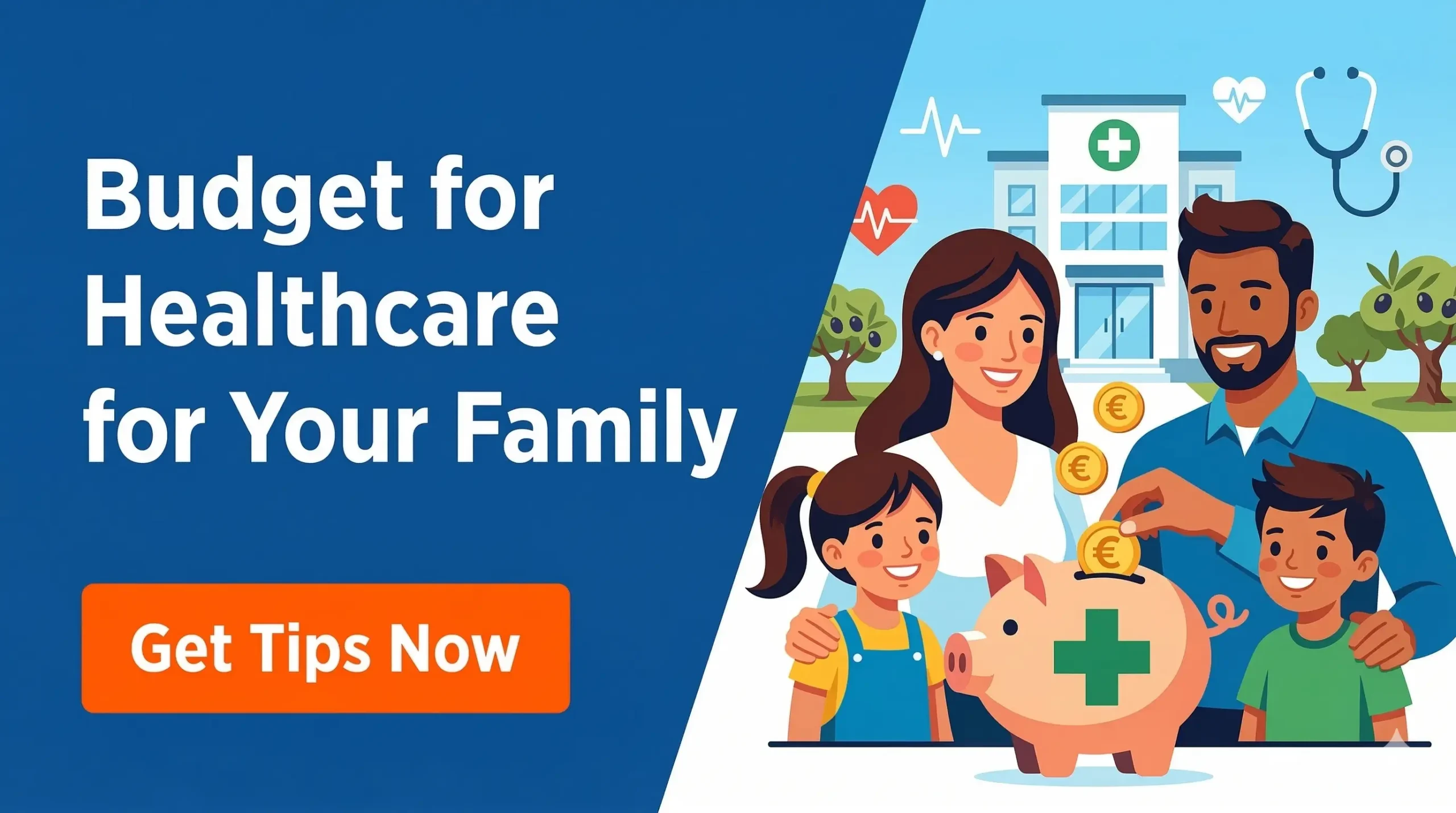
Moving a family abroad guarantees someone will inevitably get sick, and discovering Spain’s “free” healthcare comes with hidden costs is an incredibly stressful shock. This guide breaks down exactly how to budget for family healthcare in Spain without draining your savings.
Understanding the Public vs Private Healthcare Split
When you relocate your family to Spain, you are immediately confronted with a dual-track medical system. Figuring out which track you are eligible for—and which one you actually want to use—is the foundation of your monthly healthcare budget.
Registering for the Public System
If you are moving to Spain on a work visa and contributing to the Spanish social security system, your family generally gains access to the state-funded public healthcare network. This system is world-renowned for its high quality of care, particularly in emergencies and severe chronic illnesses. To actually access it, you have to navigate the local bureaucracy to get your family registered at the neighborhood clinic, a process we outline step-by-step in What Is a Centro de Salud in Spain and How Do You Register.
However, relying entirely on the public system does not mean your medical budget drops to zero. While doctor visits, surgeries, and emergency room trips are fully covered by your social security contributions, wait times for non-urgent pediatric specialists can be agonizingly long. Many expat parents find themselves staring at a three-month waiting list just to get their child’s mild asthma checked by a specialist. This disparity in wait times is a core frustration we explore in Spain Healthcare System for Expats: Public vs Private.
The Hidden Costs of the Public System Copago
The biggest financial surprise for families relying on the public system happens at the pharmacy register. Spain uses a co-payment system for prescription medications.
While the state subsidizes a significant portion of the cost of essential drugs, you are still legally required to pay a percentage out of your own pocket based on your declared income. If you have just arrived and the system has no income data for you, you are often defaulted to a higher bracket, meaning you could be paying 40% to 50% of the cost of your children’s antibiotics or asthma inhalers. To understand how these exact percentages are calculated, review Understanding Co-Payments at Spanish Pharmacies Copago.
Why Families Opt for Private Insurance
Because of the public waiting lists and the strict requirement of many expat visas (such as the Non-Lucrative Visa or Digital Nomad Visa), the vast majority of foreign families opt to purchase comprehensive private health insurance. Private insurance gives you immediate access to pediatricians, English-speaking doctors, and fast-tracked diagnostic tests.
However, navigating Spanish insurance contracts in a foreign language is a minefield. Many policies look cheap on the surface but are packed with hidden fees. This is exactly why utilizing an expert, expat-focused broker like Innoinsure is a massive financial lifesaver for families. A bilingual agent from Innoinsure can seamlessly filter the complex Spanish market and match your family with a premium health plan that strictly fits your monthly budget, ensuring you do not sign a contract loaded with surprise fees.
Monthly Premium Costs and Out of Pocket Expenses
Budgeting for your family requires understanding both your fixed monthly premiums and the variable costs that inevitably pop up when children scrape their knees or catch a winter virus.
Budgeting for Private Family Policies
The cost of private health insurance in Spain is generally much lower than in the United States, but it still represents a significant line item in your family budget. For a standard, healthy family of four (two adults in their thirties and two young children), a comprehensive private policy will typically range from €150 to €300 per month.
The massive variance in this monthly premium depends entirely on whether you choose a policy with or without co-payments, and the size of the hospital network you want access to. By securing your family’s policy through a trusted broker like Innoinsure, you gain complete transparency over these exact pricing tiers. Innoinsure will clearly explain which hospitals are in your network so you aren’t hit with out-of-network penalty fees when your child gets sick. To fully understand how to evaluate these different network structures, read our thorough breakdown on How to Compare Private Health Plans: Deductibles, Co-Pays, Networks.
Copayments and Unforeseen Medical Fees
When budgeting, you must decide between a sin copago (no co-payment) and a con copago (with co-payment) policy. A sin copago policy has a higher fixed monthly premium, but you pay absolutely nothing when you walk into a private clinic. A con copago policy is cheaper month-to-month, but you will be charged a small fee (usually €5 to €20) every single time you see a doctor or get a blood test.
If you have young children in daycare who are constantly bringing home the flu, those €15 co-payments can easily add up to an extra €100 a month in the winter. To grasp the broader baseline of these variable medical costs across the country, see our detailed overview on Health Costs in Spain: Typical Co-Pays and Out-of-Pocket Fees.
| Healthcare Expense | Estimated Cost Public System | Estimated Cost Private System | Frequency |
| Monthly Premium (Family of 4) | €0 (Funded by taxes) | €150 – €300+ | Monthly |
| Pediatrician Visit | €0 | €0 to €20 (Depending on copay) | Variable |
| Prescription Antibiotics | €2 – €10 (Subsidized) | €10 – €25 (Full retail) | Variable |
| Private ER Visit | N/A | €0 to €30 (Depending on copay) | Rare |
Dental, Vision, and Preventative Care Costs
Standard health insurance in Spain—both public and private—rarely covers the full scope of routine dental and vision care for a family, creating an entirely separate category you must budget for.
Pediatric Dental and Orthodontics
The Spanish public health system provides very basic dental care for children (usually just extractions and emergency infection control), but it does not cover standard cleanings, cavity fillings, or orthodontics.
If your teenager needs braces, you must go to a private dentist, and you will be paying out of pocket. A standard set of traditional metal braces in Spain can cost anywhere from €2,000 to €3,500, while invisible aligners can exceed €4,000. Fortunately, when you work with Innoinsure to build your family’s healthcare package, their agents can often bundle a specialized dental add-on into your main policy for just a few extra euros a month. These dental add-ons provide massive discounts on orthodontics and usually cover annual cleanings for the whole family for free.
Vision and Glasses
Similarly, neither the public system nor standard private insurance will pay for your child’s eyeglasses or contact lenses. While the actual vision test at a high-street optician is often free or very cheap, the retail cost of frames and complex lenses is entirely on you. You should easily budget €100 to €200 per child if they need corrective lenses. If you need to know exactly how this retail process works, check out Vision Tests in Spain: Where to Get Them and Typical Costs.
Wellness and Over the Counter Needs
The most frequent source of financial shock for expat parents has nothing to do with doctors, but rather with basic, everyday wellness items.
Because Spanish pharmacies hold a strict legal monopoly on the sale of all medical and wellness products, you cannot buy children’s ibuprofen, cough syrup, or basic vitamins at the grocery store. You must go to the physical farmacia. While local pharmacists are brilliant for frontline triage advice—a dynamic we explore deeply in Can a Pharmacist in Spain Help With Minor Illness? What to Expect—the lack of retail competition means the markups on preventative wellness items are absolutely staggering. Buying multi-strain probiotics for your kids, specialized eczema creams, or clean-ingredient immune boosters in a local Spanish pharmacy will quickly drain your monthly budget.
To completely bypass this frustrating retail gap, savvy expat parents rely heavily on iHerb. By ordering your children’s daily gummy vitamins, premium Omega-3s for brain development, and natural cough remedies directly through iHerb, you gain access to the exact, trusted wellness brands you successfully used back home without paying the inflated local pharmacy markup.
Having a dedicated holistic wellness stash delivered directly to your Spanish door via iHerb ensures you are actively fortifying your family’s immune systems before the back-to-school virus wave hits. Navigating a foreign retail system for daily comforts is chaotic and expensive; relying on iHerb to effortlessly restock your family’s specific preventative wellness arsenal puts the control firmly back in your budget. You can avoid the local pharmacy “expat tax” completely by utilizing iHerb for your ongoing preventative care, saving your family hundreds of euros a year.
Managing Surprises Emergency Funds and Medications
Even with the best budgeting and a premium insurance policy, kids will be kids, and emergencies will happen. You must structure your finances and your administrative knowledge to handle the unexpected.
Stocking the Medicine Cabinet
If your private doctor prescribes a medication for your child, you must pay 100% of the retail price at the pharmacy, as private prescriptions are not eligible for state subsidies. Fortunately, the Spanish government heavily regulates pharmaceutical prices, so a full course of private antibiotics might only cost you between five and fifteen euros.
Proactively stocking your home medicine cabinet with natural remedies and preventative aids through iHerb is a highly effective budgeting strategy. By ordering your soothing natural throat sprays, digestive enzymes, and hypoallergenic skincare products in bulk from iHerb, you insulate your family from midnight pharmacy runs and high retail costs. Furthermore, utilizing iHerb allows you to access specialized pediatric supplements that are simply impossible to find in a standard Spanish neighborhood pharmacy.
Emergency Room Visits Urgencias
If your child takes a bad fall at the playground and you suspect a broken arm, knowing where to go and what it will cost is critical. If you rush to a public hospital emergency room, the care is phenomenal, but the wait times can be agonizing.
If you have secured a premium private policy through Innoinsure, you can bypass this public chaos entirely and rush directly to a private 24-hour hospital. With a good policy, your out-of-pocket cost for a private emergency room visit, complete with X-rays and a cast, is often completely covered, or limited to a tiny €15 copayment. This absolute financial peace of mind during a crisis is the primary reason expat families invest in private coverage. To ensure you know exactly where these clinics are located in your city, read How to Find a 24-Hour Clinic in Spain (Urgencias). If the injury occurred due to a traffic incident or a sports liability issue, knowing the local administrative protocols is crucial; check out What to Do After a Minor Accident in Spain: Insurance and Care Steps for guidance.
Furthermore, if your child wakes up at 2:00 AM with a high fever but no signs of severe trauma, dragging them to the hospital is exhausting. Many of the premium family policies brokered by Innoinsure feature highly robust 24/7 digital doctor access. You can consult an English-speaking pediatrician via your smartphone from your child’s bedside, completely free of charge. Discover how to safely leverage this incredible digital perk to save money and time in Telemedicine in Spain: When It’s Useful and What to Expect.
References
Primary sources (official)
- Ministerio de Sanidad – Cartera de Servicios Comunes del SNS: https://www.sanidad.gob.es/profesionales/prestacionesSanitarias/CarteraDeServicios/home.htm
- Seguridad Social – Aportación en la prestación farmacéutica (Copago): https://www.seg-social.es/wps/portal/wss/internet/Trabajadores/PrestacionesPensionesTrabajadores/10938/11566/11567
Other helpful sources
- Expatica – Healthcare Basics and Costs in Spain: https://www.expatica.com/es/healthcare/healthcare-basics/healthcare-in-spain-101467/
- Citizens Advice Bureau Spain – Healthcare Information: https://www.citizensadvice.org.es/faq/healthcare/
Disclaimer
The information provided in this article is for educational and informational purposes only and does not constitute formal medical, financial, or legal advice. Healthcare premiums, copayment percentages, and private insurance network coverage limits vary significantly based on your family’s exact demographic profile, pre-existing conditions, and autonomous community of residence. Always consult directly with a certified financial planner, a licensed Spanish medical professional, or your private insurance broker regarding your specific budgeting needs and healthcare coverage limits.