Pollen Seasons in Spain: What Expats Should Know
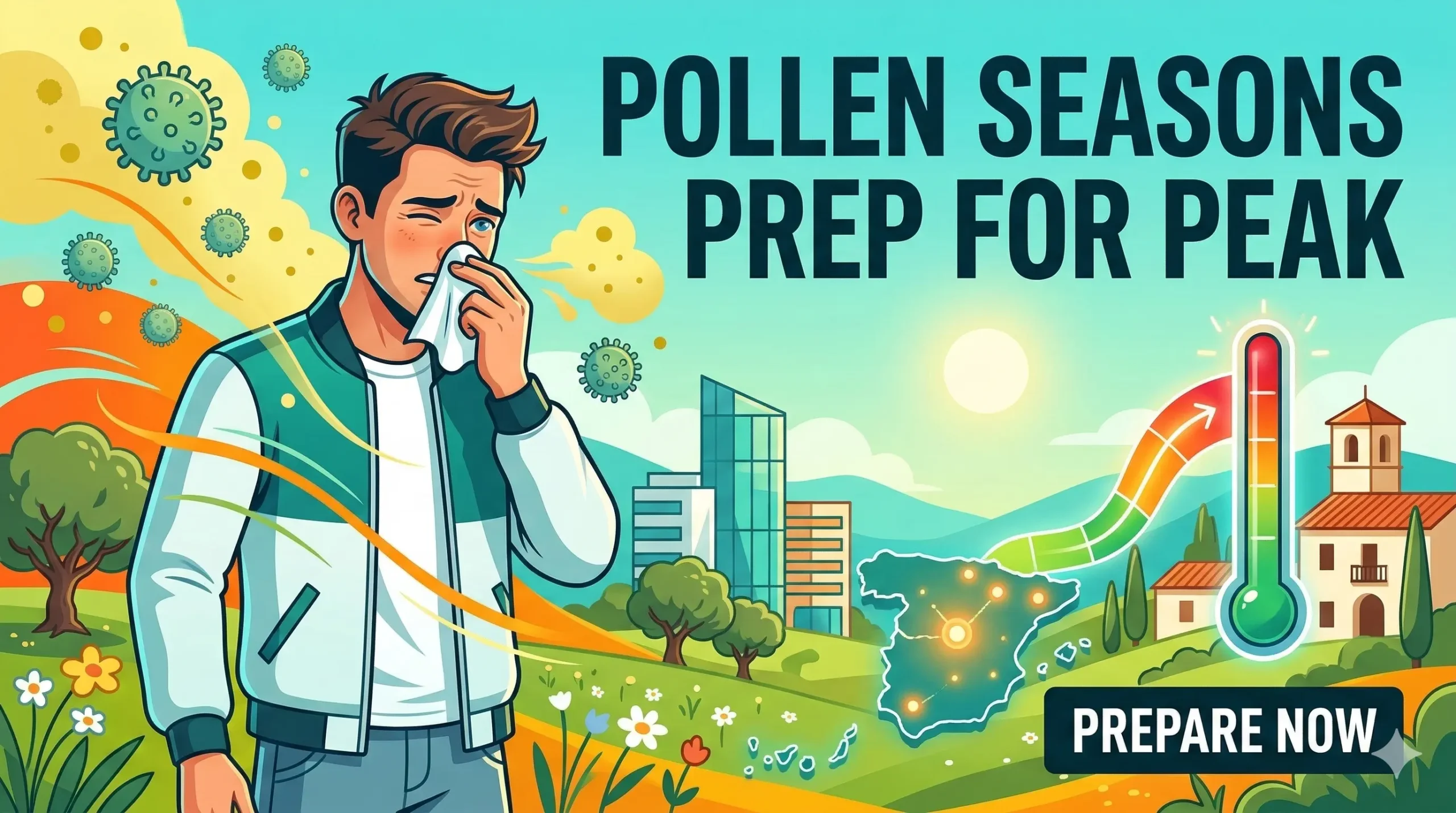
Moving to Spain promises endless sunshine, but nobody warns you about the sudden, aggressive adult-onset allergies that leave you struggling to breathe. I spent my first spring in Madrid convinced I had a chronic respiratory infection before discovering the local pollen counts. This guide explains Spain’s distinct pollen seasons, the major regional culprits, and how to finally find relief.
Disclosure: This post may contain affiliate links. We may earn a commission at no extra cost to you if you make a purchase through these links. Read full disclosure.
The Major Culprits Behind Spanish Allergies
When you relocate to a different country, your immune system is suddenly bombarded by an entirely new botanical ecosystem. Many expats who never experienced a single day of hay fever in their home countries are shocked when they are suddenly hit with severe sinus pressure, itchy eyes, and asthma-like symptoms during their first Spanish spring.
The Olive Tree Dominance
If you live anywhere in the southern half of Spain—particularly in regions like Andalusia, Extremadura, or Castilla-La Mancha—you are living in the absolute epicenter of olive oil production. Spain is home to hundreds of millions of olive trees. When the olivo blooms, typically between late April and early June, the pollen explosion is truly something you have to see to believe.
The pollen from the olive tree is microscopic, highly allergenic, and capable of traveling hundreds of kilometers on the wind. During a dry, breezy May in cities like Jaén, Córdoba, or Granada, a literal yellow-green film of pollen dust coats cars, balconies, and outdoor cafe tables. The allergic reaction to this specific pollen is notoriously fierce. If you already suffer from pre-existing respiratory issues, the olive season can exacerbate them severely. Organizing your long-term medical strategy before this season hits is vital; you can read our insights on Chronic Conditions in Spain: Managing Ongoing Care as an Expat to prepare your baseline health.
The Urban London Plane Trees
If you moved to a major urban center like Madrid or Barcelona, you might assume that city living protects you from heavy botanical pollen. Unfortunately, the exact opposite is true. The urban planners of Spain’s past heavily favored planting the plátano de sombra (London plane tree) along major avenues, promenades, and city squares because they grow quickly and provide excellent summer shade.
However, these trees are a nightmare for allergy sufferers. For about three brutal weeks, usually spanning late March to mid-April, these towering trees release massive amounts of pollen alongside tiny, irritating fuzz balls. This fuzz physically floats through the air like urban snow, getting caught in your throat, nose, and eyelashes. The physical irritation combined with the chemical allergic reaction creates severe, short-term misery for city-dwelling expats.
Coastal and Nationwide Triggers
Spain’s diverse geography means the allergy calendar shifts depending on your exact zip code. If you live on the Mediterranean coast in places like Valencia, Alicante, or the Balearic Islands, the coastal humidity helps suppress some of the airborne dust, but you face a different enemy: Parietaria (wall pellitory). This highly allergenic weed thrives in the cracks of ancient stone walls and ruins, and because of the mild coastal winters, its pollen season can stretch relentlessly from March all the way through October.
Nationwide, standard grasses (gramíneas) are a major culprit, peaking from May through July. Furthermore, the ciprés (cypress tree), commonly found in Spanish parks, cemeteries, and lining residential fences, releases highly potent pollen incredibly early in the year, often peaking between January and March. This early trigger frequently confuses expats, who mistakenly assume they just have a lingering winter cold rather than a full-blown early allergy attack.
| Allergen (Spanish Name) | Peak Allergy Season | Primary High-Risk Regions |
| Cypress (Ciprés) | January – March | Nationwide (Common in residential areas) |
| London Plane Tree (Plátano de sombra) | Late March – April | Madrid, Barcelona, Major Cities |
| Olive Tree (Olivo) | Late April – June | Andalusia, Extremadura, Central Spain |
| Grasses (Gramíneas) | May – July | Nationwide (Highest in Northern Spain) |
| Wall Pellitory (Parietaria) | March – October | Mediterranean Coast, Balearic Islands |
Tracking Pollen Levels Across the Country
You cannot effectively fight an invisible enemy. To manage your seasonal allergies in Spain, you must transition from reacting to your symptoms to proactively tracking the pollen levels before you even step outside your apartment.
Official Spanish Aerobiology Resources
The Spanish medical community takes aerobiology incredibly seriously, providing the public with highly accurate, localized tracking tools. The absolute gold standard for monitoring the air is the Red Española de Aerobiología (REA), which works in tandem with the Spanish Society of Allergology and Clinical Immunology (SEAIC).
These maps break down the exact pollen types currently circulating in your specific province, ranking them from low (green) to extreme (red). Make it a habit to check the local pollen forecast every morning alongside the weather report. If the olivo pollen is flashing red in Seville, that is the day you absolutely skip your outdoor run and choose an air-conditioned gym instead.
Adjusting Your Daily Spanish Routine
Beyond checking the digital forecasts, surviving the Spanish pollen seasons requires adjusting your cultural habits. Spanish architecture is designed to naturally combat the intense summer heat. The cultural norm is to throw open every window and balcony door early in the morning to let the cool breeze circulate before closing the heavy shutters (persianas) for the afternoon.
Furthermore, do not adopt the local habit of hanging your wet laundry outside on the rooftop clothesline during May and June. Drying your bedsheets outside during olive season guarantees that you will be sleeping in a massive cloud of allergens. If your symptoms escalate to a point where your weekend getaway is ruined by a sudden, severe asthma attack from unexpected pollen exposure, you must know where to turn; review What to Do If You Need Care on a Weekend in Spain to find out-of-hours care.
Healthcare and Allergy Relief Options
When avoidance strategies fail and the pollen successfully breaches your defenses, you need to know exactly how the Spanish healthcare system handles allergy relief, from frontline pharmacy counters to specialized clinical care.
Finding Solutions at the Farmacia
When the nasal congestion hits, your first instinct as a foreigner is likely to run to a large supermarket to buy a massive, 100-count bottle of generic antihistamines. In Spain, this is impossible. You cannot buy allergy medication at a grocery store; you must go directly to a licensed pharmacy (farmacia).
Furthermore, the packaging limitations will frustrate you. Standard over-the-counter allergy medications—such as loratadine or cetirizine—are strictly sold in tiny blister packs containing just 7 to 10 pills. When you suffer from allergies that last for three consecutive months, constantly returning to the pharmacy to buy tiny, expensive boxes is incredibly annoying.
However, Spanish pharmacists are highly trained professionals who offer excellent frontline triage. If you explain your specific symptoms, they can recommend highly effective medicated nasal sprays and targeted eye drops that do not require a doctor’s signature. To understand how to properly leverage their expertise without overpaying, read our guide on Can a Pharmacist in Spain Help With Minor Illness? What to Expect. If your allergic reaction is highly severe, causing genuine respiratory distress, do not rely on the pharmacy; find immediate medical intervention by following the steps in How to Find a 24-Hour Clinic in Spain (Urgencias).
Utilizing Private Insurance for Allergists
If over-the-counter pills and nasal sprays are not stopping your suffering, you need to consult a clinical allergist (alergólogo). If you rely on the state-funded public healthcare system, this introduces a massive bureaucratic bottleneck. You must first see your general practitioner, convince them to issue a referral, and then sit on a public waiting list that can easily stretch for four to six months. By the time you get your appointment, the pollen season will be entirely over.
This agonizing public waiting period is exactly why the vast majority of expats with chronic allergies opt for the private healthcare sector. You can explore this cultural healthcare divide deeply in our overview of the Spain Healthcare System for Expats: Public vs Private.
Bypassing the long public queue is precisely why using an expert, expat-focused broker like Innoinsure is a massive game-changer. A dedicated, bilingual agent from Innoinsure can seamlessly set up a comprehensive private health policy that grants you immediate, unrestricted access to a vast network of top-tier, English-speaking private allergists in your specific city.
With a premium policy secured through Innoinsure, you can literally open your provider’s app, bypass the general practitioner referral entirely, and book a guaranteed appointment with an allergist for the very next week. You can get patch testing done immediately and secure a prescription for high-dose preventative inhalers before the season even peaks. To fully understand the financial structure of these premium networks before you sign a contract, read our breakdown on How to Compare Private Health Plans: Deductibles, Co-Pays, Networks. Furthermore, if you simply need a quick, strong prescription refill without leaving your pollen-covered neighborhood, these policies often include robust 24/7 digital health access. Discover how to leverage this safely in Telemedicine in Spain: When It’s Useful and What to Expect.
Stocking Up on Preventative Wellness
Because standard Spanish pharmacies heavily prioritize dispensing acute pharmaceutical medications in small doses, they frequently fall incredibly short when it comes to holistic, preventative allergy wellness.
Many expat allergy sufferers prefer to proactively manage their histamine levels before the season starts. Products like highly concentrated quercetin, stinging nettle leaf extract, high-grade Vitamin C, and specialized saline sinus rinses are brilliant preventative tools. Unfortunately, trying to find these specific, clean-ingredient holistic items in a local Spanish farmacia is deeply frustrating. When local pharmacies do happen to stock recognized international holistic brands, the retail markups are absolutely staggering. To understand exactly why these out-of-pocket costs escalate so quickly, review our financial breakdown on Health Costs in Spain: Typical Co-Pays and Out-of-Pocket Fees.
To completely bypass this frustrating retail gap, the savvy international community in Spain relies heavily on iHerb. By ordering your preventative allergy supplements directly through iHerb, you gain access to the exact, trusted wellness brands you successfully used back home without draining your wallet.
Having a dedicated holistic allergy stash delivered directly to your Spanish door via iHerb ensures you are actively fortifying your immune system weeks before the olive trees bloom. Managing a new climate abroad is chaotic; relying on iHerb to effortlessly restock your quercetin and specialized nasal rinses puts the control firmly back in your hands, allowing you to actually enjoy the beautiful Spanish spring rather than hiding indoors.
References
Primary sources (official)
- Red Española de Aerobiología (REA): https://www.uco.es/rea/
- Sociedad Española de Alergología e Inmunología Clínica (SEAIC): https://www.seaic.org/
Other helpful sources
- Niveles de Polen en España (El Tiempo): https://www.eltiempo.es/polen
- Expatica – Healthcare in Spain: https://www.expatica.com/es/healthcare/healthcare-basics/healthcare-in-spain-101467/
Disclaimer
The information provided in this article is for educational and informational purposes only and does not constitute formal medical or pharmaceutical advice. Allergy severity, local pollen counts, and specific medication availability vary significantly across Spain’s autonomous communities. Always consult directly with a licensed Spanish pharmacist, a registered allergist, or a certified insurance broker regarding your specific immune reactions, prescription needs, and private coverage details. If you experience anaphylaxis or severe breathing difficulties, dial 112 immediately.