What to Wear to a Job Interview in Spain (Office vs Hospitality)
Showing up to a Madrid interview sweating in a three-piece wool suit while the hiring manager wears an untucked linen shirt is a deeply embarrassing expat mistake. I lost my first major opportunity here because I entirely misread the local dress code. This guide breaks down exactly what to wear to Spanish job interviews, from corporate offices to coastal hospitality roles, ensuring a flawless first impression.
Disclosure: This post may contain affiliate links. We may earn a commission at no extra cost to you if you make a purchase through these links. Read full disclosure.
The Cultural Nuances of Spanish Professional Attire
In Spain, personal presentation is not just a superficial detail; it is considered a direct reflection of your professionalism and respect for the company. Understanding the local culture surrounding appearance is just as critical as preparing your answers to potential interview questions.
Arreglado pero Informal: The Golden Rule
If you ask a Spanish recruiter what the dress code for an interview is, they will likely give you the most confusing answer possible: “Arreglado pero informal.” Directly translated, this means “dressed up but informal.” For expats coming from the UK or North America, this phrase is a complete paradox. It does not mean “casual” in the Anglo-Saxon sense—do not wear ripped jeans, oversized t-shirts, or dirty sneakers.
In Spain, arreglado pero informal translates to “smart casual,” but with a heavy emphasis on the “smart.” It means your clothes must fit perfectly. An ironed, well-fitted pair of chinos paired with a crisp button-down shirt and a blazer effortlessly hits this mark for men. For women, a tailored blouse with high-quality trousers or a knee-length skirt is standard. The visual expectation you set when you submitted your application must match reality. If you presented a highly polished image following the rules detailed in Spanish CV Photo: When It’s Expected and When to Skip It, you cannot walk into the interview looking disheveled.
Your clothing must also match your conversational tone. If you are dressed sharply for a corporate role, your Spanish should reflect that level of formality. Practicing the strict differences between addressing someone as usted (formal) versus tú (informal) using the business modules on SpanishPod101 ensures that your spoken language perfectly aligns with the polished, professional aesthetic you are presenting to the hiring manager.
The Impact of Climate on Your Wardrobe
The absolute biggest hurdle for expats dressing for a Spanish interview is the brutal climate. During the summer, temperatures in southern cities like Seville or central hubs like Madrid can easily exceed 40 degrees Celsius (104 degrees Fahrenheit). Wearing a heavy polyester suit on the Madrid metro in July will guarantee you arrive at the employer’s office dripping with sweat, instantly destroying any illusion of cool professionalism.
Breathability is your ultimate defense. You must invest in lightweight fabrics like high-quality linen blends, breathable cotton, or tropical-weight wool for blazers. If you realize you packed the wrong seasonal clothing after reading Winter in Spain: What to Expect, and you desperately need to purchase a breathable interview outfit locally, using Wise allows you to easily convert your foreign savings to Euros instantly. By paying for your new Spanish wardrobe with a Wise card, you bypass the extortionate foreign transaction fees that legacy banks charge, leaving you more money to survive your job hunt.
Furthermore, you must plan your commute strategically to avoid the heat. Never walk 30 minutes in the blazing sun right before an interview. If you need to order an air-conditioned Uber or Cabify to arrive looking fresh, utilizing Wise ensures that the international charge clears seamlessly on your ride-hailing app without getting blocked for suspected fraud, a common issue with foreign debit cards.
Dressing for Corporate and Office Environments
While arreglado pero informal is a great baseline, you must tailor your outfit specifically to the industry you are targeting. A law firm expects a drastically different aesthetic than a tech startup.
Traditional Finance, Law, and Real Estate Sectors
If you are interviewing for a traditional sector like corporate finance, law, or high-end real estate, the dress code strictly reverts to conservative, classic business wear. In these environments, you are expected to project authority, reliability, and stability.
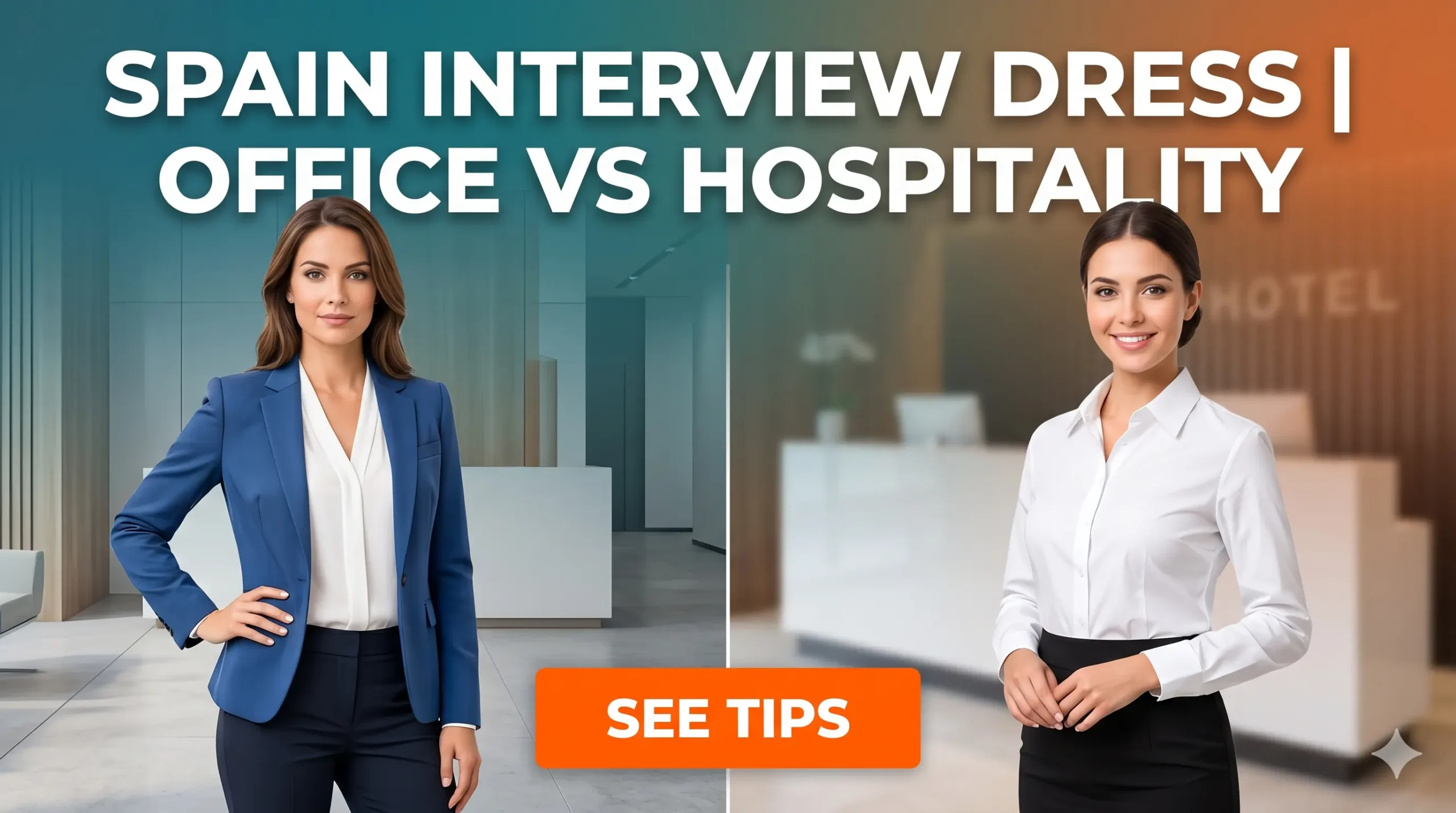
For men, a well-tailored suit is absolutely mandatory. Stick to conservative colors like navy blue, charcoal grey, or dark brown. A tie is highly recommended for the first interview, even if you notice the employees in the office are not wearing them; it is always better to be slightly overdressed than underdressed. For women, a tailored pantsuit, a conservative business dress with a blazer, or a high-quality blouse with an elegant skirt is expected. Keep jewelry minimalist and avoid overly loud, distracting patterns. Because these traditional roles often feature rigorous, formal interview processes, you must meticulously prepare your verbal presentation, a strategy we map out entirely in Common Spanish Interview Questions (and How to Answer in English).
Startups and the Modern Tech Scene
Spain has rapidly become a massive European hub for digital nomads and technology startups, particularly in cities like Barcelona, Valencia, and Malaga. The startup culture aggressively rejects the traditional corporate suit.
If you show up to a tech startup interview in a three-piece suit, the hiring manager will assume you are too rigid to fit into their dynamic, agile company culture. Here, the dress code is genuinely relaxed, but it still demands style. Dark, unripped denim jeans are perfectly acceptable if paired with a sharp blazer and a clean, solid-color t-shirt or a casual button-down. Clean, minimalist sneakers (like plain white leather shoes) have become the unofficial uniform of the Spanish tech sector. This modern dress code is especially common if you are entering the industry through a university placement, a competitive process decoded in How to Get a Spanish Internship Contract as a Foreigner. However, even in these casual environments, your CV still needs to look traditionally polished, following the structural guidelines found in How to Build a Spanish‑Style CV From Scratch (Template Guide).
Nailing the Hospitality and Tourism Look
The hospitality and tourism sectors are massive employers of expats in Spain. However, because you will be the physical face of the business dealing directly with international clients, the grooming standards are incredibly strict.
Hotels and High-End Dining
If you are interviewing for a receptionist role at a boutique hotel or a waitstaff position at a high-end restaurant, you must look immaculately clean. The interview outfit should closely mirror the formality of the uniform you would eventually wear on the floor.
A crisp, ironed white button-down shirt paired with well-fitted black trousers or a black skirt is the universal hospitality standard. Your shoes must be closed-toe, polished, and preferably black leather. Your hair should be neatly pulled back from your face, and your nails must be perfectly manicured and clean. The interviewer will judge your attention to detail immediately. Because these roles demand constant customer interaction, they also require rapid problem-solving in a second language. Utilizing the specific customer service dialogue exercises on SpanishPod101 ensures you can confidently demonstrate your ability to handle stressful client interactions in fluent Spanish during the interview role-play scenarios.
Bars, Cafes, and Entry-Level Roles
If you are applying for a part-time role at a local café, an Irish pub, or a retail store, the dress code is more relaxed, but the rule of cleanliness remains absolute. This is a very common entry point for international students, an employment landscape we explore heavily in How to Find a Legal Part‑Time Job as a Student in Spain.
Do not show up to a bar interview wearing shorts, flip-flops, or beachwear, no matter how close the establishment is to the Mediterranean coast. A clean pair of jeans, a neat polo shirt or a solid blouse, and closed-toe shoes are perfect. Once you actually secure the job, the employer might require you to purchase specific uniform items, like non-slip shoes or black aprons, before your first shift. Because you will not receive your first paycheck for several weeks, having your foreign savings easily accessible via Wise allows you to comfortably purchase these mandatory work supplies without stressing over heavy international bank fees, an essential financial buffer before navigating the complex process of Opening a Bank Account in Spain: Step-by-Step for Foreigners.
| Industry Sector | Men’s Interview Attire | Women’s Interview Attire | Key Style Note |
| Traditional Corporate | Navy/Grey Suit, Tie, Dress Shoes | Tailored Suit, Modest Dress, Heels/Flats | Conservative, authority-driven |
| Tech Startups | Smart Jeans, Blazer, Clean Sneakers | Dark Denim, Blouse, Smart Casual Shoes | Modern, agile, comfortable |
| High-End Hospitality | White Shirt, Black Trousers, Dress Shoes | White Blouse, Black Skirt/Trousers, Hair Tied | Immaculate grooming, formal |
| Casual Retail / Cafes | Clean Jeans, Polo/Button-down | Smart Jeans, Solid Blouse, Closed-toe Shoes | Clean, approachable, practical |
Final Grooming and Interview Preparation Tips
The clothing you wear is only the foundation of your presentation. Spanish culture places a massive emphasis on personal hygiene, grooming, and the subtle details of your appearance.
The Importance of Details and Fragrance
In Spain, ironing your clothes is not optional; it is culturally mandatory. If you show up to an interview wearing a shirt with visible wrinkles, the interviewer will assume you are lazy and lack attention to detail.
Furthermore, Spain has a very strong culture of personal fragrance. Wearing a subtle, high-quality perfume or cologne is highly appreciated in professional settings and is seen as a sign of good personal hygiene. However, do not overdo it. The scent should be noticeable only when someone is standing directly next to you. If disaster strikes on your way to the interview—perhaps a passing car splashes your trousers or you spill a coffee on your shirt—you will need to buy a replacement instantly. Knowing the specific vocabulary for clothing, sizes, and fabrics by studying with SpanishPod101 ensures you can run into a nearby Zara or Mango, ask the shop assistant for exactly what you need, and change in the fitting room without missing your interview slot.
Navigating the Interview Logistics with Confidence
Your outfit must remain intact while you navigate the logistical hurdles of the Spanish business day. If you are carrying a backpack to your interview, leave it at home. Backpacks are viewed as distinctly academic or touristy. Invest in a professional leather messenger bag, a sleek laptop sleeve, or a structured tote bag to carry your printed CVs and your legal documentation. Keeping your paperwork pristine is vital, especially since the HR department will likely demand a physical copy of your foreigner identity card, an administrative necessity decoded in Getting an NIE for Employment or Study: Practical Overview.
When you finally walk into the office lobby, your professional presentation must immediately be paired with cultural politeness. Greet the receptionist warmly. In Spain, small talk (charla) before the actual interview begins is a critical part of the evaluation process. They want to see how you carry yourself. By dressing appropriately, managing your commute effectively to avoid the heat, and projecting a polished, localized image, you instantly validate your respect for Spanish corporate culture. Securing the job is the very first step toward stabilizing your life abroad and successfully managing the overall Cost of Living in Spain.
References
Primary sources (official)
- Servicio Público de Empleo Estatal (SEPE) – Consejos para una entrevista de trabajo: https://www.sepe.es/HomeSepe/Personas/encontrar-trabajo/entrevista-trabajo.html
- Ministerio de Trabajo y Economía Social – Guía de Inserción Laboral: https://www.mites.gob.es/
Other helpful sources
- InfoJobs – ¿Cómo vestirse para la entrevista de trabajo?: https://orientacion-laboral.infojobs.net/como-vestirse-para-la-entrevista-de-trabajo/
- Randstad España – Cómo vestir en una entrevista de trabajo: https://www.randstad.es/tendencias360/como-vestir-en-una-entrevista-de-trabajo/
Disclaimer
The information provided in this guide is exclusively for educational and informational purposes and does not constitute official career, legal, or employment advising. Dress codes and grooming standards vary drastically between different Spanish autonomous communities, individual corporate cultures, and specific hospitality establishments. You should always research the specific company culture of your prospective employer before your interview and ensure that your presentation aligns with their publicly stated corporate values and safety regulations.