Paying for Overseas SaaS and Ads From Spain: Cutting FX Markup
Living in Spain is wonderful, isn't it? But then you hit that wall: the financial side of things, especially when you need to pay for services outside the Eurozone. You've got your favorite SaaS tools that bill in USD, or perhaps you're running ad campaigns on platforms that operate in various currencies, and suddenly your perfectly planned budget gets eaten alive by hidden foreign exchange markups. It’s a frustrating reality for many expats and businesses here. This guide is going to walk you through exactly how those sneaky fees add up and, more importantly, how you can slash them down to size, making your international payments from Spain significantly more cost-effective.
Disclosure: This post may contain affiliate links. We may earn a commission at no extra cost to you if you make a purchase through these links. Read full disclosure.
The Hidden Costs of Cross-Border Payments from Spain
When you're dealing with international transactions, whether it's paying for a vital software subscription or managing your overseas ad spend, it’s easy to feel like you’re losing money without really understanding why. Traditional banks are notorious for making a pretty penny on your currency conversions, and if you're not paying close attention, those small percentages can really add up. It’s not just about the explicit transfer fee; it’s the less obvious, but far more impactful, exchange rate markup that truly stings.
Understanding Exchange Rate Markups and Why Banks Love Them
Think of the exchange rate as the price of one currency in terms of another. There’s a "real" exchange rate out there, often called the mid-market rate, which is the midpoint between what buyers are willing to pay and what sellers are willing to accept on global markets. It's the rate you'd see on Reuters or Google. But when you make an international payment through your bank in Spain, they rarely give you this real rate. Instead, they apply their own "customer rate," which is subtly worse for you. This difference, often 1-3% (sometimes more), is their exchange rate markup – pure profit for them.
It's a clever trick, really. They don't have to openly charge you a huge fee, because the fee is baked into the rate itself. So, if you're sending euros to pay for a service in US dollars, your bank will convert your euros at a rate that gives you fewer dollars than you should get. This means you have to send more euros to cover the same dollar amount, and boom, they’ve made their margin. This is why you might see an enticing price tag for a service in dollars, only for the actual cost from your Spanish bank account to be noticeably higher. It's not just a small inconvenience; it's a constant drain on your finances, especially with recurring payments.
Common Scenarios: SaaS Subscriptions and Ad Campaigns
Let’s get specific. Many of us, particularly freelancers or small business owners here in Spain, rely heavily on Software as a Service (SaaS) tools. You might be paying for your project management software like Notion, your email marketing platform like Mailchimp, your CRM like Salesforce, or creative suites like Adobe – often these are billed monthly or annually in US dollars, British pounds, or other currencies. Each time that recurring payment hits your Spanish bank account, you're likely paying an invisible FX markup. Imagine losing an extra 2% on every single subscription, every month. Over a year, across several tools, that's a significant chunk of change that could have stayed in your pocket or been reinvested in your business.
Then there’s the world of online advertising. If you're a digital marketer or agency in Spain running campaigns on Facebook Ads, Google Ads, or LinkedIn Ads, you're often setting your budgets in the target country's currency – typically USD for North American audiences, or GBP for UK ones. You’re pouring your hard-earned money into these platforms to reach customers, and if your bank is taking a cut on every single ad spend transaction, it's directly impacting your return on investment. It's like filling up your car, but a hidden hand siphons off a little bit of fuel every time you pay, meaning you get fewer kilometers for your euros. The cumulative effect of these small, frequent markups on ad spend can be truly alarming, and it means you're effectively spending more for the same advertising reach.
Traditional Methods and Their Drawbacks
When you first set up your life or business here in Spain, your natural inclination is to use your trusted local Spanish bank for all your financial needs. And for local transactions or Eurozone payments, they often work just fine. But the moment you venture outside the Eurozone, paying for those overseas SaaS subscriptions or international ad campaigns, that's when the cracks in the system start to show, and your wallet starts to feel the pinch.
Using Your Spanish Bank for International Transfers
Sending money directly from your Spanish bank account to an account in a different currency via a traditional bank transfer, often a SWIFT transfer, is usually the most expensive and slowest option available. Let's break down why.
First, the fees. Oh, the fees! You'll typically be charged a flat fee by your Spanish bank for initiating the transfer, which can range from €20 to €50 or even more, depending on the amount and your specific bank. But that's just the start. Many people don't realize that SWIFT transfers often involve "correspondent banks" – intermediary banks that help facilitate the transaction between your bank and the recipient's bank. Each of these intermediary banks can (and often does) deduct their own fee from the transferred amount. So, the recipient might end up receiving less money than you actually sent, which can lead to awkward conversations and further delays.
Then there's the exchange rate, which, as we discussed, is usually far from the real mid-market rate. Your Spanish bank applies its unfavorable rate, adding another layer of cost. And finally, the speed – or lack thereof. SWIFT transfers can take anywhere from 2 to 5 business days, sometimes even longer, especially if there are multiple correspondent banks involved or if it's a weekend or holiday in Spain or the recipient country. This means critical SaaS tools could be temporarily suspended due to payment delays, or your ad campaigns might pause, costing you valuable time and potential customers. It really makes you feel like you're stuck in the dark ages, doesn't it?
Credit Card Payments in Foreign Currencies
Another common method, especially for recurring SaaS subscriptions, is simply using your Spanish credit card. It's convenient, it's automated, but it’s often far from cost-effective. The primary culprit here is the "foreign transaction fee," typically an additional 1% to 3% charged by your bank on top of the transaction amount whenever you pay in a currency other than euros. So, a €100 SaaS subscription in USD might actually cost you €102 or €103 after the fee. This might seem small, but remember the cumulative effect across multiple subscriptions or consistent ad spend.
Even more insidious is Dynamic Currency Conversion (DCC). You might encounter this when paying online, where you're given the option to pay in the local currency (e.g., USD for a US-based SaaS) or in your home currency (EUR). Always, always choose to pay in the local currency! If you choose to pay in EUR, the foreign vendor (or their payment processor) does the currency conversion using their own, often terrible, exchange rate, which is almost certainly worse than even your Spanish bank's rate. They display the conversion up front, making it seem transparent, but it's a hidden way for them to add a chunky markup. It’s a classic trap for unsuspecting expats and businesses making international payments. For more on avoiding this common pitfall, you might want to check out our guide on Avoiding Dynamic Currency Conversion DCC at Spanish ATMs and Terminals.
So, while credit cards offer convenience, that convenience comes at a significant premium in the form of these foreign transaction fees and the ever-present danger of DCC, eroding your budget one small transaction at a time.
The Smart Way to Pay: Leveraging Specialist Services like Wise
This is where the game truly changes for expats and businesses in Spain dealing with international payments. Forget the old ways of getting ripped off by banks on FX rates. There are smarter, more transparent solutions out there, and one of the absolute best is Wise. Trust me, as someone who’s been through the bureaucratic maze and financial hurdles of living here, finding services that genuinely save you money without a headache is a godsend. Wise isn't just a slight improvement; it's a fundamental shift in how you manage your cross-border finances.
How Wise Eliminates Hidden Markups
The core magic of Wise (formerly TransferWise) lies in its commitment to transparency and fairness. Unlike traditional banks that hide their profit in inflated exchange rates, Wise always uses the real mid-market exchange rate – the same one you'd see on Reuters or Google. Seriously, they do. They then charge a small, upfront, transparent fee for the conversion, which they show you before you even commit to the transaction. No hidden markups, no nasty surprises. This alone is a massive differentiator and a huge sigh of relief for anyone who's tired of playing guessing games with their bank statements.
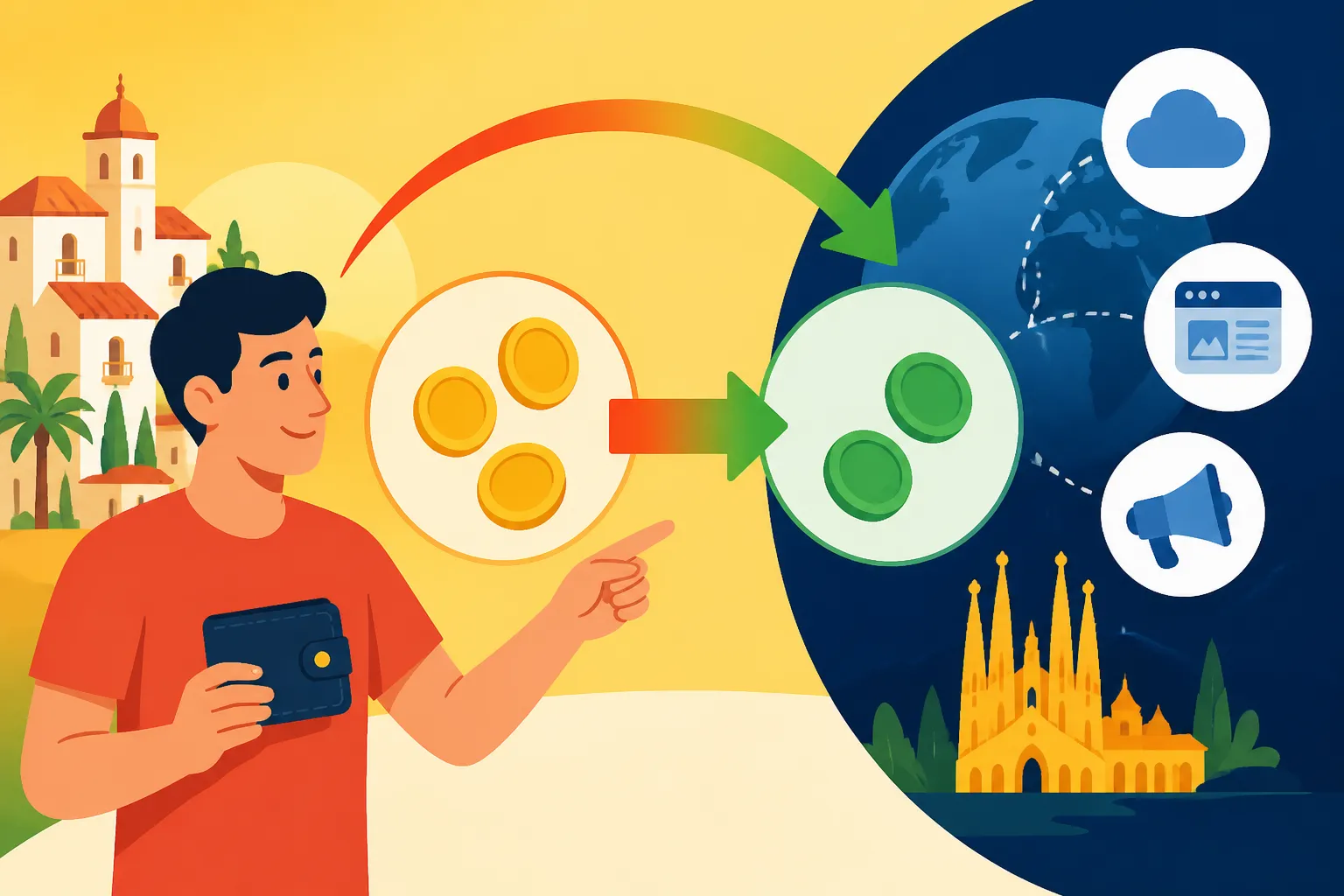
Wise achieves this by essentially having local bank accounts in dozens of countries around the world. When you send euros from your Spanish account to pay for something in USD, your euros go into Wise’s euro account in the Eurozone. Then, Wise pays out the equivalent amount in USD from their USD account in the US. Your money never actually crosses borders in the traditional, expensive SWIFT sense; it's cleverly matched and moved locally, significantly reducing costs and speeding things up.
But it’s not just about transfers. Wise offers a fantastic Multi-Currency Account. This allows you to hold balances in over 50 different currencies, including EUR, USD, GBP, and many more. You get local bank details for 10 currencies (like a US routing number, a UK sort code, an EU IBAN) which means you can receive payments in those currencies as if you had a local bank account there, often for free. For paying those overseas SaaS subscriptions or managing ad spend, you can simply convert your euros into the required currency within your Wise account at the mid-market rate, then pay directly from your Wise balance. This completely bypasses the traditional banking system's FX markups on individual transactions.
And for those daily expenses or ad-hoc payments, the Wise Debit card is a lifesaver. You can spend directly from any currency balance you hold in your Wise account. If you don't have enough of a specific currency, Wise automatically converts it from another balance (usually EUR) at the mid-market rate with the same low, transparent fee. It truly puts you in control of your money, giving you the power to avoid unnecessary foreign transaction fees and bad exchange rates that cling to traditional credit and debit cards from Spanish banks.
Practical Steps for Businesses and Freelancers
If you’re a freelancer or run a small business in Spain, setting up a Wise Business account is one of the smartest financial moves you can make. The process is straightforward and can be done entirely online.
- Sign Up for a Wise Business Account: Head to the Wise website and choose the business account option. You'll need to provide some basic details about your company (NIF, business activity, address, etc.) and yourself. They might ask for proof of identity and business registration, which is standard procedure for financial services. For freelancers in Spain, this means your Autónomo registration documents will be useful. (If you're still navigating the world of self-employment here, our guide on Freelancing (Autónomo) in Spain: Taxes, Invoicing, and Setup Guide can offer more insights.)
- Fund Your Account in EUR: Once your account is set up, you can easily add funds in euros from your Spanish bank account via bank transfer or debit card.
- Convert to Your Desired Currency: Let's say you need to pay for a Google Ads campaign in USD. Within your Wise account, you simply choose to convert a portion of your EUR balance into USD. Wise will show you the exact mid-market exchange rate and the tiny, transparent fee. You'll see precisely how many USD you'll receive before confirming.
- Pay Your SaaS or Ad Platform: Now that you have USD in your Wise account, you can use it to pay your overseas services.
- For SaaS Subscriptions: Many SaaS providers allow payment via bank transfer (ACH in the US, for example) or by linking a bank account. With your Wise Multi-Currency Account, you'll have US account details. You can provide these directly to the SaaS provider, and they can pull payments directly from your USD balance. Alternatively, if they only accept card payments, you can use your Wise Debit card or a virtual card linked to your USD balance.
- For Ad Platforms (Google Ads, Facebook Ads, LinkedIn Ads): You can link your Wise Multi-Currency Account's USD bank details directly to your ad platform payment methods. This allows the platform to charge your USD balance directly, completely avoiding any foreign transaction fees or unfavorable bank exchange rates that you'd incur with a Spanish credit card or bank transfer. Many users report significant savings on their recurring ad spend by doing this.
- Virtual Cards: Wise also offers virtual cards, which are fantastic for online subscriptions. You can generate multiple virtual cards, assign them to specific currency balances (like your USD balance for US subscriptions), and even freeze or delete them easily for security or budgeting purposes.
By integrating Wise into your payment workflow, you're not just saving a few euros; you’re establishing a truly global financial solution right from your base in Spain. It makes managing international business expenses feel less like a chore and more like the smart decision it is. If you're looking into broader business setup in Spain, our Starting a Business in Spain: Taxes and Accounting Basics guide could be a valuable next step.
Maximizing Your Savings and Streamlining Payments
Making the switch to a service like Wise is a no-brainer once you understand the mechanics of hidden FX markups. It’s not just about a single transaction here or there; it’s about a consistent, systematic approach to keeping more of your hard-earned money and making your financial life in Spain a whole lot smoother.
Comparing Costs: A Real-World Example
Let's put some numbers to this to really drive the point home. Imagine you're running a monthly US ad campaign and your budget is $1,000 USD. You're paying this from your Spanish bank account.
| Feature / Service | Traditional Spanish Bank Transfer | Spanish Credit Card | Wise Business Account |
|---|---|---|---|
| Exchange Rate | Bank's unfavorable rate (e.g., mid-market + 2.5%) | Card issuer's unfavorable rate (e.g., mid-market + 1.5-2%) | Real mid-market rate |
| Transfer/Transaction Fee | Typically €20-€50 + potential correspondent bank fees | 1-3% foreign transaction fee on total amount | Small, transparent upfront fee (e.g., ~0.5% of amount) |
| Total Cost for $1,000 USD | Let's assume €945 for $1,000 (after bad rate) + €30 transfer fee = ~€975 | Let's assume €930 for $1,000 (after bad rate) + 2% fee (€18.60) = ~€948.60 | Let's assume €910 for $1,000 (real rate) + €4.50 fee = ~€914.50 |
| Savings vs. Bank Transfer | (Base comparison) | ~€26.40 | ~€60.50 |
| Speed | 2-5 business days | Instant | Instant (if using card/balance) or same-day/next-day (bank transfer) |
| Transparency | Low (hidden FX markup, unknown intermediary fees) | Moderate (FX fee shown, but rate hidden) | High (real rate and fee shown upfront) |
Note: Exchange rates and fees are illustrative and vary, but demonstrate the typical differential.
As you can see from this table, the savings with Wise are substantial. For a single $1,000 payment, you could be saving €60.50 compared to a traditional bank transfer. If you're doing this every month for your ad campaigns or a handful of SaaS subscriptions, you’re talking hundreds, even thousands, of euros saved per year. That’s real money that stays in your business.
Beyond Just Payments: Other Benefits for Expats in Spain
The utility of Wise extends far beyond just outbound payments for SaaS and ads. As an expat living in Spain, its multi-currency features can be incredibly beneficial for your personal finances too.
For instance, if you're a freelancer receiving payments from international clients in different currencies (USD, GBP, AUD), you can give them your local Wise bank details for those currencies. This means they can pay you as if you have a local bank account, often avoiding international transfer fees on their end, and you receive the full amount into your Wise balance without the hassle of a Spanish bank imposing their unfavorable conversion rates upon receipt. You can then choose when to convert it to EUR at the mid-market rate, rather than being forced to at the moment of receipt by your Spanish bank. This flexibility is a game-changer for managing diverse income streams. For more on managing your money as an expat, take a look at our article on Money in Spain for Expats: Banking, Taxes, and Everyday Payments.
It streamlines your entire financial perspective from Spain, making it easier to manage funds globally without being tethered to the often rigid and expensive offerings of traditional Spanish banks. Whether you’re sending money to family, receiving your salary, or simply want to keep an eye on international market fluctuations, Wise provides a truly global banking experience right from your Spanish home. It’s definitely worth considering if you're exploring Opening a Bank Account in Spain: Step-by-Step for Foreigners, as it complements traditional banking perfectly. When you're thinking about how to move money around, always consider the long game. You can learn more about efficient money transfers in our guide Sending Money to/from Spain: Comparing Banks vs Transfer Services.
So, if you're tired of watching your hard-earned money vanish into thin air due to hidden foreign exchange markups when paying for overseas SaaS and ad campaigns, it’s time to take control. Wise offers a transparent, efficient, and cost-effective solution that integrates seamlessly into your life and business in Spain. Stop letting banks profit unnecessarily from your international transactions and start keeping more of your money where it belongs: with you.
Disclaimer
Please remember that while I strive to provide accurate and up-to-date information based on my experiences and available resources, financial regulations and service offerings can change. This content is for informational purposes only and does not constitute financial or legal advice. Always do your own research and consider consulting with a financial professional to ensure that any choices you make are appropriate for your specific circumstances.