Living in Spain Without a Spanish Bank Account: What Breaks and What Works
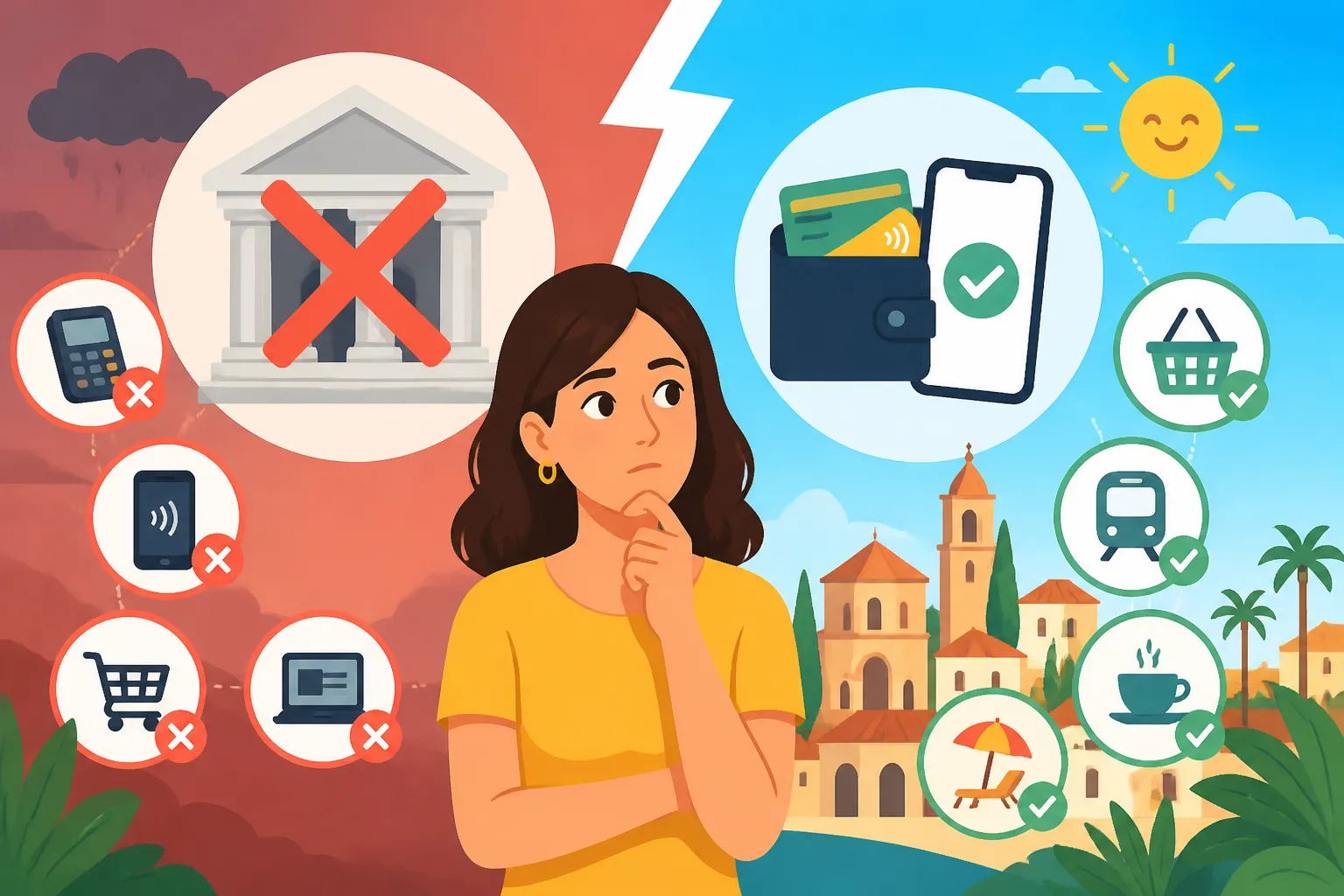
Navigating life in Spain can feel like a beautiful dance, but when it comes to money without a local bank account, it often feels more like a clumsy tango with bureaucracy. Many expats arrive hoping to manage everything with their home country’s bank or a shiny new digital account, only to find themselves constantly bumping into unexpected hurdles. This comprehensive guide is here to shed light on what genuinely works and what inevitably breaks when you try to live in Spain without a traditional Spanish bank account, and crucially, how services like Wise can be your absolute lifeline through it all.
Disclosure: This post may contain affiliate links. We may earn a commission at no extra cost to you if you make a purchase through these links. Read full disclosure.
Initial Challenges of Living Bank-Account-Free in Spain
Let's be real, the dream of arriving in Spain and seamlessly continuing your financial life with just your foreign bank card or a snazzy new fintech app is a seductive one. And for a short visit, it works! But once you're looking at more than a few weeks, especially if you're planning to live and work here, the Spanish system, bless its heart, tends to insist on a certain level of local financial integration.
The Administrative Headaches You'll Face
One of the first things you'll realize is that Spain loves a good direct debit – a domiciliación bancaria, as they call it. For nearly everything recurring, from your electricity bill to your internet, water, and even some mobile phone contracts, a Spanish IBAN is often the preferred, if not mandatory, method of payment. You might get lucky with some smaller, more flexible providers, but for the big utility companies like Endesa, Iberdrola, or Vodafone, they expect a local account. It’s not just about convenience for them; it’s about their internal systems and how they process payments and manage defaults. Imagine trying to set up your Wi-Fi only to be told your German or American bank details simply won't process through their system. It's a common, frustrating scenario.
Beyond utilities, other administrative processes also lean heavily on local banking. Registering for certain public services, receiving government refunds (if you ever get one!), or even certain forms of payment from employers might require a Spanish IBAN. It’s not necessarily a malicious gatekeeping tactic, but rather an ingrained part of how the country’s financial infrastructure operates. You'll quickly discover that many essential services in Spain operate on a "local first" principle, and trying to bypass it can lead to endless calls, emails, and dashed hopes. It’s enough to make you want to pull your hair out!
Why the "No Bank Account" Plan Often Falters
The primary reason why relying solely on foreign accounts or even non-Spanish digital banks becomes problematic is the reliance on the Spanish IBAN system for almost all direct debits and recurring payments. While many European digital banks offer an EU IBAN, some Spanish institutions are surprisingly sticky about accepting anything that isn't explicitly a Spanish IBAN. This has improved somewhat with EU regulations enforcing acceptance of any SEPA IBAN, but older systems or less informed staff can still throw up roadblocks.
For example, I once heard from a friend who tried to pay their monthly comunidad fees (building maintenance fees) to their apartment block. The administrator, a lovely but old-school lady, simply couldn't fathom taking payment from a non-Spanish account, even though it was a perfectly valid SEPA IBAN. She insisted on a Spanish one, and my friend had to scramble to open an account.
Then there's the issue of cash. While Spain is moving towards a more cashless society, cash is still king in many smaller establishments, local markets, and for quick, everyday purchases. Relying solely on a foreign debit card means potentially incurring foreign transaction fees or unfavorable exchange rates every time you swipe. And for those times you need actual euros from an ATM, be prepared for withdrawal fees, not just from your own bank, but often from the Spanish ATM operator as well. These small fees add up rapidly and can significantly impact your budget. Using a service like Wise helps immensely here, offering better exchange rates and often lower fees for withdrawals and card payments. It provides a proper euro account, sidestepping many of these pesky charges.
Everyday Transactions: What Works and What Doesn't
Daily life in Spain requires handling money constantly, and how smoothly that goes often depends on your payment method. You'll quickly learn that while cards are widely accepted, cash still has its place, and some transactions are just plain easier with a local touch.
Paying for Daily Essentials
For your groceries, coffee, or a quick caña at the bar, using your foreign debit or credit card is generally fine in most cities and larger towns. Supermarkets like Mercadona, Carrefour, or Lidl, and most chain restaurants and shops, accept international cards without a hitch. However, always be mindful of potential foreign transaction fees from your home bank. These can sneak up on you, adding a small percentage to every single purchase. Over time, these really do add up!
Smaller local shops, bakeries, and traditional tapas bars in less touristy areas might still prefer or even only accept cash. It's always a good idea to carry some euros with you, especially if you're exploring charming pueblos or venturing off the beaten path. Imagine finding the most authentic little tapas bar, only to realize they're cash-only and your only euros are stuck in an ATM that charges a hefty fee for withdrawal. A proper multi-currency account like Wise allows you to hold euros, so when you withdraw, it's treated as a local transaction, saving you money.
Handling Larger Purchases and Rent
When it comes to bigger expenses, things get a bit more complicated. For rent, many landlords will insist on a direct debit from a Spanish bank account, or at least a regular SEPA transfer to their Spanish account. While a landlord should technically accept any SEPA IBAN, some private landlords, especially older ones, might be unfamiliar or unwilling to deal with non-Spanish accounts. They want the money to land reliably and without fuss, and from their perspective, a local account is the most straightforward.
If you're buying something significant, like furniture from El Corte Inglés or a new appliance, card payments are typically fine, but for larger sums, your foreign bank might flag the transaction as unusual, leading to temporary holds or needing a security verification. This can be particularly frustrating when you're standing at the checkout trying to complete a purchase. Having a card like the Wise card can alleviate this, as it operates like a local euro card, so those big purchases go through without a hitch or foreign transaction fees.
Public Transport and Digital Payments
Spain has been embracing digital payments, especially in its larger cities. Many public transport systems, like Madrid's Metro or Barcelona's TMB, allow you to top up travel cards using foreign debit/credit cards at machines. Some cities even let you tap and go with your contactless card directly. However, for monthly passes or specific resident discounts, a Spanish bank account might be a requirement for recurring charges.
Mobile payment apps like Apple Pay or Google Pay are also very common and work seamlessly with linked foreign cards. But what about Bizum? Ah, Bizum, the darling of Spanish peer-to-peer payments! If you've been here for any length of time, you'll know Bizum is everywhere – splitting bills with friends, paying for a secondhand item, or even small local businesses accepting it. The catch? Bizum is almost exclusively tied to Spanish bank accounts. If your financial ecosystem in Spain doesn't include a local bank, you'll be missing out on this incredibly convenient payment method. This is where services like Wise truly shine, by minimizing the need for Bizum through ease of direct transfers and card payments for nearly everything else.
| Payment Method / Scenario | Works Well (Usually) | Potential Hurdles / Costs | Solution (Wise) |
|---|---|---|---|
| Small Daily Purchases | Foreign debit/credit card, Cash | Foreign transaction fees, ATM fees (for cash) | Use Wise card for local currency payments/withdrawals; hold EUR. |
| Online Shopping (Spanish sites) | Foreign credit card | Foreign transaction fees, fraud flags | Use Wise card for EUR payments to avoid fees. |
| Rent Payments | SEPA transfer (sometimes) | Landlord insistence on Spanish IBAN, transfer fees | Use Wise to send EUR directly to landlord's account with low fees. |
| Utility Bills (Direct Debit) | Rarely with foreign accounts | Strict requirement for Spanish IBAN | Set up recurring transfers from Wise if provider accepts SEPA, or open limited Spanish account. |
| Public Transport (Tickets) | Foreign card at machines, Contactless tap | No access to resident discounts, specific passes | Use Wise card for easy top-ups; get local card for discounts. |
| Bizum Transfers | No | Requires Spanish bank account | N/A (Wise doesn't support Bizum directly but covers most needs) |
| International Money Transfers | Expensive traditional banks | High fees, poor exchange rates, slow | Wise for fast, low-cost international transfers. |
Managing Your Income and Bills from Abroad
One of the biggest anxieties for new expats is making sure their money gets to Spain and that their bills get paid. It feels like walking a tightrope, especially when your income source is overseas.
Receiving Your Salary or Freelance Payments
If you're working for a Spanish company, they will almost certainly want to pay your salary into a Spanish bank account. It's just how their payroll systems are set up. While it's technically possible to ask them to pay into a foreign SEPA account, most HR departments will strongly advise against it, or even refuse, citing administrative complexities. This is a common pain point. If you're a freelancer working for international clients, receiving payments into your foreign account is usually fine. The challenge then becomes getting that money into euros and being able to access it cheaply in Spain.
This is where Wise really shines as a game-changer for many expats. With Wise, you can open a multi-currency account that gives you local bank details for various currencies, including EUR. This means your international clients can pay you into your Wise euro account as if it were a local European bank account, often avoiding international transfer fees for them and ensuring you receive the full amount in euros. For those working for Spanish companies, while they still might push for a Spanish IBAN, listing your Wise EUR account might be a viable compromise if they are flexible with SEPA transfers. It's certainly worth asking!
Setting Up Utility Payments and Direct Debits
As mentioned, domiciliación bancaria (direct debit) is the preferred method for virtually all recurring bills in Spain. From electricity and gas to water, internet, and even rent for many agencies, they love their direct debits. Trying to pay these manually each month from a foreign account can be a nightmare of remembering deadlines, navigating Spanish payment portals, and dealing with potential late fees. Some providers might offer manual payment options via their website or in person, but these are often less convenient and can be prone to errors.
While Wise offers EUR account details, historically, some Spanish utility companies have been stubborn about accepting non-Spanish IBANs for direct debits, even though EU law states they should. This situation is gradually improving, but it's not foolproof. Your best bet for these essential services, short of opening a full Spanish bank account, is to:
- Ask if they accept a Wise EUR IBAN for direct debit. It’s always worth trying.
- Explore flexible providers. Some newer internet or mobile companies might be more accommodating.
- Consider a gestor or a trusted friend. A gestor (administrative assistant) might be able to help set up payments, or you might pay a trusted Spanish friend (if you have one) who then pays your bills via their local account (with regular transfers from your Wise account to them). This sounds convoluted, and it is, but it's a workaround many have used.
This highlights a key truth: while Wise makes almost everything possible, sometimes the bureaucratic inertia in Spain pushes you towards solutions that are, well, uniquely Spanish. But for managing funds and sending money, Wise remains an unparalleled tool to handle your finances in Spain, even if you can’t get every direct debit routed through it directly.
The Best Banking Alternatives for Expats
Okay, so a traditional Spanish bank account might be a bit of a pain to get, and relying purely on your home bank isn't always ideal. What are the solid alternatives that can genuinely help you manage your money in Spain? This is where modern fintech solutions step in to save the day for many of us.
Understanding Multi-Currency Accounts: The Wise Advantage
When I first moved to Spain, international money transfers felt like sending a message in a bottle – slow, expensive, and you just hoped it got there. Multi-currency accounts have changed all that, and Wise (formerly TransferWise) is truly at the forefront.
A Wise multi-currency account gives you local bank details for several countries, including Europe (EUR), the UK (GBP), the US (USD), and many more. This means you can receive money into your Wise account as if you had a local bank account in those regions. For expats in Spain, this is revolutionary.
Here's why Wise is often the hero:
- Receive EUR like a local: You get a European IBAN, so friends, family, or even some employers can pay you in euros directly, without international transfer fees.
- Spend in EUR without hidden fees: The Wise debit Mastercard lets you spend in euros (or other currencies you hold) with no foreign transaction fees. If you don't have enough euros, it automatically converts from another currency at the real mid-market exchange rate with a tiny, transparent conversion fee. This is a massive saving compared to most traditional banks.
- Send money internationally with low, transparent fees: Need to send money back home, or pay a bill in a different currency? Wise uses the real exchange rate and shows you all fees upfront. It’s significantly cheaper and faster than traditional bank transfers.
- Hold multiple currencies: This is fantastic for those who travel frequently or receive income in different currencies. You can switch between currencies when the exchange rate is favorable, giving you more control over your money.
For many, Wise becomes their primary "bank" for day-to-day spending and receiving international payments in Spain. While it might not always replace the need for a Spanish IBAN for every single direct debit, it addresses the vast majority of financial needs with incredible efficiency and transparency.
Comparing Digital-First Options
Beyond Wise, several other digital banks and financial services cater to expats, each with their own strengths:
- Revolut: A popular choice, Revolut offers similar multi-currency accounts, budgeting tools, and a debit card. It's often praised for its sleek app and additional features like cryptocurrency trading and disposable virtual cards. Like Wise, it provides an EU IBAN, which helps with many European transactions. However, some users report higher fees for certain services or limits on free withdrawals.
- N26: As a fully licensed German bank, N26 offers a legitimate European bank account with an EU IBAN. It's a great option if you want a proper bank account that operates entirely through an app. It's generally well-regarded for its user-friendly interface and transparent fee structure. N26 can be a good choice for setting up some direct debits in Spain, though like Wise, its non-Spanish IBAN can still occasionally hit a snag with some Spanish institutions.
- Monese: Another digital bank offering accounts in EUR and GBP, Monese is particularly good for those who might struggle to open a traditional bank account due to lack of proof of address in the early days. It's known for its relatively easy signup process.
The key takeaway here is that these digital-first options are incredibly flexible and generally far more expat-friendly than traditional banks. They often have better exchange rates, lower fees, and user-friendly apps that make managing your money a breeze. For everyday life and international transfers, these platforms, especially Wise, significantly reduce the headaches of living abroad. To dive deeper into managing your money, check out our guide on Sending Money to/from Spain: Comparing Banks vs Transfer Services.
International Money Transfers: Speed and Savings
Let’s talk about moving money between countries. Traditionally, this was a slow, expensive affair with opaque exchange rates and hefty fees. Your home bank would likely charge a flat fee, take a cut on the exchange rate, and then it would take days for the money to arrive. For anyone trying to manage funds between Spain and their home country, this was a constant drain on finances and patience.
This is precisely where services like Wise fundamentally change the game. Wise uses a different model: when you send money, you transfer it to Wise's local account in your home country, and then Wise pays out from its local account in the destination country. This bypasses the SWIFT network, making transfers much faster (often instant or within a few hours) and significantly cheaper. They always use the real mid-market exchange rate, and their fees are transparent and low.
For expats who might be receiving a pension from their home country, getting paid by international clients, or simply needing to move savings, Wise is an invaluable tool. You can set up recurring payments, track transfers easily, and save a substantial amount on fees over time. This financial agility is critical when you’re building a new life in Spain and every euro counts.
Specific Scenarios and Workarounds
Even with the best digital tools, there are unique Spanish situations that require a bit more thought. Let's look at a few common ones.
Dealing with Landlords and Rental Deposits
Getting your rental deposit, or fianza, sorted in Spain is crucial. By law, landlords must deposit the fianza with a regional housing authority (e.g., IVIMA in Madrid, INCASOL in Catalonia). When you move out, they get it back from the authority, and then they're supposed to return it to you. This process, while intended to protect tenants, often requires a Spanish bank account for the return of the funds. The housing authorities are usually very strict about this.
If you don't have a Spanish bank account, you might need a workaround:
- Negotiate with your landlord: Some private landlords might be willing to transfer the fianza to a non-Spanish SEPA account, but don't count on it.
- Use a trusted friend's account: This is a risky last resort and should only be done with someone you implicitly trust, as the money would legally go to them first.
- Open a basic Spanish account: For the sole purpose of receiving your fianza back, even a basic, low-fee account at a traditional Spanish bank might be worth the hassle. Read our guide on Opening a Bank Account in Spain: Step-by-Step for Foreigners for more details.
Regarding monthly rent, while some landlords might be hesitant about non-Spanish IBANs, a regular SEPA transfer from your Wise EUR account should technically be accepted by law. If they resist, politely remind them of the SEPA regulations, but sometimes, a simple, low-cost Spanish bank account might be the path of least resistance for a peaceful tenancy. Check out our comprehensive guide on Renting in Spain: Contracts, Deposits, and Tenant Rights for more insights.
Shopping Online and Subscriptions
Online shopping in Spain is generally quite straightforward with international cards or digital solutions. Major retailers like Amazon.es, El Corte Inglés, or Zalando will accept foreign credit and debit cards. Just remember those potential foreign transaction fees. Using a Wise card linked to your euro balance eliminates these, as it acts like a local card.
Subscription services, from Netflix to Spotify to local Spanish news outlets, usually accept international credit cards. The only hiccup might be for very niche local services or apps that specifically require a Spanish mobile number or a Spanish bank account for recurring billing. For digital payments in general, you might find our article on Mobile Payments in Spain: Bizum, Apple Pay, and Alternatives quite helpful.
Emergency Funds and Cash Access
Having access to emergency funds is paramount for any expat. While card payments are prevalent, there will be times when cash is king – a taxi at 3 AM, a small market stall, or a spontaneous trip to a remote village. Relying solely on foreign cards for ATM withdrawals can be expensive due to multiple layers of fees (your bank, the Spanish ATM operator).
This is another area where Wise is a lifesaver. You can hold a balance in euros in your Wise account, and then use your Wise debit card to withdraw cash from ATMs in Spain. Wise offers a certain amount of free ATM withdrawals each month (check their current terms), and after that, the fees are usually much lower than what traditional banks charge for international withdrawals. This significantly reduces the cost of accessing cash when you need it most. Always carry a small stash of emergency cash, but for larger withdrawals, Wise offers a much more economical solution.
When a Spanish Bank Account Becomes Essential
Despite the incredible utility of services like Wise and other digital banks, there are still specific situations in Spain where a traditional, locally opened bank account becomes not just convenient, but virtually indispensable.
Residency and Legal Requirements
For many long-term residency permits and official procedures, having a Spanish bank account, or at least proof of sufficient funds held in a European bank, is often required. While you can often prove your financial means for a visa application with foreign bank statements, once you're on the ground and integrating, a local account streamlines things. For instance, when renewing residency, showing financial ties to Spain can be beneficial. Also, some local government services or certain types of benefits (though less common for new expats) will require a Spanish IBAN.
For specific visa types, the exact requirements for proof of funds vary. For example, the Non-Lucrative Visa requires significant savings, which can be held in foreign accounts, but for the Spain Digital Nomad Visa, demonstrating regular income that lands in a European account is key. Having a Wise EUR account certainly helps with the latter, providing clear proof of funds in a European format. However, some gestores or immigration lawyers might still recommend having a "proper" Spanish bank account to avoid any potential questions from officials. For comprehensive information, our Spain Visas & Residency: Complete Guide for Foreigners is a must-read.
Mortgages, Loans, and Credit Building
If you have aspirations of buying property in Spain and need a mortgage, a Spanish bank account is absolutely essential. Spanish banks will only grant mortgages to applicants who have an account with them, and they'll want to see your financial history (income, spending, savings) through that account. The same applies to personal loans, credit cards from Spanish banks, or any form of credit. Building a credit history in Spain is largely tied to having an active account and financial dealings with a Spanish institution.
While Wise and other digital solutions are fantastic for everyday spending and international transfers, they are not traditional banks in Spain and cannot offer you mortgages or loans that contribute to a local credit score. If your long-term plan involves significant financial integration, such as home ownership, then opening a traditional Spanish bank account, even if it's a basic one, will eventually be a necessity.
Long-Term Financial Integration
Beyond specific financial products, a Spanish bank account simply makes long-term life easier and more integrated. Think about things like:
- Taxes: While you can pay Spanish taxes from various accounts, linking your tax identity (NIE/NIF) to a Spanish bank account simplifies the process for the Agencia Tributaria. Our guide to Spanish Taxes for Foreign Residents: Practical Guide to Staying Compliant explains why.
- Investment: If you plan to invest in Spanish stocks, bonds, or local funds, a Spanish brokerage or investment account will almost always require a linked Spanish bank account.
- Convenience: For instance, if you ever lose your debit card and need quick emergency cash, walking into a physical branch of your Spanish bank can be a lifesaver. Digital banks offer great support, but nothing beats a face-to-face interaction when you’re in a bind.
Ultimately, while living without a Spanish bank account is certainly possible for short to medium terms, especially with tools like Wise, the deeper your roots grow in Spain, the more likely you'll find yourself needing one. It's not a matter of if, but when for many long-term residents.
Disclaimer
The information provided in this article is for general guidance only and does not constitute financial, legal, or immigration advice. While we strive to keep the information up-to-date and accurate, regulations and financial product offerings in Spain can change rapidly. Always consult with a qualified financial advisor, gestor, or legal professional for advice tailored to your specific situation.