Inheritance and Gift Tax in Spain: Basic Rules for Expats
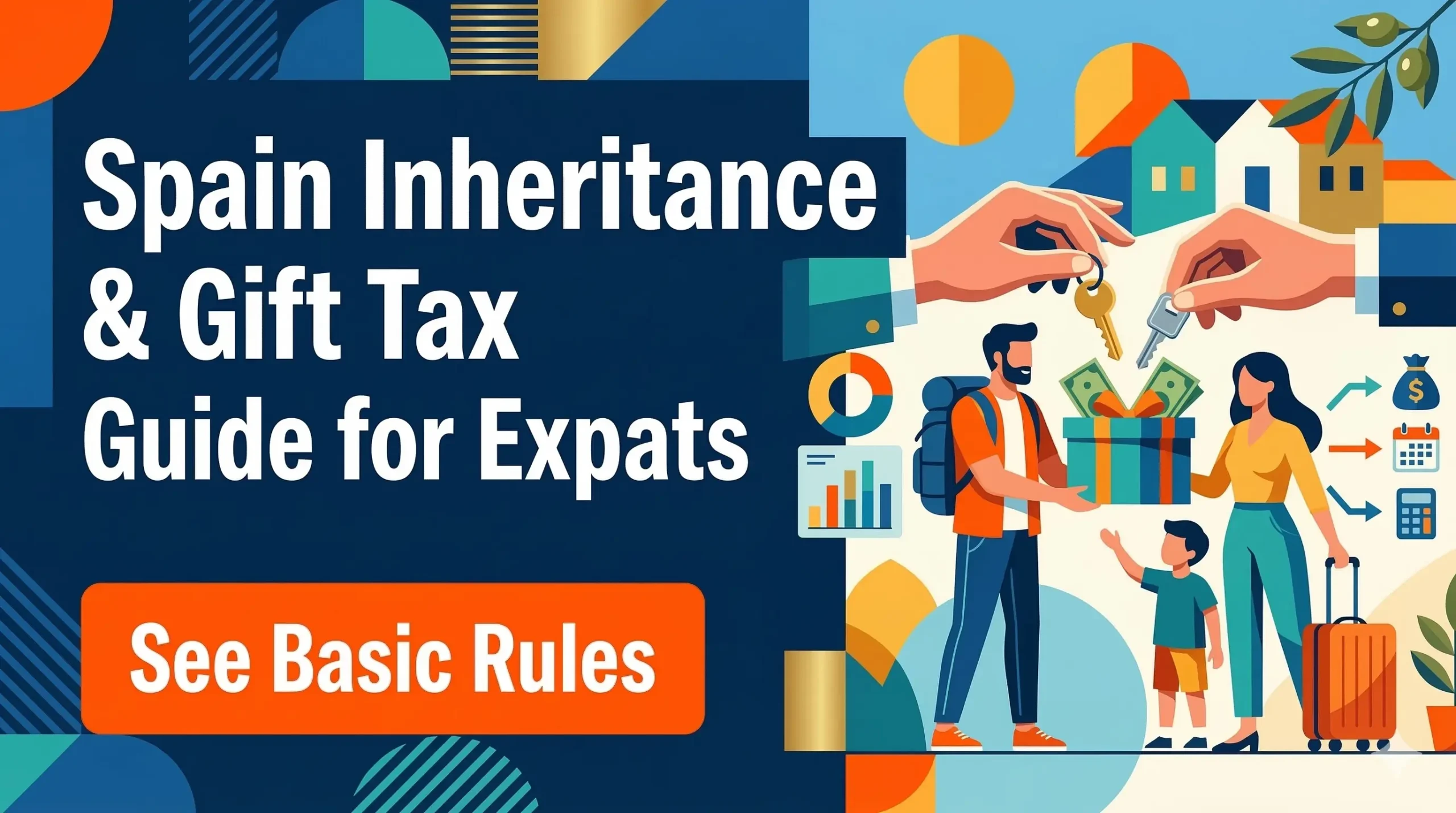
Receiving a wire transfer from your parents back home to help buy a house, only to realize the Spanish government wants a twenty percent cut, is a terrifying realization. I once faced a massive, unexpected gift tax bill simply because my father sent me emergency funds for a surgery. This guide breaks down Spain’s complex inheritance and gift tax rules so you can protect your family’s wealth without accidentally triggering an audit.
Disclosure: This post may contain affiliate links. We may earn a commission at no extra cost to you if you make a purchase through these links. Read full disclosure.
The Shock of Spanish Succession Laws
When expats move to Spain from the United States, the United Kingdom, or Canada, they bring along deeply ingrained cultural and legal assumptions about how wealth is passed down. The most dangerous assumption is believing that Spanish inheritance laws operate identically to the Anglo-Saxon systems back home.
How the Recipient Pays the Tax
In the US and the UK, the estate system is generally straightforward: the estate itself is taxed before the money is distributed to the heirs. If your aunt leaves an estate worth under the multi-million dollar threshold, no federal tax is owed, and you receive your inheritance tax-free. In Spain, the legal framework flips this entirely upside down. Spain utilizes the Impuesto sobre Sucesiones y Donaciones (ISD), an inheritance and gift tax where the beneficiary is the one solely responsible for paying the tax, not the estate of the deceased.
This creates a massive logistical shock for expats. If your parents leave you a family home or a significant stock portfolio, you must find the liquid cash to pay the Spanish inheritance tax before you are legally allowed to take ownership of those assets. You cannot simply sell the inherited house to pay the tax bill, because you do not legally own the house until the tax bill is settled.
Worldwide Assets and Spanish Tax Residents
The next massive shock comes from the scope of the tax. The Spanish government’s reach is aggressively global. If you are legally classified as a Spanish tax resident, you are subject to Spanish inheritance and gift tax on any asset you receive, regardless of where in the world that asset is physically located, and regardless of where the deceased lived.
This means if you live in Madrid, and your American mother passes away in Ohio leaving you an Ohio bank account, Spain expects a cut of that money simply because you reside on Spanish soil. This concept is legally known as obligación personal (personal obligation).
Expats often assume that because the death occurred abroad and the money was transferred between foreign accounts, Spain will never find out. This is a highly dangerous assumption. Global banking systems now automatically share data under the Common Reporting Standard (CRS). If you are unsure whether your physical presence actually triggers this global liability, reviewing our guide on Tax Residency in Spain: 183-Day Rule and Practical Tests is a mandatory first step before you accept any international transfers.
The Forced Heirship Rule
Beyond the taxation itself, Spain also dictates exactly who gets your money when you die. Anglo-Saxon law generally respects testamentary freedom—you can leave your entire estate to your favorite charity, your spouse, or your best friend, and completely cut out your children if you wish. Spain, however, operates under the Ley de Herencias (Law of Inheritances), which enforces strict “forced heirship” (la legítima).
Under Spanish law, you cannot simply leave everything to your spouse. A significant portion of your estate—usually two-thirds—must strictly go to your biological or legally adopted children. Your spouse is typically only entitled to a life interest (usufruct) over a fraction of the estate. For expats arriving with blended families, stepchildren, or specific wishes to protect a spouse over adult children, this default Spanish rule is an absolute nightmare.
Fortunately, there is a legal workaround for expats. Under the EU Succession Regulation (Brussels IV), you can insert a specific clause into your Spanish will explicitly choosing the inheritance laws of your home nationality to govern your estate, entirely bypassing Spain’s forced heirship rules.
Regional Postcode Lotteries in Inheritance Tax
While the national government sets the overarching framework for the Impuesto sobre Sucesiones y Donaciones, they decentralize the actual collection and rate-setting to the 17 autonomous communities. This creates a staggering financial postcode lottery.
Madrid and Andalusia Tax Havens
Where you live in Spain dictates exactly how much of your inheritance you get to keep. Over the past decade, certain politically conservative regions have aggressively slashed inheritance taxes to attract wealthy residents, effectively turning themselves into domestic tax havens.
The Community of Madrid and the region of Andalusia are the most famous examples. If you are a resident of Madrid or Andalusia, the regional government applies a massive 99 percent bonificación (discount) on inheritance and gift taxes, provided the transaction occurs between Group I or Group II relatives (which includes children, parents, and spouses).
In practical terms, this means inheriting wealth from your parents in Madrid results in a tax bill that is essentially zero. This staggering regional benefit is a massive factor for wealthy expat families deciding where to put down roots. If you are comparing different cities for your relocation and want to factor these hidden tax benefits into your long-term plan, review our comprehensive breakdown on the Cost of Living in Spain: Budgeting for Expats.
High Tax Regions and Bureaucracy
Conversely, regions like Catalonia, the Valencian Community, and Asturias have historically maintained much higher, punitive inheritance tax rates. In these regions, the standard tax-free allowances are significantly lower, and the progressive tax brackets climb aggressively based on the size of the inheritance.
Furthermore, the tax brackets in Spain heavily penalize distant relatives and non-relatives. The Spanish system groups beneficiaries into four kinship categories. Group I and II are direct descendants and spouses, who get the best allowances. Group III includes siblings, aunts, uncles, nieces, and nephews, who face massive tax multipliers. Group IV includes cousins, completely unrelated friends, and, crucially, unmarried partners (parejas who are not formally registered).
Moving Regions to Save Wealth
Because the regional disparities are so extreme, expats often ask: “Can I just move to Madrid a month before I receive my inheritance or a month before I die to save my family money?” The Spanish tax authority is acutely aware of this tactic and has implemented strict anti-abuse rules to prevent regional tax shopping.
To legally claim the highly favorable inheritance tax rates of a specific autonomous community, the deceased (or the beneficiary, depending on the specific asset) generally must have habitually resided in that specific region for the five years immediately preceding the death or the gift.
You cannot simply rent a cheap apartment in Marbella on paper while living in Barcelona to dodge the tax. Hacienda will aggressively audit utility bills, toll road usage, and credit card receipts to prove where your true life was anchored. If you are navigating this complex web of regional tax liabilities, including how it impacts your daily savings, you must understand the broader picture detailed in Wealth Tax and Solidarity Tax in Spain: Overview for Foreigners.
Surviving the Spanish Gift Tax
Inheritance tax applies when someone dies, but what happens when they give you money while they are still alive? Spain treats gifts (Donaciones) with the exact same aggressive scrutiny, utilizing the very same legal framework (ISD).
The Trap of Helping Family Out
In the United States, citizens are accustomed to the annual gift tax exclusion, which allows you to give tens of thousands of dollars to anyone you want every single year without reporting it or paying a dime in taxes. In the UK, there are similar, generous allowances for wedding gifts and regular gifts out of income.
Spain has no such general annual exemption. Technically, if you give your adult child €5,000 to help them buy a second-hand car, or €10,000 to help them with a down payment on a flat, that transaction is a legally taxable event. The recipient is legally required to declare it and pay the gift tax within 30 days. While the tax agency rarely chases down a €100 birthday check, any substantial wire transfer hitting a Spanish bank account will immediately trigger automated banking algorithms, and your bank will report the transaction to Hacienda.
Receiving Foreign Gifts as a Resident
The global reach of the gift tax mirrors the inheritance tax. If you are a young expat living in Spain and your parents back in Australia wire you €50,000 to help you start a business, you owe Spanish gift tax on that money because you are a Spanish tax resident receiving a massive influx of wealth.
Countless expats fall into this trap, assuming that because the money came from foreign parents who have never set foot in Spain, the local government has no right to tax it. Hacienda does not care where the money originated; they care that a Spanish resident’s net worth just increased by €50,000. If you fail to declare this within the strict 30-day window, Hacienda will eventually flag the wire transfer, demand the tax, and slap you with severe compounding late penalties. To understand the baseline timelines of when you interact with the tax agency so you don’t miss these sudden deadlines, check out Spanish Income Tax IRPF 101 Who Pays and When.
Strategic Gifting to Minimize Tax
Because the gift tax can be incredibly punitive outside of regions like Madrid and Andalusia, expats must utilize strategic legal structures to help family members financially. The most common workaround for helping a child buy property without triggering the gift tax is formalizing a zero-interest loan (préstamo entre particulares).
Instead of gifting your child €50,000, you legally loan them the money at 0% interest. You must draft a formal, legally binding loan agreement stipulating a realistic repayment schedule. Most importantly, you must physically take this document to the local tax office and register it using the Modelo 600 form within 30 days of the transfer.
Because it is a loan and must theoretically be paid back, it is not a gift, and therefore no gift tax is owed. However, if Hacienda audits you years later and sees that the child never made a single repayment according to the schedule, they will reclassify the loan as a fraudulent gift and hit you with massive penalties. Proper execution and accounting are vital. If you want to understand how these complex filings fit into your overall annual tax burden, read How to File a Spanish Tax Return Renta as a New Resident.
Navigating the Bureaucracy of Inheriting
When a loved one passes away, the last thing you want to deal with is a hostile foreign bureaucracy. However, the Spanish system waits for no one, and failing to act quickly will compound your grief with massive financial fines.
The Six Month Deadline Panic
The Spanish government places a brutally strict timer on your grief. You have exactly six months from the date of the deceased’s passing to officially file the inheritance tax paperwork (using Modelo 650) and pay the resulting tax bill in full.
Gathering international death certificates, tracking down foreign wills, translating them, getting them apostilled, and securing Spanish tax identification numbers for foreign heirs often takes far longer than six months. If you foresee that you will not meet this deadline, Spanish law allows you to formally request a single, six-month extension. However—and this is the critical trap—you must request this extension strictly within the first five months following the death. If you ask for an extension on month five and a half, you will be denied, and late penalties will begin compounding the day after the initial six-month deadline expires.
Blocked Bank Accounts and Assets
The most devastating practical hurdle for expats dealing with a Spanish inheritance is the bloqueo bancario (bank block). When a person dies in Spain, or a non-resident dies holding Spanish assets, the bank must be notified immediately.
The very second a Spanish bank is notified of a client’s death, they are legally required to freeze the deceased’s bank accounts entirely. Direct debits for electricity and water might still be honored, but the heirs cannot withdraw a single euro, even if they were named as joint account holders.
The bank will not unfreeze the funds until you physically present them with the official, stamped document from Hacienda proving that the inheritance tax has been fully paid. This creates the agonizing cash-flow trap mentioned earlier: you cannot use the deceased’s money to pay the tax on the deceased’s money. You must find the cash elsewhere. If you are struggling with the rigid, unhelpful nature of legacy bank managers during this process, read Opening a Bank Account in Spain as a Non Resident to understand why their compliance rules are so inflexible.
The Paperwork Mountain
The sheer volume of documentation required to settle a Spanish inheritance is staggering. You cannot simply walk into a bank with a foreign death certificate and ask for the funds.
You must secure a sworn, official translation of the foreign death certificate bearing a Hague Apostille. You must then request a Certificado de Últimas Voluntades from the Spanish Ministry of Justice, which proves whether or not the deceased left a registered Spanish will. If they did not, you must undergo a complex process to validate their foreign will in Spain. Every single beneficiary, even if they live in the US and have never visited Spain, must apply for and obtain a Spanish NIE (Foreigner Identity Number) just to process the tax paperwork. Navigating this labyrinth without a bilingual Spanish lawyer (abogado) and a specialized notary (notario) is virtually impossible.
Practical Financial Strategies for Expats
Handling cross-border inheritances and large monetary gifts requires sophisticated financial infrastructure. Relying on archaic high-street banks will result in you losing massive percentages of your wealth to hidden fees.
Managing International Capital Transfers
When you finally settle an estate abroad and need to repatriate your inheritance to Spain, or when you need to bring your own foreign savings into Spain to pay a sudden inheritance tax bill, the logistics of the transfer are critical.
If you inherit $100,000 in the US and ask your American bank to wire it directly to your Spanish bank via a traditional SWIFT transfer, you will be financially crushed. Both banks will apply hidden exchange rate markups (the spread), and you could easily lose three to five thousand dollars simply in the conversion process.
To protect your family’s wealth, you must use a dedicated currency specialist like Wise. By routing your inheritance through Wise, you ensure that your foreign capital is converted to euros at the true, mid-market exchange rate. Wise offers total transparency, allowing you to bypass the predatory margins of the banking sector so that your inherited wealth arrives intact and ready to deploy in Spain.
Protecting Your Investment Portfolio
If your inheritance consists not of liquid cash, but of a massive foreign stock portfolio or mutual funds, you face a strategic dilemma. Transferring those assets into a traditional Spanish brokerage account subjects them to high local maintenance fees and terrible digital interfaces.
To actually manage and grow your inherited wealth efficiently while remaining a Spanish tax resident, veteran expats utilize global brokerage platforms like Interactive Brokers. By transferring your inherited assets into Interactive Brokers, you gain direct access to low-cost, globally diversified ETFs and equities, completely bypassing the high-fee traps of the Spanish retail banking sector. Furthermore, Interactive Brokers provides clean, highly detailed annual tax statements that make manually inputting your capital gains into your Spanish tax return significantly easier. Maintaining a global portfolio also ensures that your wealth remains highly portable; if your expat journey eventually takes you out of Spain, your assets travel with you seamlessly.
Setting Up Local Tax Compliant Accounts
When the deadline arrives to actually pay the Impuesto sobre Sucesiones y Donaciones, you must have the correct local infrastructure in place. Hacienda heavily prefers, and often technically mandates, pulling tax payments from a local Spanish account starting with the letters “ES”.
Attempting to pay a Spanish tax bill using a foreign bank account frequently results in catastrophic system errors, rejected payments, and immediate late penalties. For expats who despise the archaic paperwork and massive language barriers of traditional Spanish high-street banks, utilizing a modern digital platform like N26 is an absolute necessity.
By opening an account with N26, you bypass the legacy system entirely and receive a fully recognized, official Spanish IBAN in minutes directly from your smartphone. Linking your N26 account to the tax portal ensures that your tax liabilities are processed flawlessly, without enduring the bureaucratic friction of a local branch manager. If you want to understand how this localized IBAN is also crucial for preventing double taxation on your global wealth, review Double Tax Treaties: Avoiding Double Taxation as a Spain Resident.
| Feature | US / UK Inheritance System | Spanish Inheritance System |
| Who Pays the Tax? | The Estate (before distribution) | The Beneficiary (must pay out of pocket) |
| Worldwide Scope | Taxed based on deceased’s domicile | Taxed if the beneficiary lives in Spain |
| Spousal Exemptions | Generally 100% exempt | Varies by region; rarely 100% globally |
| Testamentary Freedom | High (can leave assets to anyone) | Low (Forced Heirship to children) |
| Gift Tax Allowances | High annual tax-free allowances | Virtually zero; all gifts taxable within 30 days |
References
Primary sources (official)
- Agencia Tributaria – Impuesto sobre Sucesiones y Donaciones (no residentes): https://sede.agenciatributaria.gob.es/Sede/no-residentes/impuesto-sobre-sucesiones-donaciones.html
- European Union e-Justice Portal – Cross-border Successions (Regulation 650/2012): https://e-justice.europa.eu/topics/family-matters-inheritance/inheritance/succession_en
Other helpful sources
- Expatica – Inheritance tax in Spain: https://www.expatica.com/es/finance/taxes/inheritance-tax-spain-104449/
Disclaimer
The information provided in this article is for educational and informational purposes only and does not constitute formal financial, tax, or legal advice. Spanish inheritance legislation, regional bonificaciones for Madrid and Andalusia, and the exact timelines for the Impuesto sobre Sucesiones y Donaciones are highly complex and subject to frequent legislative updates. Always consult directly with a certified Spanish tax accountant (asesor fiscal) and an international succession lawyer (abogado) regarding your specific global asset distribution, will drafting, and cross-border tax liabilities before making major financial transfers.