How to Plan for Wealth Tax If You Own Assets Abroad
Most expats arriving in Spain expect to pay income tax, but the sudden realization that the Spanish taxman wants an annual slice of the family home back in London or your 401k in the US can be a total shock. I remember the cold sweat I felt during my first Renta season when I learned my global savings weren't off-limits. This guide breaks down the Spanish Wealth Tax so you can protect your global portfolio legally.
Disclosure: This post may contain affiliate links. We may earn a commission at no extra cost to you if you make a purchase through these links. Read full disclosure.
Understanding the Spanish Wealth Tax and Global Assets
The Spanish Wealth Tax, known locally as Impuesto sobre el Patrimonio, is a concept that often catches newcomers from the UK, US, or Canada completely off guard. Unlike income tax, which targets what you earn, this tax targets what you own. If you are considered a tax resident in Spain, the government views your net worth through a global lens. This means they aren't just looking at your bank account in Madrid; they are looking at your vacation home in Florida, your investment portfolio in Zurich, and your retirement accounts in Sydney.
Determining whether you fall into this net starts with understanding your residency status. If you spend more than 183 days in the country during a calendar year, you are generally considered a tax resident. At this point, you are subject to "obligación personal," which mandates that you report and potentially pay tax on your worldwide assets. This is where many expats feel the pinch of Tax Residency in Spain: 183‑Day Rule and Practical Tests because the transition from "visitor" to "taxpayer" happens faster than most realize.
When I first moved here, I assumed that as long as my money stayed in my home country, it was "invisible" to the Spanish authorities. That was a naive and potentially expensive mistake. Spain has incredibly robust reporting requirements, and with the rise of automatic information exchange between banks globally, trying to keep foreign assets "off the books" is a recipe for massive fines. Understanding the scope of this tax is the first step toward effective planning and avoiding a nasty surprise come June.
Who is Liable for Wealth Tax in Spain
Not everyone who moves to Spain will end up paying the Wealth Tax. There are significant thresholds and exemptions designed to protect those with more modest means. Generally, at the state level, there is a tax-free allowance of €700,000 per person. If you are a couple moving to Spain and you hold your assets jointly, that threshold effectively jumps to €1.4 million. However, it is vital to check the Spanish Taxes for Foreign Residents: Practical Guide to Staying Compliant as regional governments have the power to change these amounts.
On top of the general allowance, there is a specific exemption for your primary residence (vivienda habitual). You can deduct up to €300,000 of the value of the home you actually live in within Spain from your taxable base. Note that this only applies to your main home; if you own a beach condo in Alicante and a villa in the Pyrenees, only one gets the exemption. This is a crucial detail for retirees who might be selling a large family home abroad to buy a luxury property in Spain.
The calculation of "net wealth" is also important. The tax is levied on the value of your assets minus your liabilities (debts). If you have a mortgage on your foreign property, that debt can often be used to reduce the taxable value of that asset. This is where professional advice from a firm like Taxes for Expats becomes invaluable, as they can help you navigate which debts are deductible and how to value foreign life insurance policies or private pensions that don't have a direct Spanish equivalent.
The Role of Regional Differences and the Solidarity Tax
One of the most confusing aspects of living in Spain is that your tax bill can change drastically just by moving across a provincial border. Each Autonomous Community (Comunidad Autónoma) has the right to set its own Wealth Tax rates and allowances. For years, regions like Madrid and Andalusia were "tax havens" for the wealthy because they offered a 100% discount on the Wealth Tax. You still had to file the paperwork, but the actual bill was zero.
However, the central government recently introduced the "Solidarity Tax" (Impuesto Temporal de Solidaridad de las Grandes Fortunas) to harmonize things. This tax targets individuals with a net wealth exceeding €3 million and was specifically designed to capture revenue in regions that had abolished the standard Wealth Tax. Understanding Regional Tax Differences in Spain: How Your Comunidad Affects You is now more critical than ever because even if you live in a "zero-tax" region, you might still owe the Solidarity Tax if your global assets are significant.
For instance, if you are living in Valencia, you might face much lower thresholds and higher rates than if you were in Madrid. When planning your relocation, the choice of where to sign your lease or buy your home should involve a deep dive into the local tax code. Some expats have saved thousands purely by choosing a villa ten minutes down the road because it crossed a regional line. It sounds absurd, but in the world of Spanish bureaucracy, geography is destiny.
Reporting Foreign Assets with Modelo 720
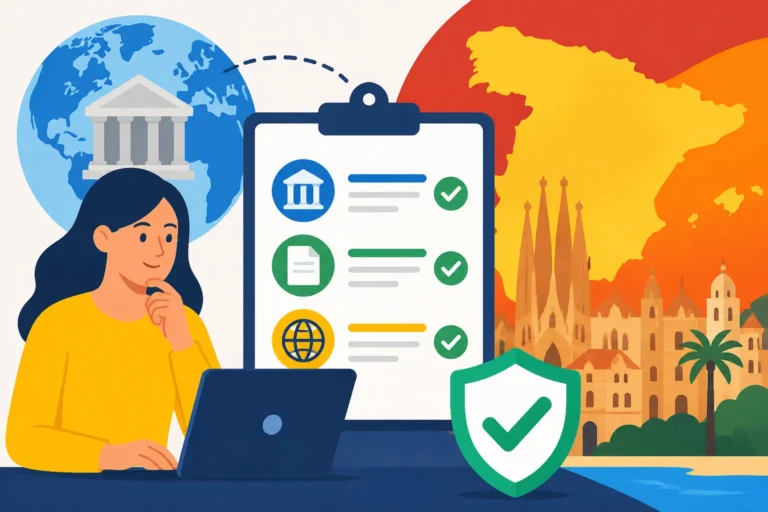
Before you even pay a cent in Wealth Tax, you have to tell the government what you have. This is done through the infamous Modelo 720. This is an informative declaration of assets held abroad, and it is the primary tool the Spanish Tax Agency (Hacienda) uses to identify potential Wealth Tax payers. If you have more than €50,000 in any one of three categories—bank accounts, investments/securities, or real estate—you are legally required to file this form.
Filing the Modelo 720 does not in itself trigger a tax payment, but it creates a paper trail. If you report €2 million in a US brokerage account on your Modelo 720, Hacienda will be looking for a corresponding Wealth Tax return. For those managing these accounts, using a transparent service like Wise can be helpful because their monthly statements are clear and easy to translate into the Euro values required for Spanish reporting. It is much easier than trying to decipher complex, handwritten ledgers from a boutique foreign bank.
The penalties for failing to file or filing incorrectly used to be draconian, sometimes exceeding the value of the assets themselves. While the European Court of Justice forced Spain to scale back these fines, they are still significant. This is why Modelo 720 and Foreign Asset Reporting: A Practical Overview is essential reading for anyone keeping their "nest egg" in their home country. Transparency is always the best policy when dealing with Hacienda; they appreciate the honesty, and it prevents you from being flagged for an audit.
Strategies to Mitigate Your Wealth Tax Liability
While the Wealth Tax can seem aggressive, there are legal ways to reduce your exposure. One of the most effective strategies is the "60% Rule." Spanish law states that the combined total of your Income Tax (IRPF) and Wealth Tax cannot exceed 60% of your total taxable income base. If your taxes go above this limit, your Wealth Tax bill can be reduced by up to 80%. This often benefits "asset-rich, income-poor" retirees who have large portfolios but low annual withdrawals.
Another strategy involves the way you structure your business interests. Assets that are necessary for the development of a business activity (under specific conditions) can sometimes be exempt from Wealth Tax. If you are an entrepreneur or freelancer, you should look into Freelancing (Autónomo) in Spain: Taxes, Invoicing, and Setup Guide to see if your business structure allows for these exemptions. However, this is a complex area of law and requires careful "substance" to prove the assets aren't just being hidden in a shell company.
Finally, consider the timing of your residency. Since Wealth Tax is calculated based on your assets as of December 31st each year, moving to Spain late in the year or structuring the sale of large assets before you become a tax resident can save a fortune. For managing your daily liquidity during this transition, an account with N26 is highly recommended, as it gives you a Spanish IBAN while maintaining a high level of digital flexibility for moving funds between countries.
| Asset Category | Wealth Tax Treatment | Exemption/Allowance |
|---|---|---|
| Primary Residence (Spain) | Taxable above limit | Up to €300,000 exempt |
| Foreign Real Estate | Fully taxable at market value | No specific exemption |
| Bank Accounts (Global) | Taxable at year-end balance | €700,000 general allowance |
| Pension Plans (Qualified) | Often exempt until payout | Varies by country of origin |
| Business Assets | Potentially 100% exempt | Must meet "active" criteria |
Practical Planning for Expats with High Net Worth
If you are moving to Spain with a high net worth, your planning should start at least a year before you arrive. Many expats make the mistake of landing in Barcelona, falling in love with a flat, and then realizing six months later that they’ve triggered a tax liability that wipes out their investment gains. Working with specialized firms like Taxes for Expats allows you to look at your home-country tax obligations and your Spanish ones side-by-side.
For those who earn in dollars or pounds but pay tax in Euros, currency volatility is a hidden risk. Using Wise to manage your tax payments and currency conversions can help you avoid the hidden markups that traditional banks charge. When you are paying tax on a €5 million portfolio, a 3% "hidden" exchange fee is a significant amount of money that should be in your pocket, not the bank's.
It is also worth investigating if you qualify for the "Beckham Law." This is a special tax regime for displaced workers that allows you to be treated as a non-resident for tax purposes for your first six years in Spain. Under this regime, you are generally only taxed on your Spanish-sourced income and, crucially, you are often exempt from Wealth Tax on your foreign assets. Check the Wealth Tax and Solidarity Tax in Spain: Overview for Foreigners to see if this regime applies to your specific visa type.
Common Pitfalls and Valuation Mistakes
The biggest mistake I see expats make is using the wrong "value" for their foreign assets. For real estate, Hacienda generally wants the highest of three values: the purchase price, the value assessed by the local tax authority, or the value determined by the Spanish government for tax purposes. If you bought a house in London thirty years ago for £50,000 and it’s now worth £1 million, you cannot use the original purchase price for Wealth Tax purposes.
Another pitfall is the treatment of foreign pensions. In some cases, a US 401k or a UK SIPP might be considered an "investment" rather than a "pension" by Spanish authorities if you have the right to withdraw the entire balance as a lump sum. If it is classified as an investment, it is fully taxable under the Wealth Tax. If it is a life annuity (pension), it might be exempt. This distinction is tiny but carries a massive financial weight.
Don't forget that Top Banks in Spain for Expats: Fees, Apps, and Requirements often provide basic reporting, but they won't help you with your global Wealth Tax filing. You need a dedicated gestor or tax advisor who understands international treaties. Many expats try to DIY their taxes to save €500, only to end up with a €5,000 fine for a simple clerical error on their foreign asset valuation. Using N26 for your local expenses while keeping your global planning in the hands of experts is the best way to balance modern convenience with old-school compliance.
Disclaimer
This article is for informational purposes only and does not constitute professional tax, legal, or financial advice. Tax laws in Spain are subject to frequent changes and regional variations. Always consult with a qualified tax advisor (Asesor Fiscal) or gestor specializing in international tax law before making any financial decisions or filing tax returns in Spain.