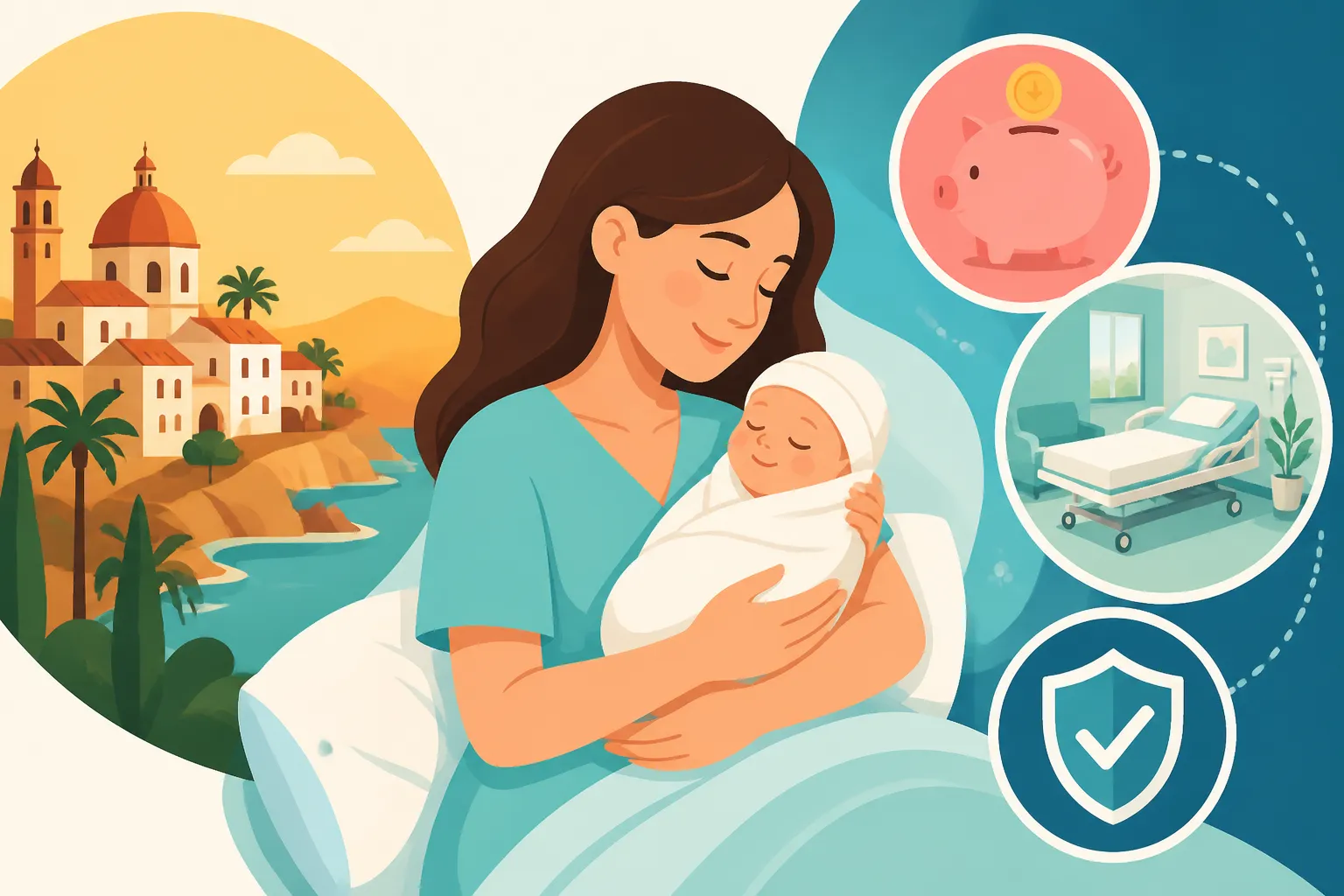
Giving Birth Privately in Spain: Costs and Insurance Reality Check
Okay, let's talk about bringing a new little one into the world here in Spain. For many expats, the thought of navigating the public healthcare system during pregnancy and childbirth, especially when language can be a barrier, feels utterly daunting. You dream of a birth experience where you feel completely understood, comfortable, and have more say. This guide will walk you through the realistic costs and crucial insurance considerations for giving birth privately in Spain, helping you decide if it's the right path for your family.
Disclosure: This post may contain affiliate links. We may earn a commission at no extra cost to you if you make a purchase through these links. Read full disclosure.
Why Choose Private Birth in Spain? Understanding the Appeal for Expats
When you're expecting a baby in a foreign country, there's already a lot of emotional and practical weight on your shoulders. The public system in Spain is fantastic, truly, and often provides excellent care, but it comes with its own set of cultural nuances and operational procedures that might not align with every expat's expectations. This is where private care often steps in, offering a sense of control and familiarity that many of us crave during such a significant life event.
Personalized Care and Language Comfort
One of the biggest draws of the private system for expats is the promise of more personalized care. In the public hospitals, you're usually assigned whichever doctor or midwife is on duty. While they are highly qualified, you might see a different face at each appointment, and their English proficiency can vary wildly. This can be incredibly frustrating when you're trying to discuss sensitive topics or complex medical information, leaving you feeling unheard or misunderstood.
With private care, you often get to choose your own obstetrician and midwife from the very beginning. This means you can find a professional who not only aligns with your birth philosophy but also speaks your language fluently. Imagine the relief of having consistent care from a team you trust, who knows your history inside out, and with whom you can communicate effortlessly. This continuity of care is a huge comfort, especially for first-time parents or those with specific medical needs.
Control Over Your Birth Experience
Another significant factor is the desire for more control over the birth experience itself. While public hospitals prioritize safety (as they should!), they often have more standardized protocols. For example, getting an epidural might depend on staff availability or how far along you are. Private hospitals, on the other hand, often offer more flexibility. If you prefer to have an elective C-section, provided it's medically advisable, it's generally an easier conversation in the private sector.
Beyond the delivery itself, private facilities tend to offer amenities that enhance comfort and privacy. Think private rooms, more flexible visiting hours for family, and sometimes even options for specific birthing positions or less medical intervention, if that's what you're hoping for. It's about tailoring the experience to your preferences as much as possible, making what can be an overwhelming time feel a little more calm and tailored to you.
The Financial Reality: What Does Private Birth Really Cost in Spain?
Let's cut to the chase: private healthcare, especially something as comprehensive as maternity care, isn't cheap anywhere, and Spain is no exception. While it offers those comforts and choices, it comes with a significant price tag if you're footing the bill yourself. Understanding these costs upfront is crucial for realistic planning.
Breakdown of Typical Costs Without Insurance
If you decide to go the self-pay route for a private birth, you'll be looking at a range of expenses that can quickly add up. These usually include:
- Prenatal Consultations: Each visit to a private obstetrician can range from €80 to €150. You'll have many of these throughout your pregnancy.
- Ultrasounds and Tests: Standard ultrasounds (usually 3-4 throughout pregnancy) might be included in a package, but additional scans or specialized tests like NIPT can cost €150-€500 each.
- Delivery Fees: This is the big one.
- Vaginal Birth: Without complications, a standard vaginal birth can cost anywhere from €3,000 to €6,000. This typically covers the obstetrician, anesthesiologist (for epidural), and hospital staff.
- C-section: A planned or emergency C-section will be more expensive, usually ranging from €5,000 to €9,000.
- Hospital Stay: Private rooms in a hospital can cost €200-€400 per night. A typical stay for a vaginal birth is 2-3 nights, while a C-section might require 3-5 nights.
- Postnatal Care: Follow-up appointments for you and the baby will also incur costs, similar to prenatal consultations.
Here's a simplified table to give you a rough idea of the range:
| Service Category | Estimated Cost Range (without insurance) |
|---|---|
| Prenatal Consultations (per visit) | €80 – €150 |
| Standard Ultrasounds (per scan) | €100 – €200 (if not part of package) |
| Specialized Tests (e.g., NIPT) | €300 – €700 |
| Vaginal Birth (delivery & basic stay) | €3,000 – €6,000 |
| C-Section (delivery & basic stay) | €5,000 – €9,000 |
| Hospital Room (per night) | €200 – €400 |
| Postnatal Check-ups | €80 – €150 (per visit) |
Please remember these are general estimates for cities like Madrid, Barcelona, or Valencia, and actual costs can vary significantly by hospital, doctor, and region. Always get a detailed quote from your chosen private clinic.
Hidden Fees and Unexpected Expenses
One of the most frustrating aspects of private healthcare globally can be the unexpected costs. A quoted "maternity package" might seem comprehensive, but often has exclusions. What if your baby needs to spend time in the Neonatal Intensive Care Unit (NICU)? That's a significant additional cost, easily thousands of euros per day, and often not covered by standard maternity packages, even with insurance unless explicitly stated.
Complications during labor, extended hospital stays due to unforeseen issues for mother or baby, additional specialist consultations, or even certain pain relief options not included in the basic fee can quickly inflate your bill. It’s vital to ask for a crystal-clear breakdown of everything included in any quoted package and, more importantly, what isn't. Don't be shy about asking "what if" scenarios to understand the potential financial impact of various complications. This is why having robust health insurance is not just an option, but a financial safety net for private births.
Navigating Insurance for Private Maternity Care in Spain
This is where things get truly critical, especially if you're thinking about a private birth. Relying solely on self-pay is a huge financial risk. Private health insurance can cover the bulk of these costs, but there's a catch, and it's a big one that many expats discover too late: waiting periods.
The Waiting Period Predicament
Almost every private health insurance policy in Spain, and indeed worldwide, has a waiting period for maternity benefits. This isn't just a small delay; it's typically anywhere from 8 to 12 months (and sometimes even 24 months) from the date your policy becomes active until you can claim for childbirth-related expenses.
What does this mean for you? It means you cannot buy a policy once you are already pregnant and expect it to cover your birth. The insurance companies consider pregnancy a "pre-existing condition" if it begins before the waiting period is over. This is probably the single most common and heartbreaking mistake expats make when planning a private birth. You must have your private health insurance in place and active well before you conceive, or at least in the very early stages of planning a family, for it to cover maternity.
If you find yourself already pregnant and without adequate private insurance, your primary option for covered care will likely be the public healthcare system. While it's fantastic, it won't offer the same level of personal choice or amenities that private care does. For those considering public care, learning Pregnancy Care in Spain: Public vs Private Maternity Pathways can be really helpful.
What to Look for in a Private Health Insurance Policy
When you're shopping for private health insurance that includes maternity in Spain, you need to be meticulous. Don't just look at the price; delve deep into the policy wording. Here’s what you absolutely must scrutinize:
- Maternity Waiting Period: As discussed, this is non-negotiable. Confirm the exact length of the waiting period and ensure you understand when your coverage will actually kick in for childbirth.
- Comprehensive Coverage: Does it cover all aspects? This should include prenatal consultations, diagnostic tests (ultrasounds, blood work), the delivery itself (vaginal and C-section), epidurals, hospital stay (including private room if desired), and postnatal care for both mother and baby.
- Neonatal Care: This is crucial. Check if the policy includes coverage for the newborn, especially if there are complications requiring NICU care. Some policies only cover the mother, leaving the baby's potential costs exposed.
- Co-payments (Copagos) and Deductibles (Franquicias): Many policies, especially those with lower monthly premiums, will have co-payments for each service or a deductible you must pay before the insurance kicks in. Understand these costs, as they can still add up.
- Hospital Network: Does the insurer have a direct billing agreement with your preferred private hospital and obstetrician? Being able to use direct billing (where the insurer pays the hospital directly) saves you from having to pay huge sums upfront and then claiming reimbursement, which can take time and effort.
- Flexibility for Expats: For digital nomads and those frequently on the move, finding insurance that understands an international lifestyle is key. SafetyWing, for example, is a popular choice among many expats and digital nomads for its travel medical insurance. While its traditional Nomad Insurance is primarily for emergencies and may not cover routine maternity care in the same way a full Spanish private health plan would, it does offer a robust safety net for unforeseen medical emergencies. For those planning an international lifestyle and a family, it's worth checking their specific long-term health plan options, as many expat-focused insurers are adapting to include more comprehensive benefits like maternity for those who plan ahead and meet waiting period requirements. SafetyWing prides itself on being designed for global citizens, making it an ideal core solution for your broader health needs while living abroad, often having options that are more flexible than traditional local plans. It’s always important to read the specifics of any policy you consider, but SafetyWing's commitment to expat needs makes them a strong contender to investigate for your wider health security.
- Customer Service and Language Support: Can you easily communicate with the insurer in English? This becomes vital if you need to make a claim or clarify coverage details during your pregnancy.
Remember, a cheaper premium often means less comprehensive coverage or higher co-payments. It’s a balance you need to weigh carefully.
Public vs. Private: A Quick Comparison for Maternity
While this guide focuses on private birth, it's important to briefly acknowledge the public alternative. Spain's public healthcare system is universal and of high quality. If you are a legal resident and contributing to social security, or otherwise eligible, you can access it for free or at very low cost.
| Feature | Public Healthcare (Maternity) | Private Healthcare (Maternity) |
|---|---|---|
| Cost | Free or very low co-pay (covered by social security) | Significant out-of-pocket, or covered by private insurance |
| Doctor Choice | Assigned doctor/midwife on duty, may vary | Choose your own obstetrician/midwife |
| Language | Mostly Spanish; interpreters rare | High chance of English-speaking professionals |
| Continuity of Care | Less consistent | High, often with the same doctor/team |
| Hospital Room | Often shared, private rooms rare and for medical need only | Usually private rooms available |
| Birth Plan Flexibility | More standardized protocols, less flexibility | More flexibility and options for personal preferences |
| Waiting Periods | None for eligible residents | Crucial 8-12 month (or more) waiting period for maternity coverage |
| Pre-existing Conditions | Covered for eligible residents | Pregnancy is often a pre-existing condition if insurance bought too late |
Ultimately, the choice depends on your priorities, financial situation, and how far in advance you plan. For many, the peace of mind and personalized experience offered by private care, especially with the right insurance, is invaluable.
Practical Steps for Planning Your Private Birth
So, you've decided private is the way to go. Excellent! Now it's time to put that plan into action. The key takeaway from everything we’ve discussed is planning ahead. Seriously, don't wait.
Early Planning is Key (Especially for Insurance)
I cannot stress this enough: if you plan to utilize private health insurance for maternity care, you must secure your policy with ample time to spare, ideally before you even start trying to conceive, or at the very least, as soon as you arrive in Spain and secure your residency. Think of it as investing in your future peace of mind. Start researching private health insurance providers in Spain early on. Look into options like DKV, Sanitas, and Adeslas, but also explore international options designed for expats and digital nomads. Always, always confirm the maternity waiting period directly with the insurer and get it in writing.
Once you have your insurance sorted, it’s a good idea to start preliminary research into private hospitals and obstetricians in your area. Even if you're not pregnant yet, knowing your options will save you a lot of stress later. Many private hospitals offer tours of their maternity wards, and this is a fantastic way to get a feel for the environment and ask all your burning questions.
Choosing Your Care Team and Hospital
Once you are pregnant and your insurance waiting period is satisfied (or if you’re self-paying), the real fun begins: choosing your team!
- Finding English-Speaking Doctors: Websites, expat forums, and local expat groups are invaluable resources for recommendations. Don't be afraid to ask for direct referrals. Many private clinics have dedicated international patient departments with English-speaking staff.
- Interviewing Obstetricians: Yes, you can "interview" them! Schedule initial consultations with a few obstetricians to discuss their approach to birth, their availability, their fees (if self-paying), and their hospital affiliations. Ask about things like their C-section rate, their stance on epidurals, and how they handle different birth scenarios. This is your birth experience, and finding someone you click with is paramount.
- Touring Private Hospitals: Visiting the maternity ward allows you to see the facilities firsthand. Ask about room amenities (private bathroom, comfortable bed for partner), equipment available, and hospital policies (e.g., skin-to-skin contact immediately after birth, visiting hours for siblings, options for birth photography).
Remember, you are the client, and you have the right to choose care that makes you feel safe and respected.
Essential Documents and Registrations
Even with private care, there are still administrative steps to follow. You’ll need a stack of documents for both hospital admission and registering your newborn.
For hospital admission, you'll typically need:
- Your Spanish ID (NIE/TIE) or passport.
- Your private health insurance card and policy details.
- All your prenatal medical records, test results, and ultrasound reports.
- Your Libro de Familia if you already have one and are registering a subsequent child (though you usually apply for this after the first child is born).
After the birth, you'll need to register your baby with the Civil Registry (Registro Civil). This process requires:
- Your and your partner's IDs/passports.
- Your marriage certificate (if applicable).
- The hospital's birth certificate (parte de nacimiento).
It’s a bit of paperwork, but knowing what to expect can ease the process. For a detailed list, you can refer to What Documents Foreign Parents Need for Hospital Registration (Spain). Many private hospitals will have a dedicated administrative person to help guide you through the initial steps of birth registration.
Giving birth privately in Spain offers a fantastic route for expats seeking a more personalized, comfortable, and linguistically accessible birth experience. However, the financial implications and, crucially, the strict waiting periods for maternity coverage on private health insurance, mean that proactive planning is not just advised, it’s essential. Do your homework, budget carefully, and secure your insurance well in advance, and you'll be well on your way to a smoother, more supported journey into parenthood here in Spain.
Disclaimer
The information provided in this article is intended for general guidance only and does not constitute professional medical, legal, or financial advice. While we strive for accuracy, regulations, costs, and insurance policies in Spain can change. Always consult with qualified medical professionals, insurance providers, and legal experts for advice tailored to your specific situation. We are not responsible for any actions taken based on the information in this article.