Online Therapy in Spain: What to Check Before You Book
Exploring online therapy in Spain? Discover how to find qualified, English-speaking professionals, navigate private insurance coverage, ensure data privacy, and manage costs effectively so you can confidently prioritize your mental health while living abroad.
Disclosure: This post may contain affiliate links. We may earn a commission at no extra cost to you if you make a purchase through these links. Read full disclosure.
The Rise of Telehealth and Online Therapy in Spain
The landscape of mental healthcare in Spain has transformed dramatically over the last few years. While traditional in-person therapy remains highly popular, the convenience and accessibility of digital consultations have made online therapy a preferred choice for many expatriates, digital nomads, and international students.
Public versus Private Digital Mental Health Options
When seeking mental health support in Spain, expats must first understand the divide between the state-funded public system and the commercial private sector. The Spanish public healthcare system, known as the Sistema Nacional de Salud, is renowned for its comprehensive medical care. However, psychological services within the public system are frequently overburdened. Securing a referral from a general practitioner to a public psychologist can involve lengthy waiting lists, and regular, weekly therapy sessions are rarely feasible. Furthermore, finding a public therapist who can conduct deep, nuanced psychological counseling in English is extremely difficult.
Because of these systemic limitations, the vast majority of expats turn to the private sector for mental health support. The private sector has rapidly embraced digital solutions, allowing patients to connect with clinical psychologists and psychiatrists via secure video links. This shift means you no longer need to live in major international hubs like Madrid or Barcelona to access top-tier, English-speaking mental health professionals. To understand the broader operational differences between these two systems, you can review our comprehensive guide on the Spain Healthcare System for Expats: Public vs Private.
Legal and Privacy Standards
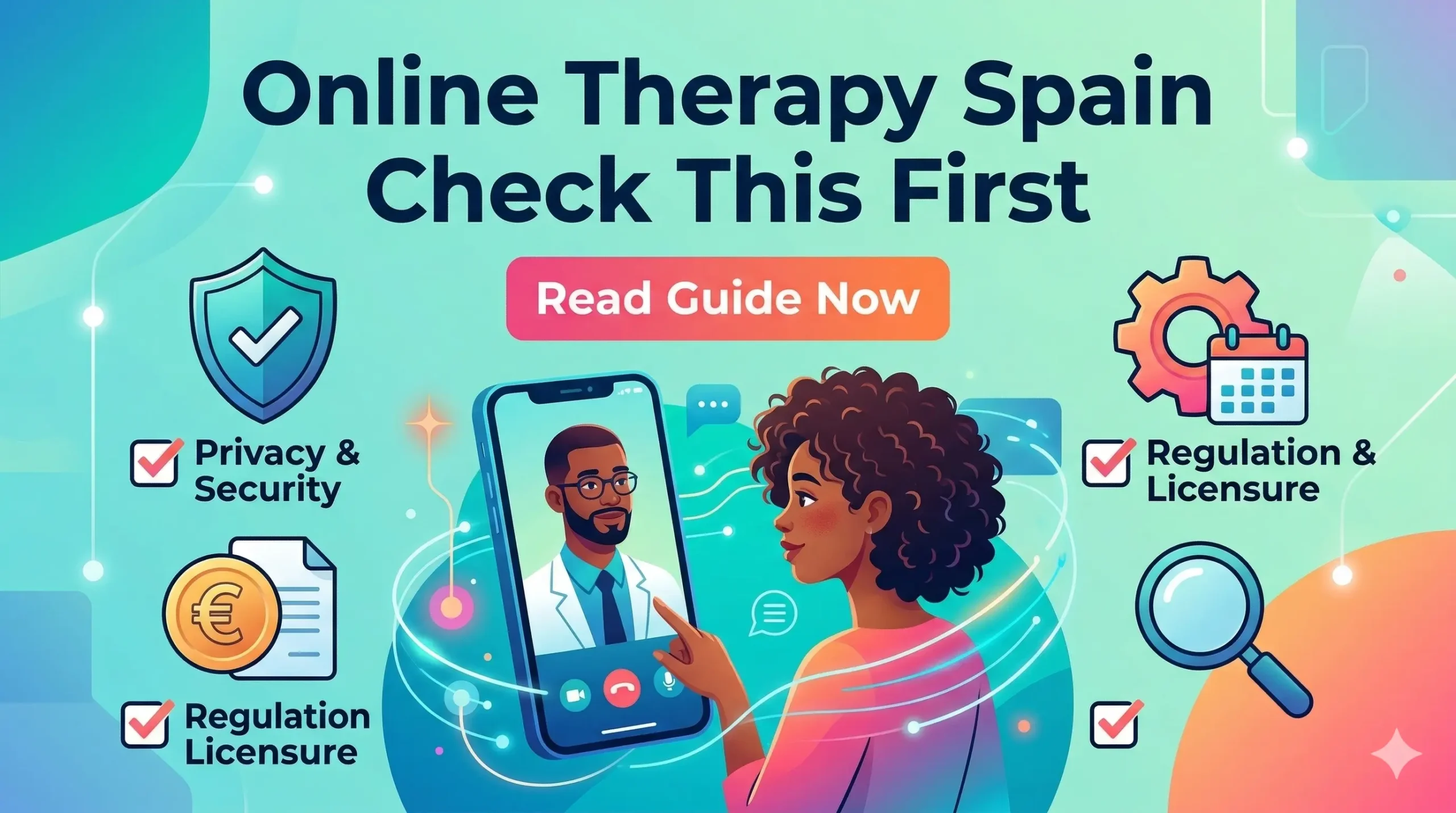
Before booking any online therapy session, it is critical to ensure that the platform or the independent therapist complies with stringent European data protection laws. Spain operates under the General Data Protection Regulation (GDPR) and its local equivalent, the LOPDGDD. Health data, including psychological counseling notes and psychiatric diagnoses, is classified under the highest level of protection.
Legitimate online therapists in Spain use secure, end-to-end encrypted video conferencing software specifically designed for telehealth, rather than standard consumer applications like Skype or free Zoom accounts. Additionally, they must provide you with a clear consent form outlining exactly how your personal medical data will be stored, who has access to it, and your rights regarding the deletion of those records. Taking a moment to verify these privacy standards ensures your most sensitive conversations remain entirely confidential. For a deeper look at how medical records are handled digitally, see Medical Records in Spain: Accessing and Sharing Your History.
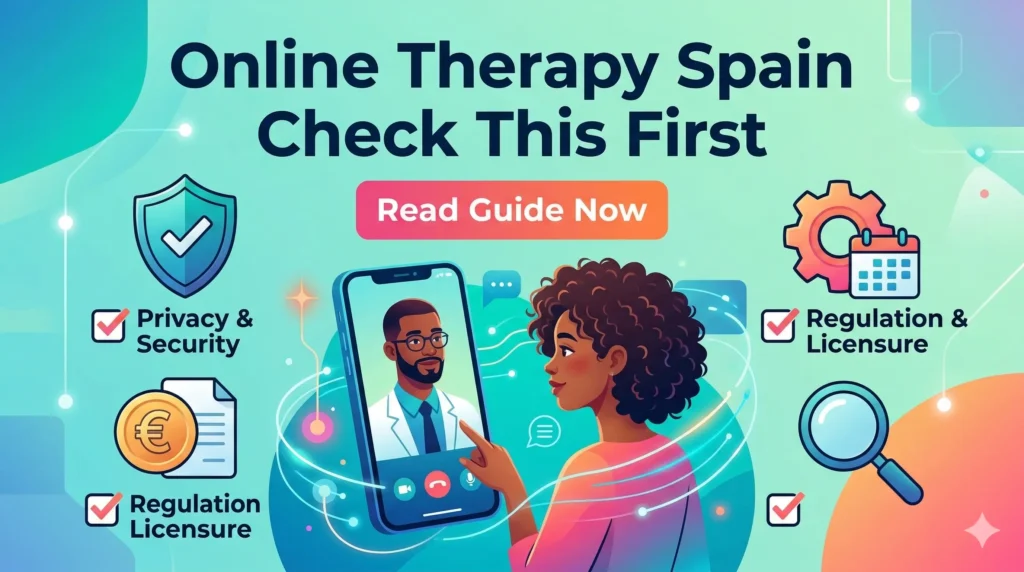
Key Factors to Check Before Booking a Session
Finding the right therapist is a highly personal journey, but when doing so in a foreign country, there are specific administrative and cultural checks you must perform before committing to a treatment plan.
Verifying Professional Credentials
In Spain, the title of psychologist is strictly regulated to protect patients from unqualified life coaches or unlicensed counselors. For a practitioner to legally offer clinical therapy, they must hold the title of Psicólogo General Sanitario (General Health Psychologist) or Psicólogo Clínico (Clinical Psychologist).
Crucially, they must also be officially registered with the professional psychological association in their autonomous region, known as the Colegio Oficial de Psicólogos. When browsing a therapist’s website or directory profile, always look for their registered collegiate number, known as the número de colegiado. If this number is missing, you should explicitly ask for it before booking an introductory session. You can easily verify this number through the official registry to ensure their license is active and in good standing.
It is also important to distinguish between a psychologist who provides talk therapy and a psychiatrist who is a medical doctor capable of prescribing medication. If your treatment requires prescription management, you will need to coordinate with a psychiatrist. If you are already managing prescriptions from your home country, understanding the local renewal process is vital; check out our guide on Medication Refills in Spain: How Renewals Work.
Language and Cultural Competence
Language is the fundamental tool of psychotherapy. Even if you speak conversational Spanish, discussing complex emotional trauma, subtle anxieties, or nuanced relationship dynamics requires absolute linguistic comfort. Finding a therapist who operates in your native language is paramount.
Beyond basic language translation, cultural competence is incredibly important. Expatriates face a unique set of psychological stressors, including profound culture shock, bureaucratic exhaustion, and the isolation of living far from established support networks. An English-speaking therapist who themselves is an expat, or one who specializes in treating the international community, will understand these specific hurdles without requiring extensive explanation. If you are specifically looking for professionals who cater to these needs, our guide on How to Find a Therapist in Spain Who Works in English offers targeted search strategies.
Paying for Your Therapy and Insurance Coverage
Understanding the financial logistics of online therapy allows you to budget effectively for long-term care and avoid unexpected administrative headaches.
Navigating Out of Pocket Costs
Therapy rates in Spain are generally more affordable than in North America or Northern Europe. An out-of-pocket online therapy session typically ranges from €50 to €90 for a 50-minute consultation. Psychiatrist consultations, particularly the initial diagnostic assessment, tend to be more expensive, ranging from €80 to €150.
When paying an independent therapist directly, particularly if you are transferring funds from a non-Euro bank account, you must be financially strategic. Traditional legacy banks often charge hidden international transfer fees and apply terrible dynamic exchange rates. Smart expats bypass these predatory fees by using a borderless multi-currency account like Wise. By setting up your therapy payments through Wise, you ensure that you are sending the exact Euro amount required at the transparent mid-market exchange rate, keeping your healthcare budget strictly focused on your recovery.
If you plan to claim these therapy costs back from an international health insurance provider or a corporate wellness program, you must ensure the therapist provides you with a legally valid, officially stamped invoice known as a factura. We break down the exact administrative requirements for these documents in How to Handle Medical Bills in Spain: Receipts, Claims, and Disputes. For a broader view of medical pricing across various specialties, review Health Costs in Spain: Typical Co‑Pays and Out‑of‑Pocket Fees.
Using Private Health Insurance
Many expats hold comprehensive private health insurance policies in Spain, either as a requirement for their residency visa or as a personal lifestyle choice. Most top-tier Spanish health insurance plans include coverage for psychological therapy, typically offering a set block of sessions per year, such as 15 to 20 appointments.
However, utilizing this coverage often requires navigating your insurer’s specific network, known as the cuadro médico. You may need to secure a formal referral from an in-network general practitioner or psychiatrist before the insurance company will authorize your therapy sessions. Furthermore, not all policies cover online therapy equally; some explicitly mandate physical in-person visits.
To avoid the stress of navigating complex insurance terms, utilizing a specialized expat insurance broker like Innoinsure is highly recommended. A dedicated agent from Innoinsure can seamlessly match you with a premium policy that explicitly includes robust, flexible telehealth benefits for mental health, ensuring you can access digital therapy without hidden exclusions. If you are currently shopping for coverage, our article on How to Compare Private Health Plans: Deductibles, Co‑Pays, Networks will help you decipher the fine print.
| Payment Method | Typical Cost to Patient | Provider Flexibility | Administrative Effort |
| Out-of-Pocket | €50 – €90 per session | Unlimited choice of therapists | Low (Direct payment) |
| In-Network Insurance | €0 to €15 copay | Restricted to insurer’s network | High (Requires referrals) |
| Reimbursement Policy | 10% to 20% of total fee | Unlimited choice of therapists | Moderate (Requires submitting facturas) |
Making the Most of Your Virtual Therapy Experience
Once you have verified credentials and sorted out the financial logistics, preparing for the actual online sessions will help you maximize the therapeutic benefits.
Setting Up a Secure Environment
The success of online therapy relies heavily on your physical environment. Unlike entering a quiet, soundproofed clinical office, you are responsible for creating your own safe space. Ensure you have a highly stable internet connection to prevent frustrating video drop-outs during vulnerable emotional moments.
Privacy is paramount. If you share an apartment in a busy Spanish city with roommates or family members, consider scheduling your sessions when they are out of the house, or use a white noise machine near your door. Using high-quality headphones rather than computer speakers not only improves audio clarity but also guarantees that the therapist’s voice cannot be overheard by anyone else in your home. Integrating these sessions into your overall digital healthcare routine is easy; you can learn more about managing remote medical appointments in Telemedicine in Spain: When It’s Useful and What to Expect.
Complementing Therapy with Wellness Habits
While professional therapy is an incredible tool for mental health, it works best when supported by a holistic lifestyle approach. Adapting to life in Spain often involves changes in diet, sleep schedules, and daily routines, which can inadvertently impact your mood and energy levels.
Many expats find that incorporating high-quality nutritional supplements helps them manage the physical symptoms of stress and anxiety alongside their psychological work. Essential vitamins, highly absorbable magnesium for sleep support, or adaptogens like ashwagandha are popular choices. Because specialized, organic wellness brands can be difficult to find or overly expensive in local Spanish pharmacies, many international residents source their daily health products through global platforms like iHerb.
By ordering your preferred wellness supplements through iHerb, you can easily maintain the specific holistic routines you trust from your home country, ensuring your body is fully supported while you engage in mental health therapy. Taking proactive steps to maintain your overall wellbeing is especially vital if you are navigating ongoing health challenges, a topic we cover extensively in Chronic Conditions in Spain: Managing Ongoing Care as an Expat.
References
Primary sources (official)
- Consejo General de la Psicología de España (General Council of Psychology of Spain): https://www.cop.es/
- Agencia Española de Protección de Datos (Spanish Data Protection Agency): https://www.aepd.es/es
- Ministerio de Sanidad (Ministry of Health Spain): https://www.sanidad.gob.es/
Other helpful sources
- Expatica – Mental Health in Spain: https://www.expatica.com/es/healthcare/healthcare-services/mental-health-in-spain-106772/
- European Federation of Psychologists’ Associations (EFPA) – Guidelines on Telepsychology: https://www.efpa.eu/
Disclaimer
The information provided in this article is for educational and informational purposes only and does not constitute formal medical or psychiatric advice. Regulations regarding telehealth, insurance coverage limitations, and professional mental health credentials vary and are subject to change. Always verify a practitioner’s credentials directly with the official Colegio Oficial de Psicólogos. If you are experiencing a severe mental health crisis or a life-threatening emergency while in Spain, dial 112 immediately to access urgent medical assistance.