Disability Services in Spain: Accessibility and Support Basics
Navigating disability services in Spain requires understanding local accessibility laws, medical support systems, and bureaucratic processes. This guide outlines how expats and tourists can access mobility infrastructure, obtain official disability certificates, and utilize essential community resources for a barrier-free experience.
Disclosure: This post may contain affiliate links. We may earn a commission at no extra cost to you if you make a purchase through these links. Read full disclosure.
Legal Framework and Disability Rights in Spain
General Disability Law and Expat Eligibility
The foundation of accessibility and inclusion in Spain is built upon the General Law on the Rights of Persons with Disabilities and their Social Inclusion. This comprehensive legislative framework aligns strictly with the United Nations Convention on the Rights of Persons with Disabilities. It officially mandates universal accessibility, guarantees equal opportunities, and explicitly prohibits discrimination across all sectors of public and private life, from housing and transportation to education and employment.
For expats relocating to the Iberian Peninsula, understanding how this law applies to foreign nationals is crucial. Legally registered residents in Spain are generally entitled to the exact same foundational protections as Spanish citizens under this framework. This means that if you hold a valid residency visa or an EU citizen registration certificate, the state is obligated to ensure your access to public services, reasonable accommodations, and anti-discrimination protections without prejudice regarding your nationality.
Anti-Discrimination Protections
Spain has integrated anti-discrimination protections directly into its national civil and labor codes. It is illegal for an employer, a landlord, or a service provider to treat an individual less favorably on the basis of a physical, sensory, cognitive, or mental health disability. This extends beyond direct discrimination to encompass indirect discrimination, where seemingly neutral policies inadvertently disadvantage a person with a disability.
If an expat feels they have been the victim of discrimination—such as being denied a rental apartment solely because they use a wheelchair or a guide dog—they have the legal right to file a formal complaint. The Spanish government operates the Office of Attention to Disability (Oficina de Atención a la Discapacidad or OADIS), which investigates complaints of discrimination and accessibility violations. Filing a grievance with OADIS can lead to mediation or formal administrative sanctions against the offending party.
To navigate these protective systems effectively, proper documentation of the incident is key. Gathering emails, written testimonies, and organizing your personal records can support your claim. Understanding how to manage your documentation and health data in Spain is a vital skill, which we cover extensively in our guide on Medical Records in Spain: Accessing and Sharing Your History.
Applying for the Official Disability Certificate
To officially unlock the vast majority of social, financial, and medical benefits in Spain, residents must apply for a Certificate of Disability (Certificado de Discapacidad). This official document is issued by the social services department of your specific autonomous community. To qualify for the certificate, an individual must be evaluated by an official medical board at an Assessment and Orientation Center (Centro de Valoración y Orientación) and receive a recognized disability rating of 33 percent or higher.
The bureaucratic process for expats can be highly demanding. You must submit extensive medical documentation detailing your condition, its progression, and its impact on your daily life. It is absolutely essential that all foreign medical reports are officially translated into Spanish by a sworn translator (traductor jurado). Because managing the costs of these professional translations and administrative fees can add up quickly, many expats utilize financial platforms like Wise to transfer funds from their home bank accounts into Euros using the mid-market exchange rate, avoiding exorbitant international banking fees.

Physical Accessibility and Urban Infrastructure
Public Transportation and Transit Assistance
Spain possesses one of the most accessible public transportation networks in Europe, heavily subsidized by the government to ensure equal mobility. The crown jewel of this system is the national railway operator, Renfe, and its dedicated assistance service, Atendo. The Atendo service provides free, highly trained personnel at train stations across the country to assist passengers with reduced mobility, visual impairments, or cognitive disabilities. They help passengers navigate the station, board the high-speed AVE trains using automatic ramps, and locate their specialized wheelchair spaces or adapted seating.
For point-to-point travel, every Spanish municipality mandates a fleet of Eurotaxis (wheelchair-accessible taxis) equipped with rear ramps and spacious interiors. Furthermore, individuals holding a recognized disability certificate combined with a specific mobility limitation rating can apply for an EU Blue Badge (tarjeta de aparcamiento). This parking permit allows residents and tourists to utilize designated, extra-wide disabled parking bays located strategically outside public buildings, hospitals, and shopping centers throughout the country.
Architectural Standards in Housing and Public Buildings
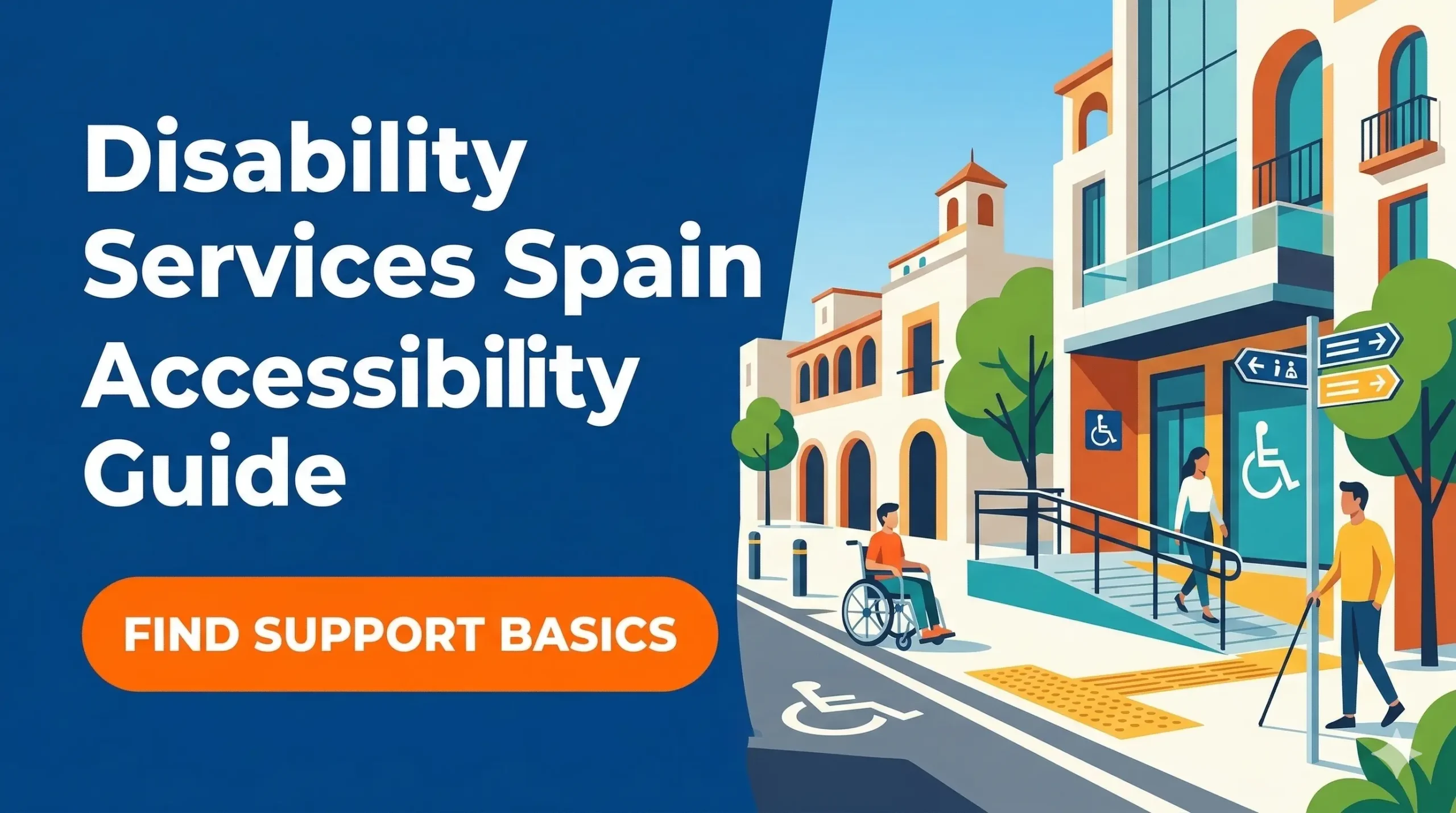
While modern Spanish urban planning strictly adheres to universal design principles, the reality on the ground is a mix of state-of-the-art accessibility and historical challenges. In newer neighborhoods and commercial districts, sidewalks feature smooth dropped kerbs, wide pedestrian pathways, and tactile paving designed to guide individuals with visual impairments. The prominent national organization for the blind, ONCE, has been highly influential in standardizing auditory traffic signals at crosswalks across the nation.
Under the Spanish Law of Horizontal Property, if a resident with a disability or a person over the age of 70 requests the installation of an elevator or a ramp, the community of owners (comunidad de propietarios) is legally obligated to execute and finance the necessary structural modifications, provided the cost does not exceed 12 months of standard community fees. While this law heavily favors the disabled resident, the bureaucratic process of forcing a community to comply, securing building permits, and executing the construction can realistically take years.
Navigating Tourist Attractions and Historic Sites
Spain is globally renowned for its immense cultural heritage, but ancient architecture inherently clashes with modern accessibility standards. Fortunately, the Spanish Ministry of Culture and private heritage foundations have invested heavily in adapting these sites without destroying their historical integrity. Major tourist attractions, such as the Prado Museum in Madrid or the Guggenheim in Bilbao, are fully barrier-free, offering loaner wheelchairs, tactile exhibits for the visually impaired, and sign language video guides.
Even complex, ancient sites like the Alhambra in Granada or the Sagrada Familia in Barcelona have developed highly specific, adapted itineraries. While a wheelchair user may not be able to climb the narrow spiral staircases of a medieval tower, the management ensures that the primary courtyards, ground-level basilicas, and accessible viewing platforms are integrated into a comprehensive, step-free route.
Medical Support and Healthcare Access
Public Healthcare Benefits for Disabled Residents
Once an expat secures legal residency and registers with the Spanish social security system, they gain access to the Sistema Nacional de Salud (SNS). The public healthcare system is entirely free at the point of access, covering everything from routine primary care and specialist consultations to complex surgeries and emergency hospitalizations. For individuals managing lifelong disabilities, this universal safety net provides immense financial and medical security. To understand exactly how to register and what documentation is required, consult our detailed breakdown on What Is a ‘Centro de Salud’ in Spain and How Do You Register?.
Beyond free clinical care, the disability certificate significantly alters the landscape of pharmaceutical costs. The Spanish public system utilizes an income-based copayment model for prescriptions (copago farmacéutico). However, individuals who hold a severe disability rating, or those who receive specific non-contributory disability pensions, are frequently assigned a specific health card code (TSI 001) that completely exempts them from all pharmacy copayments, rendering their essential medications completely free. We explore the nuances of these financial tiers extensively in our guide on Health Costs in Spain: Typical Co‑Pays and Out‑of‑Pocket Fees.
The public system also heavily subsidizes specialized orthopedics, prosthetics, and mobility aids. If a public rehabilitation specialist prescribes a custom wheelchair, hearing aids, or specific physical therapy, the state will fund a significant portion, or the entirety, of the cost. The primary drawback to the SNS is the severe waiting lists; accessing specialized outpatient physical therapy, occupational therapy, or speech pathology through the public system can involve waiting months, which can be detrimental for conditions requiring immediate, intensive intervention.
Supplementing with Private Expat Insurance
Because the public healthcare system struggles with lengthy waiting lists for non-acute therapies, many expats choose to supplement their state coverage with a comprehensive private health insurance policy. The private sector in Spain is vast, offering immediate access to top-tier rehabilitation centers, specialized hydrotherapy clinics, and English-speaking neurologists without the need for a primary care gatekeeper.
However, securing private insurance when you have a pre-existing disability requires careful navigation. Many standard private insurers impose strict exclusions or massive premium hikes for pre-existing chronic conditions. Utilizing a specialized, international insurance broker like Innoinsure is the most effective strategy. These brokers advocate on your behalf to find flexible policies that provide the necessary specialist coverage without penalizing your medical history, ensuring you have a rapid, private safety net for diagnostic testing and therapy.
By holding a private policy, you gain the autonomy to design a hybrid healthcare strategy. You can utilize the public SNS for heavily subsidized, expensive daily medications and major emergency surgeries, while relying on your private coverage to secure immediate, weekly physiotherapy sessions and rapid specialist consultations. This dual approach is the gold standard for expats managing complex health profiles, a strategy we detail further in our article on Chronic Conditions in Spain: Managing Ongoing Care as an Expat.
Sourcing Essential Supplies and Holistic Wellness
Managing holistic wellness alongside traditional medicine is a priority for many facing chronic mobility or health conditions. Over-the-counter specialized dietary supplements, specific vegan proteins, or high-grade anti-inflammatories are often treated as premium goods in Spanish pharmacies and subjected to massive retail markups.
The expat community frequently circumvents these high local costs by utilizing global e-commerce platforms like iHerb. This allows you to legally source the exact international wellness brands you trust at highly competitive prices, shipped directly to your Spanish door. Whether you need joint-support supplements, specific digestive aids, or mobility-assisting nutritional products, using online holistic retailers like iHerb is often more affordable and reliable than browsing a physical Spanish pharmacy.
When managing the ongoing costs of these international supplement orders or paying out-of-pocket for specialized private medical equipment rentals, using a multi-currency account like Wise ensures you are paying the true exchange rate without hidden banking fees. It provides a secure way to manage your healthcare budget in Euros while drawing from your home currency. If you require specialized prescription medications when entering the country, our comprehensive guide on Traveling With Medication in Spain: Practical Carry‑On Tips provides the exact bureaucratic steps to ensure a smooth transition through customs.
Financial Assistance and Employment Quotas
Tax Exemptions and Financial Benefits
The Spanish government utilizes the tax code to actively offset the elevated costs of living with a disability. For expats who become tax residents in Spain, presenting the 33 percent disability certificate unlocks a multitude of profound financial exemptions. One of the most impactful is the massive reduction in Value Added Tax (IVA). While the standard IVA rate in Spain is 21 percent, the purchase of adapted vehicles, motorized wheelchairs, and essential prosthetic devices is taxed at a super-reduced rate of just 4 percent.
Furthermore, vehicle owners with disabilities are entirely exempt from paying the municipal road tax (Impuesto de Vehículos de Tracción Mecánica) and are spared from the expensive vehicle registration tax (Impuesto de Matriculación) when purchasing a new, adapted car. These exemptions save residents thousands of Euros, facilitating easier access to private, adapted transportation.
On an annual basis, individuals with recognized disabilities benefit from significantly higher personal tax allowances on their income tax returns (IRPF). The Spanish tax agency allows disabled workers, and the parents of children with disabilities, to deduct substantial amounts from their taxable income. For expat families navigating the complexities of raising a child with specific needs, understanding how these tax benefits interact with the public medical system is vital. You can find more information on family-focused healthcare strategies in our guide on Pediatric Care in Spain: Choosing a Pediatrician. Managing these complex tax deductions and cross-border transfers is made easier by relying on efficient services like Wise for all international tax payments.
Workplace Accommodations and Hiring Quotas
Spain actively promotes the integration of individuals with disabilities into the open labor market through a strict quota system. Under national labor law, any public or private company operating in Spain with a workforce of 50 or more employees is legally required to ensure that at least two percent of their staff are individuals holding an official disability certificate. Companies that fail to meet this quota can face severe administrative fines unless they prove they have utilized alternative compliance measures, such as contracting with specialized employment centers.
Beyond the hiring quota, Spanish employers are legally bound to provide reasonable accommodations (ajustes razonables) to ensure that employees with disabilities can perform their duties safely and effectively. This might include modifying the physical workspace, providing specialized ergonomic equipment, adapting computer software for visual impairments, or offering flexible working hours to accommodate medical treatments. Expats entering the Spanish workforce should familiarize themselves with these rights by consulting our comprehensive overview on Workplace Health & Safety in Spain: What Employees Should Know.
Pension and Social Security Integration
For expats who develop a permanent disability while living and working in Spain, the social security system offers robust invalidity pensions (pensión de incapacidad permanente). These pensions are designed to replace the income lost when a worker can no longer perform their usual profession or any profession at all due to illness or injury.
For those who have not contributed sufficiently, Spain offers a non-contributory invalidity pension (PNC de Invalidez). Managed by IMSERSO (Institute for the Elderly and Social Services), this pension provides a basic subsistence income and free medical care for individuals with a disability rating of 65 percent or higher, provided they meet strict residency and low-income requirements.
Practical Community Support and Resources
National NGOs and Regional Social Services
Spain possesses an incredibly robust network of Non-Governmental Organizations (NGOs) and charities dedicated to supporting individuals with disabilities. At the national level, the Spanish Committee of Representatives of Persons with Disabilities (CERMI) acts as the primary political advocacy group, fiercely lobbying the government to expand accessibility rights. For individuals with visual impairments, the National Organization of Spanish Blind People (ONCE) is a massive, highly funded institution that provides unparalleled support, education, and employment opportunities.
For expats, integrating into local support structures usually begins at the municipal level. Every town hall (Ayuntamiento) features a dedicated Social Services department (Servicios Sociales). This office is the critical starting point for applying for the disability certificate, requesting municipal home-help subsidies, and connecting with local community transport services.
| Support Organization | Primary Focus Area | Utility for Expats |
| CERMI | National Political Advocacy | Understanding overarching legal rights. |
| ONCE | Visual Impairments | Accessing specialized auditory tech and employment. |
| Ayuntamiento (Social Services) | Municipal Aid | Applying for local parking badges and home help. |
| Local Expat Forums/Charities | Cultural & Language Support | Finding English-speaking specialists and navigating local red tape. |
Digital Accessibility Tools and Health Apps
The digitalization of the Spanish service sector has dramatically improved the daily lives of individuals with disabilities. For travel and leisure, applications like TUR4all are indispensable. Developed by the Spanish representative platform for people with physical disabilities, this app provides highly accurate, user-generated reviews of the physical accessibility of thousands of hotels, restaurants, and tourist sites across the country, allowing you to plan outings with absolute confidence.
In the realm of healthcare, regional public health applications have revolutionized administrative access. Instead of physically traveling to a health center and waiting in line simply to renew a prescription or book a routine appointment, residents can manage their entire healthcare journey from their smartphones. Many of these apps now feature high-contrast modes and auditory screen-reader compatibility. To learn how to download and configure your specific region’s health portal, review our step-by-step instructions in Health Apps in Spain: Booking, Records, and Telemedicine Options.
Private healthcare providers have also pushed the boundaries of digital accessibility. By utilizing the telemedicine networks included in private policies secured via Innoinsure, patients with severe mobility limitations can instantly connect with general practitioners and specialists via high-definition video calls. This eliminates the physical exhaustion of traveling to a clinic for minor ailments or routine follow-ups, allowing patients to receive professional medical triage, digital prescriptions, and peace of mind from the comfort of their own accessible homes. For a deeper understanding of how these virtual services operate, see our article on Telemedicine in Spain: When It’s Useful and What to Expect.
References
Primary sources (official)
- Ministerio de Derechos Sociales, Consumo y Agenda 2030 – Información sobre discapacidad: https://www.dsca.gob.es/es/derechos-sociales/discapacidad/informacion
- IMSERSO (Instituto de Mayores y Servicios Sociales) – Grado de discapacidad: https://imserso.es/autonomia-personal-dependencia/grado-de-discapacidad
- CERMI (Comité Español de Representantes de Personas con Discapacidad): https://cermi.es/
Other helpful sources
- Renfe Atendo – Accessibility and Assistance Services: https://www.renfe.com/es/en/travel/prepare-your-trip/atendo
- TUR4all – Accessible Tourism in Spain: https://www.tur4all.com/
Disclaimer
The information provided in this article is for educational and informational purposes only and does not constitute formal legal, medical, or financial advice. Spanish accessibility laws, disability certification requirements, and tax exemptions are highly complex and subject to frequent legislative updates at both the national and regional levels. Always consult directly with the social services department of your local Spanish town hall, a qualified legal professional, or your specific insurance provider regarding your personal circumstances and eligibility for disability support services.