School Health Requirements in Spain: Vaccines and Paperwork
Navigating school health requirements in Spain as an expat involves understanding specific medical documentation, vaccination schedules, and regional bureaucratic nuances. This comprehensive guide details everything parents need to know about registering their children safely and legally in the Spanish educational system.
Disclosure: This post may contain affiliate links. We may earn a commission at no extra cost to you if you make a purchase through these links. Read full disclosure.
Understanding the Spanish Educational System and Health Mandates
The Legal Framework for Student Health and Safety
The Spanish educational system places a profound emphasis on the health, safety, and holistic well-being of all students. At a national level, the Ministry of Education collaborates closely with the Ministry of Health to establish baseline health and safety protocols that every educational institution must follow. However, because Spain is divided into 17 autonomous communities, the day-to-day administration of these health mandates is decentralized. This means that the specific health paperwork required to enroll a child in a school in Madrid might differ slightly from the requirements in Andalusia or Catalonia.
The legal framework is designed to protect both the individual child and the broader school community. It ensures that schools are aware of any chronic conditions, severe allergies, or physical limitations a student might have so that the teaching staff and school nurses can respond appropriately in an emergency.
Types of Schools in Spain: Public and Concertado
To fully grasp school health requirements, you must first understand the main types of schools operating in Spain, as their administrative processes can vary. Public schools (colegios públicos) are entirely state-funded and secular. They form the backbone of the Spanish educational system. Health requirements for public schools are strictly dictated by the regional government, and they usually demand official documentation from the public healthcare system, such as the regional health card (SIP card) and an official vaccination booklet issued by a public clinic.
Concertado schools occupy a unique middle ground. They are semi-private institutions, often with religious (Catholic) affiliations, that receive partial funding from the government. Because they are subsidized, they must follow the same core admission criteria and health mandates as public schools. However, concertados often have their own specific administrative forms and might be more flexible in accepting health certificates issued by private pediatricians, provided the documents are officially stamped and translated.
Differences Between Expat and Resident Requirements
While the core biological health requirements—like being free of contagious diseases—are the same for all children, the bureaucratic pathway to prove this health status differs significantly for newly arrived expats compared to established Spanish residents. A Spanish child born in the country has their entire medical history seamlessly integrated into the national healthcare database from day one. Their vaccination records are digitized, and school administrators can often verify their health status with a simple database check or a standard printout from the local clinic.
Expats, on the other hand, arrive with foreign medical records, different vaccination schedules, and often, a lack of immediate access to the public health system. Before an expat child can be fully matriculated, their parents must undertake the arduous task of translating and homologating their medical history. This involves taking foreign vaccination records to a Spanish pediatrician to have them officially transcribed onto the Spanish schedule. If you are navigating this transition, reading our guide on Pediatric Care in Spain: Choosing a Pediatrician will help you find a doctor who can facilitate this crucial paperwork.
Mandatory vs. Recommended Vaccinations for School Entry
Are Vaccines Legally Required for School Enrollment?
One of the most common questions from international parents moving to Spain is whether childhood vaccinations are legally mandatory for school attendance. From a strict national legal standpoint, vaccinations are not forced or compulsory in Spain. The Spanish constitution protects individual autonomy, and the government relies on high levels of public trust in the medical system rather than legal coercion to maintain herd immunity. Therefore, a public school cannot theoretically deny a child’s constitutional right to basic education solely because they are unvaccinated.
Even in the public school system, while an unvaccinated child might eventually be admitted, the parents will face significant bureaucratic friction. School administrators and public health officials will require multiple meetings to discuss the risks, and parents may be required to sign official waivers accepting legal responsibility if their child sparks an outbreak. During any localized outbreak of a preventable disease, unvaccinated children are legally mandated to be excluded from the school premises until the health crisis is resolved, causing massive disruption to their education.
Navigating the National and Regional Vaccination Calendars
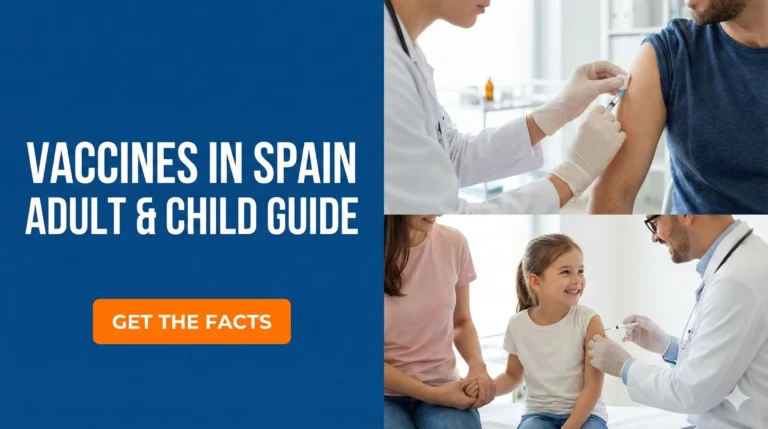
To ensure your child’s health records align with Spanish expectations, you must familiarize yourself with the national vaccination schedule. The Spanish Ministry of Health establishes a baseline “Common Vaccination Schedule” that covers core diseases such as Diphtheria, Tetanus, Pertussis, Polio, Haemophilus influenzae type b, Hepatitis B, Pneumococcus, Measles, Mumps, Rubella, and Varicella. For a comprehensive breakdown of the exact timelines for these shots, please refer to our detailed article on the Child Vaccination Schedule in Spain: A High‑Level Overview.
Complicating matters is Spain’s decentralized healthcare system. The 17 autonomous communities have the power to adapt the national schedule, often funding additional vaccines or altering the exact months when booster shots are administered. For example, the Meningococcus B vaccine and the Rotavirus vaccine might be fully funded and routinely scheduled in Andalusia, while another region might handle them differently. When you register your child at a local school, the administration will evaluate your child’s records against their specific regional calendar, not just the national baseline.
How to Handle Missing or Delayed Immunizations
If your child’s foreign vaccination record does not perfectly match the Spanish requirements, you must initiate a “catch-up” schedule (calendario de rescate). The first step is booking an appointment with a Spanish pediatrician. You must bring the child’s original vaccination booklet and, ideally, an official translation if the document is not in English or Spanish. The pediatrician will identify the gaps and design a safe, medically sound timeline to administer the missing doses without overloading the child’s immune system.
Managing these missing immunizations often requires purchasing specific vaccines out-of-pocket at a local pharmacy, especially if you are using the private healthcare route. Specialized vaccines can be expensive, and paying for private pediatric consultations adds to the initial relocation costs. Expat families managing these cross-border expenses frequently use dedicated financial platforms like Wise to transfer their healthcare budgets into their Spanish accounts, securing the best exchange rates and avoiding hidden banking fees when paying for their child’s medical catch-up program.
Medical Paperwork Needed for School Registration
Translating and Homologating Foreign Medical Records
The administrative burden of matriculating a child in a Spanish school revolves heavily around paperwork, and medical records are arguably the most scrutinized documents. Spanish school administrators require all official documentation to be legible and comprehensible. If your child’s medical history, vaccination booklet, or diagnostic reports are in a language other than Spanish (or the co-official language of your specific region, such as Catalan or Valencian), you must have them translated.
For crucial documents like severe allergy diagnoses or complex surgical histories, schools often demand a “traducción jurada” (a sworn translation). A sworn translation is performed by a translator officially certified by the Spanish Ministry of Foreign Affairs, granting the document legal validity in Spain. While standard vaccination booklets often only require a simple translation by a bilingual pediatrician, anything detailing a chronic condition that the school must legally accommodate will require this rigorous, certified translation process.
The Official Health Certificate and Pediatric Checks
The most universally requested medical document for school registration in Spain is the Official Medical Certificate (Certificado Médico Oficial). This is a standardized, yellow piece of paper issued by the Spanish Medical Association (Organización Médica Colegial). You can purchase the blank certificate for a few euros at almost any local pharmacy (farmacia) or tobacconist (estanco) in Spain.
Once you have purchased the blank form, you must book an appointment with a licensed Spanish pediatrician. The doctor will conduct a comprehensive physical examination of your child, checking their vision, hearing, cardiovascular health, and overall physical development. Upon confirming the child is healthy and free of contagious diseases, the pediatrician will fill out the yellow certificate, sign it, and stamp it with their official medical license number. This document is valid for three months from the date of issue.
Securing the SIP Card or Private Insurance Proof
Beyond the physical health certificate, schools require proof that the child has active medical coverage in case of an emergency on campus. If you are enrolling your child in a public or concertado school, the administration will ask for a copy of the child’s public health card (SIP card, TSI, or equivalent regional acronym). This card proves that the child is registered in the regional healthcare system and can be seamlessly transported to a public hospital by ambulance if necessary.
For a detailed breakdown of how to obtain this public card and integrate your family into the state system, our guide on the Spain Healthcare System for Expats: Public vs Private provides step-by-step instructions. If you have not yet secured your public health card due to pending residency applications, the school will require you to provide an alternative.
Managing Chronic Conditions and Allergies in Schools
Creating an Individualized Healthcare Plan
If your child lives with a chronic health condition—such as Type 1 diabetes, epilepsy, severe asthma, or a bleeding disorder—clear communication with the Spanish school is paramount. Spanish schools are legally obligated to accommodate students with chronic illnesses, but they can only do so effectively if they have a detailed, medically sound plan in place. This requires the creation of an Individualized Healthcare Plan (Plan de Actuación Médica Individualizado).
To initiate this plan, parents must request a formal meeting with the school director, the school nurse (if the institution has one), and the child’s primary teacher. You must provide comprehensive medical reports from your Spanish pediatrician or pediatric specialist detailing the exact nature of the condition, the signs of a medical emergency, and the step-by-step protocols the school staff must follow.
Navigating Food Allergies in the School Cafeteria
Food allergies are treated with extreme seriousness in the Spanish educational system. The school cafeteria, known as the “comedor,” is a central part of the Spanish school day. Because Spanish work schedules often dictate late afternoon lunches, a massive percentage of students eat their main, hot meal of the day in the school comedor.
For expat parents who prefer to pack snacks for their children to ensure absolute allergy safety during the mid-morning break (almuerzo), sourcing specific allergen-free brands locally can sometimes be difficult. Many international families rely on specialized online retailers like iHerb to stock up on certified gluten-free crackers, nut-free granola bars, and specialized vegan snacks, ensuring their child always has safe, familiar food in their backpack.
Rules for Administering Medication During School Hours
The protocols for administering medication during the school day in Spain are extremely strict to protect teachers from medical liability. As a general rule, teachers and school staff are not allowed to administer any over-the-counter medications (like paracetamol or ibuprofen) to a student without explicit, written parental consent and a corresponding doctor’s note. If your child develops a sudden fever or a headache, the school will call you to come and collect the child or administer the medication yourself.
For prescription medications that must be taken during school hours (such as ADHD medication or a midday dose of antibiotics), the administrative hurdle is higher. Parents must provide the school secretariat with the original prescription box, clearly labeled with the child’s name, alongside a signed letter from the prescribing pediatrician. This letter must detail the exact dosage, the time of administration, and the duration of the treatment.
In the case of emergency life-saving medications, such as EpiPens for anaphylaxis or rescue inhalers for severe asthma, the rules are slightly adapted. These medications are stored in a highly visible, easily accessible location (often the school secretariat or the nurse’s office). The parents must provide written authorization allowing any staff member to administer the EpiPen in a life-or-death scenario, freeing the staff from legal liability in the event of an emergency intervention.
Physical Examinations and Extracurricular Health Clearances
Routine Pediatric Checkups for School-Aged Children
Beyond the initial matriculation paperwork, the Spanish health system emphasizes ongoing preventative care throughout a child’s academic career. Public pediatricians conduct routine well-child checkups (revisiones del niño sano) at specific developmental milestones, typically around ages 4, 6, 10, and 14. These checks monitor the child’s growth percentiles, visual acuity, hearing, and spinal development (screening for scoliosis).
While the school itself does not usually demand proof of every single routine checkup after the initial enrollment, maintaining this schedule is vital for the child’s long-term health. If a public pediatrician identifies a developmental delay, a speech impediment, or a learning disability (like dyslexia) during one of these routine exams, they will initiate an official referral to a pediatric specialist or a child psychologist.
Sports Certificates for After-School Activities
Extracurricular sports are a massive component of childhood in Spain. Whether it is joining the local football club (fútbol base), enrolling in tennis academies, or participating in martial arts, physical activity is highly encouraged. However, joining an official, federated sports league in Spain requires a specific layer of health clearance distinct from the standard school medical certificate.
To obtain a federated sports license (ficha federativa), the child must undergo an official sports medical examination (reconocimiento médico deportivo). This is not a standard pediatric checkup. It is a specialized exam focused heavily on cardiovascular health to prevent sudden cardiac events during intense physical exertion. The exam typically involves a resting electrocardiogram (ECG), a stress test, and a musculoskeletal assessment.
These sports certificates are almost always conducted at specialized private sports medicine clinics and are not covered by the public healthcare system. The cost usually ranges from €30 to €60 per child, paid out-of-pocket. Parents must schedule these exams in late August or early September, just before the sports season begins, and present the signed certificate to the club managers before the child is allowed to participate in their first official match.
Mental Health and Special Needs Assessments
The awareness and integration of mental health support within Spanish schools have improved dramatically over the last decade. If a child is experiencing severe anxiety, depression, behavioral issues, or trauma related to their international relocation, the school will act as a primary support network. Teachers are trained to flag concerning behavioral changes to the school’s psychological team.
However, for a child to receive formal, legally mandated accommodations for mental health or neurodivergent conditions (such as Autism Spectrum Disorder or ADHD), the parents must provide comprehensive diagnostic paperwork from a licensed clinical psychologist or psychiatrist. If your child was diagnosed in their home country, this paperwork must be meticulously translated by a sworn translator and reviewed by a Spanish specialist.
Navigating the Bureaucracy: Tips for Expat Parents
Coordinating Between Public Centers and Private Clinics
One of the most frustrating aspects of the Spanish health bureaucracy is the lack of seamless communication between the public and private sectors. If you use a private pediatrician for your child’s routine care, the public school system will not automatically have access to those records. The databases are entirely separate.
As an expat parent, you must act as the administrative bridge. If your child receives a vaccine at a private clinic, you must request a physical, stamped copy of the record and manually deliver it to the public school nurse or your local public Centro de Salud so they can update the state database. Fostering a good relationship with the administrative staff at your local public clinic and your school secretariat is incredibly helpful. Approach them with patience, a polite demeanor, and all your paperwork neatly organized in a physical folder.
Important Deadlines for Health Paperwork Submission
The Spanish school year begins in early to mid-September, but the administrative matriculation process starts much earlier. The official enrollment window (plazo de matriculación) for public and concertado schools typically occurs in April or May. During this strict, highly regulated window, you must submit your initial application, which includes proof of address (padrón) and your child’s basic identification.
The medical paperwork—including the official health certificate, updated vaccination records, and allergy action plans—is usually demanded during the final formalization of the enrollment, which occurs in late June or early July. It is a massive mistake to wait until June to book your pediatric appointments. Private pediatricians and public clinics are overwhelmed with requests for school health certificates during this period. Booking your appointments in May ensures you have the necessary documents signed, stamped, and ready to submit well before the final administrative deadline.
Financial Considerations for International Healthcare
While public schooling and public healthcare in Spain are free, the associated administrative and private medical costs of relocation can accumulate rapidly. Paying for sworn translations of complex medical histories, purchasing the official yellow medical certificates, paying out-of-pocket for missing vaccines, and covering the fees for federated sports physicals require a well-managed budget.
Furthermore, if you are enrolling your child in a private international school, the tuition fees often run parallel to mandatory health and accident insurance premiums charged by the school itself. Managing these large, recurring expenses across borders can result in significant financial waste if you rely on traditional banks. Expat families highly recommend using modern financial platforms like Wise to transfer tuition fees and healthcare funds directly into Spanish accounts, ensuring transparent, mid-market exchange rates and protecting the family budget from exorbitant international transfer fees.
Summary Table of School Health Requirements
| Requirement | Public / Concertado Schools | Private / International Schools | Estimated Cost / Notes |
| Official Health Certificate | Mandatory | Mandatory | Form costs ~€4 at pharmacy; private doctor fee €40-€80. |
| Vaccination Record | Mandatory (to prove status) | Mandatory (often strictly enforced) | Free in public system; translations cost €30-€60. |
| Health Insurance Proof | SIP Card (Public System) | Private Insurance Policy details | Must cover emergencies during school hours. |
| Sworn Translations | Required for foreign medical history | Required for foreign medical history | €50 – €100+ depending on document length. |
| Allergy/Chronic Action Plan | Required if applicable | Required if applicable | Requires specialist signature and school meeting. |
| Federated Sports Certificate | Not required for standard PE | Not required for standard PE | €30-€60 at private sports clinics for after-school leagues. |
References
Primary sources (official)
- Ministerio de Sanidad – Calendario común de vacunación e inmunización a lo largo de toda la vida: https://www.sanidad.gob.es/areas/promocionPrevencion/vacunaciones/calendario/home.htm
- Comunidad de Madrid – Requisitos de Vacunación e Información: https://www.comunidad.madrid/servicios/salud/vacunas
Other helpful sources
- Asociación Española de Pediatría (AEP) – Calendario de Vacunaciones e Inmunizaciones: https://vacunasaep.org/profesionales/calendario-de-vacunaciones-e-inmunizaciones-aep-2026
- Guía para matricular a tus hijos en colegios en España: https://how2spanish.com/es/blog/spanish-school-system-for-foreigners
Disclaimer
The information provided in this article is for educational and informational purposes only and does not constitute legal or medical advice. School admission requirements, regional health mandates, and vaccination schedules in Spain are subject to change by national and autonomous community authorities. Always consult directly with your chosen educational institution and a qualified Spanish pediatric professional to verify the specific documentation required for your child’s enrollment.