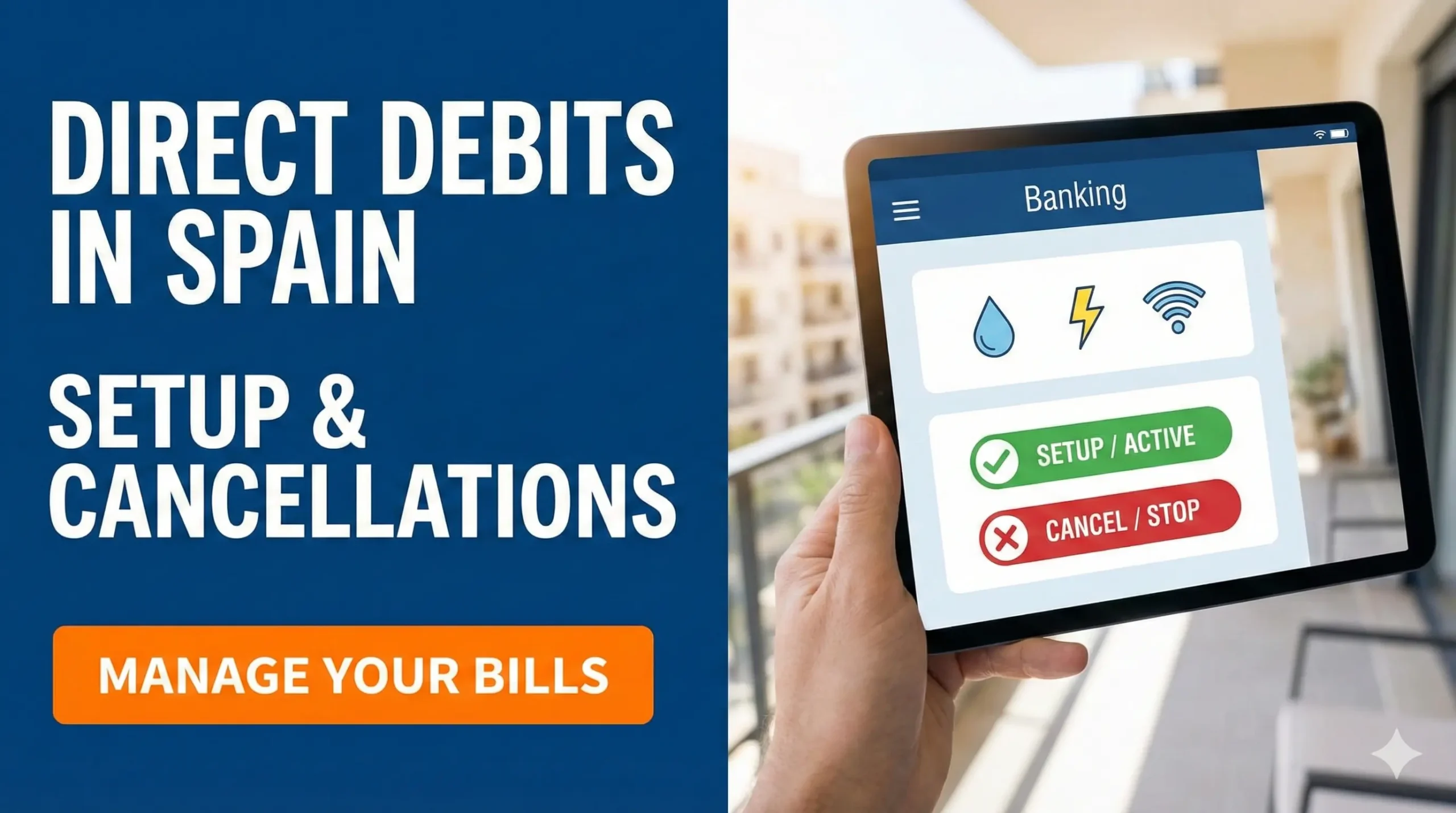
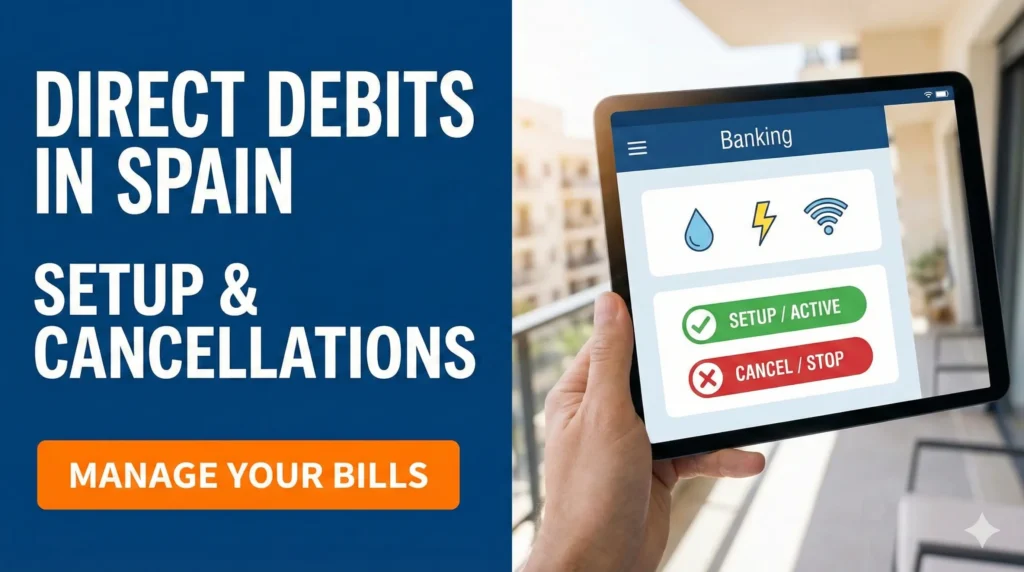
How Direct Debits (Domiciliación) Work in Spain: Setup and Cancellations
Mastering direct debits in Spain is essential for paying utilities, internet, and taxes seamlessly. This comprehensive guide explains how to set up a SEPA mandate, the legal timelines for returning unauthorized charges, and the correct process for cancelling recurring payments.
Disclosure: This post may contain affiliate links. We may earn a commission at no extra cost to you if you make a purchase through these links. Read full disclosure.
Understanding Domiciliacion Bancaria and SEPA
To grasp how direct debits function in Spain, you must first understand the infrastructure that powers them: the Single Euro Payments Area. Spain is a fully integrated member of the SEPA network, which was designed to make electronic payments across Europe as standardized, secure, and efficient as domestic payments.
For a deep dive into how this network facilitates all of your incoming and outgoing capital, you can review our guide on Spanish IBAN, SEPA, and SWIFT: Sending and Receiving Money Explained.
A domiciliación bancaria is simply the Spanish term for a SEPA Direct Debit. It is a financial arrangement where you, the bank account holder, give explicit permission to a company or service provider to withdraw money from your account on a recurring basis. The key feature of a direct debit is that the transaction is initiated by the payee (the company billing you), rather than the payer (you). You do not have to remember to send the money; the company requests it directly from your bank on the due date.
This system offers massive advantages for both parties. For the consumer, it eliminates the risk of forgetting a payment, incurring late fees, or having essential services disconnected. For the business, it ensures predictable cash flow and radically reduces the administrative burden of chasing unpaid invoices.
The SEPA Mandate Authorization Form
A company cannot simply decide to take money out of your Spanish bank account. Before a single cent can be withdrawn, you must provide formal, documented authorization. This authorization is known as a SEPA Direct Debit Mandate.
When you sign up for a new mobile phone plan or register your child for a private school, you will be asked to sign this mandate. It can be a physical paper document or, increasingly, a digital form signed via SMS verification or an electronic signature.
To be legally valid and compliant with European banking regulations, a SEPA mandate must contain the following specific information:
- Your full legal name and address.
- Your complete International Bank Account Number.
- The Bank Identifier Code of your financial institution.
- The name, address, and unique Creditor Identifier of the company billing you.
- The type of payment (whether it is a one-off payment or a recurring monthly/quarterly charge).
- Your signature and the date of authorization.
Once you sign this document, the company keeps it on file. They will use the Unique Mandate Reference generated from this form to communicate with your bank every time they request a payment.
How to Set Up a Direct Debit in Spain
Setting up a direct debit is usually a seamless part of the onboarding process when you contract a new service. Because the system is so heavily utilized, companies have optimized the workflow.
Providing Details to the Service Provider
The most common method is providing your banking details directly to the merchant. For example, when establishing your home infrastructure, you will give your banking information to the electricity and water companies. You can learn more about managing these specific contracts in Setting Up Utilities in Spain: Electricity, Gas, and Water Basics.
The service provider will generate the SEPA mandate, ask you to sign it, and handle all the backend communication with your bank. You do not need to contact your bank to warn them that a new utility company will be charging you; the signed mandate serves as the universal proof of authorization.
Providing Details to the Tax Authority
Direct debits are not limited to private companies. The Spanish government relies heavily on this system to collect taxes. If you own a home, your local town hall will highly recommend that you set up a direct debit for your annual property tax to avoid missing the strict payment windows. You can read more about these specific municipal levies in Property Taxes in Spain: IBI, Community Fees, and Annual Costs.
Similarly, when you file your annual personal income tax return, you can input your account number directly into the government portal to have any owed taxes debited automatically on the final day of the tax season. For a broader look at navigating your fiscal responsibilities, refer to How to File a Spanish Tax Return (Renta) as a New Resident.
Consumer Versus Business Direct Debits
It is highly important to distinguish between the two different types of SEPA Direct Debits operating in Spain, as your legal rights regarding refunds differ drastically depending on which scheme you are using.
SEPA Core Direct Debit
The SEPA Core scheme is designed for transactions between a business and a private individual (a consumer). If you are paying your personal gym membership, your home internet, or your personal health insurance, you are using the Core scheme.
This scheme is incredibly consumer-friendly. It mandates that your bank must offer you a “no-questions-asked” refund period for any charge you wish to contest. The burden of proof regarding the validity of the charge falls entirely on the company billing you, not on you as the consumer.
SEPA B2B Direct Debit
The SEPA Business-to-Business scheme is exclusively for transactions between two registered businesses or registered freelance professionals. You cannot use a B2B mandate to charge a private consumer.
Because businesses are assumed to have a higher level of financial scrutiny, the B2B scheme offers much faster settlement times but drastically reduces refund rights. Under a B2B mandate, once an authorized payment is debited, the paying business cannot request a refund from their bank. To use this scheme, the paying business must also proactively notify their bank that they have signed a B2B mandate before the first charge arrives; otherwise, the bank will automatically reject the collection.
Rules for Returning a Direct Debit Receipt
One of the greatest fears expats have regarding automatic payments is the loss of control. What if the electricity company charges you five hundred euros by mistake? In Spain, you have absolute control over your funds, backed by strict European consumer protection laws.
If a company charges your account, you have the legal right to order your bank to return the receipt (known in Spanish as devolver el recibo). When you return a receipt, the funds are instantly pulled back from the company and redeposited into your checking account.
The timeframe in which you can execute this return depends entirely on whether the charge was authorized or unauthorized.
The Eight Week Rule for Authorized Charges
If you signed a SEPA mandate authorizing a company to bill you, but you disagree with the specific amount they charged, you have exactly eight weeks (56 days) from the date the money left your account to request a no-questions-asked refund.
This frequently occurs with utility bills where the consumption is estimated incorrectly, or with telecommunications companies that apply hidden fees. You can log into your Spanish banking app, navigate to your direct debits section, click on the specific transaction, and hit “Return.” The bank will refund the money immediately. You do not have to explain yourself to the bank or ask the utility company for permission.
The Thirteen Month Rule for Unauthorized Charges
If a company charges your bank account and you never signed a SEPA mandate authorizing them to do so, the law views this as an unauthorized, potentially fraudulent transaction.
In this scenario, European regulations grant you a massive window of thirteen months to demand a refund from your bank. If you notice a strange recurring charge from a magazine subscription you never signed up for nine months ago, your bank is legally obligated to reverse all of those charges, provided the company cannot produce a valid mandate bearing your signature.
To ensure you can utilize these features effectively, choosing a bank with a robust digital platform is crucial. You can review the best mobile banking options available in Opening a Bank Account in Spain: Step-by-Step for Foreigners.
The Risks of Returning Receipts Without Cancelling
While the ability to easily return a direct debit is a powerful consumer protection tool, it is also the source of major legal trouble for many expatriates who misunderstand how contracts work in Spain.
Returning a bank receipt does not cancel your contract with the service provider.
If you decide you no longer want your internet service, and you simply go into your banking app and block the internet company from charging you, you are making a severe financial mistake. The internet company still holds a legally binding contract bearing your signature. By returning the receipt, you have not cancelled the service; you have simply stopped paying for a service you are legally contracted to pay for.
The Default and ASNEF Consequences
If you return a valid receipt without properly terminating the underlying contract, the company will treat the unpaid bill as an outstanding debt.
- Service Suspension: The company will legally suspend your service. If it is a utility company, your power or water will be cut off.
- Late Fees and Surcharges: The company will begin applying aggressive late payment penalties to your account.
- The ASNEF List: In Spain, unpaid corporate debts are swiftly reported to credit bureaus. The most famous defaulters registry is the ASNEF list. If a telecom company places your name and Foreigner Identification Number on the ASNEF list for an unpaid fifty-euro phone bill, you will be financially blacklisted across Spain. You will be unable to get a new mobile phone contract, secure a credit card, or be approved for a property rental.
Never use the “Return Receipt” function as a substitute for cancelling a service contract. If you have an active dispute with a landlord or a service provider regarding charges, you must communicate with them in writing. Maintaining a pristine paper trail is essential; learn how to manage these formal disputes in Dealing with Landlords in Spain: Communication Tips and Paper Trail.
Direct Debit Timelines and Rules Summary
To help you navigate your rights and obligations, refer to this quick reference table regarding SEPA direct debits in Spain.
| Action / Scenario | Legal Timeframe or Rule | Consumer Responsibility |
| Return Authorized Charge | Within 8 weeks of the debit date. | Valid for disputed amounts (e.g., a utility bill that is inexplicably high). |
| Return Unauthorized Charge | Within 13 months of the debit date. | Used if you never signed a mandate for the company. |
| Notice of Upcoming Charge | 14 days prior to collection. | Companies must pre-notify you of the amount (often waived in contracts for fixed monthly subscriptions). |
| Cancelling a Mandate | Before the last working day prior to billing. | You must instruct your bank to stop honoring the mandate. |
| Cancelling a Service | Governed by your specific contract. | Returning a bill does NOT cancel the service. You must cancel with the provider directly. |
How to Cancel a Direct Debit Mandate
If you genuinely wish to terminate a recurring payment because you are switching providers or moving to a new country, you must follow a two-step process to protect yourself legally and financially.
Step 1 Cancel the Contract with the Provider
You must contact the company providing the service and follow their specific cancellation procedure (dar de baja). In Spain, telecom and utility companies often require a minimum of fifteen to thirty days’ notice before the next billing cycle.
Ensure you receive written confirmation from the company that the contract has been successfully terminated and that no further invoices will be generated.
Step 2 Revoke the Mandate with Your Bank
Once you have written proof that the service is cancelled, you should then log into your Spanish banking application and revoke the SEPA mandate.
In your online banking portal, there will be a section titled “Domiciliaciones” or “Recibos.” Here, you can view a list of every company that currently holds an active mandate to charge your account. You can select the specific company and choose the option to “Baja de mandato” (Cancel mandate) or “Bloquear emisor” (Block issuer).
By revoking the mandate at the bank level, you guarantee that even if the service provider makes an administrative error and attempts to charge you for an extra month after your contract was cancelled, the bank’s automated system will instantly reject the request.
Managing Direct Debits with the Spanish Tax Agency
While dealing with private companies is straightforward, managing direct debits with the Spanish government requires special attention.
When you set up a direct debit to pay your annual income tax or your quarterly freelance taxes, the rules are slightly more rigid. If you realize you made an error on your tax return and need to stop the direct debit, you cannot simply block the tax agency via your banking app. Blocking a charge from the Agencia Tributaria will result in immediate, severe late-payment surcharges and potential embargoes on your bank accounts.
If you need to modify or revoke a direct debit established for a tax payment, you must do so directly through the government’s electronic headquarters (Sede Electrónica) before the official direct debit deadline, which is usually five days before the actual end of the tax filing season. The tax agency allows you to log in, view your pending direct debits, and change the destination bank account or cancel the automated payment entirely, provided you choose an alternative method to settle the debt before the deadline expires.
Conclusion
The direct debit system is the invisible engine that keeps the Spanish domestic economy running smoothly. While the prospect of granting companies automatic access to your checking account may initially feel uncomfortable, the overarching framework of the Single Euro Payments Area provides extraordinary consumer safeguards.
By understanding the mechanics of the SEPA mandate, you can automate your life in Spain, ensuring your utilities, rent, and taxes are paid on time without any manual intervention. More importantly, by knowing your legal right to demand a no-questions-asked refund within eight weeks, and by understanding the critical difference between revoking a banking mandate and cancelling a service contract, you can protect your capital and your Spanish credit rating from predatory corporate practices. Master your domiciliaciones, and you will remove one of the largest administrative burdens of your expatriate experience.
References
Primary sources (official)
- Banco de España (Direct debits and Consumer Rights): https://clientebancario.bde.es/pcb/en/menu-horizontal/productosservici/serviciospago/Adeudos_domiciliados.html
- European Payments Council (SEPA Direct Debit Core Rulebook): https://www.europeanpaymentscouncil.eu/what-we-do/sepa-direct-debit
- Agencia Tributaria (How to view or change your tax direct debit): https://sede.agenciatributaria.gob.es/Sede/en_gb/irpf/declaraciones-presentadas/consultar-modificar-domiciliacion-bancaria.html
Other helpful sources
- Stripe (Direct Debit in Spain: How Does It Work?): https://stripe.com/resources/more/direct-debits-in-spain
- GoCardless (What is SEPA Direct Debit?): https://gocardless.com/guides/sepa/introduction/
Disclaimer
The information provided in this article is for educational and informational purposes only and does not constitute formal financial, legal, or banking advice. SEPA Direct Debit regulations, including specific refund timelines (8 weeks for authorized, 13 months for unauthorized) and B2B mandate rules, are subject to updates by the European Payments Council and the Bank of Spain. Always consult your specific Spanish banking institution or a registered legal advisor before returning a receipt or disputing a formal commercial contract.