Medical Spanish Practice: Rehearsing Symptoms Before You Need To
That gut-wrenching feeling of needing medical help in Spain, when you're trying to describe a throbbing headache or a suspicious rash, and your Spanish suddenly feels like it's evaporated into thin air? It's a truly terrifying experience many of us expats face. This guide isn't about rote memorization; it's about building the confidence and practical vocabulary to rehearse those vital medical conversations before an actual emergency strikes, ensuring you can communicate effectively when it matters most.
Disclosure: This post may contain affiliate links. We may earn a commission at no extra cost to you if you make a purchase through these links. Read full disclosure.
Why Medical Spanish is a Lifeline, Not a Luxury
When you move to Spain, you quickly realize that while a friendly "hola" and "dos cervezas, por favor" get you far in daily life, they won't cut it when you're doubled over with stomach pain. The Spanish healthcare system, whether public or private, is excellent, but it operates in Spanish. Relying solely on a kind, English-speaking doctor or a translation app can lead to misunderstandings, delays, and a whole lot of unnecessary stress during already vulnerable moments. Practicing medical Spanish proactively transforms a potential crisis into a manageable situation.
The Fear Factor: When Language Barriers Become Critical
Imagine this: you wake up with a sharp, persistent pain, unlike anything you've felt before. Your mind races: Is it serious? Do I need to go to the urgencias (emergency room)? You try to piece together words, but "sharp," "dull," "constant," "intermittent," and "radiating" suddenly seem like advanced vocabulary. The fear isn't just about the illness; it's the added terror of not being able to articulate what's wrong, fearing you won't be understood, or worse, that your symptoms will be misinterpreted. This isn't just about comfort; it's about patient safety. We often underestimate how much detailed information doctors need, and how difficult it is to provide that under duress in a foreign language.
It’s completely valid to feel this anxiety. Many of us have been there, fumbling with Google Translate while trying to explain something more complex than a cold. It’s a frustrating and isolating experience. But with dedicated practice, like the kind you can get on platforms like iTalki, you can move past that fear and approach medical situations with a calm, prepared mind. Investing in your medical Spanish is investing in your peace of mind and health in Spain.
Beyond "Hola": Nuances of Healthcare Communication
Basic Spanish allows you to navigate simple transactions. Medical Spanish, however, demands precision and a grasp of specific vocabulary that isn't typically covered in beginner or even intermediate textbooks. You need to know the names of body parts, types of pain, common illnesses, and how to describe symptoms related to duration, intensity, and accompanying factors. Beyond vocabulary, there are cultural nuances. For example, directness in explaining symptoms versus a more deferential approach can vary. Understanding how to ask for clarification when you don't fully grasp what the doctor is saying, or how to discuss sensitive topics, is crucial.
Furthermore, medical appointments in Spain often involve understanding questions about your medical history, allergies, current medications, and lifestyle. These aren't just yes/no questions; they require a brief but clear narrative. This level of communication goes far beyond tourist phrases and truly requires focused effort. For many of us, it means stepping out of our comfort zone to learn words we hope we never have to use, but are immensely grateful to know when the time comes.
Common Medical Scenarios to Practice
To build true confidence, it helps to rehearse specific scenarios. Think about the most common reasons people go to the doctor or pharmacy. These are the situations where your practiced medical Spanish will shine.
Describing Symptoms Accurately
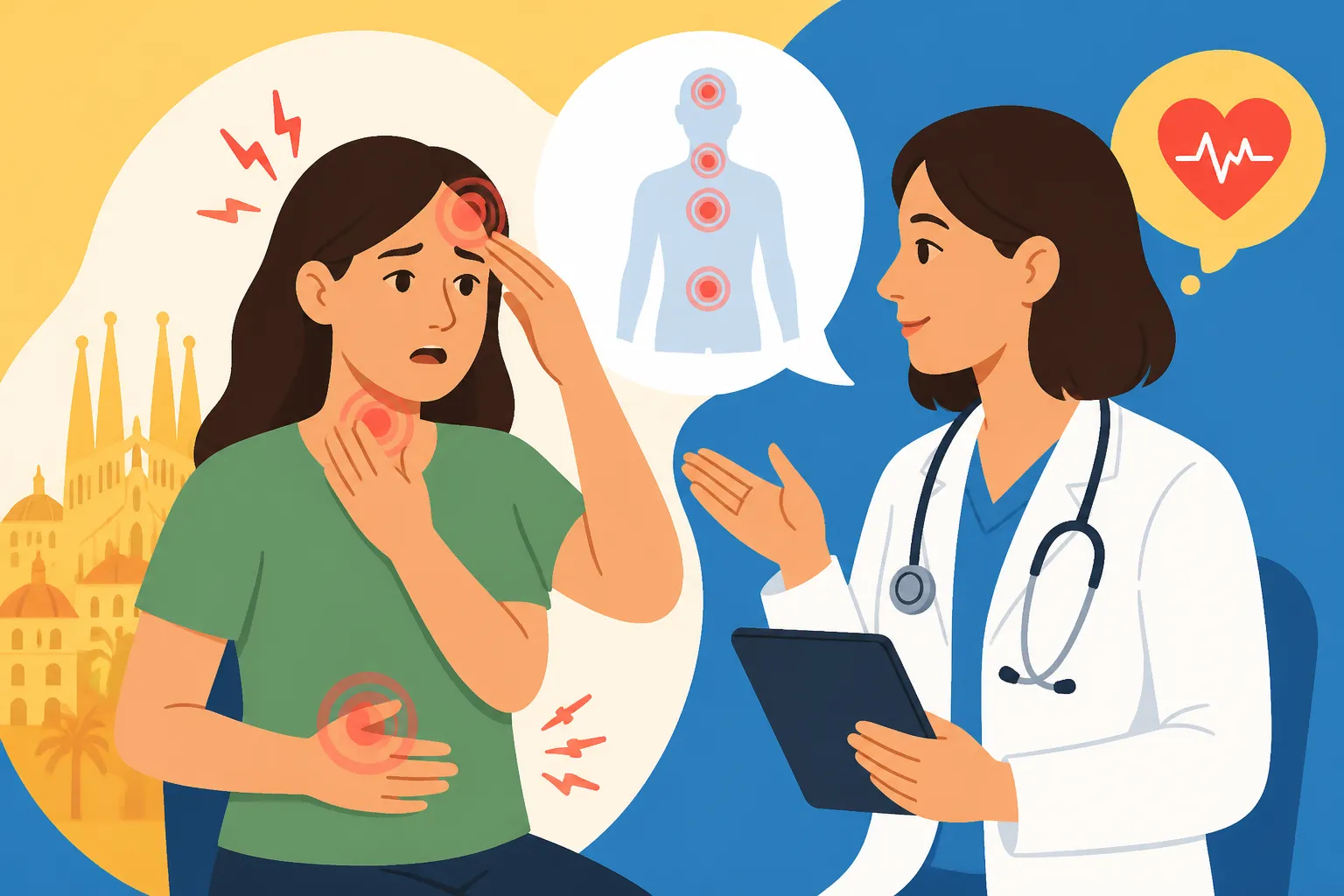
This is perhaps the most critical skill. Doctors rely on your description to form a diagnosis. Instead of just saying "me duele" (it hurts), you need to be able to elaborate.
- Location: ¿Dónde le duele exactamente? (Where exactly does it hurt?) – Knowing words like cabeza (head), estómago (stomach), espalda (back), pecho (chest), garganta (throat), brazo (arm), pierna (leg).
- Type of pain: Is it agudo (sharp), sordo (dull), punzante (stabbing), quemante (burning), opresivo (crushing)?
- Severity: Using a scale of 1 to 10 (del uno al diez), or adjectives like leve (mild), moderado (moderate), intenso (intense), insoportable (unbearable).
- Duration and Frequency: ¿Desde cuándo? (Since when?), ¿Es constante o intermitente? (Is it constant or intermittent?), ¿Con qué frecuencia? (How often?).
- Aggravating/Relieving factors: ¿Qué lo empeora? (What makes it worse?), ¿Qué lo mejora? (What makes it better?).
Practicing these descriptions in full sentences with a tutor on iTalki can be invaluable. They can play the role of the doctor, ask follow-up questions, and correct your phrasing, making sure you sound natural and clear, rather than like you're reading from a dictionary. It's a safe space to make mistakes and learn.
Understanding Doctor's Questions and Instructions
It's a two-way street. Not only do you need to explain, but you also need to comprehend what your doctor is asking or telling you. This could range from simple questions about your general health to complex instructions for medication or follow-up tests.
- Medical History: ¿Tiene alguna alergia? (Do you have any allergies?), ¿Toma alguna medicación regularmente? (Do you take any medication regularly?), ¿Ha tenido alguna enfermedad grave en el pasado? (Have you had any serious illnesses in the past?).
- Lifestyle: ¿Fuma? (Do you smoke?), ¿Bebe alcohol? (Do you drink alcohol?), ¿Qué tipo de dieta sigue? (What kind of diet do you follow?).
- Instructions: Tome esto dos veces al día (Take this twice a day), Vuelva en una semana (Come back in a week), Necesita una cita con un especialista (You need an appointment with a specialist). Understanding terms related to Seeing a Specialist in Spain: Referral Process Explained can be really helpful here.
If you don't understand, knowing how to ask ¿Podría repetirlo, por favor? (Could you repeat that, please?) or ¿Podría hablar más despacio? (Could you speak more slowly?) is essential. Don't be shy about it. Your health is too important. Practice active listening and asking for clarification during your sessions on iTalki. This way, when you're in the actual doctor's office, you won't feel flustered.
Pharmacy Visits and Prescription Questions
The farmacia in Spain isn't just for picking up prescriptions; pharmacists are often the first point of contact for minor ailments. Being able to explain your symptoms to them, understand their recommendations, or ask detailed questions about your medication is incredibly useful. This is also where you might learn about Over-the-Counter Medicines in Spain: What You Can Buy Without a Prescription.
- Describing Minor Ailments: Tengo tos (I have a cough), Estoy congestionado/a (I'm congested), Necesito algo para el dolor de cabeza (I need something for a headache).
- Understanding Prescriptions: ¿Cómo debo tomar este medicamento? (How should I take this medicine?), ¿Tiene efectos secundarios? (Does it have side effects?), ¿Puedo tomarlo con otros medicamentos? (Can I take it with other medicines?).
- Asking for a specific item: ¿Tiene pastillas para la garganta? (Do you have throat lozenges?), Necesito un protector solar de factor alto (I need high-factor sun cream).
Don't forget that Prescription System in Spain: How ePrescriptions Work means you'll usually just need your health card, but understanding the specifics of your medication is still your responsibility. Role-playing pharmacy visits with a native Spanish speaker through iTalki can help you feel much more at ease when you step up to the counter.
The Best Ways to Practice Medical Spanish
Okay, so you're convinced. But where do you start? How do you practice something so specific and vital? While general language learning is great, focused practice is key for medical scenarios.
The Power of One-on-One Tutoring with iTalki
For something as crucial as medical communication, generic apps and textbooks can only take you so far. This is where personalized, one-on-one tutoring truly shines, and platforms like iTalki are a game-changer for expats in Spain. Imagine being able to tell someone, "Hey, I'm an expat in Spain, and I'm really nervous about medical appointments. Can we focus our sessions on medical Spanish?" With iTalki, you can find native Spanish speakers who are willing to tailor lessons exactly to your needs.
Here’s why iTalki is incredibly effective:
- Personalized Curriculum: You dictate the pace and content. Want to focus solely on describing digestive issues? No problem. Need to practice understanding instructions for Medication Refills in Spain: How Renewals Work? They can help.
- Real-Time Feedback: Unlike apps, a human tutor can correct your pronunciation, grammar, and even suggest more natural ways to phrase things in a medical context. This is essential for clarity and confidence.
- Role-Playing: This is the magic bullet. Your iTalki tutor can simulate doctor-patient conversations, acting as the doctor asking questions, or as the pharmacist explaining medication. You can practice describing symptoms, asking questions about treatment, and understanding complex instructions in a low-pressure environment. This builds muscle memory for those high-stress situations.
- Flexibility and Affordability: You can schedule lessons at your convenience, fitting them around your work or family life. There are tutors at various price points, making quality, personalized learning accessible.
- Exposure to Native Speakers: Hearing and practicing with a native speaker helps you get accustomed to different accents and natural speech patterns, which is vital when you're under pressure in a real medical setting.
Seriously, if medical Spanish is a concern for you (and it should be!), check out iTalki. It's the closest thing you'll get to real-world practice without the actual stress of being sick. Many tutors are familiar with the challenges expats face, and some might even have backgrounds in healthcare or experience teaching medical professionals.
Other Practice Methods: Apps, Role-Playing, and Self-Study
While iTalki offers an unparalleled level of personalization for medical Spanish, other methods can complement your learning and help you expand your general vocabulary.
- Language Learning Apps: Apps like Memrise or Anki can be useful for flashcard-style learning of specific medical vocabulary. You can often find user-created decks dedicated to medical Spanish. However, they lack the conversational practice needed for true fluency.
- Self-Study with Medical Resources: Look for online medical dictionaries or glossaries in Spanish. Read articles about health topics in Spanish newspapers or websites. This helps familiarize you with the context and common phrases, but again, doesn't offer interactive practice.
- Role-Playing with a Friend: If you have a Spanish-speaking friend who is patient and willing, ask them to role-play with you. This can be awkward at first, but it’s excellent practice. Just remember, a friend won’t have the pedagogical training of a dedicated tutor found on platforms like iTalki, nor might they be comfortable correcting your every mistake.
- Medical Dramas/Documentaries: Watching Spanish medical dramas or documentaries can expose you to natural medical dialogue, although it's often fast-paced and uses specialized jargon. Try watching with Spanish subtitles first.
Remember, the goal is active communication, not passive absorption. Combine vocabulary building with interactive practice. Platforms like iTalki allow you to apply new words and phrases in simulated conversations, cementing your understanding and building real confidence.
Essential Medical Spanish Vocabulary and Phrases
Having a core set of vocabulary and phrases ready to go can make a huge difference. Here's a table of some common terms and situations you might encounter.
Key Terms for Symptoms and Body Parts
| English | Spanish | Notes |
|---|---|---|
| Head | La cabeza | |
| Stomach | El estómago / La barriga | Barriga is more informal |
| Chest | El pecho | |
| Back | La espalda | |
| Throat | La garganta | |
| Arm | El brazo | |
| Leg | La pierna | |
| Pain | El dolor | |
| Acute pain | Dolor agudo | Sharp, sudden pain |
| Dull pain | Dolor sordo | Persistent, less intense but nagging |
| Burning sensation | Sensación de ardor / Quemazón | |
| Nausea | Náuseas | |
| Vomiting | Vómitos | Vomitar (to vomit) |
| Diarrhea | Diarrea | |
| Fever | Fiebre | |
| Cough | Tos | |
| Rash | Erupción / Sarpullido | |
| Swelling | Hinchazón | Hinchado/a (swollen) |
| Bruise | Moratón / Hematoma | Hematoma is more medical |
| Dizzy | Mareado/a | |
| Weakness | Debilidad | |
| Shortness of breath | Falta de aire | |
| Bleeding | Sangrado | Sangrar (to bleed) |
Doctor's Office Phrases and Questions
Beyond specific words, knowing how to structure sentences and ask pertinent questions is vital for effective communication.
- Me duele… (My … hurts.) – Follow with a body part.
- Tengo dolor en… (I have pain in…).
- Siento una presión en el pecho. (I feel a pressure in my chest.)
- He tenido fiebre desde hace dos días. (I've had a fever for two days.)
- Estoy tomando un medicamento para la tensión. (I'm taking medication for blood pressure.)
- ¿Es grave? (Is it serious?)
- ¿Necesito hacerme alguna prueba? (Do I need any tests?)
- ¿Cuándo tendré los resultados? (When will I get the results?)
- ¿Hay alguna farmacia de guardia cerca? (Is there an How to Find a ‘Farmacia de Guardia’ Near You in Spain nearby?)
- ¿Qué documentos debo traer para mi primera visita? (What to Bring to Your First Doctor Visit in Spain Documents Checklist?)
Practicing these sentences with a native speaker on iTalki can help you not only memorize them but also understand the correct intonation and usage in a conversational context. They can also provide you with common Spanish medical terminology that you might encounter.
Overcoming the Anxiety of Speaking Spanish Medically
Let's be honest, talking about your health in a foreign language is inherently anxiety-inducing. You're already feeling vulnerable because you're unwell, and then adding the language barrier on top can feel overwhelming. But there are ways to manage this and build genuine confidence.
Embrace Imperfection: It's About Communication, Not Fluency
One of the biggest hurdles expats face is the fear of making mistakes. We want to be perfect, to sound fluent, especially when it comes to something as important as our health. But here's the truth: in a medical emergency, perfection isn't the goal; clear and understandable communication is. Your doctor or the healthcare professional wants to help you, and they will appreciate any effort you make to explain yourself in Spanish.
It's okay to stumble, to use simpler words, or even to mix in a little English if absolutely necessary. The important thing is to convey the core message. Focus on being understood, not on having impeccable grammar. The more you practice, the more your fluency will improve naturally, but don't let the pursuit of perfection paralyze you. Be kind to yourself, acknowledge that it's a challenging situation, and celebrate every small victory in communication. Every time you successfully articulate a symptom, even imperfectly, you're making progress.
Building Confidence Through Repetition
Confidence in any language skill comes from consistent practice and repetition. This is especially true for medical Spanish. The more you rehearse those "what if" scenarios, the more natural the words will feel when you actually need them. This is precisely why platforms like iTalki are so valuable. You can literally repeat the same simulated conversation multiple times until you feel comfortable.
Think of it like training for a marathon. You don't just run the full race once; you train with shorter runs, build up your stamina, and refine your technique through repetition. Similarly, with medical Spanish, you need to:
- Learn vocabulary: Use flashcards, apps, or lists.
- Practice sentences: Formulate phrases and sentences with a tutor.
- Role-play scenarios: Engage in simulated conversations, receiving feedback.
- Repeat: Do it again, and again, focusing on different scenarios or types of pain.
Each time you practice describing a hypothetical ache, asking for directions to the pharmacy, or discussing follow-up care, you're depositing confidence into your mental bank. When the actual moment arrives, you'll be drawing from a well of practiced experience, rather than starting from scratch in a state of panic. Make medical Spanish practice a routine part of your language learning journey, and you'll thank yourself later.
Navigating the Spanish healthcare system can feel daunting for expats, and the language barrier often amplifies those anxieties. But you don't have to face potential medical situations unprepared. By proactively practicing medical Spanish, especially through personalized, one-on-one sessions with native speakers on platforms like iTalki, you can build the essential vocabulary, confidence, and conversational skills needed to communicate effectively when it matters most. Take control of your health communication in Spain; invest in your medical Spanish today.
Disclaimer
This article is for general informational purposes only and does not constitute professional advice. Laws, prices and regulations vary by location and change over time. Consult a qualified professional for guidance on your specific situation.