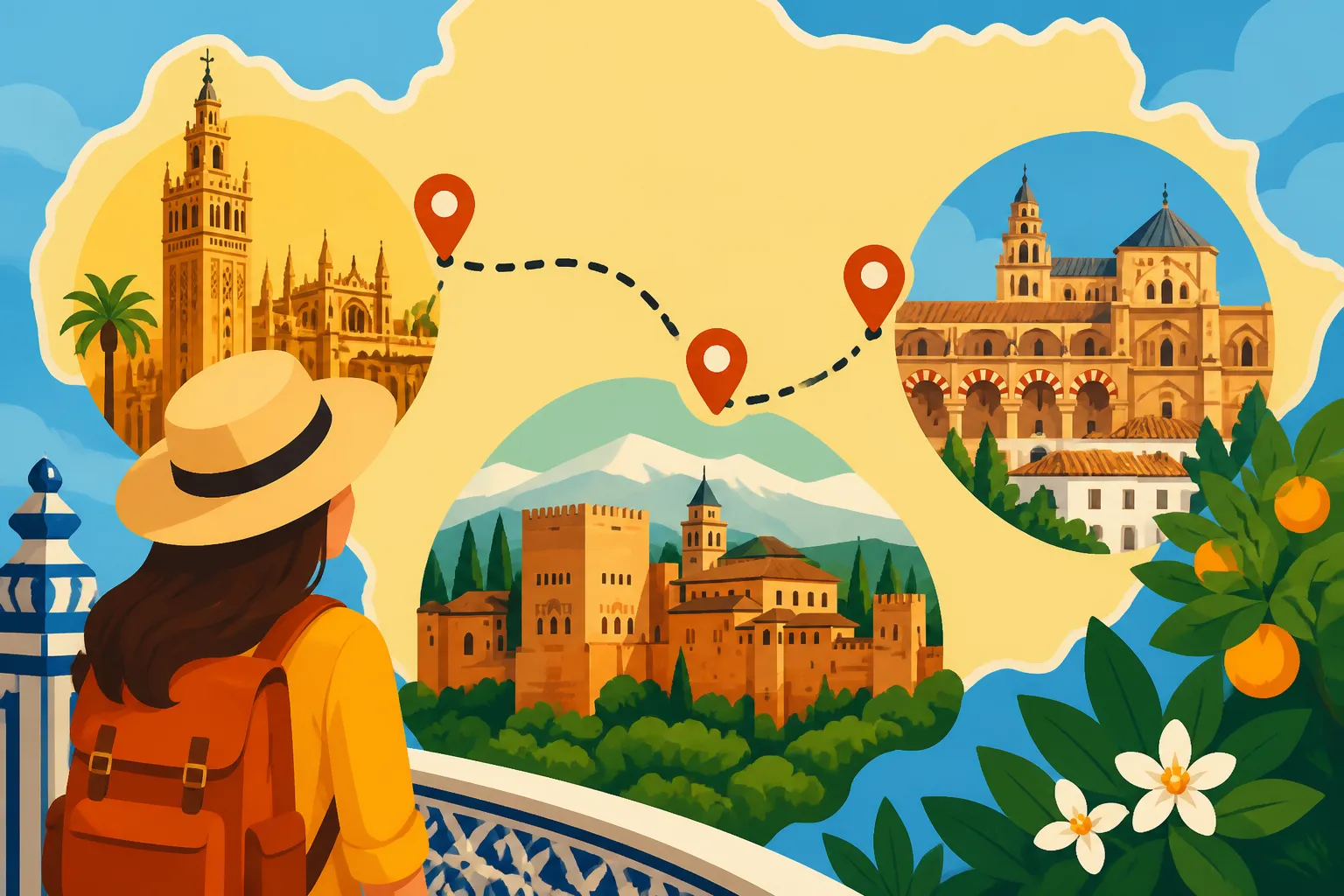
Seville to Granada and Cordoba: Andalusian Route Planning
Planning a multi-city adventure through the heart of Andalusia can feel like trying to solve a Rubik's Cube after a few too many tapas – exciting, but potentially dizzying with all the options. You're trying to figure out the best way to get from the vibrant streets of Seville to the majestic Alhambra in Granada, with a crucial stop in historical Cordoba, and you just want it to be easy. Trust me, I've been there, staring at endless train schedules and bus routes. This guide is here to untangle that journey for you, making your Andalusian route planning from Seville to Granada and Cordoba as smooth and enjoyable as a glass of fino.
Disclosure: This post may contain affiliate links. We may earn a commission at no extra cost to you if you make a purchase through these links. Read full disclosure.
Why This Andalusian Triangle is a Must-Do
There's a reason why the triumvirate of Seville, Cordoba, and Granada consistently tops every expat's and tourist's must-see list in Spain. These three cities encapsulate the very soul of Andalusia, offering a rich tapestry of history, stunning architecture, passionate culture, and mouth-watering gastronomy. It's an experience that really sticks with you.
The Unmistakable Charm of Andalusia
Andalusia, in general, is a place that grabs you by the heart and refuses to let go. From the sun-drenched plazas to the rhythmic click of castanets, the scent of orange blossoms, and the haunting strains of flamenco, it's an assault on the senses in the most wonderful way. This isn't just a region; it's a feeling, a way of life. The people are warm, the food is incredible, and the pace of life invites you to slow down and truly savor every moment. It’s a stark contrast, sometimes, to the hustle and bustle of bigger European capitals, and that’s precisely its charm. You’ll find yourself adapting to late dinners and leisurely strolls, and before you know it, you’re fully immersed.
Why Seville, Cordoba, and Granada?
Each of these cities offers a distinct flavor of Andalusian magic, making them the perfect trio for a deep dive into the region's heritage. Seville is the grand dame, brimming with flamenco, monumental cathedrals, and the sheer joy of living. Cordoba, often overlooked for a quick day trip, holds a quiet, profound beauty, most famously in its Mezquita and the labyrinthine Jewish Quarter. And then there's Granada, perched dramatically at the foot of the Sierra Nevada, dominated by the ethereal beauty of the Alhambra. Skipping any one of them would mean missing a crucial piece of the puzzle that makes Andalusia so captivating. Connecting them is surprisingly straightforward once you know how, and that's where a comprehensive platform like Omio really shines, allowing you to easily piece together your journey across all three.
Starting Your Journey: Seville and Its Allure
Ah, Seville! The capital of Andalusia, a city that practically pulsates with life and passion. For many, this is the natural starting point for an Andalusian adventure, and it’s a brilliant choice. It’s got excellent transport links, a vibrant energy, and sights that will leave you absolutely breathless.
Getting to Know Seville: First Impressions for Expats
When you first arrive in Seville, whether by train to Santa Justa station or by bus, you'll immediately feel a different kind of energy. It’s warm, it’s loud (in the best way!), and it's utterly enchanting. The historical center is very walkable, but the city also boasts a fantastic public transport system, including buses and a metro. Getting around is fairly simple, and if you're not confident with your Spanish, don't fret – many people in the tourist areas speak English, and a friendly "Hola" and "Gracias" goes a long way. This is a city where it's easy to shed your inhibitions and just soak it all in. Remember that meal times and opening hours here might be later than you're used to, but that's just part of the charm! If you're wondering about local customs, our guide on Spanish Social Customs: Greetings, Kisses, and Personal Space might be useful.
Seville's Must-See Sights
Seville is bursting with iconic landmarks. You absolutely cannot miss the Seville Cathedral, home to Christopher Columbus's tomb and crowned by the magnificent Giralda bell tower, which you can climb for panoramic views of the city. Right next door is the Real Alcázar, a stunning royal palace with exquisite Mudejar architecture and lush gardens that feel like something out of a fairy tale. Spend an afternoon getting lost in its courtyards. Then there's the majestic Plaza de España in Maria Luisa Park, a semi-circular masterpiece of regional architecture, perfect for a rowboat ride or just people-watching. In the evening, immerse yourself in a traditional flamenco show in the Triana neighborhood or enjoy some tapas in the lively Alameda de Hércules. Our article on Spanish Tapas Culture: How to Order and Where to Go has some fantastic tips for making the most of your culinary adventures.
The Heart of Andalusia: Cordoba's Charms and How to Get There
After the grand spectacle of Seville, Cordoba offers a slightly more intimate, yet equally profound, experience. This city is a living testament to Spain's multicultural past, a place where Moorish, Jewish, and Christian histories intertwine beautifully.
From Seville to Cordoba: The Journey
Getting from Seville to Cordoba is incredibly easy and quick, making it an ideal first leg of your Andalusian journey. The most efficient way is definitely by train. Spain's high-speed AVE trains connect these two cities in as little as 45 minutes! The journey itself is comfortable, offering views of the Andalusian countryside flashing by. The main train station in Cordoba (Estación de Córdoba) is conveniently located just a short walk or taxi ride from the historic center. Booking your tickets in advance, especially during peak season, is always a smart move. This is where a platform like Omio becomes invaluable. You can easily find and compare train and bus options, ensuring you get the best price and schedule. It’s so much easier than navigating the Spanish railway website in a new language. For more on train travel, check out our guide on High-Speed Trains in Spain (AVE): Routes, Booking, and Savings.
Cordoba's Mezquita and Historic Quarter
The undisputed star of Cordoba is the Mezquita-Cathedral, a truly breathtaking monument that began as a mosque and later incorporated a cathedral within its vast prayer hall. Walking through its forest of striped arches is an experience you won’t soon forget – it's a powerful symbol of Spain's complex history. Beyond the Mezquita, lose yourself in the Jewish Quarter (Judería), a UNESCO World Heritage site with its narrow, winding alleys, whitewashed houses, and flower-filled patios. Don't miss the Calleja de las Flores for that quintessential Cordoban photo op. The Alcázar de los Reyes Cristianos also offers beautiful gardens and a glimpse into royal history. Cordoba is a city best explored on foot, allowing you to stumble upon hidden gems around every corner.
Planning Your Cordoba Stop
Many people visit Cordoba as a day trip, and it's certainly doable, especially given the quick train journey from Seville. However, to truly appreciate its serene beauty and delve into its history, I highly recommend spending at least one night. This allows you to experience the Mezquita at different times of the day (it's especially magical in the evening or early morning before the crowds arrive) and enjoy a leisurely dinner in one of its charming restaurants. Remember, the patios of Cordoba are famous, and while May brings the Patio Festival, many homes keep their patios decorated year-round for visitors to admire.
The Grand Finale: Granada and the Alhambra's Magic
Your Andalusian journey culminates in Granada, a city that feels almost mystical, overshadowed by the grandeur of the Alhambra and backed by the snow-capped peaks of the Sierra Nevada. It’s a captivating destination that will leave an indelible mark on your travel memories.
Journey from Cordoba to Granada
The route from Cordoba to Granada is another straightforward journey, and again, the train is often the preferred choice for its speed and comfort. While there might be direct high-speed trains, sometimes the route involves a transfer or a slightly slower train, but Omio will show you all available connections and journey times, making it simple to pick the best option. The bus is also a perfectly viable and often more economical alternative, with regular services running between the two cities. Travel time by train typically ranges from about 1 hour 20 minutes to 1 hour 45 minutes, depending on the service, while buses usually take around 2 hours 30 minutes to 3 hours. Both options offer a chance to watch the diverse Andalusian landscapes unfold outside your window. When you arrive at Granada’s train or bus station, you’ll find them well-connected to the city center by local buses.
Granada Beyond the Alhambra
Yes, the Alhambra is the absolute star of Granada, and for good reason (more on that in a moment!). But don't make the mistake of thinking it's all there is to see. Granada boasts the charming Albaicín district, a UNESCO World Heritage site of winding cobblestone streets, whitewashed houses, and breathtaking viewpoints (miradores) overlooking the Alhambra. Spend an afternoon getting delightfully lost, stopping for a mint tea or a drink with a free tapa. The Sacromonte neighborhood, famous for its cave dwellings and flamenco traditions, offers another unique perspective. The city center has its own grandeur too, with the Granada Cathedral and the Royal Chapel, where Catholic Monarchs Ferdinand and Isabella are buried. Granada's vibe is wonderfully eclectic, a mix of ancient history, bohemian charm, and lively student culture.
Securing Your Alhambra Tickets
This is THE CRITICAL TIP for visiting Granada: book your Alhambra tickets well in advance! I cannot stress this enough. Tickets, especially for the Nazrid Palaces (the most stunning part), sell out weeks, if not months, ahead of time. Don't just show up hoping to get in; you'll almost certainly be disappointed. You can book directly through the official Alhambra website. Make sure to choose a specific entry time for the Nazrid Palaces and arrive promptly. If you find tickets are sold out, don't despair completely. Some tour operators might still have packages available, or you can try for early morning or late evening slots. But honestly, plan ahead. It's truly one of Spain's most iconic sites, and it deserves your foresight.
Navigating Between Cities: Your Transport Options
Deciding how to travel between Seville, Cordoba, and Granada is a key part of your planning. Thankfully, Spain has an excellent transportation network, offering both speed and affordability. Your best bet for seamless travel through this region is generally by train or bus. And to keep things super simple, using a unified booking platform like Omio is a game-changer. It takes the guesswork out of comparing routes, times, and prices across different operators.
High-Speed Trains in Spain (AVE): The Fastest Way
When time is of the essence, Spain's high-speed rail network, primarily operated by Renfe with its AVE trains, is your best friend.
- Seville to Cordoba: This leg is incredibly fast, often taking just 45 minutes. The trains are modern, comfortable, and usually very punctual. This quick connection makes a day trip to Cordoba from Seville very appealing, though as I mentioned, staying overnight is highly recommended if you can swing it.
- Cordoba to Granada: This route also offers fast connections, though some services might involve a change or use slightly slower trains depending on the schedule, usually taking between 1.5 to 2 hours.
- Pros: Speed, comfort, usually city-center to city-center connections, no need for airport security queues. The views can be quite lovely too!
- Cons: Can be more expensive than buses, especially if booked last minute. Flexibility can be limited once tickets are purchased for a specific time.
You can learn more about specific routes and booking strategies by checking out our detailed article on How to Buy AVE Train Tickets in Spain and Save Money.
Intercity Buses in Spain: The Budget-Friendly Option
For those looking to save a few euros or seeking more flexible departure times, intercity buses are an excellent choice. Various companies, like ALSA, operate extensive networks across Andalusia.
- Seville to Cordoba: Bus journeys typically take around 1 hour 45 minutes to 2 hours, roughly twice as long as the AVE train.
- Cordoba to Granada: This leg by bus usually takes between 2 hours 30 minutes and 3 hours.
- Pros: Generally more affordable than trains, especially if you book closer to your travel date. Often more frequent departures and can serve smaller towns not on the high-speed rail line. Modern buses are usually quite comfortable.
- Cons: Longer travel times compared to AVE trains. Bus stations are sometimes further from city centers than train stations.
For comprehensive information on bus travel, check out our guide on Intercity Buses in Spain: Networks, Booking, and Tips.
The Ease of Booking with Omio
Now, trying to compare all these train and bus options across different Spanish operators can feel like a full-time job. This is precisely why Omio is such a lifesaver for travelers navigating Spain. Instead of hopping between the Renfe website and ALSA's site, Omio pulls all the information together in one place. You input your departure and arrival cities, and it shows you all the available trains and buses, along with their prices and journey times.
I can’t tell you how many times I’ve used Omio for my own travels around Spain. It just makes things so much simpler. You can filter by price, duration, or departure time, and then book directly through their platform in English. It's convenient, user-friendly, and perfect for planning multi-leg journeys like your Andalusian triangle. Plus, having all your tickets stored digitally on your phone is incredibly convenient, eliminating the stress of paper tickets. Trust me, you'll be glad you used it when you're effortlessly gliding between these incredible cities. Using Omio helps you stay organized, compare options at a glance, and secure your tickets without the language barrier headaches you might encounter on local booking sites. It's the smart traveler's choice for hassle-free travel planning in Spain.
| Route | Transport Option | Approximate Duration | Average Cost Range (€) | Pros | Cons | Best For |
|---|---|---|---|---|---|---|
| Seville to Cordoba | AVE Train | 45 – 50 min | 15 – 30 | Speed, Comfort, Punctuality | Higher cost, less flexibility | Quick trips, comfort, time-saving |
| Bus | 1 hr 45 min – 2 hr | 10 – 15 | More affordable, frequent departures | Longer travel time, less comfort | Budget travel, more flexible times | |
| Cordoba to Granada | Train | 1 hr 20 min – 1 hr 45 min | 20 – 40 | Speed, Comfort, Scenic views | Can be more expensive, less frequent | Comfort, speed, less hassle |
| Bus | 2 hr 30 min – 3 hr | 15 – 20 | Affordable, direct routes | Longer travel time | Budget travel, direct service |
Note: Prices are approximate and can vary significantly based on booking time, seasonality, and class of travel. Always check Omio for the most up-to-date information.
Practical Tips for Your Andalusian Adventure
Getting between these stunning cities is one thing, but making the most of your time there involves a bit of insider knowledge. From when to visit to how to manage your budget, a few practical tips can make all the difference to your experience.
Best Time to Visit and Weather Considerations
Andalusia experiences hot summers, mild winters, and beautiful springs and autumns.
- Spring (March-May): This is arguably the best time to visit. Temperatures are pleasant, flowers are blooming (especially in Cordoba's patios!), and the light is incredible. However, it's also high season, particularly around Easter (Semana Santa) and Seville's April Fair, when crowds are dense and prices soar. Book everything, including your train tickets with Omio, well in advance.
- Autumn (September-November): Another fantastic window, with comfortable temperatures, fewer crowds than spring, and often clearer skies.
- Summer (June-August): Be warned: Andalusia gets incredibly hot, especially inland in Seville and Cordoba, where temperatures often exceed 40°C (104°F). If you're sensitive to heat, avoid these months or plan your activities for early mornings and late evenings, embracing the traditional siesta. Our guide on Visiting Spain in Summer: Heat, Crowds, and Coastal Escapes has more specific advice. Granada, being higher, can be slightly cooler.
- Winter (December-February): Generally mild, but can be chilly and rainy, especially further north or in the mountains around Granada. Crowds are minimal, and prices are lower, making it a good option if you don't mind cooler weather.
Accommodation and Luggage Strategies
Choosing the right accommodation is key. Each city offers a range of options, from charming boutique hotels in historic quarters to modern apartments. For Seville and Cordoba, look for places near the train station if you prioritize convenience for arrival and departure, or deeper in the old town if you want more atmosphere. In Granada, many choose to stay in the Albaicín for its views, but be prepared for hills! For comprehensive advice, see our article on Accommodation in Spain: Hotels, Hostels, and Rentals.
When it comes to luggage, remember you'll be moving between cities. Traveling light is always a good idea. A carry-on size suitcase plus a backpack is often sufficient for a week-long trip, saving you hassle on trains and buses. If you’re bringing larger bags, most train and bus services have luggage allowances, but navigating cobblestone streets with heavy bags is never fun. Some hotels and even certain train stations offer luggage storage if you want to explore hands-free before checking in or after checking out.
Budgeting and Local Spending
Spain, and Andalusia specifically, can be very budget-friendly, but costs can add up.
- Transportation: As discussed, booking trains and buses via Omio in advance often secures better prices. Consider a pass if you're doing extensive rail travel, but for just these three cities, individual tickets are usually fine.
- Food: Eating out can be very economical, especially if you embrace the menú del día (fixed-price lunch menu) for lunch or enjoy tapas in the evenings. Granada is famous for its free tapas with drinks, which can help your budget immensely!
- Sightseeing: Entrance fees for major attractions like the Alhambra, Seville Cathedral, and the Mezquita can be significant, so factor these into your budget. Many museums offer free entry on certain days or evenings, so check ahead.
- Cash vs. Card: While most places accept card payments, it's always wise to carry some cash, especially for smaller purchases, local markets, or tips. Our guide on Money for Travel in Spain: Cards, Cash, and ATMs has more details on financial practicalities.
Remember, flexibility is key. Things in Spain can run on their own schedule, and embracing that relaxed pace rather than fighting it will make your trip infinitely more enjoyable. Enjoy every moment of your Andalusian adventure!
Disclaimer
Please note that travel information, including schedules, prices, and visa requirements, can change rapidly. While every effort has been made to provide accurate and up-to-date information in this guide, it is always recommended to verify details with official sources, such as government websites, transportation providers like Renfe and ALSA, and booking platforms like Omio, closer to your travel dates. This guide is for informational purposes only and does not constitute professional advice.