Skiing in the Pyrenees and Sierra Nevada: Rescue Costs and Policy Limits
Oh, the crisp air, the stunning mountain views, the thrill of carving through fresh snow in Spain! It sounds idyllic, doesn't it? Many of us expats and tourists flock to the Pyrenees or the Sierra Nevada each winter, eager to experience Spain's lesser-known but truly spectacular ski scene. But amidst the excitement of planning your next adventure, there's a serious question that often gets overlooked: what happens if things go wrong? Mountain rescues, medical emergencies, and the subsequent bills can turn a dream vacation into a financial nightmare. This guide is going to walk you through the nitty-gritty of rescue costs in Spain, help you decipher those confusing insurance policy limits, and show you how to properly prepare so you can hit the slopes with peace of mind.
Disclosure: This post may contain affiliate links. We may earn a commission at no extra cost to you if you make a purchase through these links. Read full disclosure.
The Thrill and the Real Risks of Skiing in Spain
Spain offers an incredible variety of skiing experiences, from the towering peaks of the Pyrenees to the surprisingly sunny slopes of the Sierra Nevada. These aren't just small local hills; we're talking about world-class resorts with extensive terrain, modern lifts, and breathtaking scenery. However, with the beauty and the thrill comes inherent risk, and it’s something every expat and tourist needs to take seriously.
A Glimpse at Spain's Majestic Ski Resorts
When you think of skiing, Spain might not be the first country that springs to mind, but that's precisely part of its charm. The Pyrenees, stretching along the border with France, host some truly magnificent resorts. Take Baqueira Beret, for instance, often considered the grande dame of Spanish skiing. It boasts vast, interconnected pistes, a reliable snow record, and a decidedly upscale vibe. You'll find everything from gentle nursery slopes to challenging off-piste areas. Then there's Formigal-Panticosa, a sprawling resort in the Aragonese Pyrenees, known for its lively après-ski scene and diverse terrain that caters to all levels. These places are designed for fun, for that feeling of freedom as you glide down the mountain.
Further south, almost unbelievably, you'll find the Sierra Nevada resort in Andalusia, just a stone's throw from Granada. It's Europe's southernmost ski resort, famous for its incredible sunshine and the unique experience of skiing in the morning and potentially relaxing on a beach in the afternoon (if you're really ambitious!). The views from the top, reaching all the way to Africa on a clear day, are simply unforgettable. It's a truly magical place, combining the joy of winter sports with that quintessential Spanish warmth.
However, beneath the stunning scenery and the exhilarating descents lies the reality that mountains are unpredictable. Weather can change in an instant, conditions can shift, and even the most experienced skier can have an accident. The very adventure that draws us to these places also holds the potential for serious incidents, which is why proper planning goes far beyond just booking lift passes and accommodation.
Why Expats and Tourists Need Specific Ski Insurance
It’s a common misconception that your general travel insurance or even your existing private health insurance in Spain will cover you for a ski accident. Unfortunately, this is often not the case. Many standard policies explicitly exclude "adventure sports," "winter sports," or "off-piste skiing." They might cover a sprained ankle if you slip on a cobblestone street in Barcelona, but not if you take a tumble on a black run in Baqueira.
Imagine you're having a fantastic day, feeling confident, and then – bam! – a sudden patch of ice, a collision with another skier, or simply a moment of lost balance. Suddenly, you're lying on the snow with a searing pain in your leg. Your day, and potentially your entire trip, is over. What follows isn't just discomfort; it's a cascade of potential costs. First, there's the on-mountain rescue, which, contrary to popular belief, is often not free. Then there's the initial medical assessment at the resort clinic, followed by a potential ambulance ride or even a helicopter evacuation to a larger hospital. Once there, you might need X-rays, MRI scans, surgery, and then rehabilitation. If the injury is severe, you might need to be repatriated to your home country. These aren't just minor bumps; these are significant, potentially life-altering events with staggering financial implications.
This is precisely why anyone planning to hit the slopes in Spain, whether you're a seasoned expat or just visiting, needs specific, dedicated ski insurance. It’s not an optional extra; it’s a non-negotiable part of your safety net. Relying on inadequate coverage is simply rolling the dice with your financial future.
Unpacking Ski Rescue Costs in Spain: What You Need to Know
Let's talk about the elephant in the room: the cost of getting you off the mountain if something goes wrong. Many people assume that rescue services, particularly if performed by emergency personnel, are always free. In Spain, while there's a strong public emergency system, this is a dangerous assumption, especially in a ski context.
The High Price of a Mountain Rescue Operation
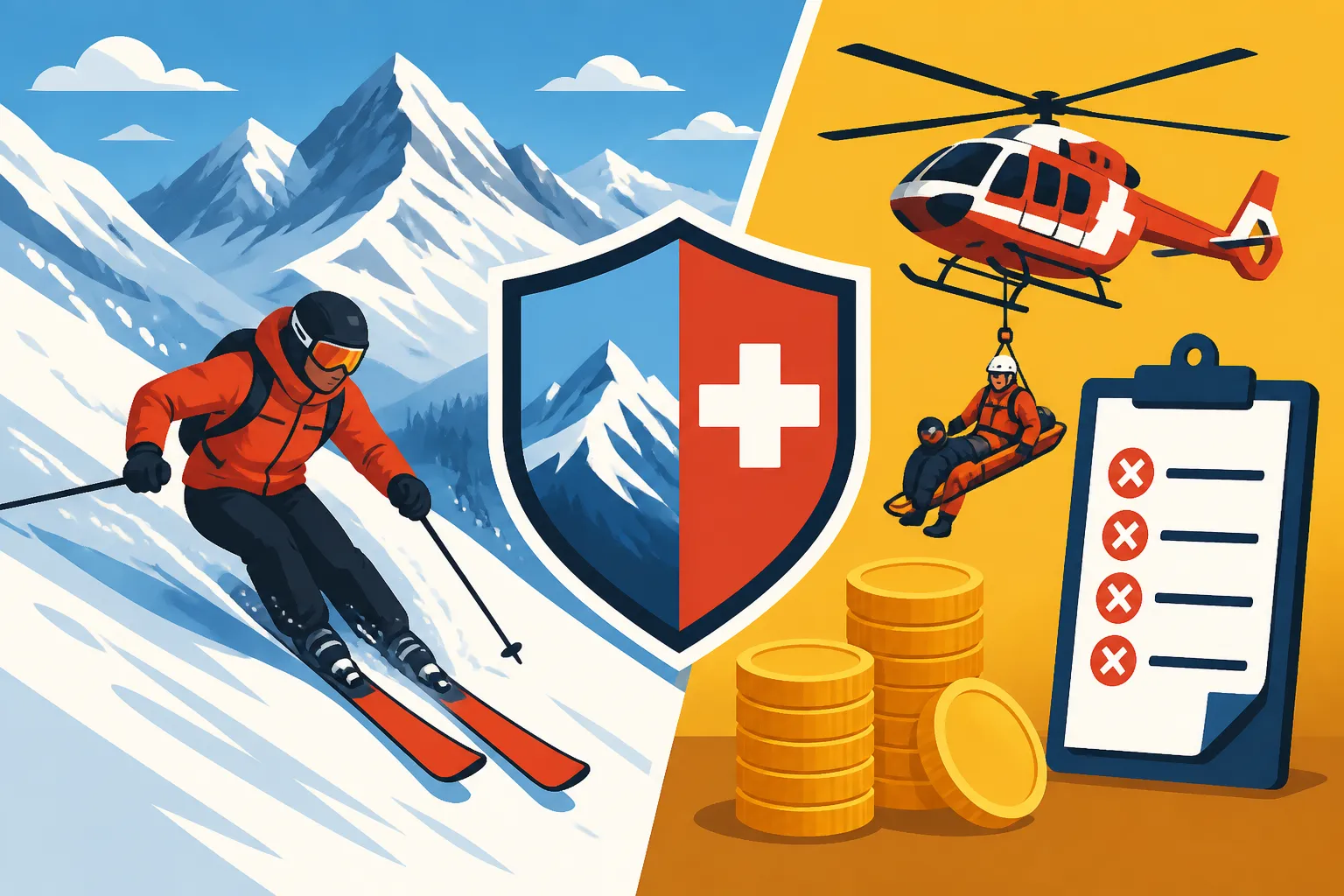
Contrary to what some might believe, being rescued from a Spanish mountain can be incredibly expensive. In many regions, particularly for non-residents or if the rescue is deemed to be due to negligence (e.g., going off-piste against warnings, ignoring danger signs), you will be charged. The cost depends heavily on the complexity of the rescue. A simple stretcher evacuation by ski patrol from a marked piste might be absorbed by your lift pass or be relatively minor, but a full-blown operation involving the Guardia Civil's mountain rescue units (GREIM) and, crucially, a helicopter, can quickly rack up thousands of euros.
Consider these hypothetical scenarios:
- Scenario 1: Simple Piste Accident. You fall on a marked piste and break your wrist. Ski patrol attends, splints you, and takes you down to the base clinic on a skidoo. The direct cost of this "rescue" might be minimal, perhaps €100-€300, or even covered by the resort's basic insurance (if included with your pass).
- Scenario 2: Off-Piste Adventure Gone Wrong. You venture slightly off-piste, get disoriented in a whiteout, and sprain your knee badly. You manage to call 112, and the Guardia Civil's GREIM team needs to trek in and then use a helicopter for evacuation due to difficult terrain. This could easily run into €3,000 to €8,000, or even more, depending on flight time, personnel deployed, and medical stabilization on site.
- Scenario 3: Avalanche or Extreme Terrain. You get caught in a small slide or fall into a ravine in a remote, dangerous area. This requires a full-scale, multi-agency search and rescue operation, potentially lasting hours. The costs for such an event, involving multiple helicopters, specialized teams, and extensive resources, could easily climb to €10,000, €20,000, or higher.
It's important to understand that while Spain's public emergency service (accessible by calling 112) is excellent, the cost recovery aspect for certain non-critical or "negligent" rescues is a real factor. The regional governments are increasingly cracking down on rescues that could have been avoided. Therefore, having robust coverage that explicitly includes search and rescue operations, particularly helicopter evacuations, is paramount. This is a vital component often missing from basic travel insurance, making a specialized option like SafetyWing all the more appealing for its comprehensive approach. If you ever have to call 112 in Spain, knowing you're financially protected is a massive relief.
Medical Care Beyond the Slopes
The rescue itself is just the first hurdle. Once you're off the mountain, the real medical journey begins. If you've suffered a significant injury – a broken bone, a head injury, a severe sprain – you'll need immediate medical attention. This often means transport to a local hospital, which could be in a nearby town or, for more serious cases, a major city with specialist trauma centers.
Spain boasts an excellent healthcare system, both public and private. For residents with a Spanish health card, much of this care might be covered by the public system. However, as an expat or tourist, your situation might be different. If you're relying on private health insurance, it needs to have comprehensive coverage for accidents and emergencies. This includes everything from diagnostic tests (X-rays, CT scans, MRIs) to consultations with specialists, surgery, medication, and follow-up physiotherapy.
Let's look at some potential costs for medical care, excluding the initial rescue:
| Medical Service | Estimated Cost Range (EUR) | Notes |
|---|---|---|
| Emergency Consultation & X-ray | €150 – €400 | For minor injuries (sprain, simple fracture). |
| Ambulance Transport (short distance) | €100 – €300 | Ground ambulance to nearest hospital. |
| Complex Fracture Surgery | €5,000 – €15,000+ | Requires orthopedic surgeon, anesthesia, operating room, hospital stay. |
| MRI Scan | €200 – €600 | Often needed for soft tissue damage (ligaments, cartilage). |
| Physiotherapy (per session) | €40 – €80 | Essential for recovery, often multiple sessions needed. |
| Hospital Stay (per night) | €300 – €800+ | Varies greatly by hospital type (public/private) and level of care. |
| Medical Repatriation | €10,000 – €50,000+ | If you need to be flown home with medical assistance. Can be extremely costly. |
Note: These are estimates and can vary significantly based on the specific injury, hospital, region, and type of care received.
It’s clear that without adequate insurance, even a seemingly straightforward injury can leave you with a crippling debt. Your primary concern should always be getting the best medical care available, and a robust insurance policy ensures that financial worries don't compromise your treatment. For more on the general system, you might want to read about the Spain Healthcare System for Expats: Public vs Private.
Navigating Insurance Policies: What "Policy Limits" Really Mean
So, you understand the costs. Now, how do you find an insurance policy that actually covers them? This is where understanding "policy limits" and coverage types becomes absolutely critical. Don't just tick a box saying "adventure sports" and assume you're golden.
Understanding Different Coverage Types
When it comes to insuring your ski trip, you'll encounter a few different types of policies, and it's essential to know their distinctions:
- General Travel Insurance: This is what most people buy for a regular trip. It usually covers trip cancellation, lost luggage, and basic medical emergencies. However, as mentioned, it often excludes winter sports entirely. Even if it has a small medical component, it might not cover the specific risks and higher costs associated with skiing.
- Specialist Ski & Snowboard Insurance: These policies are specifically designed for winter sports. They typically include coverage for piste closure, lost or damaged equipment, lift pass cover, and, crucially, specific clauses for mountain rescue and medical expenses related to ski accidents. This is what you should be looking for.
- Local Resort Insurance: Some resorts offer a very basic, often inexpensive insurance with your lift pass. While tempting, these are usually very limited, covering only basic medical care on the mountain or very specific types of accidents. They rarely cover comprehensive medical costs, helicopter rescue, or repatriation.
This is where a flexible and comprehensive option like SafetyWing truly shines. While it's primarily known as an international travel medical insurance for digital nomads, remote workers, and expats, it offers an "Adventure Sports" add-on that can cover many of the activities often excluded by standard policies, including recreational skiing and snowboarding. This means you can have broad coverage for your travels plus the specific protection you need for your time on the slopes. It's built for folks living a more dynamic, international lifestyle who want a single, reliable policy.
Deciphering Policy Limits and Exclusions
This is perhaps the most important, yet most overlooked, section of any insurance policy. A "policy limit" is the maximum amount an insurer will pay for a specific type of claim. It's not just about the overall medical coverage amount; often, there are sub-limits for particular services.
Let's illustrate with an example: Your policy might state "Medical Expenses up to €100,000." That sounds great, right? But then you read further and see:
- "Emergency dental care: max €500"
- "Physiotherapy: max €1,000"
- "Search and Rescue: max €5,000"
- "Medical Repatriation: max €10,000"
Suddenly, that €100,000 doesn't look quite as robust. If your helicopter rescue alone costs €8,000, and your policy only covers €5,000 for search and rescue, you're out €3,000 before you even start paying for hospital bills, surgery, and physio. What if your surgery costs €15,000, and your repatriation costs another €20,000? Your policy with these sub-limits would leave you significantly out of pocket.
Beyond limits, pay very close attention to exclusions. These are the circumstances under which your policy will not pay out. Common exclusions for ski policies include:
- Off-piste skiing: This is a big one. Many policies will not cover you if you leave the marked ski area, even if it's just a few meters into fresh powder.
- Skiing under the influence: Alcohol or drugs will almost certainly void your claim.
- Professional or competitive skiing: If you're racing or getting paid to ski, you'll need a different type of insurance.
- Failure to follow local advice/warnings: Ignoring avalanche warnings, closed pistes, or instructions from resort staff.
- Pre-existing medical conditions: Unless specifically declared and agreed upon, these are usually excluded.
This is why, when considering an option like SafetyWing, you need to carefully review their "Adventure Sports" add-on terms. They are generally quite clear about what recreational activities are covered and under what conditions. The beauty of a service like SafetyWing is its transparency and the ability to tailor coverage to your needs, rather than buying a generic policy that might leave you exposed. They understand that modern expats and travelers often seek out these adventurous activities, and they aim to provide realistic solutions.
Why SafetyWing is a Top Choice for Skiers in Spain
So, why are we talking about SafetyWing as a go-to for your Spanish ski adventures? It boils down to their pragmatic approach, especially for those of us living an international lifestyle.
First, flexibility. Unlike many traditional annual travel insurance policies, SafetyWing is designed for continuous travel and remote work. You can buy it when you need it, and it can cover you for extended periods, making it ideal for expats who might take several ski trips throughout the winter or even for digital nomads popping in for a month.
Second, the Adventure Sports add-on. This is key. It specifically addresses the gap left by most standard travel insurance policies. It extends coverage to a range of activities including recreational skiing and snowboarding, providing that crucial peace of mind that if you have an accident on the slopes, you're covered for emergency medical expenses, including search and rescue up to certain limits. Always check the latest policy document for exact limits and covered activities, but this feature is a game-changer.
Third, their focus on medical coverage and emergency evacuation. This aligns perfectly with the high costs we've discussed for mountain rescues and subsequent medical care. SafetyWing understands that these incidents can be incredibly expensive and provides robust coverage for these worst-case scenarios, including emergency medical evacuation and repatriation. For anyone needing Emergency Healthcare in Spain: 112, Urgent Care, and What to Expect, having this kind of backing is invaluable.
Finally, ease of use and digital-first approach. As expats, we're used to managing our lives online. SafetyWing's platform is user-friendly, allowing you to manage your policy, extend coverage, and initiate claims efficiently, no matter where you are in the world. It’s a modern solution for modern travelers, designed by digital nomads, for digital nomads and active expats.
Practical Steps to Ensure Your Ski Trip is Covered
You've got the lowdown on risks and costs, and you know what to look for in an insurance policy. Now, let's talk practical steps to make sure you're truly prepared before you even strap on your skis.
Before You Go: Checking the Fine Print
This isn't the fun part of planning, but it is the most critical. Before you commit to any insurance policy, you absolutely must read the full Product Disclosure Statement (PDS) or policy wording. Don't skim. Don't assume. Look for specific keywords and sections:
- "Winter Sports" or "Skiing/Snowboarding": Ensure these activities are explicitly covered.
- "Off-Piste": If you plan to venture beyond marked runs, confirm that this is included. Many policies specifically exclude it, or only cover it if you're with a licensed guide.
- "Search and Rescue" or "Mountain Rescue": This is crucial. Confirm that helicopter evacuation and the costs incurred by rescue teams (like the Guardia Civil GREIM) are covered, and what the monetary limit is.
- "Medical Evacuation": This covers transport from a local clinic to a larger hospital, potentially even between countries.
- "Medical Expenses": Check the overall limit, but also look for sub-limits on things like dental, physiotherapy, and hospital stays. Is it adequate for potential Spanish costs?
- "Repatriation": In a worst-case scenario, this ensures you can be brought home if medically necessary.
If you're unsure about anything in the policy document, call the insurance provider directly. Get clarification in writing if possible. It’s your money and your safety on the line. Being honest about your planned activities is also key. If you say you're only skiing on-piste but then go off-piste and have an accident, your claim will almost certainly be denied. Insurance for Travel Logistics in Spain: Money, Safety, and Connectivity goes hand-in-hand with specific activity insurance.
On the Slopes: Safety First, Then Policy Awareness
No amount of insurance can prevent an accident or undo an injury. Your primary focus should always be on safety. This means:
- Stick to marked pistes: Unless you are an expert and have explicit off-piste coverage, plus the right avalanche safety gear and a guide, stay on the runs.
- Know your limits: Don't attempt runs beyond your skill level.
- Wear a helmet: Seriously, just do it.
- Check weather and snow conditions: Conditions can change rapidly.
- Listen to resort staff: They know the mountain best.
- Ski with a buddy: Never venture out alone, especially in challenging conditions.
While you're enjoying the stunning Spanish mountains, remember that a strong insurance policy like SafetyWing acts as your financial safety net. It allows you to focus on the joy of skiing, knowing that if the unthinkable happens, you won't be left with a crushing financial burden. Think of it as another piece of essential safety gear, alongside your helmet and bindings. For more on general safety, check out Staying Safe in Spain: Practical Safety Tips for New Residents.
Making a Claim: Documentation is Key
If an accident does happen, your first priority is medical attention. Once you're safe and stable, your next step is to initiate your insurance claim. This is where meticulous documentation becomes your best friend:
- Contact your insurer immediately: Many policies require you to inform them within 24-48 hours of an incident. SafetyWing has a straightforward online claims process.
- Get a police/resort report: For any accident involving another party, significant injury, or rescue, ensure you get an official report from the ski patrol or local authorities. This is crucial for verifying the incident.
- Collect all medical records: Keep every single piece of paper: hospital reports, doctor's notes, prescriptions, receipts for medication, and physiotherapy bills. Don't throw anything away.
- Keep receipts for lost/damaged gear: If your policy covers equipment, you'll need proof of purchase and a report from the resort or police about the damage/loss.
- Take photos: Document the scene of the accident if possible (once you're safe), your injuries, and any damaged equipment.
The more evidence you have, the smoother your claim process will be. Remember, the insurance company needs proof to process your claim, and you're the one who needs to provide it.
Skiing in the Pyrenees or the Sierra Nevada is truly a fantastic experience, offering adventures that will make incredible memories. But those memories shouldn't be overshadowed by the fear of financial ruin if an accident occurs. By understanding the potential costs of rescue and medical care, and by choosing a comprehensive policy like SafetyWing that explicitly covers winter sports with adequate limits, you can truly enjoy every moment on the slopes with genuine peace of mind. Don't let a moment of thrill become a lifetime of debt; prioritize your safety and your financial well-being. Get your SafetyWing coverage today and hit those Spanish mountains with confidence!
Disclaimer
The information provided in this guide is for general informational purposes only and does not constitute financial, medical, or legal advice. While we strive to keep the information up-to-date and accurate, rescue costs, insurance policies, and healthcare regulations in Spain can change. Always consult with a qualified insurance professional to discuss your specific needs and review the terms and conditions of any policy before purchasing. Always confirm current regulations with official Spanish government sources or legal experts.