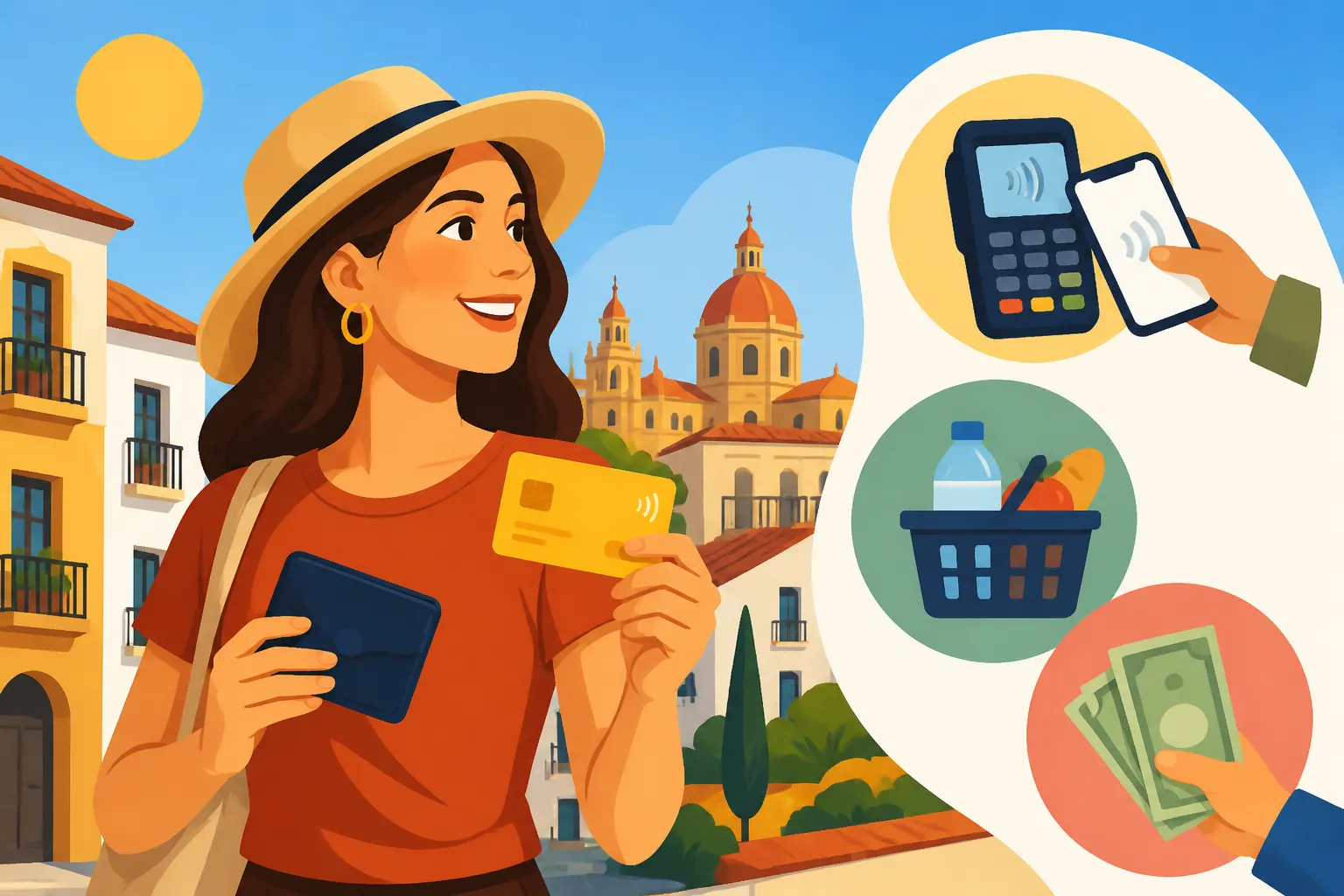
Your First Two Weeks in Spain: Paying for Things Before You Have a Local Account
Oh, that feeling! You’ve just landed in Spain, bags in hand, a head full of dreams, and probably a passport full of stamps, only to realize that paying for things is suddenly… an adventure. Trust me, we’ve all been there. Those first two weeks before you manage to open a local bank account or even get your NIE squared away can feel like you’re trying to navigate a maze blindfolded, especially when every transaction seems to hit a snag. This guide is going to walk you through exactly how to manage your money, pay for essentials, and keep those initial financial anxieties at bay until you're fully set up.
Disclosure: This post may contain affiliate links. We may earn a commission at no extra cost to you if you make a purchase through these links. Read full disclosure.
The Initial Financial Shock: What to Expect When You Arrive
Arriving in a new country, even one as welcoming as Spain, comes with a flurry of immediate needs: a place to stay, food to eat, getting around, and tackling that mountain of initial paperwork. All of these require money, and often, immediate access to funds. What many new expats quickly discover is that their tried-and-true financial methods from back home don't always translate seamlessly to Spanish soil, leading to unexpected fees and frustrating rejections.
The Urgency of Getting Cash and Making Payments
From the moment you step off the plane, you'll likely need to pay for things. Taxis, metro tickets, that crucial first coffee and tostada, or even a few groceries for your temporary accommodation. While many places in Spain do accept card payments, you'd be surprised how often a small shop, a local market stall, or even a bar for a round of cañas might prefer or even insist on cash. It's a charming quirk, perhaps, but one that can leave you scrambling if you're not prepared. You might find yourself needing to pay a deposit for a short-term rental, or quickly top up a mobile phone, and having flexible payment options is absolutely key. Even when cards are accepted, often there's a minimum spend, typically around 5-10 euros, which means those little purchases add up if you're only relying on plastic.
It's not just about convenience; some services, especially those provided by smaller, independent businesses, simply operate on a cash-only basis. Imagine trying to pay for a haircut at a local barbershop or a freshly baked loaf of bread at a neighborhood panadería with a foreign credit card, only to be met with a polite but firm "solo efectivo." This isn't meant to cause frustration but rather reflects a prevalent preference that expats need to adapt to. The administrative hurdles of setting up your new life also require money for fees, application costs, and maybe even a gestor's services, all of which might need specific payment methods. This makes the initial financial plan crucial, especially since you’ll be juggling things like getting your NIE, TIE & Empadronamiento: Essential IDs and Registrations in Spain.
Why Your Home Bank Account Might Not Cut It (Fees!)
You might think, "I'll just use my bank card from home!" And yes, you can – for a while. But be warned: relying solely on your home bank account in Spain for those first couple of weeks is almost certainly going to hit your wallet hard. Most traditional banks from your home country will charge you fees for international transactions, both for withdrawing cash from ATMs and for making purchases in euros. These aren't usually small, negligible amounts. We're talking foreign transaction fees, ATM usage fees (often a flat fee per withdrawal plus a percentage), and terrible exchange rates hidden in the conversion. It's a triple whammy that can quickly deplete your initial budget.
Think about it: every time you pull out cash for that tapas bar, or swipe your card for groceries at Mercadona, you're potentially losing 2-5% or more of your money to these hidden costs. Over two weeks, with daily spending and perhaps a few larger payments for accommodation or travel, these fees can easily add up to hundreds of euros. This is money that could be spent on exploring a new barrio, enjoying an extra meal out, or simply giving yourself more breathing room during a stressful relocation. Plus, some foreign cards might simply be rejected by Spanish payment terminals, especially older ones, leading to embarrassing moments at the checkout. It's not just about the cost, but also the peace of mind knowing your card will actually work when you need it most.
Essential Tools for Your First Fortnight in Spain
Alright, so your trusty old bank card from back home is a no-go for sustained use. What are your options then? The good news is that the world of fintech has made this initial period much, much easier than it used to be. The key is to be prepared with a solution designed for international living. This is where a service like Wise really shines, becoming your financial lifeline from day one.
The Power of Multi-Currency Accounts like Wise
Let's talk about the absolute hero for expats in those early days: a multi-currency account. And when I say multi-currency account, I'm really talking about Wise. Seriously, I cannot stress this enough – it's a game-changer. Before I discovered Wise, I was losing so much money to terrible exchange rates and transaction fees. Wise allows you to hold, send, and receive money in dozens of currencies, including euros, all within one account. You get real, mid-market exchange rates, meaning no hidden markups, and transparent, low fees.
Here's how it helps you in your first two weeks: You can transfer money from your home bank account into your Wise account, convert it to euros at an excellent rate, and then use your Wise debit card to pay for things. This means you avoid those nasty foreign transaction fees from your home bank. Many expats open a Wise account even before they leave their home country, pre-loading it with euros, so they literally hit the ground running with local currency ready to go. You can even generate virtual cards for online purchases, adding an extra layer of security. This flexibility is invaluable when you're trying to manage initial costs like Renting in Spain: Contracts, Deposits, and Tenant Rights or signing up for a Mobile Phone Plans in Spain: Prepaid vs Contract for Foreigners. Wise truly bridges the gap between your old financial life and your new one, making your first fortnight significantly smoother and more affordable.
Debit and Credit Cards: What Works (and What Doesn't)
While Wise is your best bet, let's look at other cards. Your existing debit and credit cards might work, but with caveats.
Most Visa and Mastercard debit and credit cards from major international banks will be accepted at larger stores, supermarkets (like Mercadona, Carrefour, Lidl), and many restaurants. However, as mentioned, they'll likely incur foreign transaction fees and potentially poor exchange rates. American Express, while accepted in some upscale establishments and larger chains, is far less common in Spain than Visa or Mastercard. Discover cards are almost non-existent.
A crucial point: always check the logos on the card machine. Many smaller Spanish businesses might only accept tarjetas nacionales (national cards) or have older machines that are less compatible with certain foreign card types. This isn't malicious; it's just the reality of the diverse payment infrastructure. This is another reason why a multi-currency debit card like the one from Wise is so helpful – it functions like a local card because you're spending directly in euros. You don't want to be caught out at the till, fumbling with different cards, especially if you're also wrestling with Spanish Medical Terminology: Common Words Expats Should Know at a pharmacy! Always have a backup plan, ideally cash, but having a card that consistently works without costing you a fortune is paramount.
Cash, Cash, Cash: Spain's Enduring Love Affair
Despite the rise of digital payments, Spain absolutely still loves cash, especially outside of the major metropolitan centers. For many everyday transactions, particularly at smaller businesses, local markets, or for tips, cash is king. Think about it: a coffee and a pastry, a couple of items at the frutería, bus fare, or even a small purchase at a local artisan shop. These are often cash-based. If you're planning a day trip to a charming pueblo blanco or a smaller town, you'll find cash even more indispensable.
Always carry a reasonable amount of cash on you, but don't go overboard, especially in crowded tourist areas where pickpockets can be an issue. A couple of hundred euros for a few days' worth of smaller expenses is a good starting point. You'll use it for everything from buying stamps at a tabaco shop to paying for a quick caña at a bar. The ability to pull out a €5 or €10 note without a fuss makes your life so much easier and helps you blend in. Even in cities, if you pop into a small bakery, the likelihood of them preferring cash for a €2 purchase is quite high. It’s part of the rhythm of daily life here. Having cash on hand also saves you from those awkward moments when your card is rejected for a tiny purchase.
Navigating ATMs and Currency Exchange Like a Pro
Now that we know cash is essential, the next step is getting it out of an ATM without feeling like you're being robbed. This is where many new arrivals lose a significant chunk of their budget to fees and poor exchange rates. A bit of savvy can save you a lot of euros here.
Finding Fee-Free ATMs (or Minimizing Costs)
This is a tricky one because "fee-free" is becoming rarer, especially for foreign cards. However, you can certainly minimize those pesky fees. Generally, look for ATMs belonging to major Spanish banks. Often, the big ones like CaixaBank, BBVA, or Santander might charge you a withdrawal fee, but it's usually transparently displayed. Smaller regional banks or independent ATM networks (like Euronet, often found in tourist hotspots) tend to have much higher fees. Wise is excellent here because many ATMs recognize its card as a local debit card, and Wise itself offers some fee-free withdrawals up to a certain limit per month (always check their current terms).
My advice is to always check the screen before confirming your withdrawal. The ATM must disclose any fees it intends to charge. If it looks exorbitant, cancel the transaction and try another bank's ATM. It's usually better to make fewer, larger withdrawals than many small ones, as the fee is often a flat rate. Remember, while you're still waiting for your local bank account, managing your cash flow efficiently is paramount. Once you've successfully navigated the waters of initial cash withdrawals, you'll be one step closer to Opening a Bank Account in Spain: Step-by-Step for Foreigners.
The Dreaded Dynamic Currency Conversion (DCC)
This is a trap almost every expat falls into at least once, and it’s a big one. Dynamic Currency Conversion (DCC) is when an ATM or a payment terminal asks you if you want to pay in your home currency (e.g., US dollars, British pounds) instead of the local currency (euros). It sounds convenient, right? "See the cost in your own currency!" Wrong. Always, always choose to be charged in the local currency – euros.
When you opt for your home currency, the ATM or merchant uses their own, often terrible, exchange rate, which is usually significantly worse than the rate your bank (or a service like Wise) would give you. They profit from this conversion. If you choose to pay in euros, your bank or Wise will do the conversion, typically at a much fairer, mid-market rate. This can easily save you 5-10% on larger transactions. It’s a sneaky trick that catches out countless tourists and new arrivals, so be vigilant at ATMs and point-of-sale terminals. You'll see this option pop up when you're paying for items at the checkout too, so be prepared to always select "Euros" or "Local Currency."
When to Avoid Airport Exchange Booths
I'm going to be blunt: airport currency exchange booths are almost universally a rip-off. They know you're new, possibly tired, and desperate for cash, and they take full advantage. Their exchange rates are notoriously bad, and their fees are often exorbitant. You'll get significantly less cash for your money than if you used an ATM (even one with fees) or a service like Wise.
The only time I'd ever consider them is if you literally have no other option and need a very small amount of cash immediately upon arrival. But even then, I'd suggest withdrawing a small amount from an ATM first, or better yet, having pre-loaded your Wise card before you even set foot on the plane. Save your hard-earned cash for experiencing Spain, not for funding greedy exchange services. A small number of euros for a taxi or a snack might be okay, but for any substantial amount, steer clear. Seriously, treat them like a tourist trap for your money – because they often are.
Setting Up Your Financial Foundation for the Long Run
Those first two weeks are all about survival, but also about laying the groundwork for your long-term financial stability in Spain. Getting a local bank account and proper identification isn't just a convenience; it's a necessity for truly integrating into Spanish life and handling everything from rent to utility bills.
The Quest for a Spanish Bank Account
This is probably one of the most frustrating bureaucratic hurdles for new expats. You'd think opening a bank account would be straightforward, but often it feels like you need an existing bank account just to open one! Typically, you'll need your NIE (Número de Identificación de Extranjero), your passport, and often proof of address (like your empadronamiento or a rental contract) and proof of income/funds. Many banks are hesitant to open accounts for non-residents or those without a permanent address.
Some banks are more expat-friendly than others. N26 and Revolut, while not traditional Spanish banks, offer online-only accounts with Spanish IBANs that can be opened relatively quickly with just an NIE. For traditional brick-and-mortar banks, smaller local branches can sometimes be more flexible than big city branches. However, be prepared for multiple visits, different requirements depending on the employee you speak to, and a fair amount of patience. Having your NIE is absolutely the crucial first step. Without it, your options are severely limited. For a deeper dive into this, check out our guide on Opening a Bank Account in Spain: Step-by-Step for Foreigners.
Getting Your NIE: The Gateway to Everything
The NIE, or Número de Identificación de Extranjero, is not just a piece of paper; it's your key to nearly every administrative process in Spain. Without it, you can't officially sign a rental contract, get a long-term mobile phone plan, open a bank account, start a job, or even properly register for healthcare. It's the unique identification number that the Spanish government assigns to foreigners, and it's required for almost all legal and financial activities.
The process of getting an NIE can vary widely by region and even by police station. You'll typically need to book an appointment (a cita previa) at an Oficina de Extranjería or a police station, fill out forms (Modelo EX-15), pay a small fee (Modelo 790, code 012), and present your passport and a copy. Sometimes, they'll ask for proof of why you need it (e.g., a job offer, property purchase intent). It can take several days or even weeks to get an appointment, and sometimes the queues are legendary. This is one of the biggest initial frustrations for expats, but it's utterly non-negotiable. Don't underestimate the importance of this little piece of paper; it literally unlocks your life in Spain. Our guide on How to Get a Spanish NIE Number: In Spain vs Abroad has all the details you need to tackle this head-on.
The Role of Digital Wallets and Payment Apps
Once you get a Spanish bank account, you’ll quickly discover the ubiquity of Bizum. This is a peer-to-peer payment system integrated directly into Spanish banking apps, allowing instant transfers between phone numbers. It’s used for everything from splitting a restaurant bill with friends to paying small businesses. However, Bizum requires a Spanish bank account, so it’s not an immediate solution for your first two weeks.
Before that, you can rely on global digital wallets. Apple Pay and Google Pay, when linked to a supported debit or credit card (like your Wise card or certain international credit cards), work seamlessly at most modern payment terminals in Spain. This can be a very convenient way to pay by simply tapping your phone or smartwatch, often bypassing the need to physically insert your card. It adds a layer of security too, as your actual card number isn't transmitted. While it might not be accepted everywhere cash is, it's a solid option for larger retailers and can complement your physical cards and cash nicely during those initial days. Once you have a Spanish account, then services like Bizum will be indispensable for your Money in Spain for Expats: Banking, Taxes, and Everyday Payments.
Practical Scenarios and Budgeting Tips for Your Arrival
Let's get down to the brass tacks: what will you actually be spending money on, and how can you manage it without a local account? Anticipating these common expenditures will help you plan your initial budget more effectively.
Paying for Accommodation and Initial Deposits
Securing your first accommodation is probably the biggest financial outlay in your first two weeks. Whether it's a short-term Airbnb, a hostel for a few nights, or your initial long-term rental deposit, these payments often require significant sums. Many online booking platforms for temporary stays (like Airbnb or Booking.com) will accept international credit or debit cards, but be mindful of those foreign transaction fees. This is another area where your Wise card can save you a bundle by allowing you to pay in euros directly without extra charges.
For rental deposits (known as fianza in Spain), landlords typically prefer bank transfers. This becomes a hurdle if you don't have a Spanish bank account yet. You might need to arrange a swift international bank transfer from your home account (which can be costly and slow) or, if your landlord is flexible, pay in cash for the initial deposit (though this is less common for larger sums due to safety and legal requirements). Some landlords might accept a transfer from your Wise account's euro balance, as it essentially acts as a euro account. Always communicate with your landlord or accommodation provider in advance to understand their preferred payment methods and avoid last-minute stress. For more on this, check out Renting in Spain: Contracts, Deposits, and Tenant Rights.
Groceries, Transport, and Daily Expenses
This is where your cash and your Wise card will be your constant companions.
- Groceries: Supermarkets like Mercadona, Carrefour, Lidl, and Dia generally accept card payments (Visa, Mastercard). However, having some cash for smaller local shops like fruterías (fruit shops), panaderías (bakeries), and butchers is a good idea. Use your Wise card for the bigger supermarket runs to avoid foreign transaction fees.
- Transport: For public transport in cities, you'll often buy tickets at metro stations or on buses. Many ticket machines accept card payments, but some older ones might be cash-only. Having small euro notes and coins is essential. If you plan to use regional trains or buses, booking online with your Wise card can be efficient, or paying with card at larger stations. For taxis, while many now accept cards, it’s always wise to confirm or have cash as a backup.
- Eating Out: For cafes and restaurants, most will accept cards, but again, small local bars might prefer cash for a caña or a coffee. Always ensure you have cash for tips, as these are almost exclusively given in cash in Spain (though tipping culture is more subtle here than in some other countries).
- Other Daily Needs: Picking up a local SIM card, buying toiletries, or getting a quick repair will likely involve a mix of cash and card payments.
This is the bread and butter of your initial spending, so being versatile is key. Always having a mix of cash and your reliable Wise card will help you navigate these daily necessities without a hitch.
Budgeting for the Unexpected
Moving to a new country invariably throws curveballs. Things will cost more than you anticipate, or an unexpected expense will pop up. Your initial budget needs to have a healthy buffer for these "unknowns." This could be anything from a higher-than-expected taxi fare because you got lost, to needing to pay for urgent medical supplies at a Pharmacies in Spain: Prescriptions, Over-the-Counter Meds, and Practical Tips before your health insurance is fully sorted.
Having an easily accessible emergency fund is crucial. This is another area where Wise can be a savior. By having a good chunk of your buffer funds in your Wise euro balance, you can access it instantly via your debit card without worrying about extra fees or slow international transfers. This gives you peace of mind, knowing that if something unexpected comes up – a deposit for a utility connection, an unforeseen administrative fee, or even just an impulse purchase that helps you feel more at home – you’re covered without incurring additional costs or stress. Think about the Cost of Living in Spain: Realistic Budgets and Savings Tips and how easily these unexpected costs can derail your initial plan.
What to Do Once You're Settled: Beyond the First Fortnight
Once those frantic first two weeks are behind you, and you've got your NIE and a Spanish bank account, the financial landscape changes dramatically. However, the benefits of smart international money management don't just disappear.
Streamlining International Transfers
Even with a Spanish bank account, you'll likely still need to transfer money between your home country and Spain. Perhaps you're moving savings, receiving income from abroad, or sending money back home. Traditional bank transfers for international payments can still be slow, expensive, and subject to unfavorable exchange rates. This is where services like Wise continue to shine.
Wise remains an incredibly efficient and cost-effective way to send and receive money internationally. Its transparent fee structure and commitment to the mid-market exchange rate mean you'll consistently get more for your money compared to most banks. Whether you're topping up your Spanish account from your foreign savings, or your parents are sending you some support, using Wise ensures that your money moves quickly and without unnecessary charges. It’s an ongoing tool for the financially savvy expat, allowing you to manage your Foreign Income Reporting in Spain: What Residents Need to Know with minimal hassle. Don't let your guard down on hidden fees just because you have a local account!
Managing Multiple Currencies with Ease
For many expats, life involves more than just euros. You might still have investments in your home currency, receive payments for freelance work in dollars or pounds, or travel frequently outside the Eurozone. In these scenarios, the multi-currency capabilities of Wise remain invaluable.
You can continue to hold balances in various currencies, converting them only when needed, effectively acting as a hedge against currency fluctuations. If you receive a payment in USD, it can sit in your Wise USD balance until you decide to convert it to EUR, potentially waiting for a more favorable exchange rate. This level of control over your funds is something most traditional banks can’t offer without significant fees or complex accounts. So, while your Spanish bank account becomes your primary hub for daily life in Spain, Wise can serve as your global financial companion, giving you flexibility and peace of mind for all your international money matters. It’s perfect for ensuring your Emergency Funds in Spain: How Much to Keep and Where are easily accessible, no matter the currency.
Here’s a quick comparison of your payment options for those crucial first two weeks:
| Payment Method | Pros | Cons | Best For |
|---|---|---|---|
| Wise Debit Card | Excellent exchange rates, low fees, works like a local card, multi-currency | Requires setup beforehand, subject to daily/monthly withdrawal limits, still needs to find ATMs for cash | Daily expenses, online purchases, larger payments, pre-loading euros |
| Home Bank Debit/Credit Card | Widely accepted (Visa/MC), familiar to use | High foreign transaction fees, poor exchange rates (if DCC used), potential ATM fees, Amex/Discover less accepted, possible rejection at smaller shops | Emergency use, initial airport taxi if Wise not set up, very limited use |
| Cash (Euros) | Universally accepted, preferred by many small businesses, useful for tips | Risk of loss/theft, need to find ATMs for withdrawal (with potential fees), less convenient for large purchases | Small purchases, markets, local bars/cafes, tips, emergencies |
| Digital Wallets (Apple/Google Pay) | Convenient tap-to-pay, secure, avoids physical card use | Requires compatible card (like Wise), not accepted everywhere, needs phone battery | Modern retailers, quick payments where card machines are up-to-date |
Disclaimer
The information provided in this article is for general guidance and informational purposes only, and does not constitute financial, legal, or professional advice. While we strive to keep the information up-to-date and correct, we make no representations or warranties of any kind, express or implied, about the completeness, accuracy, reliability, suitability, or availability with respect to the website or the information, products, services, or related graphics contained on the website for any purpose. Specific requirements for banking, visas, and other administrative processes in Spain can change rapidly. Always consult with relevant financial advisors, legal professionals, or official government sources for the most current and accurate information tailored to your individual situation.