Ceuta and Melilla: How to Actually Get There From Mainland Spain
Thinking about a trip to Ceuta or Melilla often leaves expats scratching their heads, doesn't it? These fascinating Spanish enclaves on the North African coast are geographically unique, and figuring out the logistics of how to actually get there from mainland Spain can feel like navigating a bureaucratic labyrinth. This comprehensive guide will cut through the confusion, offering a clear, step-by-step breakdown of travel options, booking essentials, and what to expect on your journey, making your trip planning to these intriguing destinations a breeze.
Disclosure: This post may contain affiliate links. We may earn a commission at no extra cost to you if you make a purchase through these links. Read full disclosure.
Understanding Ceuta and Melilla: A Quick Overview for Travelers
Before we dive into the nitty-gritty of tickets and routes, let's set the scene. Ceuta and Melilla aren't your typical Spanish cities, and that's precisely what makes them so captivating. They are autonomous cities of Spain, but they're located on the northern coast of Africa, bordering Morocco. This unique geographical and political status means that travelling there isn't quite like hopping on a train from Madrid to Valencia. You're effectively leaving the Schengen Area, even though you're staying within Spanish territory. This often surprises people and can lead to confusion about passport controls and customs, so it's good to be prepared.
Why Their Location Matters for Your Travel Plans
Their location means one crucial thing for your travel plans: you'll almost certainly be taking a ferry. While there are small airstrips, passenger flights are rare and often prohibitively expensive or reserved for specific circumstances. For the vast majority of us, the sea is the only practical way. This isn't just a simple boat ride; it’s an international ferry route, which comes with its own set of rules regarding documentation and sometimes even customs checks, even if it's within Spain. Think of it less as domestic travel and more like a short international hop, complete with boarding passes, security screenings, and passport stamps. It’s a fascinating blend of Spanish culture with a strong North African influence, creating a vibrant atmosphere that's truly distinct.
Border Formalities and Documentation
Even though Ceuta and Melilla are Spanish territories, you'll pass through border control when arriving and departing. For EU citizens, this typically means just presenting your valid ID card or passport. However, for non-EU citizens, it's crucial to have your passport and any relevant visa documentation ready, as you would for any international travel outside the Schengen zone. If you have a Spanish residency card (TIE), this will be your key document. Always double-check current requirements, especially if your nationality requires a visa for Spain or the Schengen Area, as there might be specific rules for entering these enclaves. It's a small detail that can cause a big headache if overlooked!
Your Main Gateway: The Ferry Routes
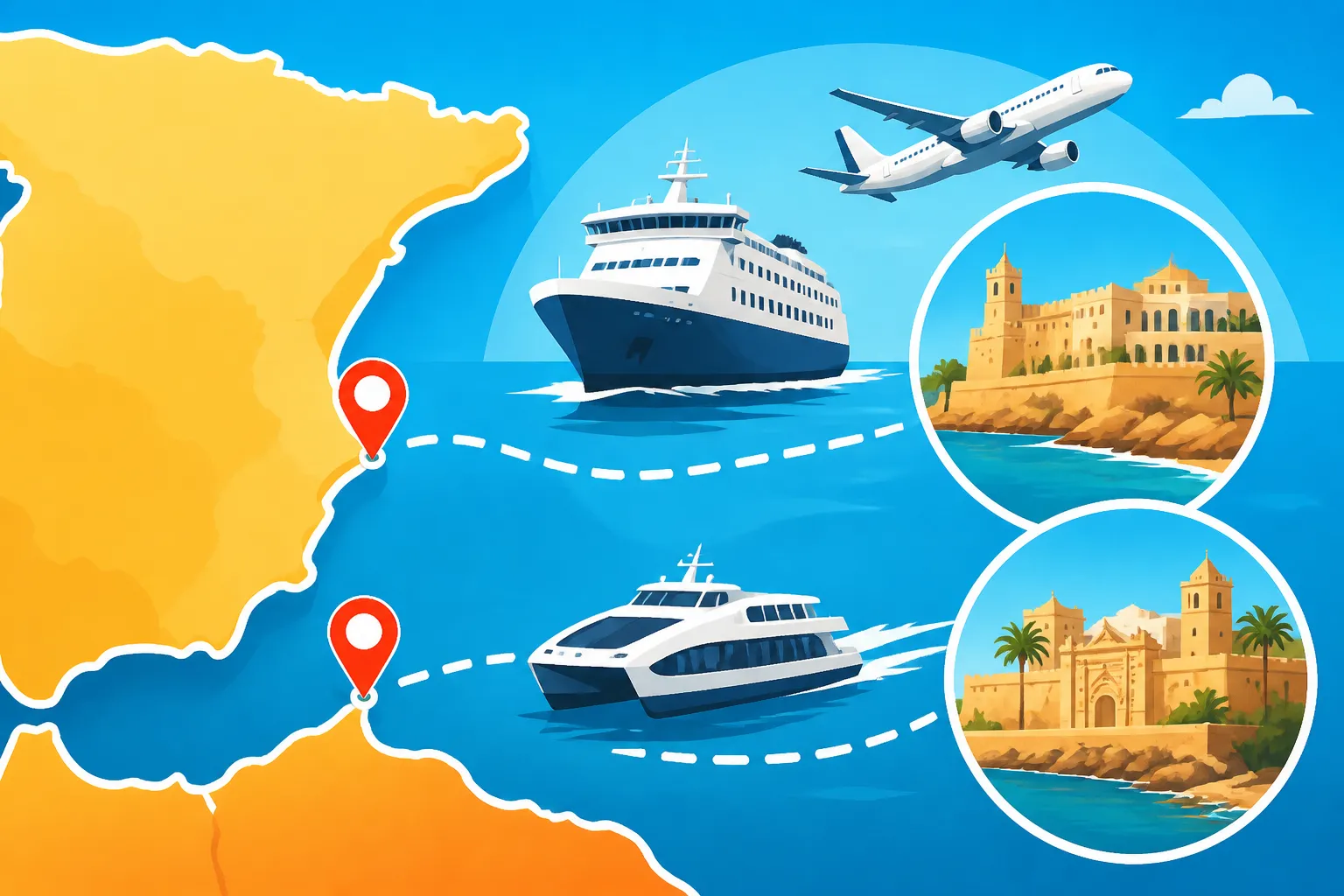
When it comes to reaching Ceuta and Melilla, ferries are your bread and butter. The journey across the Strait of Gibraltar is an experience in itself, offering stunning views and a tangible sense of adventure. You'll primarily depart from ports in Andalusia, with Algeciras being the most popular for Ceuta and a few more options for Melilla.
Departures for Ceuta: Algeciras is Key
For Ceuta, the port of Algeciras is overwhelmingly the main hub. It’s a bustling port city with excellent connections from across Spain, making it a convenient starting point. The ferry crossing to Ceuta is relatively short, usually around an hour to an hour and a half, making it a popular route for both day-trippers and those planning a longer stay.
Several major ferry companies operate this route. Balearia and FRS Iberia are the two main players offering frequent sailings throughout the day. You'll find modern vessels equipped with cafes, shops, and comfortable seating, making the short journey pleasant. When booking, keep an eye on the different types of ferries available; some are faster, high-speed catamarans, while others are larger, conventional ferries that can carry vehicles. Choosing a conventional ferry is the way to go if you plan on bringing your car. Booking your ferry tickets through a platform like Omio is incredibly helpful here, as it allows you to compare prices and schedules from both Balearia and FRS side-by-side, without having to jump between individual company websites. This saves so much time and hassle, especially when trying to find the best departure slot.
Departures for Melilla: Longer Routes, More Options
Reaching Melilla involves a longer journey by sea, reflecting its more easterly location along the North African coast. The primary departure ports for Melilla are Málaga and Motril, though you might also find less frequent connections from Almería. These crossings are typically overnight, lasting anywhere from 6 to 8 hours, and sometimes even longer depending on the vessel and specific route.
Trasmediterránea and Balearia are the dominant ferry companies on these routes. They operate larger, more cruise-like vessels, often equipped with cabins, restaurants, and entertainment options, as you’ll be spending a significant amount of time on board. Booking a cabin is highly recommended for overnight journeys, ensuring you arrive refreshed and ready to explore. Imagine settling into your private space, enjoying dinner, and waking up to the Melilla coastline – it’s far more pleasant than spending the night in a recliner seat. Again, using Omio to check the timetables and fares across both companies for your desired dates simplifies this process immensely. You can easily see which company offers the best price for a cabin or a specific departure time that suits your itinerary, proving invaluable when juggling longer travel plans.
Ferry Companies to Consider
While there are a few smaller operators, these are the main ones you’ll encounter:
- Balearia: A well-known Spanish ferry company with modern fleets. They offer routes to both Ceuta (from Algeciras) and Melilla (from Málaga and Motril). Their vessels are generally comfortable, offering various amenities.
- Trasmediterránea: Another long-standing Spanish ferry operator, Trasmediterránea primarily serves the longer routes to Melilla from Málaga and Motril. They are known for their larger ships, suitable for overnight travel with cabins.
- FRS Iberia: This company focuses on the shorter, faster routes across the Strait of Gibraltar, particularly Algeciras to Ceuta. Their high-speed ferries are popular for quick crossings.
Comparing these options on a single platform like Omio allows you to see the full picture instantly, rather than sifting through multiple websites. This convenience is a real lifesaver, especially when you're trying to figure out the best combination of time, price, and comfort for your unique trip.
Planning Your Journey: Booking and Practicalities
Now that you know your options, let’s talk about how to actually get those tickets and ensure a smooth journey. This is where a little planning goes a long way, and using the right tools can make all the difference.
The Power of Online Booking Platforms
In this day and age, trying to book direct with each ferry company, especially when comparing multiple routes and dates, is just inefficient. This is precisely why services like Omio are a game-changer for travel in Spain, particularly for these unique routes.
Omio allows you to:
- Compare Routes & Prices: Easily see all available ferry connections from your chosen mainland port to Ceuta or Melilla, comparing prices from different operators side-by-side. This means you can quickly find the most cost-effective or time-efficient option.
- View Schedules: Get real-time schedules for all operators, making it simple to pick a departure that fits your itinerary. No more guessing or conflicting information!
- Book in One Place: Once you've found your ideal ticket, you can book it directly through the platform, streamlining the entire process. This is particularly useful when you might also be looking at onward travel within Spain, as Omio often includes trains and buses too.
- Manage Your Bookings: Keep all your travel details in one place, accessible from your phone. This cuts down on paper tickets and makes last-minute checks a breeze.
For anyone navigating the slightly more complex travel to Ceuta and Melilla, using Omio transforms what could be a frustrating experience into a surprisingly straightforward one. It genuinely simplifies the decision-making process, allowing you to focus on the excitement of your trip rather than the logistics.
Booking Your Tickets: When and How
Generally, it’s advisable to book your ferry tickets in advance, especially if you’re traveling during peak season (summer, national holidays like Semana Santa, or long weekends) or if you plan to bring a vehicle. Car spaces on ferries can fill up quickly. For foot passengers, you might be able to buy tickets on the day, but you run the risk of higher prices or limited availability, particularly on popular routes like Algeciras-Ceuta.
When booking, whether through Omio or directly, you'll need:
- Passenger details: Full names, dates of birth, nationality, and passport/ID numbers for everyone traveling.
- Vehicle details: If bringing a car, you’ll need its make, model, license plate number, and dimensions.
- Contact information: Email and phone number for confirmations and updates.
A little tip from my own experience: always double-check the departure port in Algeciras. While most ferries leave from the main terminal, it's always good to confirm your specific pier closer to your travel date. You don't want to be running around a busy port looking for your boat at the last minute!
What to Bring to the Port
Arriving at the port prepared can save you a lot of stress. Here's a quick checklist:
- Printed or digital tickets: Whichever you received, have it ready. A QR code on your phone is usually sufficient.
- Valid ID/Passport/TIE: Absolutely essential. Ensure it hasn't expired!
- Euros for incidentals: While cards are widely accepted, a few euros for a quick coffee or snack can be handy.
- Comfortable shoes: You might do a fair bit of walking, especially in larger ports like Algeciras.
- Small bag with essentials: If it's an overnight ferry and you have a cabin, you won't need your large luggage for the entire trip. Pack a small bag with toiletries, a change of clothes, and anything you need during the night.
| Route Details for Ceuta & Melilla Ferries | ||||
|---|---|---|---|---|
| Departure Port (Mainland Spain) | Destination Enclave | Primary Ferry Operators | Approx. Journey Time | Typical Frequency |
| Algeciras | Ceuta | Balearia, FRS Iberia, Trasmediterránea | 1 hour – 1.5 hours | Multiple daily sailings |
| Málaga | Melilla | Balearia, Trasmediterránea | 6.5 hours – 8 hours | Usually 1-2 daily, often overnight |
| Motril | Melilla | Balearia, Trasmediterránea | 6 hours – 7.5 hours | Usually 1-2 daily, often overnight |
| Almería (less frequent) | Melilla | Trasmediterránea | 7 hours – 8 hours | Less frequent, check seasonal schedules |
(Note: Journey times are approximate and can vary based on vessel type, weather, and specific route. Frequencies are illustrative and should be confirmed at the time of booking with an up-to-date platform like Omio.)
On the Ground: Getting Around Ceuta and Melilla
Once you've made the crossing and arrived in Ceuta or Melilla, the next step is to get your bearings and start exploring. These cities, while Spanish, have their own distinct rhythms and transportation options.
Arrival at the Port and Local Transport
Upon disembarking, you’ll typically find yourself very close to the city center or with easy access to local transport. In Ceuta, the port is almost integrated with the city, and many key areas are within walking distance or a short bus ride. In Melilla, the port is also quite central, and local buses or taxis are readily available to take you to your accommodation or any part of the city.
Taxis are generally safe and metered, offering a convenient way to get around, especially if you have luggage. Public buses are also efficient and affordable, covering most of the urban areas. If you brought your car, congratulations! You have the ultimate flexibility. Just remember that parking can be a challenge in older city centers, so factor that into your planning. If you're looking for general advice on how to get around a Spanish city without speaking Spanish, you might find some useful phrases and tips in our guide on that very topic.
Exploring the Cities: Beyond the Port
Both Ceuta and Melilla offer a rich tapestry of history, culture, and unique architecture.
Ceuta: Don't miss the Royal Walls and the impressive San Felipe Moat, a testament to its strategic military past. The city's blend of cultures is evident in its churches, mosques, and synagogues, all coexisting in a compact urban space. The Mediterranean Park, designed by César Manrique, is a beautiful spot to relax, with saltwater swimming pools. For stunning views across the Strait of Gibraltar to mainland Spain and even Morocco, head up to Monte Hacho. You might even spot some of the wild Barbary macaques that inhabit the area – just remember to keep your distance and don't feed them!
Melilla: This city is a true open-air museum of Art Nouveau and Art Deco architecture, second only to Barcelona in Spain for its Modernista buildings. Gaudi's disciple, Enrique Nieto, left an incredible legacy here, with buildings like the Casa de los Dragones being true masterpieces. The Ciudadaela, a massive fortified complex, offers a journey through centuries of history, from Phoenician and Roman roots to the Spanish colonial era. Strolling through the central Plaza de España and its surrounding streets feels like stepping back in time, all while enjoying the vibrant street life and fantastic tapas bars. Remember to brush up on some Spanish Medical Terminology: Common Words Expats Should Know, just in case, because you never know when you might need to communicate with a pharmacist or doctor during your travels.
Border Crossing into Morocco (Optional)
It's important to note that many visitors to Ceuta and Melilla consider a quick trip into neighboring Morocco. This is a common practice, but it's a separate border crossing with different rules. If you're planning to do this, ensure you have all the necessary documents for entry into Morocco, as these will be separate from your Spanish travel documents. You will go through full international border control. Always check the latest travel advisories and visa requirements for Morocco based on your nationality. For general travel logistics in Spain, including staying safe, consider checking out our article on Staying Safe in Spain: Common-Sense Tips for New Residents.
Practical Tips for a Smooth Journey
Traveling to Ceuta and Melilla is a unique experience, and a few extra tips can make it even smoother.
Best Time to Travel
Like much of Spain, the shoulder seasons (spring and autumn) often offer the most pleasant weather for exploring, avoiding the intense summer heat and larger crowds. However, these cities have their own charm year-round. If you travel during Public Holidays in Spain: How They Affect Travel and Opening Hours, be prepared for more crowded ferries and potentially reduced services for shops and attractions. Always check the local calendar!
Staying Connected
Even though you’re technically leaving the main part of Spain, your Spanish mobile phone plan should still work without roaming charges in Ceuta and Melilla, as they are Spanish territories. However, once you cross into Morocco, you will likely incur international roaming fees. Consider getting an eSIM for international travel if you plan to visit Morocco, or simply rely on Wi-Fi when across the border. For general advice, our guide on Mobile Data and eSIMs for Travel in Spain can provide further insights.
Money Matters
The currency in Ceuta and Melilla is the Euro (€), just like mainland Spain. Credit and debit cards are widely accepted, but it’s always wise to carry some cash for smaller purchases, local markets, or in establishments that might prefer cash, especially in smaller, independent shops. ATM access is readily available. For more details on handling your finances while traveling, check out Money for Travel in Spain: Cards, Cash, and ATMs.
Language and Culture
While Spanish is the official language, you'll also hear a significant amount of Arabic spoken in both cities, reflecting their diverse populations. English is spoken in tourist areas and by younger generations, but making an effort with some basic Spanish phrases will always be appreciated. It also helps to familiarize yourself with Spanish Social Customs: Greetings, Kisses, and Personal Space to navigate local interactions smoothly. Learning how to order food and drinks in Spanish is particularly useful, as these cities boast fantastic culinary scenes.
Making this journey can sometimes feel like a mini-adventure in itself due to the unique logistics. But with a bit of planning, especially leveraging tools like Omio to sort out your ferry tickets, you’ll find the process quite manageable. These two cities offer a distinct and enriching experience that truly showcases Spain's incredible diversity, and they are absolutely worth the effort to visit. So, go ahead, start planning your trip to these fascinating enclaves!
Disclaimer
The information provided in this guide is intended for general informational purposes only and may not be current or complete. Travel requirements, ferry schedules, and border formalities can change frequently. Always consult official government websites, ferry operator sites, or trusted booking platforms like Omio for the most up-to-date and accurate information before making any travel plans. It is the traveler's responsibility to ensure they have all necessary documentation and comply with all entry and exit requirements.